
Bacteria are often introduced as germs, which is a terrible first impression for one of Earth's most important forms of life. Most bacteria do not cause disease. They recycle nutrients, shape ecosystems, help digest food, make medicines, ferment foods, and live on and inside you by the trillions.
Bacteria are ancient single-celled organisms
- Bacteria are single-celled organisms.
- They are prokaryotes.
- Prokaryotic cells do not have a membrane-bound nucleus.
- Bacterial DNA is usually located in a region called the nucleoid.
- Most bacteria have one main circular chromosome.
- Many also carry smaller DNA circles called plasmids.
- Bacteria have cell membranes.
- Most bacterial species also have cell walls.
- Bacterial cell walls often contain peptidoglycan.
- Peptidoglycan is not found in human cell walls because human cells do not have cell walls.
- Bacteria contain ribosomes for protein synthesis.
- Bacterial ribosomes differ from human cytoplasmic ribosomes in important ways.
- This difference is targeted by several antibiotics.
- Bacteria are far smaller than most human cells.
- Many bacterial cells are only a few micrometers long.
- Bacteria can live alone or in communities.
- They existed billions of years before humans.
- Ancient bacterial activity helped reshape Earth's atmosphere and chemistry.
- Some early photosynthetic bacteria contributed oxygen to the atmosphere.
- Bacteria are not primitive in the sense of being poorly adapted. They are ancient, compact, extremely successful organisms that occupy almost every environment on Earth.
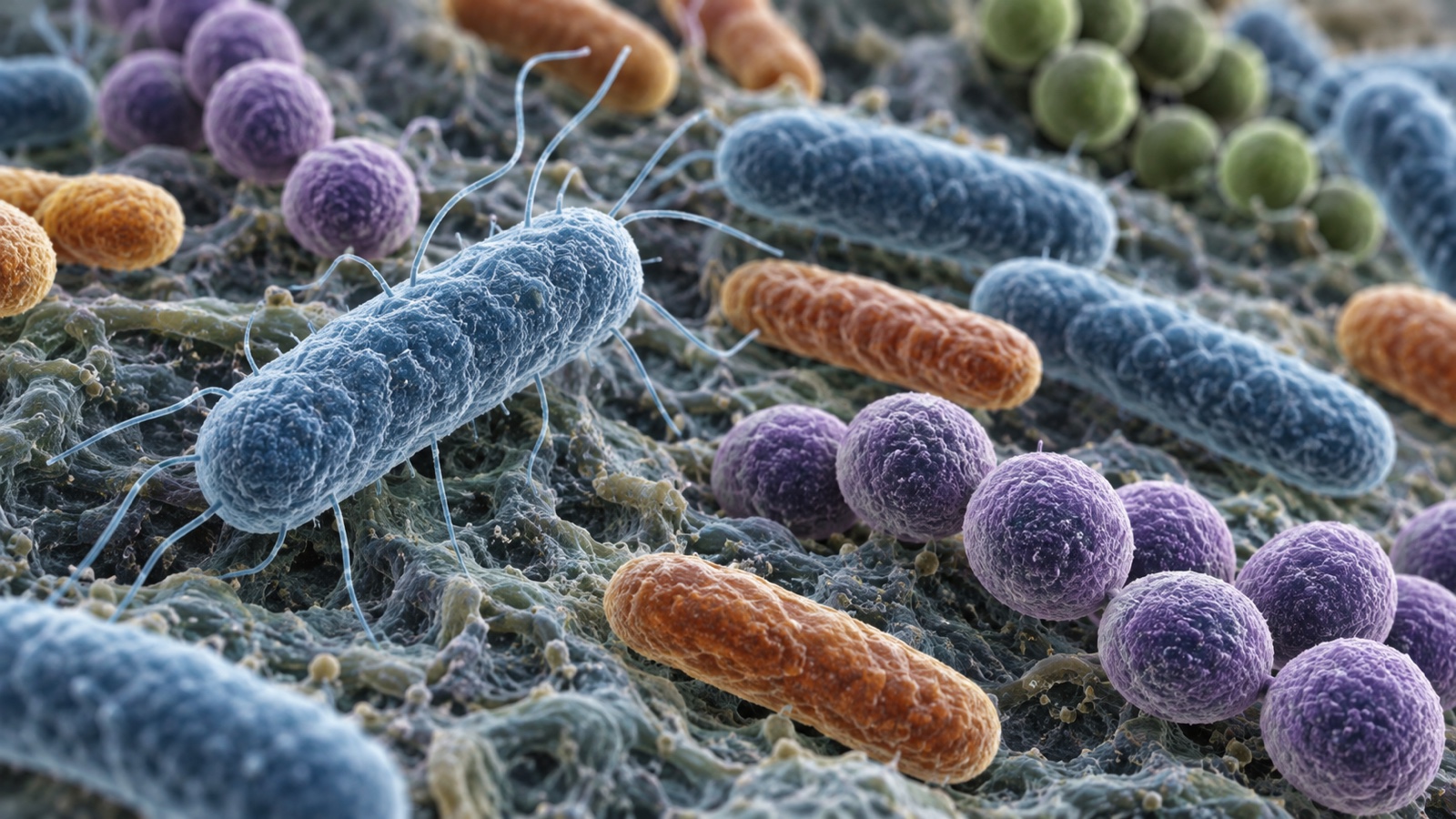
Bacteria come in many shapes and arrangements
- Spherical bacteria are often called cocci.
- Rod-shaped bacteria are called bacilli.
- Spiral-shaped bacteria occur in several groups.
- Vibrio bacteria have curved comma-like shapes.
- Some bacteria grow in chains.
- Others form clusters.
- Staphylococcus species commonly form grape-like clusters.
- Streptococcus species often form chains or pairs.
- Bacterial shape is influenced by cell-wall structure and cytoskeletal proteins.
- Some bacteria are highly pleomorphic and can change shape.
- Flagella help some bacteria swim.
- Flagella can be arranged at one end, both ends, or around the cell.
- Pili are thin surface structures with roles in attachment and DNA transfer.
- Fimbriae help many bacteria stick to surfaces.
- Some bacteria produce protective capsules.
- Capsules can help cells resist drying or immune attack.
- Endospores are highly resistant dormant structures made by some bacterial species.
- Bacterial endospores are not reproductive spores like fungal spores.
- They help cells survive heat, drying, chemicals, and other harsh conditions.
- A bacterium's shape may look simple under a microscope, but tiny structural differences can determine how it moves, attaches, survives, and causes disease.
Most bacteria reproduce by binary fission
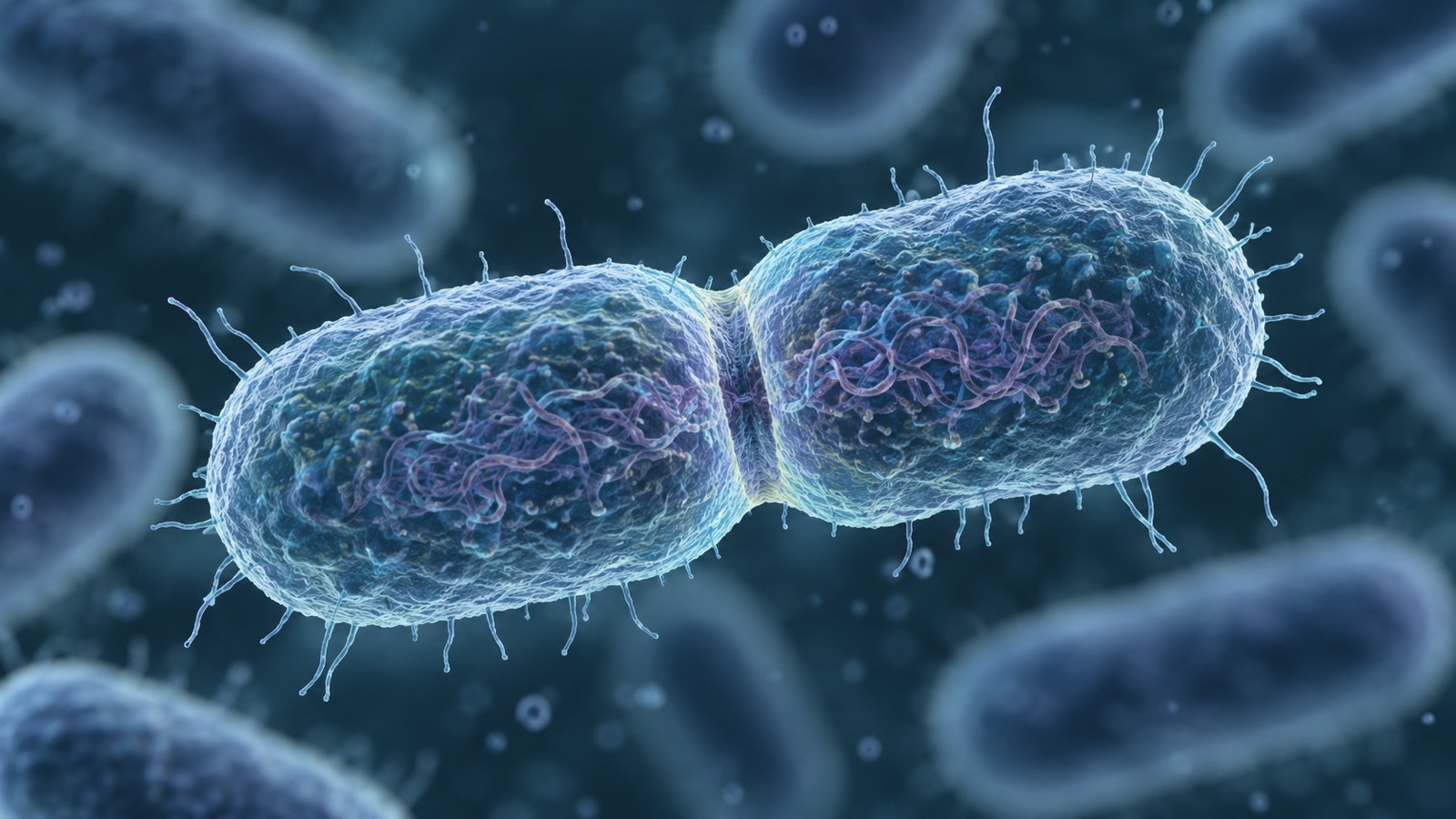
- Binary fission is the main reproductive method used by many bacteria.
- The bacterial chromosome is copied before cell division.
- The two chromosome copies move apart as the cell elongates.
- A dividing wall forms between the future daughter cells.
- The original cell then separates into two cells.
- Under ideal conditions, some bacteria divide very quickly.
- Escherichia coli can double in roughly 20 minutes under excellent laboratory conditions.
- Growth is usually much slower in natural environments.
- Nutrients, temperature, oxygen, acidity, and competition all affect bacterial growth.
- Bacterial populations often show lag, exponential, stationary, and decline phases in closed cultures.
- During exponential growth, cell numbers can rise extremely rapidly.
- Bacteria do not need sexual reproduction to generate genetic variation.
- Mutations create new variants during DNA replication.
- Bacteria can also acquire genes from other cells.
- This process is called horizontal gene transfer.
- Conjugation can move DNA between bacterial cells through direct contact.
- Transformation allows bacteria to take up free DNA from the environment.
- Transduction uses viruses called bacteriophages to move bacterial DNA.
- Horizontal gene transfer can spread antibiotic-resistance genes.
- Bacteria can evolve astonishingly quickly because huge populations, short generations, mutation, and gene swapping all operate at once.
Bacteria live almost everywhere
- Bacteria live in soil.
- They live in oceans.
- They live in freshwater.
- They live in the atmosphere.
- They live on plants.
- They live on and inside animals.
- Some bacteria thrive in extremely hot environments.
- Others tolerate freezing conditions.
- Some survive in highly salty water.
- Others prefer acidic or alkaline environments.
- Many bacteria require oxygen.
- Some bacteria cannot tolerate oxygen.
- Facultative anaerobes can grow with or without oxygen.
- Bacteria participate in nitrogen cycling.
- Nitrogen-fixing bacteria convert atmospheric nitrogen into biologically usable compounds.
- Decomposer bacteria recycle nutrients from dead organisms.
- Some bacteria oxidize sulfur or iron compounds for energy.
- Cyanobacteria perform oxygen-producing photosynthesis.
- Bacterial metabolism supports entire ecosystems where sunlight never reaches.
- If bacteria disappeared, ecosystems would not simply become cleaner. Nutrient cycles, decomposition, soil fertility, digestion, and countless food webs would begin failing.
Your microbiome contains enormous bacterial communities
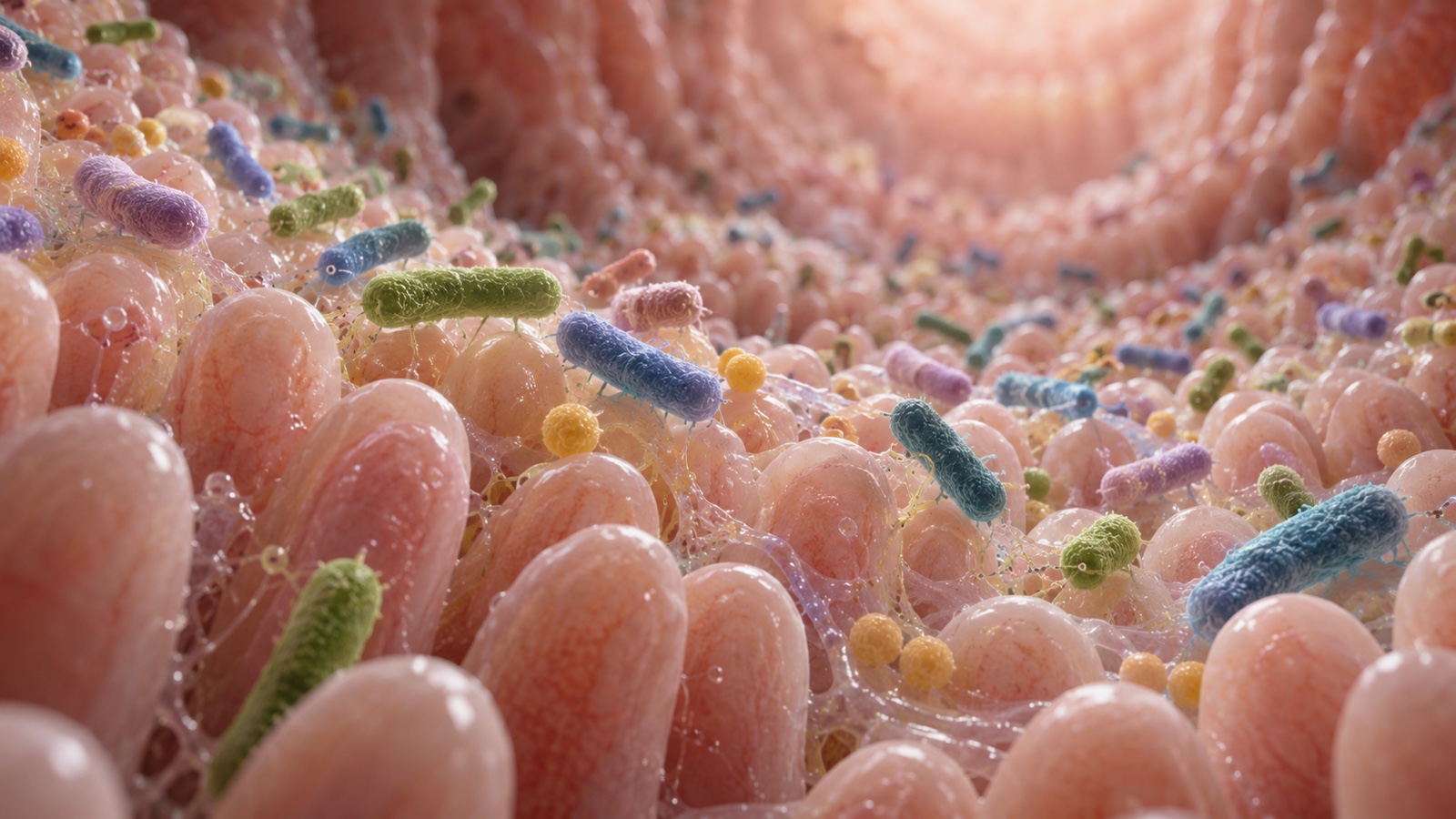
- The human body hosts vast communities of bacteria.
- The gut contains especially dense bacterial populations.
- Skin also supports diverse bacterial communities.
- The mouth contains hundreds of bacterial species.
- Different body sites support different microbes.
- Dry skin supports different communities from oily skin.
- The colon contains different bacteria from the stomach.
- Gut bacteria help break down compounds humans cannot fully digest alone.
- Some gut bacteria produce short-chain fatty acids.
- These molecules can nourish colon cells and influence metabolism.
- Gut bacteria help synthesize certain vitamins.
- They interact closely with the immune system.
- Resident bacteria can compete with invading pathogens.
- The microbiome changes with age, diet, medication, illness, and environment.
- Antibiotics can disrupt normal bacterial communities.
- Microbiome composition differs substantially between healthy people.
- There is no single perfect healthy microbiome shared by everyone.
- Probiotic effects depend on the specific strain and condition being studied.
- Eating fermented foods does not permanently colonize the gut with every bacterium they contain.
- You are not simply a human carrying bacteria around. Your physiology developed in constant partnership with microbial communities that influence digestion, immunity, and chemistry.
Some bacteria cause disease, but most do not
- A pathogen is an organism capable of causing disease.
- Only a minority of bacterial species are important human pathogens.
- Some normally harmless bacteria can cause disease if they enter the wrong body site.
- Escherichia coli includes harmless gut strains and disease-causing strains.
- Staphylococcus aureus can live harmlessly on skin or in the nose.
- It can also cause serious infections.
- Pathogenic bacteria use many different virulence strategies.
- Some produce toxins.
- Others invade tissues.
- Some avoid immune detection.
- Bacterial capsules can help some pathogens resist engulfment by immune cells.
- Biofilms can make bacterial communities harder to eliminate.
- Dental plaque is a biofilm.
- Biofilms can also form on medical devices.
- Not every exposure to a pathogen causes illness.
- Disease risk depends on dose, route, immune status, and other factors.
- Normal bacteria can become opportunistic pathogens when immunity is weakened.
- Bacterial infection is different from bacterial colonization.
- Colonization means bacteria are present without necessarily causing tissue damage or symptoms.
- The phrase “bacteria found” is not automatically equivalent to “bacterial disease,” which is why doctors interpret cultures in context rather than panicking at every microbe.
Antibiotics changed medicine and created a new evolutionary challenge
- Antibiotics are drugs that kill bacteria or inhibit their growth.
- Different antibiotics target different bacterial processes.
- Some interfere with cell-wall synthesis.
- Others target bacterial ribosomes.
- Some disrupt DNA replication or metabolism.
- Antibiotics do not treat viral infections such as colds or influenza.
- Using antibiotics when they are not needed increases selective pressure for resistance.
- Resistance can arise through mutation.
- Resistance genes can also spread through horizontal gene transfer.
- Bacteria resistant to one drug may remain sensitive to others.
- Some bacteria become resistant to multiple antibiotic classes.
- Hospitals monitor resistant organisms carefully.
- Finishing antibiotics exactly as prescribed helps ensure treatment matches the clinical plan.
- The ideal duration varies by infection and antibiotic rather than following one universal rule.
- Some infections require laboratory susceptibility testing.
- Antibiotic stewardship aims to use the right drug, dose, route, and duration.
- Resistance is a property of bacteria, not of the patient's body becoming immune to antibiotics.
- New antibiotics are difficult and expensive to develop.
- Preventing infection can reduce antibiotic use.
- Antibiotic resistance is evolution happening fast enough to become a hospital scheduling problem.

Food, industry and 5 final bacterial facts
- Lactic-acid bacteria help make foods such as yogurt, sauerkraut, kimchi, and some cheeses.
- Acetic-acid bacteria help produce vinegar by converting alcohol into acetic acid.
- Engineered bacteria can manufacture human proteins including insulin.
- Bacteria are used in wastewater treatment, biotechnology, agriculture, and environmental cleanup.
- After 145 facts, bacteria look less like a synonym for germs and more like one of Earth's most adaptable forms of life, capable of causing disease but equally essential to ecosystems, digestion, food production, biotechnology, and nutrient cycling.
Quick FAQ
Q: Are all bacteria harmful?
A: No. Most bacteria do not cause human disease, and many are neutral or beneficial.
Q: Do antibiotics kill viruses?
A: No. Antibiotics target bacterial structures or processes and do not treat ordinary viral infections.
Q: What is a biofilm?
A: A biofilm is an organized microbial community attached to a surface and embedded in a protective matrix.
Q: Can bacteria share genes?
A: Yes. Conjugation, transformation, and bacteriophage-mediated transduction can move DNA between bacteria.
Q: Is antibiotic resistance caused by the body getting used to antibiotics?
A: No. Resistance develops in bacterial populations through genetic change and selection.

Ellie is the owner and sole author of Fun Facts, combining her mechanical engineering background with years of research-driven writing to deliver facts you can trust. Every article is thoroughly fact-checked and routinely updated as new science and sources emerge to keep information accurate and current. Her mission is to make learning delightful while upholding high standards of reliability and transparency.