
Moose look mildly surprised in every photo, which feels reasonable when you are a six-foot-tall deer carrying antlers wider than a couch. They swim, dive for pond plants, kick predators, shed giant antlers every year, handle deep snow with absurdly long legs, and can become dangerously irritable when humans mistake “standing still” for “friendly.”
Moose are the largest living members of the deer family
- The moose's scientific name is Alces alces.
- Moose belong to the deer family Cervidae.
- They are the largest living deer species.
- Adult males are called bulls.
- Adult females are called cows.
- Young are called calves.
- Large bulls can weigh well over 1,000 pounds.
- Alaskan and Yukon moose are among the largest.
- Shoulder height can exceed 6 feet.
- The long legs make an adult's back much higher than the hood of many cars.
- Moose live across northern North America, Europe, and Asia.
- In Europe, the same species is commonly called elk.
- In North American English, elk usually means Cervus canadensis, a different deer species.
- That vocabulary difference creates spectacularly confusing wildlife conversations.
- Moose have large elongated heads.
- A flap of skin beneath the throat is called a bell or dewlap.
- The function of the bell is not fully understood.
- Moose have very large mobile ears.
- Their sense of smell is excellent.
- A moose is essentially what happens when a deer is scaled up until road signs become necessary.
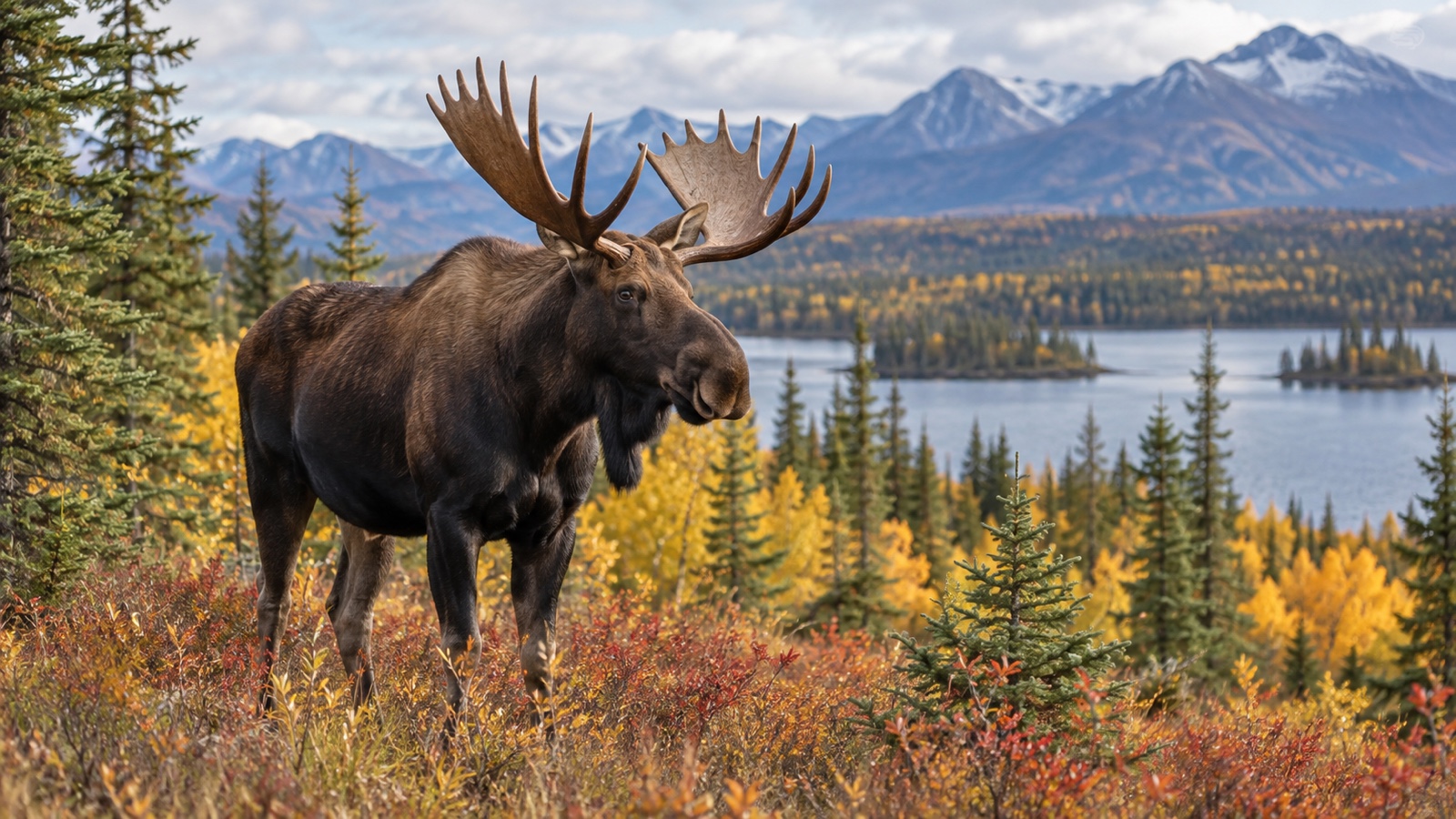
Bull antlers can span wider than a person is tall
- Only male moose normally grow antlers.
- Moose antlers are among the largest antlers of any living animal.
- A mature bull's antler spread can exceed 6 feet.
- Antlers are bone, not horn.
- They grow fresh every year.
- New antlers begin growing in spring.
- During growth, antlers are covered in velvet.
- Velvet contains blood vessels and nerves that nourish the developing bone.
- Antlers can grow remarkably quickly during summer.
- Large antlers require substantial nutrients and energy.
- As breeding season approaches, antlers harden.
- The velvet dries and is rubbed away.
- Moose antlers have broad flattened sections called palms.
- Tines project from the palms and beams.
- Antler form varies with age, health, genetics, and region.
- Bulls use antlers in displays and fights during the rut.
- Antler size can signal age and competitive ability.
- Bulls shed antlers after the breeding season.
- Dropping heavy antlers reduces winter energy costs.
- Growing a giant bone chandelier every summer and throwing it away by winter is a very committed dating strategy.
Long legs are snowshoes, waders and obstacle-clearers
- Moose legs are unusually long relative to the body.
- Long legs help move through deep snow.
- They also allow moose to wade into ponds and marshes.
- A moose can step over logs that stop smaller animals.
- The front legs can deliver powerful kicks.
- Moose can kick forward as well as backward.
- Predators approaching the front of a moose are therefore not safe from the legs.
- Wide cloven hooves spread weight on soft ground.
- Hooves can splay apart slightly.
- This improves support in mud and snow.
- Moose can run around 35 miles per hour for short distances.
- They can maintain a fast trot over rough ground.
- Long legs make them look awkward only until they start moving.
- Calves must learn to coordinate those legs quickly.
- Newborn calves stand within hours.
- Roadside guardrails can trap or redirect moose movement.
- Deep crusted snow can still make travel energetically expensive.
- Winter severity can influence survival.
- Young and weakened moose struggle most in difficult snow conditions.
- Those legs look too long right up until the first four-foot snowbank arrives.
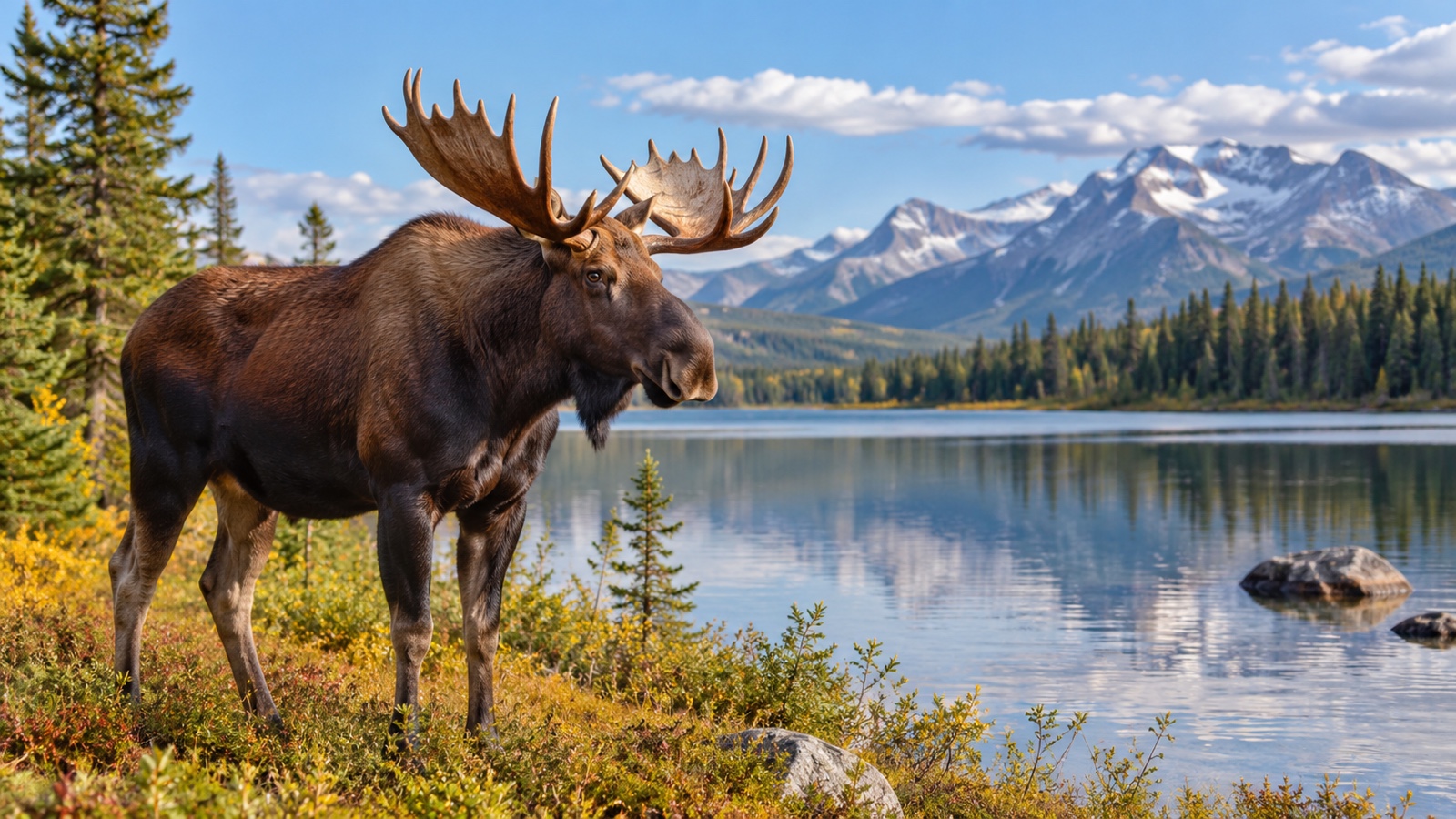
Moose are excellent swimmers and even forage underwater
A moose standing belly-deep in a pond is not cooling off by accident. Aquatic plants can be nutrient-rich food, and moose are strong enough swimmers to cross lakes, reach islands, and dip the entire head underwater while feeding.
- Moose are strong swimmers.
- They can cross broad rivers and lakes.
- Swimming helps them reach feeding habitat and islands.
- Moose may enter water to escape biting insects.
- Cool water also helps during warm weather.
- They feed heavily on aquatic vegetation in summer.
- Water lilies, pondweeds, and other submerged plants can be important foods.
- Aquatic plants can contain relatively high levels of sodium.
- Terrestrial browse in some northern habitats is low in sodium.
- Water plants can therefore supplement minerals.
- Moose can submerge the head completely while feeding.
- They can remain underwater briefly while pulling plants from the bottom.
- Nostrils can close partly during submersion.
- A large overhanging upper lip helps strip vegetation.
- Moose are browsers rather than grass specialists.
- They eat twigs, leaves, shoots, bark, and shrubs.
- Willow is a major food in many regions.
- Birch, aspen, maple, and other woody plants are also eaten.
- Diet changes greatly with season.
- A moose eating salad underwater is one of those facts that sounds cute until the salad eater stands taller than your refrigerator.
Heat can be harder on moose than cold
- Moose evolved for cool northern climates.
- They have thick insulating coats.
- Long hollow guard hairs trap air.
- A dense undercoat adds insulation.
- Large body size also helps conserve heat.
- Those same traits make hot weather difficult.
- Moose can experience heat stress at temperatures humans consider mild.
- They reduce activity during warm periods.
- Shade and water become especially important in summer.
- Moose may feed more at night when daytime temperatures are high.
- Climate warming can reduce suitable southern moose habitat.
- Warmer winters can favor some parasites.
- Winter ticks are a major example.
- Thousands or even tens of thousands of ticks can infest one moose.
- Heavily infested animals scratch and groom intensely.
- Hair loss can create a pale “ghost moose” appearance.
- Severe infestations contribute to blood loss, stress, and poor condition.
- Calves can be especially vulnerable.
- Shorter winters can increase tick survival in some areas.
- The animal famous for surviving blizzards can be undone by a warm winter and an army of insects smaller than a fingernail.
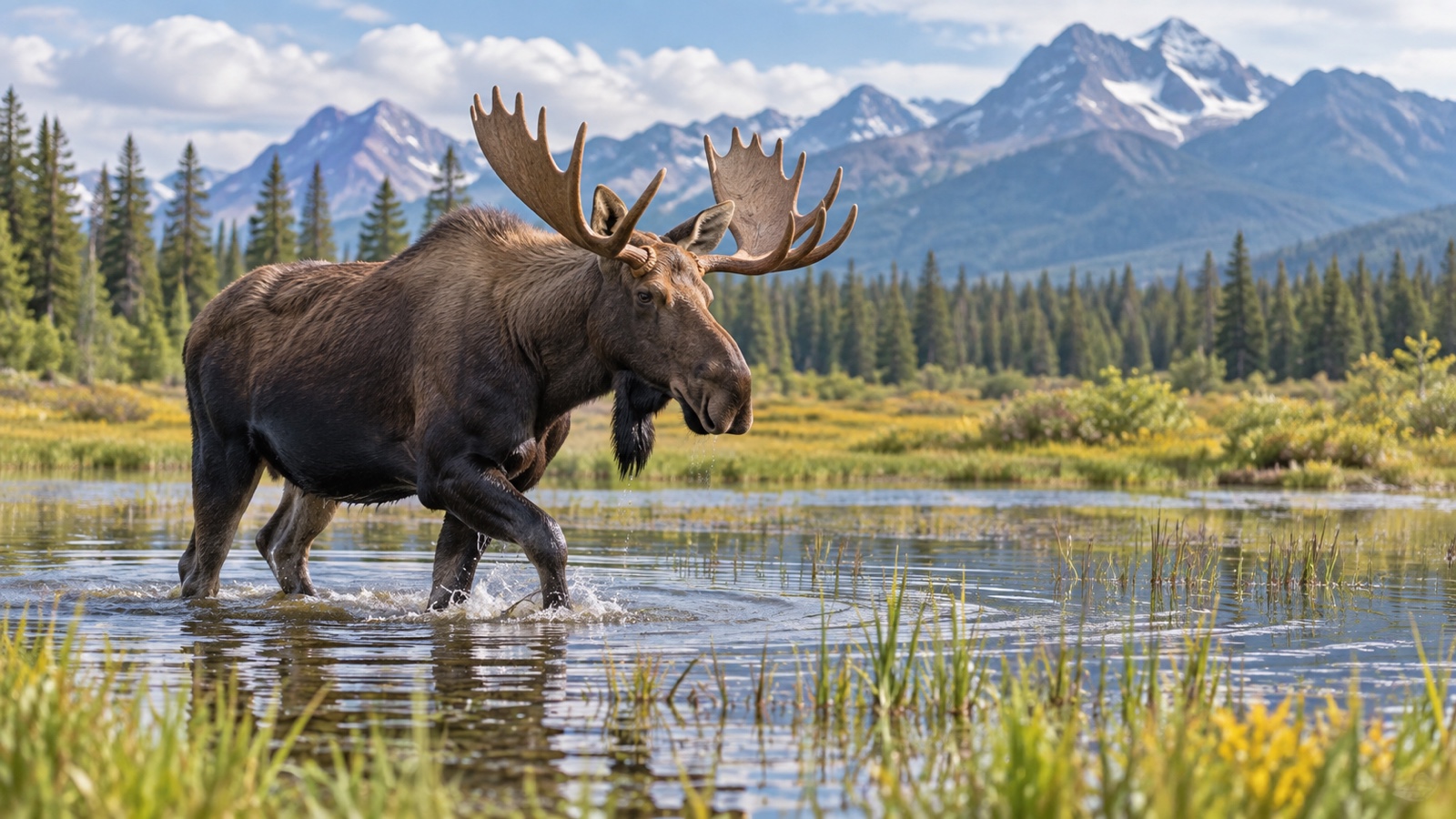
The rut turns normally solitary adults into loud competitors
Moose are not classic herd animals for most of the year. The autumn rut temporarily changes everything as bulls search for receptive cows, scrape vegetation, thrash antlers, urinate into wallows, vocalize, and test rivals with displays that sometimes escalate into full antler combat.
- Moose are usually solitary or loosely social.
- The breeding season occurs in fall.
- This season is called the rut.
- Bulls travel widely searching for cows.
- They produce deep grunts and other breeding sounds.
- Cows make calls that can attract bulls.
- Bulls rub antlers on shrubs and trees.
- They create rut pits by pawing the ground and urinating into depressions.
- Bulls may roll or rub in the scented mud.
- Those odors communicate reproductive information.
- Rival bulls often assess each other before fighting.
- Size and antler displays can prevent unnecessary combat.
- Matched rivals may lock antlers and push.
- Rut fights can cause injuries.
- Bulls eat less while devoting time to breeding competition.
- They can lose substantial body condition during the rut.
- Antlers are shed after the breeding season.
- Rodents and other animals gnaw shed antlers for minerals.
- Fresh antlers begin growing again the following spring.
- Moose dating season involves scented mud pits, tree destruction, shouting, and several hundred pounds of disposable headgear.
Calves, predators, roads and 25 final moose facts
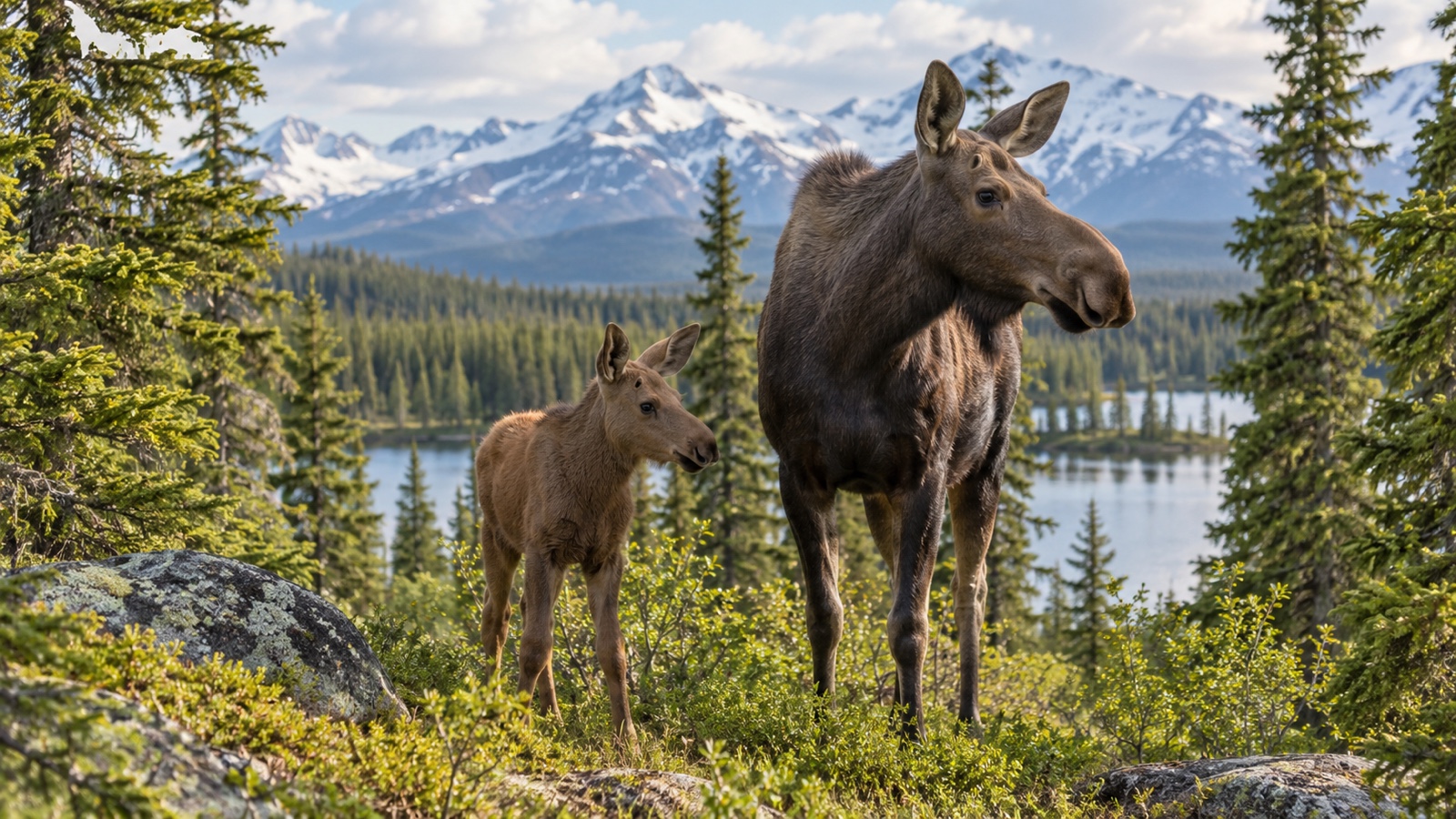
- Moose cows generally give birth in late spring.
- Gestation lasts about eight months.
- Young cows often have one calf.
- Mature healthy cows can produce twins when nutrition is good.
- Triplets occur but are rare.
- Calves can weigh around 25 to 35 pounds at birth.
- They grow rapidly on rich milk.
- Mothers defend calves aggressively.
- A cow with a calf should always be given substantial distance.
- Black bears prey heavily on newborn moose calves in some regions.
- Grizzly bears also prey on calves.
- Wolves can kill calves and adults.
- Healthy adult moose can defend themselves with powerful kicks.
- Predation rates vary dramatically by region, season, prey abundance, and habitat.
- Brainworm parasites can harm moose in areas where white-tailed deer carry the parasite.
- White-tailed deer often tolerate brainworm with little illness.
- Infected moose can develop severe neurologic disease.
- Road collisions with moose are especially dangerous because the body is so tall.
- A car can strike the legs and send the massive torso toward the windshield.
- Drivers should reduce speed in marked moose areas, especially at dusk and dawn.
- Moose eyes do not reflect headlights as conspicuously as some smaller deer eyes from every angle.
- Salt from winter road treatment can attract moose to roadsides.
- Habitat management sometimes creates young forest growth that moose browse heavily.
- Moose populations rise and fall with climate, parasites, predators, harvest, fire, forestry, and food availability.
- After 145 facts, moose look less like oversized deer and more like cold-climate browsers engineered around long legs, giant seasonal antlers, underwater salad, and the very reasonable expectation that people stay out of kicking range.
Quick FAQ
Q: Is a moose a type of deer?
A: Yes. Moose are the largest living members of the deer family Cervidae.
Q: Can moose swim?
A: Very well. They cross lakes and rivers and often enter water to eat aquatic plants.
Q: How fast can a moose run?
A: Roughly 35 miles per hour for short distances.
Q: Do female moose have antlers?
A: Normally no. Antlers are a male trait, although rare hormonal abnormalities can produce unusual antler growth in females.
Q: Why are moose dangerous to hit with a car?
A: Their long legs raise the heavy body high enough that a collision can send the torso directly into a vehicle's windshield and roofline.

Ellie is the owner and sole author of Fun Facts, combining her mechanical engineering background with years of research-driven writing to deliver facts you can trust. Every article is thoroughly fact-checked and routinely updated as new science and sources emerge to keep information accurate and current. Her mission is to make learning delightful while upholding high standards of reliability and transparency.