
McDonald’s began as a California drive-in, stripped its menu down to a handful of items, turned the kitchen into an assembly line, franchised the system across the United States, and eventually became one of the world’s most recognizable restaurant brands. The story includes two founding brothers, a milkshake-machine salesman, a 15-cent hamburger, architecture shaped like giant arches, a Filet-O-Fish created for Friday customers, and a Big Mac that needed its own bun. These 145 McDonald’s facts explore the founders, Speedee Service System, Ray Kroc, menu history, restaurants, mascots, global adaptations, kitchens, packaging, and the business behind the Golden Arches.
McDonald’s basics
- McDonald’s is an American fast-food restaurant company.
- The original restaurant business was created by brothers Richard and Maurice McDonald.
- They were commonly called Dick and Mac McDonald.
- The brothers opened a restaurant in San Bernardino, California.
- Their early business was not identical to the McDonald’s system people know today.
- They transformed it into a streamlined hamburger operation in 1948.
- Ray Kroc joined the business as a franchising partner in the 1950s.
- Kroc later bought the brothers’ interest in the company.
- McDonald’s Corporation grew through franchising.
- The Golden Arches became its best-known visual symbol.
- The menu expanded far beyond the original hamburgers, cheeseburgers, fries, drinks, and shakes.
- McDonald’s operates in more than 100 countries and markets.
- Menus vary by country.
- Most restaurants are operated by franchisees rather than directly by the corporation.
- McDonald’s official company history traces the modern system to the McDonald brothers and Ray Kroc.
The McDonald brothers redesign fast food
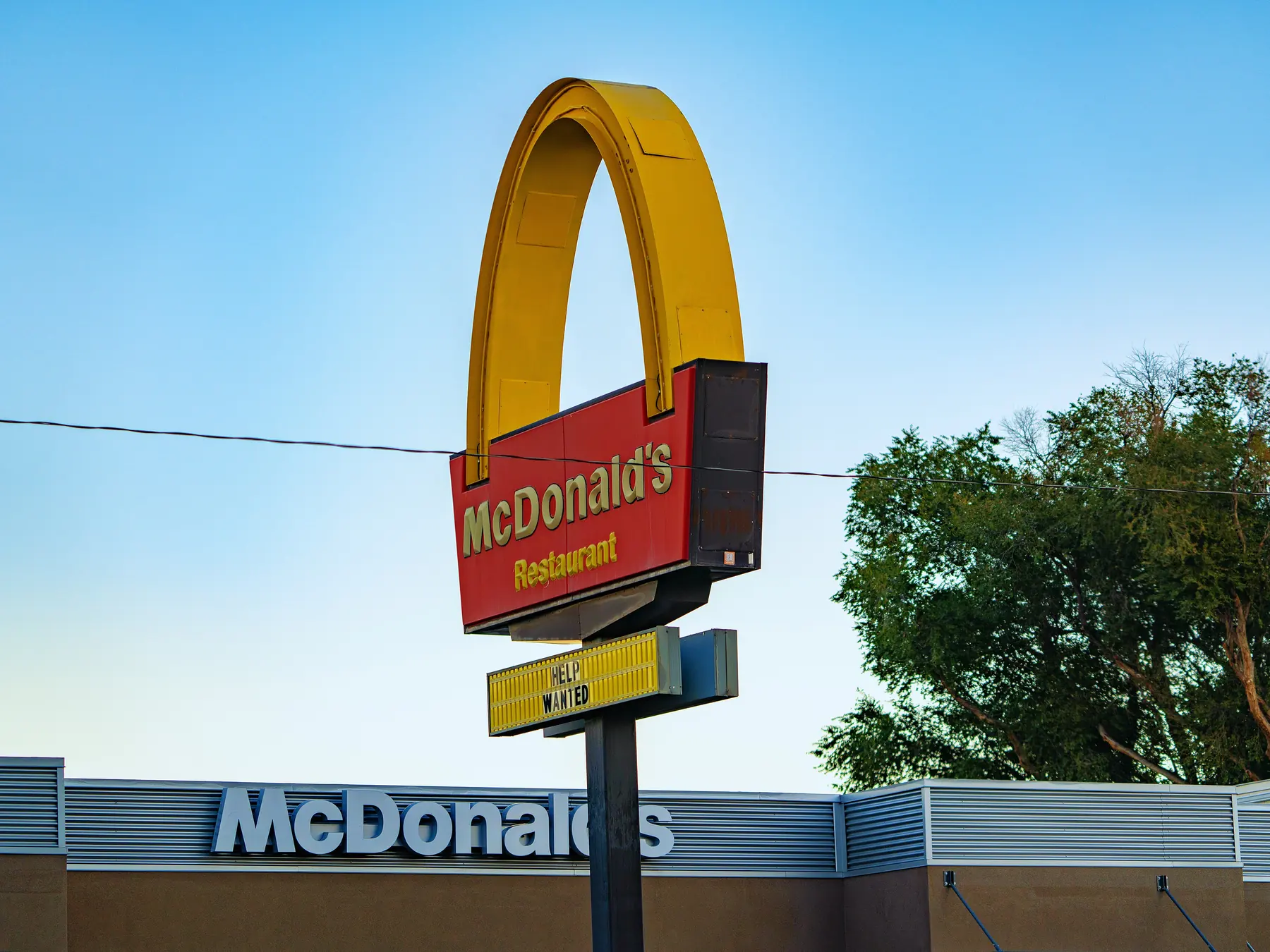
- Dick and Mac McDonald originally operated a drive-in restaurant.
- Drive-ins relied heavily on carhop service.
- The brothers noticed that a small group of menu items generated much of their business.
- They closed temporarily to redesign operations.
- In 1948, they reopened with a radically simplified system.
- They called it the Speedee Service System.
- The menu focused heavily on hamburgers.
- Customers ordered at a window instead of waiting for carhops.
- Food was prepared using specialized workstations.
- Each worker handled a limited set of repeatable tasks.
- Equipment and counter positions were arranged for efficient movement.
- Disposable wrappers reduced the need for plates and dishwashing.
- A hamburger cost 15 cents.
- The brothers could serve customers quickly while keeping prices low.
- Their kitchen anticipated the industrial workflow later associated with modern fast food.
Ray Kroc sees eight milkshake mixers
- Ray Kroc sold Multimixer milkshake machines.
- Each Multimixer could mix several shakes at once.
- Kroc became curious when the McDonald brothers ordered multiple machines.
- He visited their San Bernardino restaurant in 1954.
- Kroc was impressed by the volume and speed of the operation.
- He believed the system could expand nationally.
- The brothers had already experimented with franchising.
- Kroc negotiated the right to develop additional franchises.
- He founded a franchising company in 1955.
- Kroc opened his first McDonald’s restaurant in Des Plaines, Illinois, that year.
- McDonald’s Corporation long treated that location as an important beginning of its franchise era.
- The original Des Plaines building was later demolished.
- A replica museum also eventually closed and was removed after flooding issues.
- Kroc emphasized consistency among franchise locations.
- His great business contribution was scaling the brothers’ efficient restaurant concept into a national system.
The brothers and Kroc split
- Ray Kroc and the McDonald brothers did not remain permanent partners.
- They disagreed about expansion and control.
- Kroc wanted to grow more aggressively.
- The brothers were more cautious.
- In 1961, Kroc purchased the brothers’ interest in the company.
- The deal was valued at $2.7 million.
- That amount was structured to leave the brothers with about $1 million each after taxes by common historical accounts.
- The brothers kept their original San Bernardino restaurant property.
- They renamed the restaurant the Big M.
- Kroc opened a McDonald’s nearby.
- The original brothers’ restaurant eventually closed.
- Popular retellings often turn the split into a simple hero-versus-villain story.
- The documented relationship involved real conflict but also complex contracts, ambitions, and business decisions.
- Kroc did not invent the original McDonald’s restaurant.
- The brothers did not create the global corporation alone.
Where the Golden Arches came from
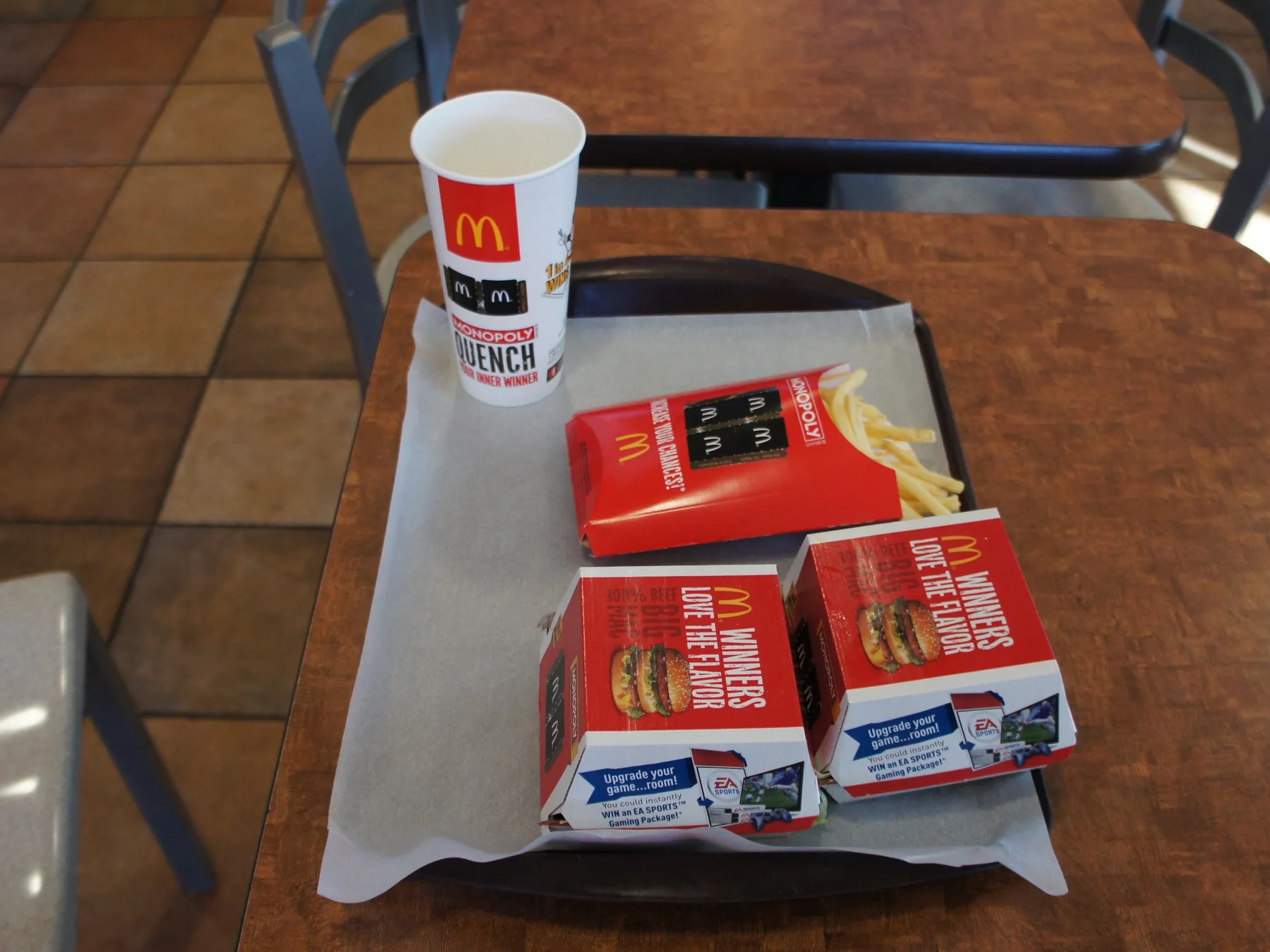
- The Golden Arches began as architectural features.
- The McDonald brothers wanted their roadside restaurants to stand out.
- Architect Stanley Clark Meston worked on the distinctive building design.
- Large yellow arches rose from the sides of the restaurant.
- The arches were visible to drivers from a distance.
- They were not initially one letter M.
- Viewed from certain angles, the pair suggested the shape later used in the logo.
- Designer Jim Schindler developed an early corporate Golden Arches logo in the 1960s.
- The arches eventually became a simplified M symbol.
- Red and yellow became strongly associated with the brand.
- Modern restaurants no longer need giant structural arches to be recognizable.
- Some historic locations preserve older architectural styles.
- The oldest operating McDonald’s restaurant is in Downey, California.
- It opened in 1953 before Kroc’s national franchise expansion.
- Its preserved design offers a rare look at the pre-corporate architectural era.
The Big Mac was created by a franchisee
- The Big Mac was created by Pennsylvania franchisee Jim Delligatti.
- Delligatti wanted a larger sandwich for adult customers.
- He tested the burger in the Pittsburgh area in 1967.
- The Big Mac uses two beef patties.
- It includes a middle bun layer.
- That center slice is often called the club bun.
- The sandwich includes special sauce.
- It also includes lettuce, cheese, pickles, and onions.
- The Big Mac rolled out nationally in 1968.
- It was not the first name considered for the sandwich.
- Earlier names included the Aristocrat and Blue Ribbon Burger.
- The name Big Mac was suggested by advertising secretary Esther Glickstein Rose according to McDonald’s historical accounts.
- The famous ingredient jingle was created for advertising.
- The Big Mac became one of McDonald’s signature global products.
- Economists later inspired the Economist magazine’s Big Mac Index as a playful way to compare purchasing power among currencies.
Filet-O-Fish solved a Friday problem
- The Filet-O-Fish was created by Cincinnati-area franchisee Lou Groen.
- Groen’s restaurant served a heavily Catholic customer base.
- Many customers avoided meat on Fridays under Catholic practice at the time.
- Friday sales suffered.
- Groen developed a fried fish sandwich.
- Ray Kroc was initially skeptical.
- Kroc proposed a competing meatless sandwich idea involving pineapple.
- His sandwich was called the Hula Burger.
- The fish sandwich outsold the Hula Burger in a test.
- The Filet-O-Fish joined the national menu in the 1960s.
- It became one of the company’s first major menu items created by a franchisee.
- The sandwich traditionally includes a fish fillet, tartar sauce, and cheese on a steamed bun.
- Its success showed that local customer behavior could reshape the national menu.
- Franchisees later contributed other menu innovations.
- Fast-food menus can therefore evolve from bottom-up experiments as well as corporate test kitchens.
Happy Meals and Chicken McNuggets
- The Happy Meal became a major McDonald’s children’s product in 1979.
- The concept developed through several people and earlier regional experiments.
- Advertising executive Bob Bernstein is credited with developing the Happy Meal box concept used nationally.
- The box combined food with activities and colorful graphics.
- A small toy became a defining feature.
- Happy Meal toys later connected McDonald’s with movies, television shows, games, and characters.
- Chicken McNuggets launched nationally in the early 1980s.
- McDonald’s worked with food scientists and suppliers to develop a scalable chicken product.
- Chef René Arend contributed to the product’s development.
- The nuggets are formed into several repeatable shapes.
- Those shapes are commonly nicknamed the bell, bone, ball, and boot.
- Uniform shapes help automated production and cooking consistency.
- Dipping sauces became part of the McNugget experience.
- McNuggets helped expand McDonald’s beyond a beef-centered identity.
- Menu innovation became essential as customer tastes and competition changed.
McDonald’s goes global
- McDonald’s expanded internationally during the second half of the 20th century.
- Canada and Puerto Rico were among its earliest markets outside the continental United States.
- Japan became an important early Asian market.
- Local menus adapt to cultural preferences.
- McDonald’s India offers extensive vegetarian choices.
- Beef is absent from many Indian McDonald’s menus because of religious and cultural considerations.
- Japan has offered teriyaki-style burgers and seasonal items.
- Some Middle Eastern restaurants serve halal-certified menus according to local requirements.
- Regional breakfast items differ.
- Portion sizes and sweetness can differ too.
- McDonald’s sometimes tests a product in one country before adapting ideas elsewhere.
- Global supply chains must reproduce consistent core products using regional suppliers.
- Franchise contracts help standardize operations.
- Local adaptation prevents the brand from being identical everywhere.
- McDonald’s became a useful case study in how global companies balance standardization with local culture.
Ten surprising McDonald’s facts
- Ray Kroc did not found the original McDonald’s restaurant.
- The McDonald brothers invented the Speedee Service System before Kroc joined them.
- The original streamlined hamburger cost 15 cents.
- The Golden Arches started as actual architectural arches.
- The oldest operating McDonald’s predates Kroc’s first franchise location.
- The Big Mac was created by a franchisee.
- The Filet-O-Fish was created because one franchise struggled on meatless Fridays.
- The Filet-O-Fish beat a pineapple-based Hula Burger in a sales test.
- Chicken McNuggets are produced in four recurring shapes.
- For more fast-food trivia, explore our burger facts, french-fries facts, and Food facts.
Quick McDonald’s FAQ
Who founded McDonald’s?
Brothers Richard and Maurice McDonald created the original restaurant and Speedee Service System. Ray Kroc later became their franchising partner, bought the company, and built the global corporation.
When did modern McDonald’s begin?
The brothers introduced their streamlined Speedee Service System in 1948. Ray Kroc opened his first franchise-era restaurant in Des Plaines, Illinois, in 1955.
Who invented the Big Mac?
Pennsylvania McDonald’s franchisee Jim Delligatti, who tested it in 1967 before the sandwich went national in 1968.
Why was the Filet-O-Fish created?
Franchisee Lou Groen needed a meatless option for customers who avoided meat on Fridays, particularly Catholics in his Cincinnati-area market.
Where did the Golden Arches come from?
They began as giant yellow architectural arches on early McDonald’s restaurant buildings and later evolved into the familiar M-shaped logo.

Ellie is the owner and sole author of Fun Facts, combining her mechanical engineering background with years of research-driven writing to deliver facts you can trust. Every article is thoroughly fact-checked and routinely updated as new science and sources emerge to keep information accurate and current. Her mission is to make learning delightful while upholding high standards of reliability and transparency.