
Honey is one of those foods that gets more impressive the closer you look. Bees collect flower nectar, chemically transform it, evaporate most of the water, store it in wax cells, and somehow produce a shelf-stable syrup whose flavor can change depending on what bloomed nearby.
Honey begins as flower nectar
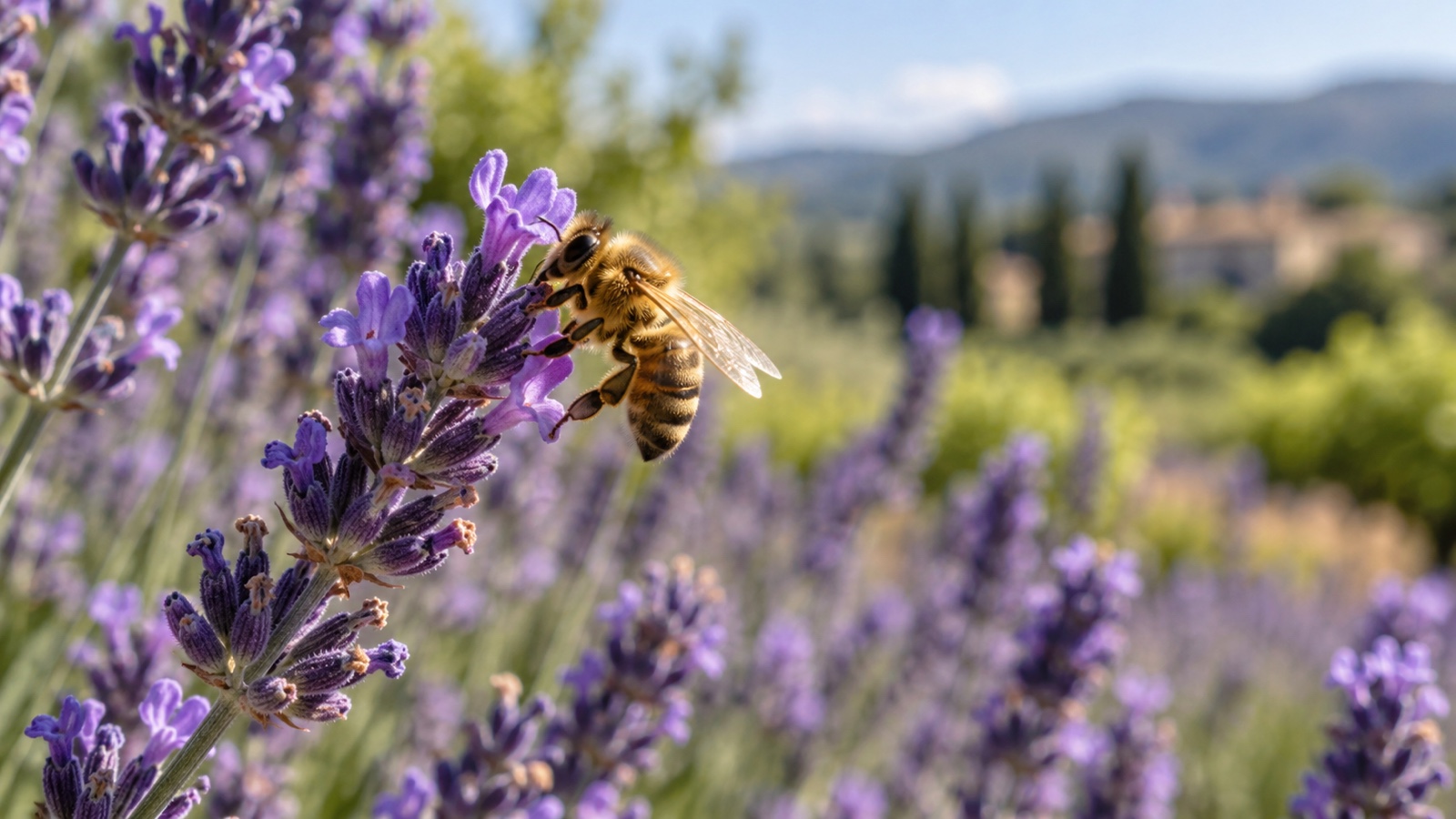
- Honey is made primarily by honey bees from floral nectar.
- Nectar is a sugary liquid produced by flowers.
- Worker bees collect nectar with their proboscises.
- Collected nectar enters a specialized storage organ often called the honey stomach.
- The honey stomach is separate from the bee's main digestive stomach.
- Bees can carry substantial nectar loads relative to their body size.
- Enzymes begin changing nectar sugars during transport.
- Foragers return to the colony and transfer nectar to house bees.
- Nectar may pass between several bees before storage.
- Bees spread nectar into honeycomb cells.
- Fresh nectar contains much more water than finished honey.
- Bees fan their wings to increase airflow through the hive.
- Evaporation lowers the water content.
- Low water content helps prevent microbial growth.
- When honey is sufficiently concentrated, bees cap cells with wax.
- Capped honey serves as stored food.
- Colonies depend on those reserves when flowers are unavailable.
- Honey therefore functions as a long-term carbohydrate pantry for bees.
- Humans are borrowing winter provisions when we harvest it.
- A jar of honey is basically a flower field condensed, enzyme-processed, air-dried, and packed by insects.
Honey's chemistry makes it unusually shelf stable
- Honey is mostly sugars and water.
- Fructose and glucose are its dominant sugars.
- Exact sugar proportions vary by floral source.
- Honey also contains small amounts of acids, minerals, proteins, and aromatic compounds.
- Its pH is acidic.
- Typical honey pH falls roughly between 3 and 4.5.
- Acidity discourages many microbes.
- Low available water also limits microbial growth.
- Honey is hygroscopic, meaning it attracts moisture from the air.
- An open jar can absorb enough moisture to increase spoilage risk.
- Honey's high sugar concentration creates osmotic pressure.
- That pressure draws water away from many microbial cells.
- The enzyme glucose oxidase can help generate small amounts of hydrogen peroxide when honey is diluted.
- That contributes to antimicrobial activity in some honeys.
- Different honeys vary greatly in antimicrobial strength.
- Honey can still contain dormant bacterial spores.
- That is why infants under 12 months should not be fed honey.
- Infant botulism can occur if spores germinate in an immature intestine.
- Cooking honey does not make it appropriate for babies under one year.
- Honey keeps well because several chemical defenses work together, not because sugar is somehow immortal.
Crystallized honey is still perfectly normal honey
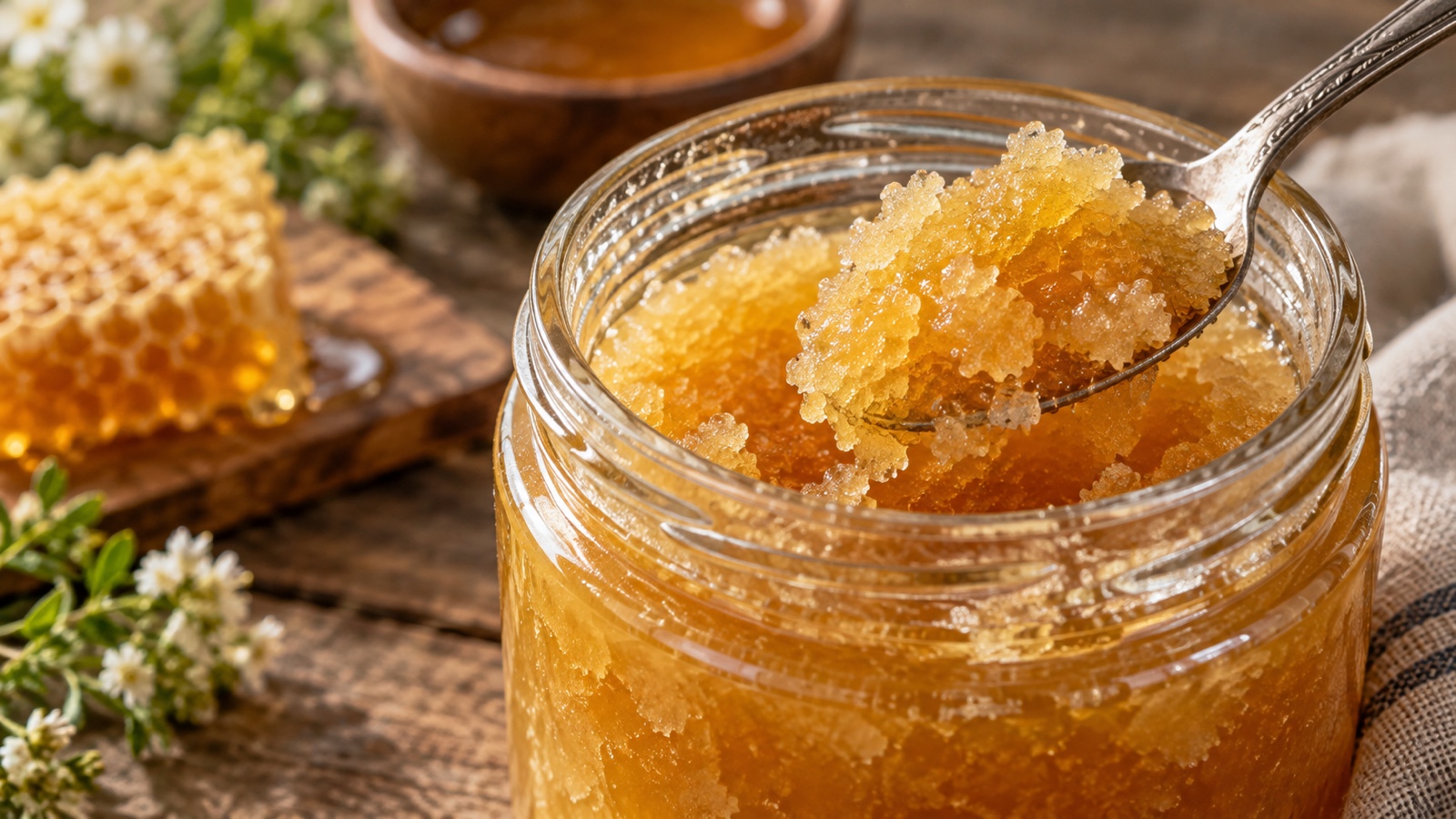
- Honey often crystallizes during storage.
- Crystallization does not mean honey has spoiled.
- Glucose is less soluble than fructose.
- Glucose therefore tends to form crystals first.
- Honeys with more glucose usually crystallize faster.
- Honeys higher in fructose may remain liquid longer.
- Tiny pollen grains can provide surfaces where crystals begin.
- Temperature strongly affects crystallization.
- Cool room temperatures often encourage it.
- Freezing slows molecular movement and can preserve texture.
- Gentle warming can dissolve crystals again.
- Excessive heat can damage flavor and aroma.
- Repeated heating can darken honey.
- Long storage can also deepen color.
- Creamed honey is intentionally crystallized under controlled conditions.
- Small uniform crystals give creamed honey a smooth texture.
- Whipped honey is another name often used for this style.
- Crystallization rate differs even between jars from the same beekeeper.
- Honey may crystallize from the bottom or around tiny seed crystals.
- If your honey suddenly looks grainy, it is usually doing chemistry rather than staging a pantry emergency.
Flower source changes honey's color and flavor
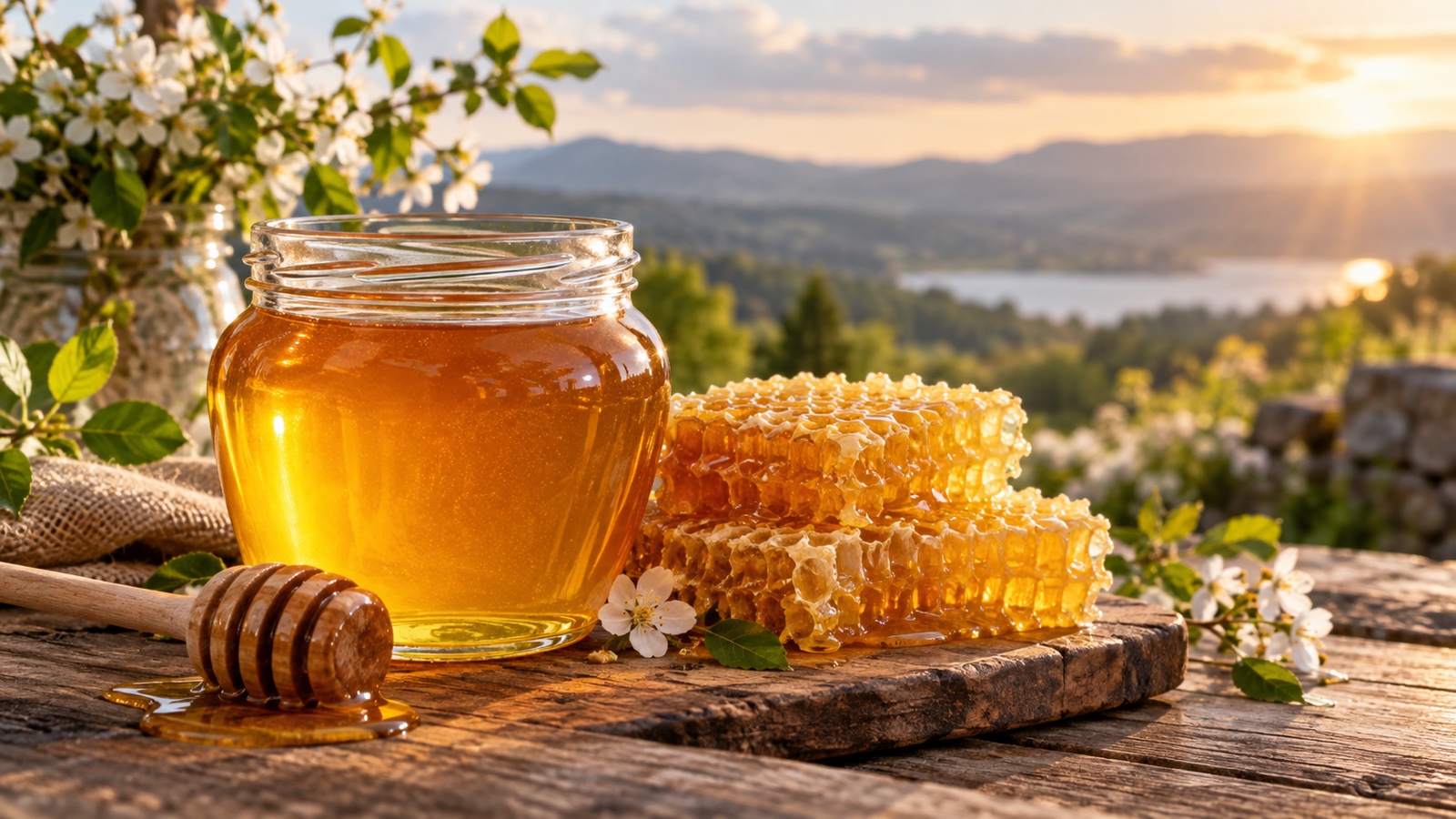
- Honey flavor depends strongly on nectar source.
- Single-flower honeys are called monofloral honeys.
- True monofloral honey still usually contains nectar from more than one plant.
- The dominant nectar source gives the honey its identity.
- Clover honey is common in North America.
- Orange-blossom honey often has citrusy floral aromas.
- Buckwheat honey is famously dark and robust.
- Acacia honey is pale and often slow to crystallize.
- Lavender honey can have distinctly floral notes.
- Manuka honey comes primarily from Leptospermum flowers in New Zealand.
- Tupelo honey is associated with tupelo trees in the southeastern United States.
- Fireweed honey is produced from fireweed nectar.
- Wildflower honey reflects whatever blooms bees visited nearby.
- Season can therefore change wildflower honey flavor.
- Soil and climate influence plant nectar chemistry.
- Honey color ranges from nearly water-white to very dark brown.
- Darker honey often contains more minerals and phenolic compounds.
- Color does not reliably predict sweetness.
- Pollen analysis can help identify geographic and floral origins.
- A honey tasting can be surprisingly close to wine tasting, except the “terroir” was gathered one flower visit at a time.
Beeswax honeycomb is a remarkable piece of engineering
- Worker honey bees produce beeswax.
- Wax glands are located on the underside of the abdomen.
- Young adult workers are especially active wax producers.
- Fresh wax emerges as tiny scales.
- Bees manipulate those scales with their legs and mandibles.
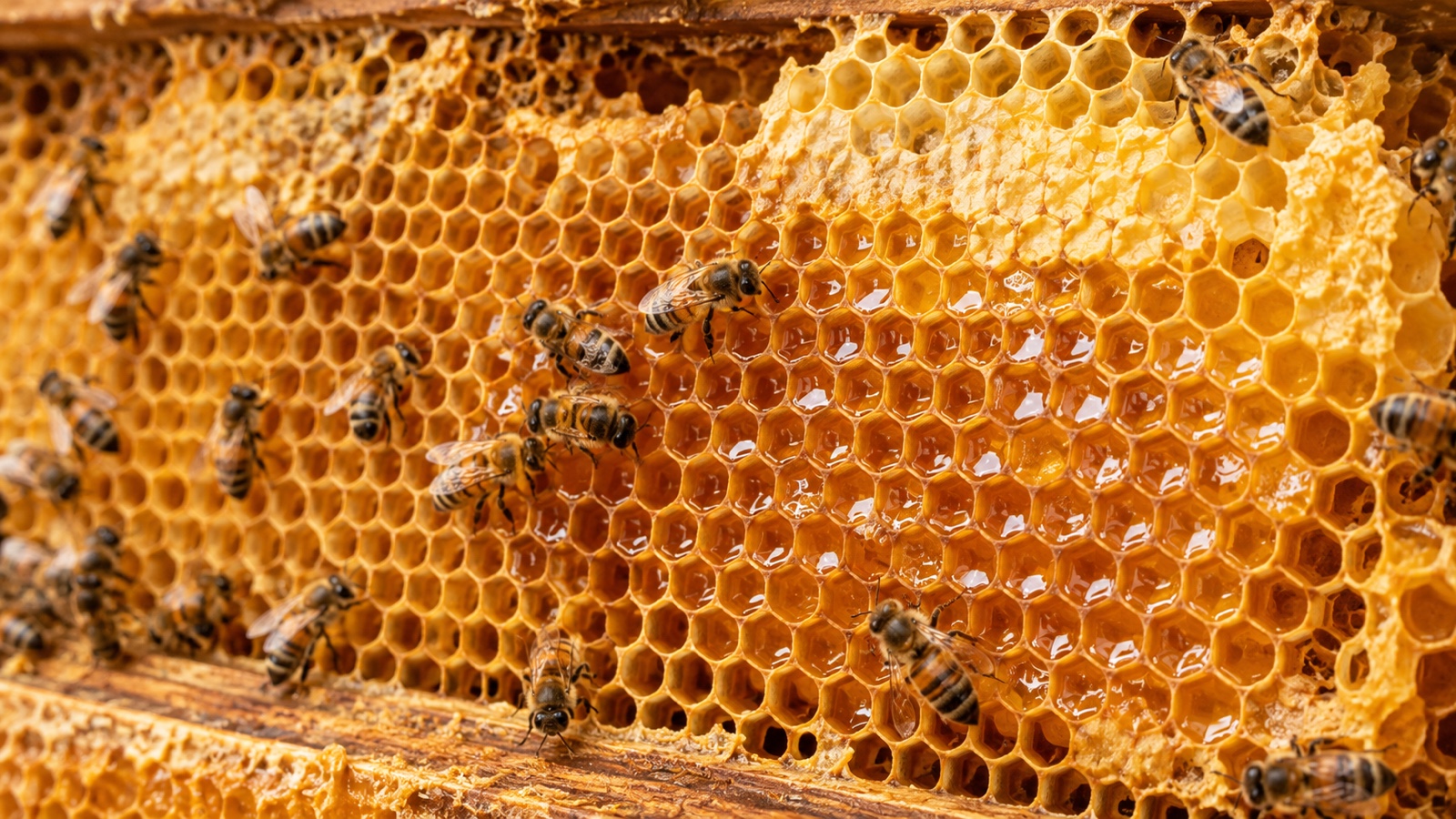
- Honeycomb cells are approximately hexagonal.
- Hexagons pack together without gaps.
- This geometry stores large volumes with relatively little wax.
- Comb cells hold honey and pollen.
- They also serve as brood chambers.
- Worker brood cells are smaller than drone brood cells.
- Bees build comb vertically.
- Comb orientation helps honey remain in cells.
- Bees regulate hive temperature to keep wax workable.
- Hot wax becomes softer and can deform.
- Beekeepers often provide foundation sheets to guide comb construction.
- Natural-comb beekeeping can let bees build without embossed foundation.
- Comb honey is sold with edible wax cells intact.
- Beeswax is digestible only to a limited degree but can be chewed and swallowed safely by most people.
- The honeycomb's famous geometry is less a design choice than a highly efficient answer to “how do we store thousands of tiny servings?”
Humans have valued honey for thousands of years
- Humans collected wild honey long before modern beekeeping.
- Rock art in Spain depicts honey gathering thousands of years ago.
- Ancient Egyptians kept bees.
- Honey was used as food and medicine in ancient cultures.
- It was also used in religious offerings.
- Honey served as a sweetener before refined sugar became widely available.
- Ancient Greeks and Romans valued honey.
- Mead is an alcoholic drink made by fermenting honey.
- Mead traditions developed in several parts of the world.
- Honey was historically used on wounds.
- Modern medical-grade honey is still used in selected wound-care settings.
- Medical-grade honey is sterilized and standardized.
- Kitchen honey should not automatically be substituted for medical products.
- Honey can soothe cough symptoms in some children over age one.
- It should never be used for an infant under one year.
- Honey appears in cuisines across Europe, Africa, Asia, the Middle East, and the Americas.
- It is used in breads, sauces, desserts, drinks, marinades, and glazes.
- Honey flavor survives best when not overheated.
- Different culinary traditions pair it with cheese, nuts, spices, or meats.
- Humans have been competing with bears for honey long enough that neither species can really claim it discovered the idea first.
Nutrition, storage and 25 final honey facts
- One tablespoon of honey contains about 60 calories.
- Most calories come from sugar.
- Honey is sweeter than table sugar by weight in many uses.
- Its water content makes volume comparisons different from dry sugar.
- Honey contains only small amounts of vitamins and minerals per serving.
- It should not be treated as a major micronutrient source.
- Honey raises blood glucose.
- People managing diabetes still need to count it as carbohydrate.
- Raw honey is honey that has not been heavily heated or filtered.
- Definitions of “raw” vary because the term is not perfectly standardized everywhere.
- Filtered honey can remain liquid longer because crystal-seeding particles are removed.
- Pasteurization can reduce yeast and delay crystallization.
- Honey should be stored tightly sealed.
- Room-temperature storage works well for most household honey.
- Refrigeration usually speeds crystallization.
- Water introduced into honey can encourage fermentation.
- Fermented honey can smell yeasty or alcoholic.
- Honey's aroma changes over time.
- Very old honey can remain safe if it stayed properly sealed and dry.
- Archaeological reports of ancient honey are famous, although “still edible” claims should be treated more cautiously than headlines suggest.
- Bees must visit enormous numbers of flowers to build colony stores.
- Honey production is inseparable from pollinator health.
- Honey bees are important agricultural pollinators but are not the only important bees.
- Native wild bees provide essential pollination too.
- After 145 facts, honey feels less like a sweetener and more like a preserved record of bee biology, flower chemistry, weather, landscape, geometry, and thousands of tiny foraging trips.
Quick FAQ
Q: Does honey expire?
A: Properly sealed honey can remain stable for an extremely long time, although flavor, color, and texture change.
Q: Is crystallized honey bad?
A: No. Crystallization is a normal physical change and can be reversed by gentle warming.
Q: Can babies eat honey?
A: No. Honey should not be given to infants under 12 months because of botulism-spore risk.
Q: Do bees make honey from pollen?
A: Honey is made mainly from nectar. Pollen is a separate protein-rich food bees collect.
Q: Why do different honeys taste different?
A: Floral source, geography, season, climate, and processing all influence honey's chemistry and aroma.

Ellie is the owner and sole author of Fun Facts, combining her mechanical engineering background with years of research-driven writing to deliver facts you can trust. Every article is thoroughly fact-checked and routinely updated as new science and sources emerge to keep information accurate and current. Her mission is to make learning delightful while upholding high standards of reliability and transparency.