
Austria is a landlocked country where Alpine peaks, imperial palaces, coffeehouses, classical composers, skiing, pastry, psychoanalysis, mountain railways, and modern democratic institutions overlap in a surprisingly compact space. Vienna once governed a vast multiethnic empire, Salzburg gave the world Mozart, and the Alps still shape everything from weather to tourism. These 145 Austria facts explore Vienna, the nine federal states, Habsburg history, the Austrian Empire, music, architecture, mountains, skiing, food, coffeehouses, science, neutrality, the European Union, and the complicated history behind one of central Europe’s most recognizable cultures.
Austria basics
- Austria is a landlocked country in central Europe.
- Its capital and largest city is Vienna.
- The official language is German.
- Austrian German has distinctive vocabulary and pronunciation.
- The currency is the euro.
- Austria is a federal republic.
- It is made up of nine federal states, called Bundesländer.
- Vienna is both a city and one of those nine states.
- Austria borders eight countries.
- They are Germany, Czechia, Slovakia, Hungary, Slovenia, Italy, Switzerland, and Liechtenstein.
- Austria joined the European Union in 1995.
- It is not a member of NATO.
- Permanent neutrality has been an important part of Austrian foreign policy since 1955.
- The Austrian Alps cover much of the country.
- The Austrian Parliament’s official federal-state guide confirms that Austria consists of nine autonomous federal provinces.
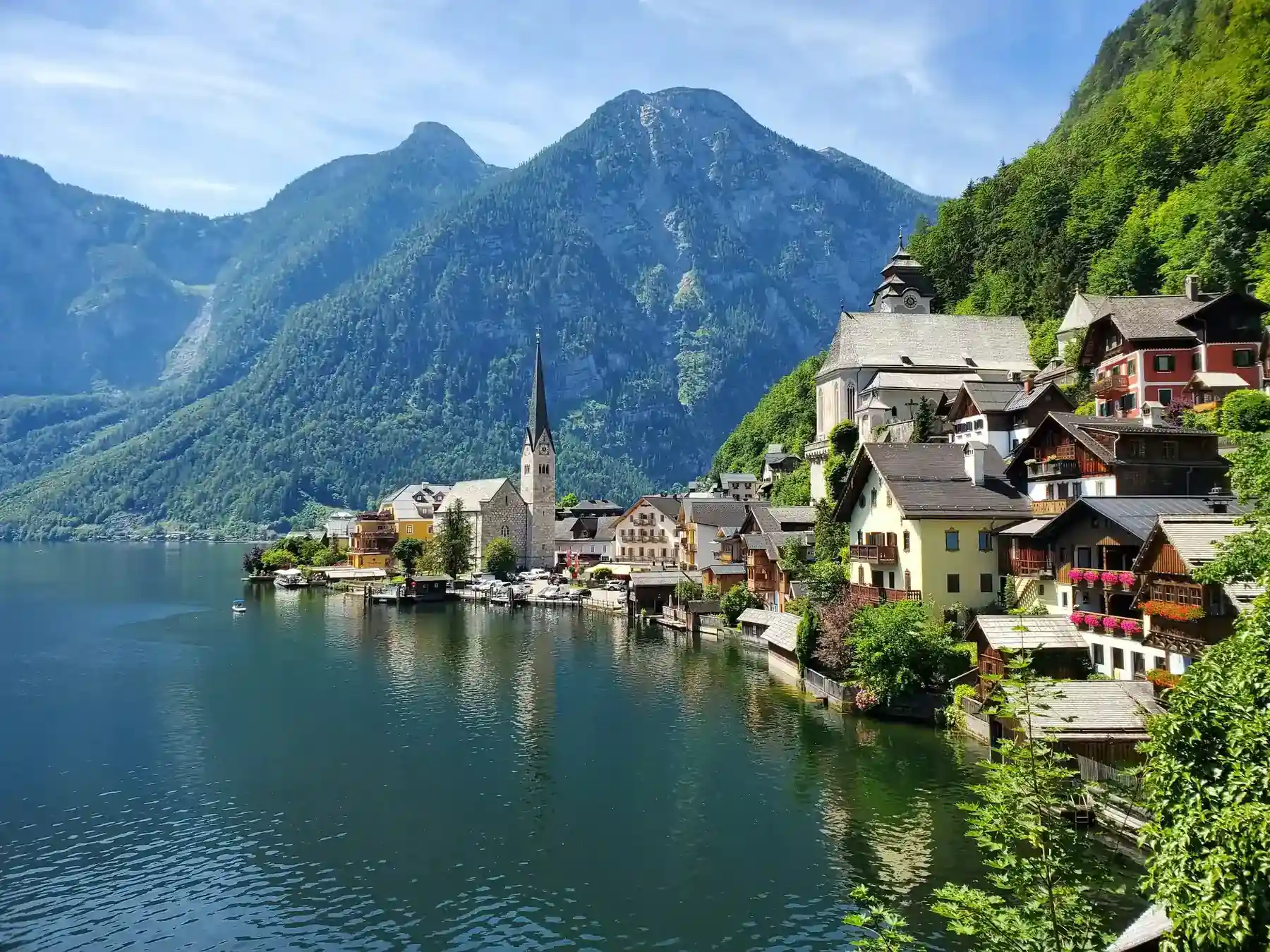
Nine states in one federal republic
- Austria’s nine states are Burgenland, Carinthia, Lower Austria, Upper Austria, Salzburg, Styria, Tyrol, Vorarlberg, and Vienna.
- Each state has its own parliament.
- Each also has a provincial government.
- Federal and state authorities divide legislative and executive responsibilities.
- Vienna is unusual because city and state government overlap.
- Lower Austria surrounds Vienna on several sides but has its own capital, St. Pölten.
- Burgenland is Austria’s easternmost state.
- Vorarlberg lies in the far west.
- Tyrol is divided geographically by Salzburg, with East Tyrol separated from the main part.
- Salzburg state surrounds the city of Salzburg.
- Styria contains Graz, Austria’s second-largest city.
- Carinthia lies along the borders with Italy and Slovenia.
- Federalism reflects Austria’s historical regions and geography.
- The Federal Council represents the states at the national level.
- The National Council is the more politically powerful chamber in most federal legislation.
The Alps dominate the landscape
- Roughly two-thirds of Austria is mountainous.
- The Eastern Alps cover much of western and central Austria.
- Grossglockner is Austria’s highest mountain.
- It rises to 3,798 meters.
- The Pasterze glacier lies near Grossglockner.
- It has retreated dramatically in modern times.
- Mountain passes have connected regions for centuries.
- The Brenner Pass is a major route between Austria and Italy.
- Modern tunnels carry road and rail traffic through the Alps.
- Valleys concentrate many towns and transportation routes.
- Alpine weather can change rapidly.
- Snowfall supports a huge winter-tourism industry.
- Avalanches are a major natural hazard.
- Austrian engineering includes extensive avalanche barriers, tunnels, and monitoring systems.
- The Alps are not merely scenery but a force shaping settlement, transport, agriculture, tourism, and national identity.
Vienna was an imperial capital
- Vienna stands on the Danube in eastern Austria.
- It became a major center of Habsburg power.
- The Hofburg served as the principal imperial palace complex.
- Schönbrunn Palace became a major summer residence.
- The Habsburg monarchy governed territories far beyond modern Austria.
- Vienna became one of Europe’s largest political and cultural capitals.
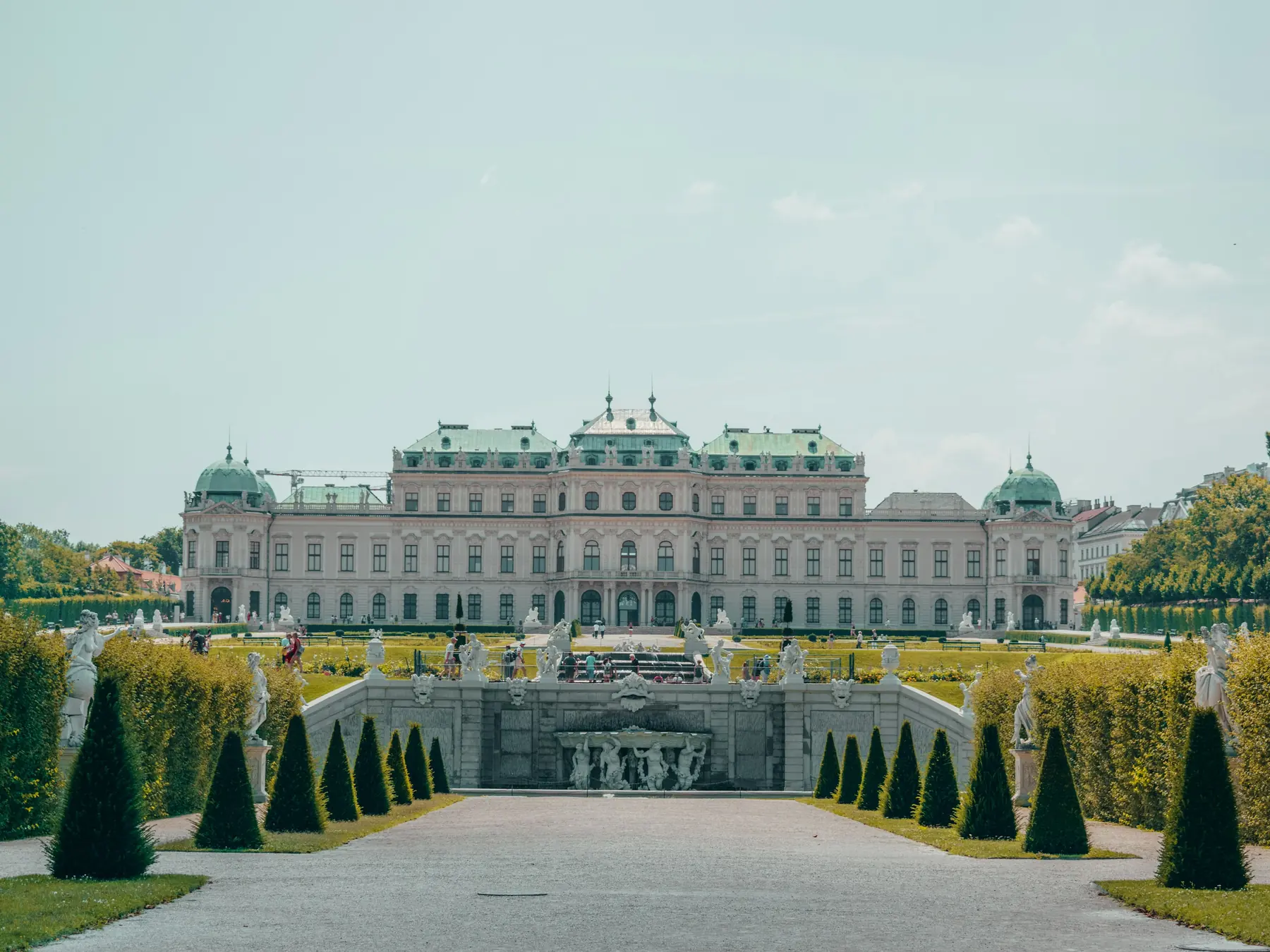
- The historic city center contains Roman, medieval, Baroque, imperial, and modern architecture.
- St Stephen’s Cathedral is a major Gothic landmark.
- The Ringstrasse replaced old city fortifications in the 19th century.
- Grand museums, theaters, government buildings, and palaces line the boulevard.
- The Vienna State Opera opened in 1869.
- The city’s population exceeded two million before World War I.
- The collapse of the empire sharply reduced the territory governed from Vienna.
- Modern Vienna remains unusually large relative to Austria’s total population.
- The city’s imperial scale makes more sense when remembered as the former capital of a multinational empire rather than only today’s republic.
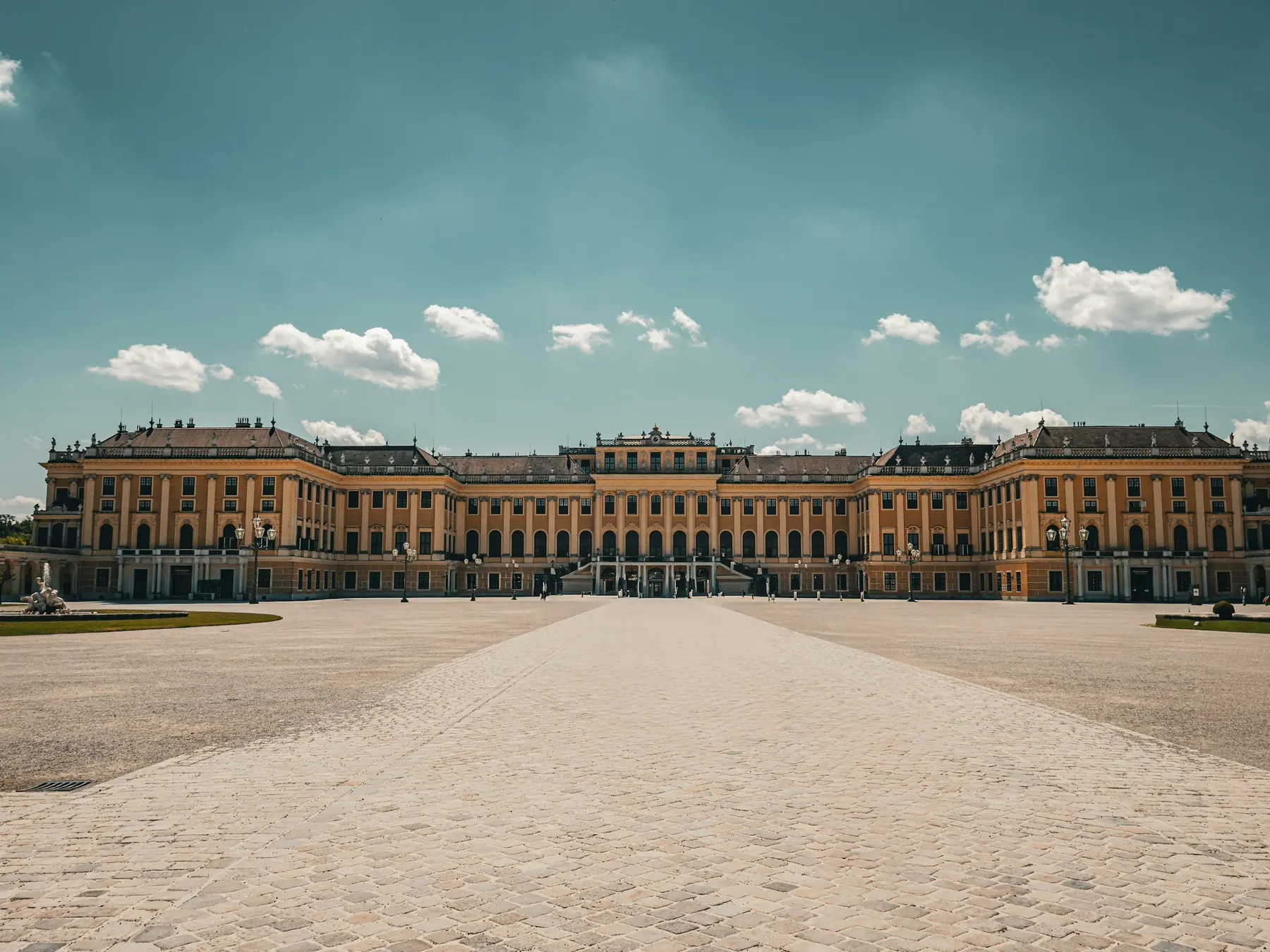
The Habsburgs ruled for centuries
- The House of Habsburg became one of Europe’s most powerful dynasties.
- Habsburg rulers acquired territory through marriage as well as war.
- A famous saying celebrated letting others wage wars while Austria married advantageously.
- Habsburgs repeatedly served as Holy Roman Emperors.
- Emperor Charles V ruled an enormous composite monarchy in the 16th century.
- His territories included Spain and overseas possessions as well as central European lands.
- Maria Theresa ruled the Habsburg monarchy from 1740 to 1780.
- She was never technically Holy Roman Emperor herself.
- Her husband Francis I held that imperial title.
- Maria Theresa carried out major administrative reforms.
- Her daughter Marie Antoinette became queen of France.
- Emperor Francis II dissolved the Holy Roman Empire in 1806.
- He had already proclaimed the Austrian Empire in 1804.
- The Habsburg monarchy became Austria-Hungary in 1867.
- The dynasty lost political power after World War I and the collapse of the empire in 1918.
Austria-Hungary was huge and diverse
- Austria-Hungary was created by the Austro-Hungarian Compromise of 1867.
- The monarchy had Austrian and Hungarian halves under one ruler.
- Emperor Franz Joseph was also King of Hungary.
- The empire contained many languages and ethnic groups.
- Germans, Hungarians, Czechs, Slovaks, Poles, Ukrainians, Croats, Serbs, Slovenes, Italians, Romanians, Jews, and others lived within its borders.
- Nationalist movements grew during the 19th and early 20th centuries.
- Archduke Franz Ferdinand was heir to the Austro-Hungarian throne.
- He was assassinated in Sarajevo on June 28, 1914.
- The assassination triggered the diplomatic crisis that led to World War I.
- Austria-Hungary declared war on Serbia.
- The wider alliance system expanded the conflict.
- The empire collapsed at the end of the war.
- New states emerged from its former territories.
- The new Republic of Austria was much smaller and predominantly German-speaking.
- Modern central European borders still reflect the breakup of the Habsburg world.
Mozart, Haydn, Beethoven, and Vienna
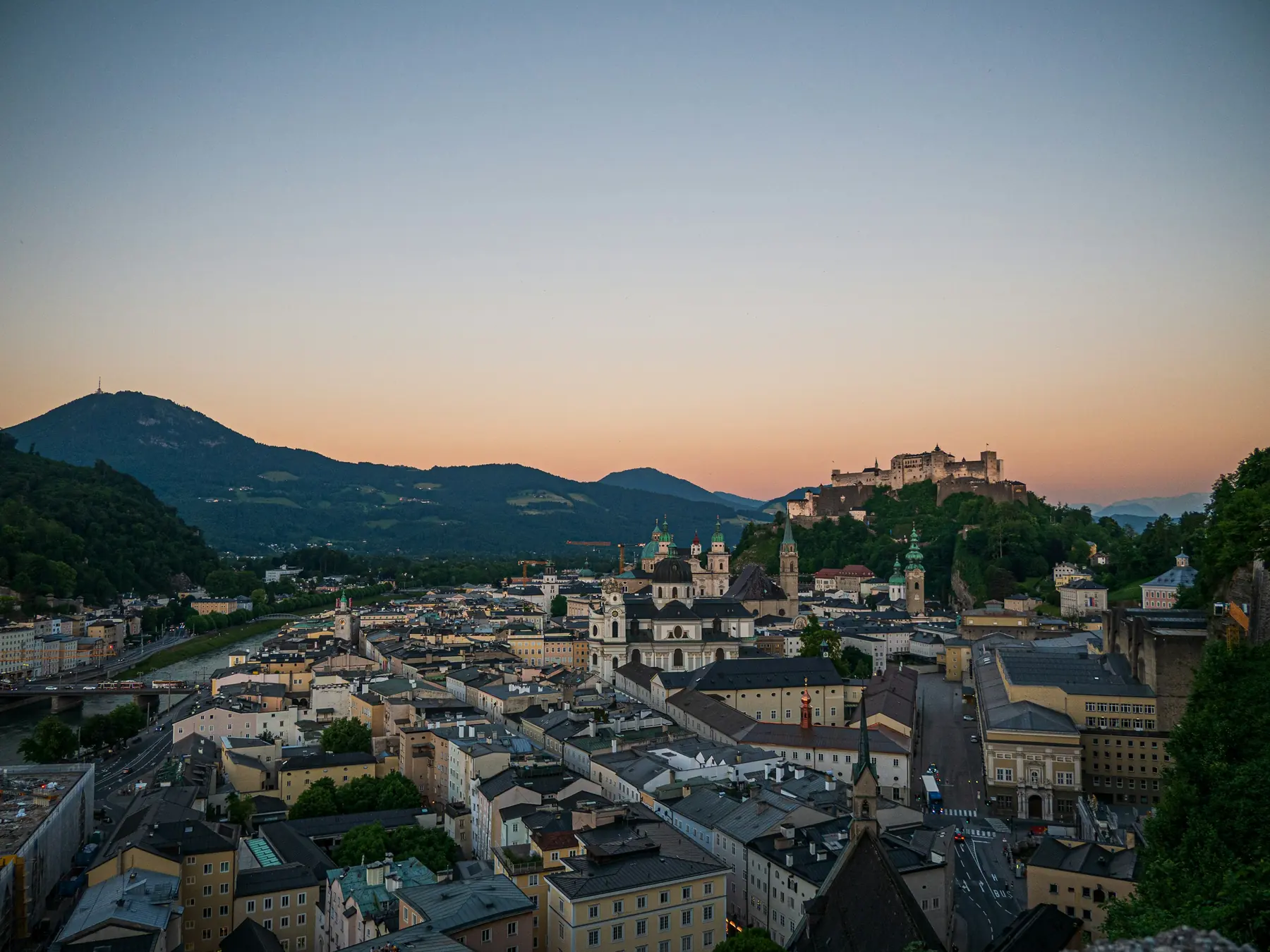
- Wolfgang Amadeus Mozart was born in Salzburg in 1756.
- He performed as a child prodigy across Europe.
- Mozart later settled in Vienna.
- Joseph Haydn was born in Lower Austria.
- He became one of the Classical era’s most influential composers.
- Ludwig van Beethoven was born in Bonn, not Austria.
- He moved to Vienna as a young man.
- Franz Schubert was born in Vienna.
- Johann Strauss II became famous for Viennese waltzes.
- His “Blue Danube” became one of Austria’s most recognizable pieces of music.
- Gustav Mahler directed the Vienna Court Opera.
- Arnold Schoenberg developed influential new compositional methods in Vienna.
- The city attracted musicians because imperial patronage, theaters, publishing, and wealthy audiences supported music.
- The Vienna Philharmonic remains one of the world’s best-known orchestras.
- Calling Vienna the city of music is marketing language, but its concentration of major composers is historically extraordinary.
Austria after World War II
- Nazi Germany annexed Austria in March 1938.
- The annexation is commonly called the Anschluss.
- Many Austrians welcomed Hitler’s takeover.
- Others resisted or became victims of Nazi persecution.
- Austrian Jews were dispossessed, deported, and murdered during the Holocaust.
- Austria was occupied by Allied powers after World War II.
- Vienna was divided into occupation sectors.
- The Austrian State Treaty was signed in 1955.
- Allied occupation ended that year.
- Austria declared permanent neutrality.
- The neutrality law became a defining part of postwar identity.
- Austria joined the United Nations in 1955.
- Vienna later became a major UN center.
- Austria joined the European Union in 1995.
- The country’s postwar narrative evolved from portraying Austria mainly as Hitler’s first victim toward a fuller reckoning with Austrian participation in Nazism.
Coffeehouses, cakes, and Austrian food
- Viennese coffeehouse culture became an important urban institution.
- Coffeehouses served as places to read, write, debate, meet, and linger.
- Writers and intellectuals used them as informal offices.
- Viennese coffeehouse culture is recognized by UNESCO on Austria’s national inventory of intangible cultural heritage.
- Sachertorte is a chocolate cake associated with Vienna.
- Franz Sacher created the original version in the 1830s.
- Apfelstrudel is a famous Austrian pastry.
- Its thin dough reflects broader central European and Ottoman culinary connections.
- Wiener schnitzel traditionally uses veal.
- Pork schnitzel is common but is not technically the same protected-style dish in Austrian culinary terminology.
- Kaiserschmarrn is a torn sweet pancake dish.
- Knödel are dumplings served in savory and sweet forms.
- Salzburg is famous for Salzburger Nockerl, a soufflé-like dessert.
- Pumpkin seed oil is strongly associated with Styria.
- Austrian cuisine blends Alpine, Bohemian, Hungarian, Italian, Balkan, and former imperial influences.
Ten surprising Austria facts
- Austria has nine federal states, and Vienna is one of them.
- The country borders eight other nations.
- Beethoven was not Austrian by birth even though Vienna became central to his career.
- Maria Theresa ruled the Habsburg monarchy but was not herself Holy Roman Emperor.
- Austria-Hungary contained far more languages and peoples than modern Austria.
- Austria was annexed by Nazi Germany in 1938 and regained sovereignty after Allied occupation in 1955.
- Permanent neutrality became a major postwar principle.
- Vienna hosts one of the United Nations’ principal international centers.
- The Alps shape most of Austria’s geography and transportation.
- For more central-European trivia, explore our Germany facts, Switzerland facts, and Culture facts.
Quick Austria FAQ
What is the capital of Austria?
Vienna, which is also one of Austria’s nine federal states.
Is Austria in the European Union?
Yes. Austria joined the EU in 1995 and uses the euro.
Is Austria in NATO?
No. Austria maintains a constitutional policy of permanent neutrality and is not a NATO member.
What is Austria’s highest mountain?
Grossglockner, at 3,798 meters.
Was Mozart Austrian?
He was born in Salzburg in 1756 when it was an independent ecclesiastical principality within the Holy Roman Empire, not yet part of modern Austria, but he is deeply associated with Austrian cultural history and spent his final decade in Vienna.

Ellie is the owner and sole author of Fun Facts, combining her mechanical engineering background with years of research-driven writing to deliver facts you can trust. Every article is thoroughly fact-checked and routinely updated as new science and sources emerge to keep information accurate and current. Her mission is to make learning delightful while upholding high standards of reliability and transparency.