
Teeth look simple from the outside, but every bite depends on enamel, dentin, nerves, roots, ligaments, saliva, jaw muscles, and living bone. They cut, crush, guide speech, support the face, record childhood stress, and carry a surprising amount of biological history in a space smaller than your hand.
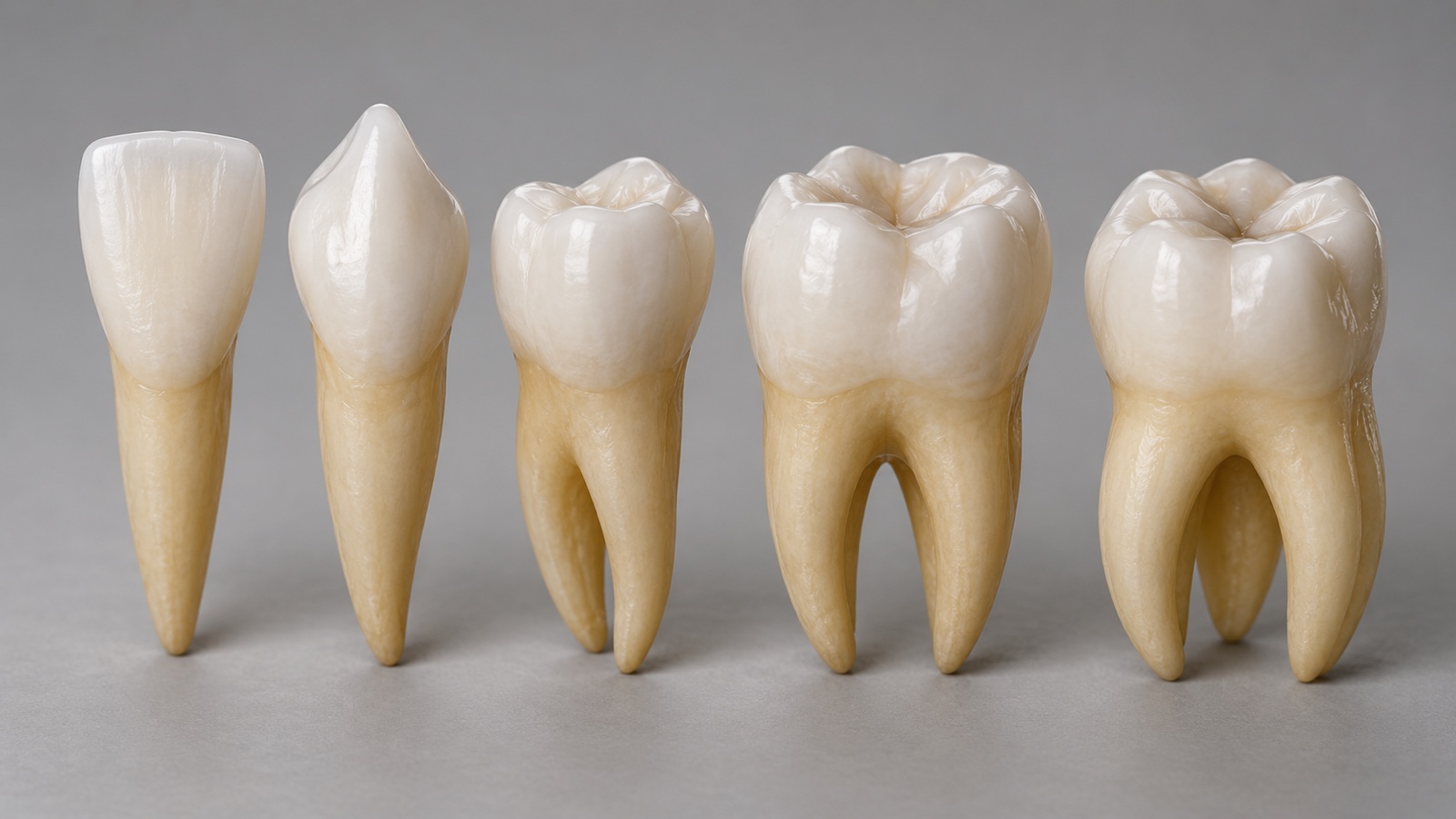
Human teeth come in several specialized shapes
- Most adults have 32 permanent teeth when all four wisdom teeth are present.
- Many healthy adults have fewer because wisdom teeth may never develop or may be removed.
- Children normally develop 20 primary teeth.
- Primary teeth are also called deciduous teeth or baby teeth.
- Incisors are the flat-edged teeth at the front of the mouth.
- Incisors are adapted for cutting and biting into food.
- Canine teeth have pointed crowns suited to gripping and tearing.
- Premolars have broader chewing surfaces than canines.
- Molars have large crowns built for crushing and grinding.
- Humans normally have eight incisors in the permanent dentition.
- Humans normally have four permanent canines.
- Humans normally have eight permanent premolars.
- Humans normally have up to 12 permanent molars including wisdom teeth.
- Primary teeth do not include premolars.
- Each tooth has a crown visible above the gum and one or more roots below it.
- Front teeth usually have fewer roots than large back teeth.
- Upper first molars commonly have three roots.
- Lower molars commonly have two roots.
- Root number and anatomy vary from person to person.
- Your mouth is basically a compact toolkit where each tooth shape has a different mechanical job rather than 32 copies of the same little white block.
Enamel is incredibly hard but cannot heal like bone
- Enamel covers the outer crown of each tooth.
- It is the hardest tissue in the human body.
- Enamel is made mostly of mineral crystals called hydroxyapatite.
- Highly mineralized enamel contains very little organic material compared with bone.
- Mature enamel contains no living cells.
- Because enamel lacks living cells, it cannot regenerate a lost chunk the way bone can repair a fracture.
- Early mineral loss can sometimes be reversed through remineralization before a true cavity forms.
- Fluoride can make tooth mineral more resistant to acid dissolution.
- Saliva supplies calcium and phosphate that support remineralization.
- Acids produced by plaque bacteria can dissolve enamel minerals.
- Acidic foods and drinks can also directly erode enamel.
- Repeated acid exposure matters more than one brief acidic meal.
- Enamel is thickest over the chewing surfaces and cusps of many teeth.
- It becomes thinner near the gumline.
- Enamel is translucent rather than perfectly opaque white.
- The color of underlying dentin strongly influences tooth color.
- Enamel can develop microscopic cracks without the tooth immediately breaking apart.
- Grinding and clenching can contribute to enamel wear.
- Once enamel is substantially lost, dental treatment may be needed to restore structure.
- The body's hardest tissue is also strangely unforgiving: it survives decades of chewing but has no resident repair crew once a piece is truly gone.
Dentin and pulp make teeth living sensory organs
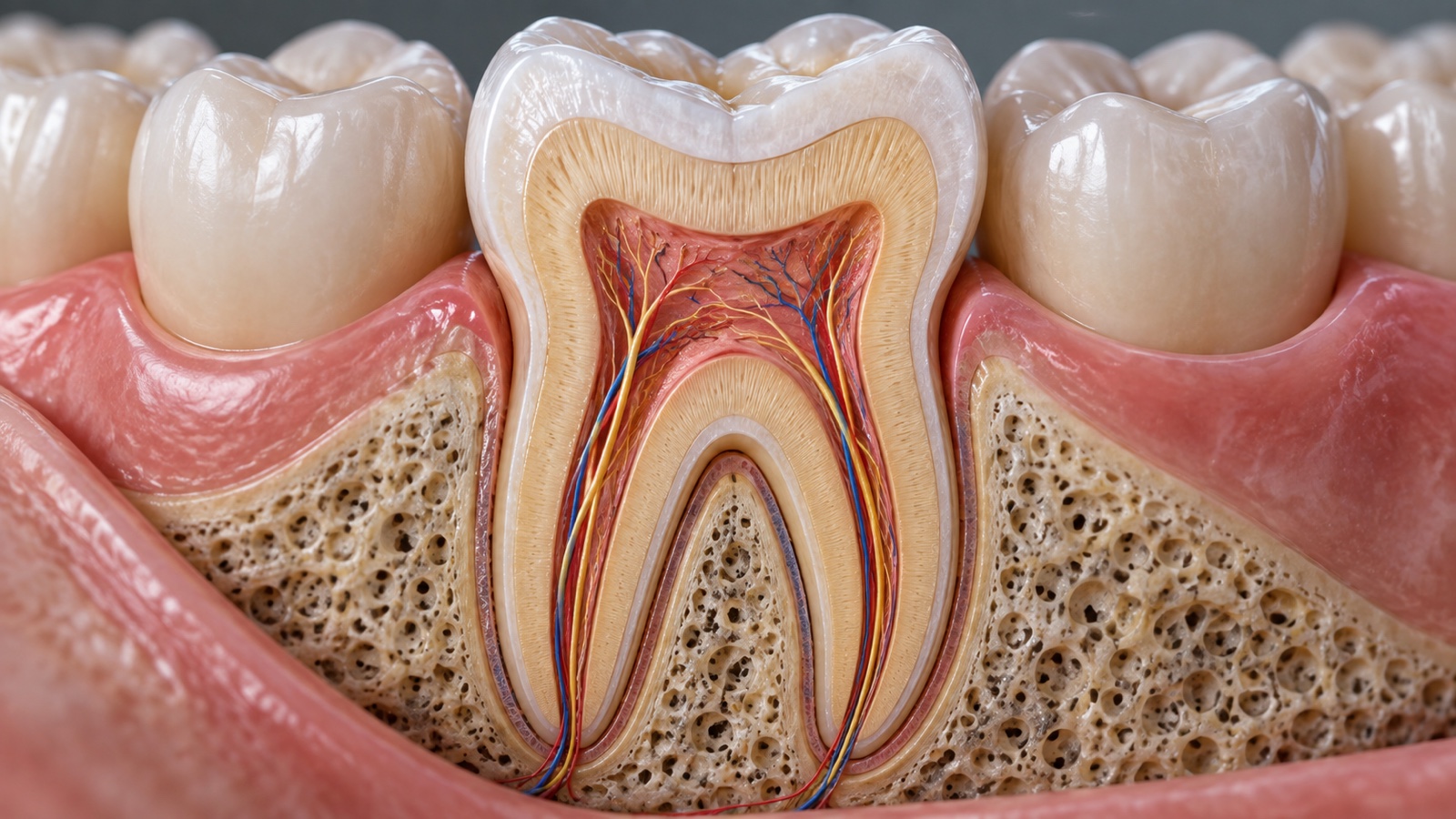
- Dentin lies beneath enamel and cementum.
- Dentin is less mineralized and softer than enamel.
- Microscopic tubules run through dentin.
- These dentinal tubules help explain why exposed dentin can feel sensitive.
- The pulp chamber sits in the center of the crown.
- Root canals continue the pulp space down through the roots.
- Dental pulp contains nerves, blood vessels, connective tissue, and specialized cells.
- Odontoblasts line the pulp and produce dentin.
- Teeth can form additional dentin throughout life.
- Secondary dentin slowly narrows the pulp space as people age.
- Reparative dentin can form in response to irritation or injury.
- The tooth nerve detects pain rather than providing fine touch sensation like fingertip skin.
- Cold sensitivity can occur when dentin is exposed by wear or gum recession.
- Inflamed pulp can become intensely painful because it is trapped within rigid tooth walls.
- Pulp inflammation is called pulpitis.
- A root-canal procedure removes infected or irreversibly inflamed pulp tissue from inside the tooth.
- A tooth can remain functional after root-canal treatment because surrounding tissues still anchor and support it.
- Root-canal treatment does not make a tooth literally hollow from crown to root.
- The cleaned internal space is shaped, disinfected, and filled with dental material.
- Teeth are not dead rocks in the jaw. Beneath the enamel, they contain a living vascular and nervous core that can respond dramatically when something goes wrong.
Teeth are suspended in the jaw by tiny ligaments
- Tooth roots are coated by a mineralized tissue called cementum.
- Cementum is softer than enamel.
- The periodontal ligament connects tooth roots to surrounding alveolar bone.
- This ligament contains bundles of collagen fibers.
- The periodontal ligament acts as a shock absorber during chewing.
- Teeth are therefore not fused rigidly to the jawbone.
- Healthy teeth can move microscopically under biting pressure.
- Pressure sensors in periodontal tissues help regulate bite force.
- The alveolar bone forms the sockets that hold tooth roots.
- Bone remodels in response to sustained pressure.
- Orthodontic braces and aligners use controlled forces to move teeth through bone.
- Bone is resorbed on one side of a moving tooth and formed on the other.
- Moving teeth too quickly can damage roots or supporting tissues.
- Gums are also called gingiva.
- Healthy gingiva forms a protective seal around teeth.
- Plaque accumulating near the gumline can trigger gingivitis.
- Gingivitis is inflammation of the gums without irreversible supporting-bone loss.
- Untreated periodontal disease can damage ligaments and bone around teeth.
- Advanced periodontal disease can loosen teeth even when the crowns themselves have no large cavities.
- The reason braces can move teeth at all is that every tooth sits in living, continuously remodeling tissue rather than being cemented into the skull like a bathroom tile.
Baby teeth guide permanent teeth and do important work
- Primary teeth begin developing before birth.
- Most babies are born without visible erupted teeth.
- The first primary tooth often appears around 6 months, but normal timing varies widely.
- Lower central incisors are commonly among the first teeth to erupt.
- Most children have all 20 primary teeth by around age 3.
- Primary teeth support chewing during early childhood.
- They help children learn clear speech sounds.
- They preserve space for developing permanent teeth.
- Roots of primary teeth gradually resorb as permanent successors approach.
- This root resorption allows baby teeth to loosen and fall out.
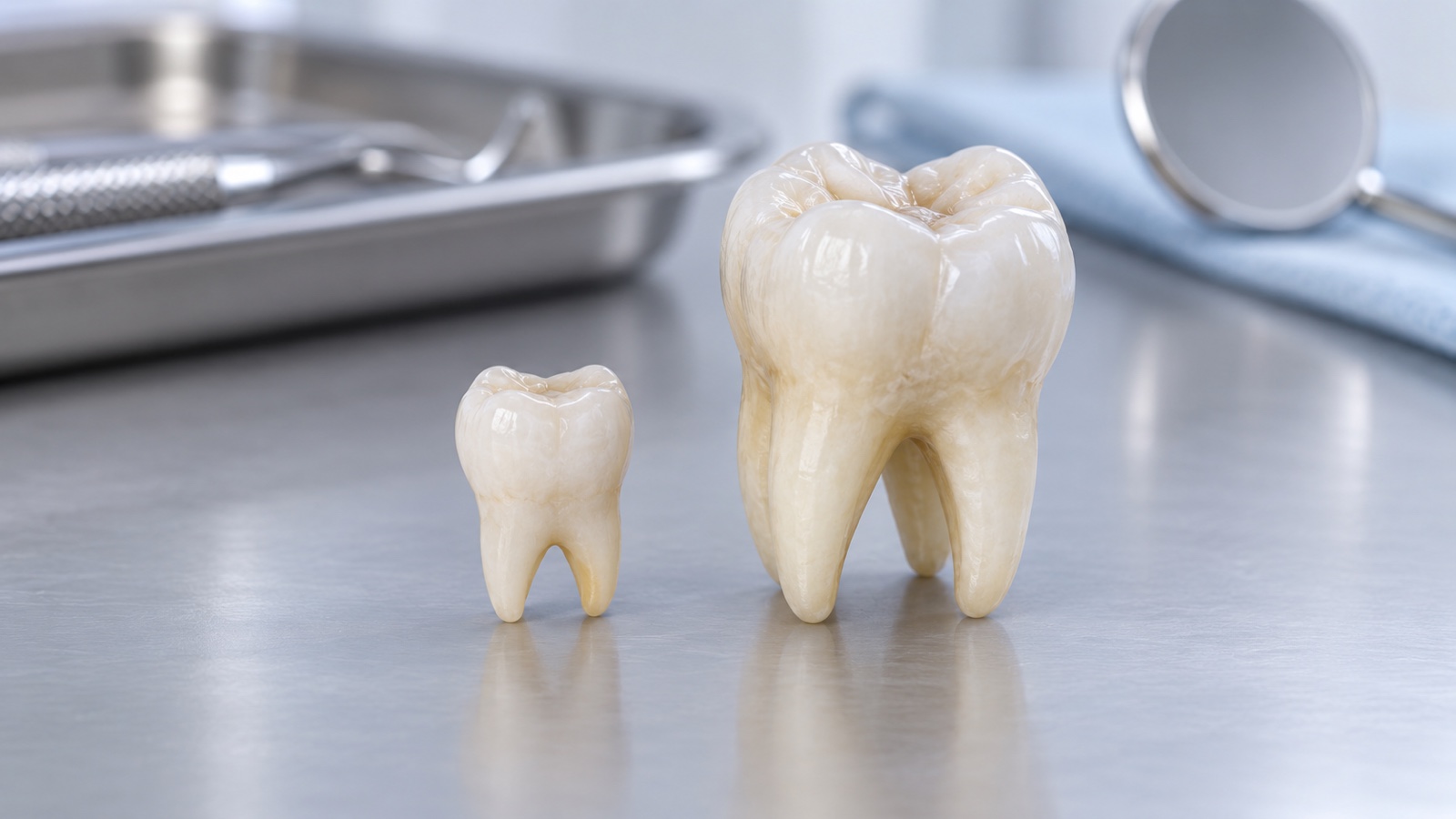
- Permanent first molars often erupt around age 6 behind the primary teeth.
- These first permanent molars do not replace baby teeth.
- Because they appear quietly at the back, parents sometimes mistake permanent first molars for temporary teeth.
- Permanent incisors usually replace primary incisors during early school years.
- Premolars replace primary molars.
- Second permanent molars commonly erupt around early adolescence.
- Wisdom teeth are third molars.
- Wisdom teeth may erupt in the late teens or twenties, remain impacted, or never develop.
- Losing a baby tooth early from decay can affect spacing for permanent teeth.
- Baby teeth are temporary only in the sense that they eventually leave. For several crucial years they are doing real chewing, speech, spacing, and developmental work.
Plaque is a living biofilm, not just leftover food
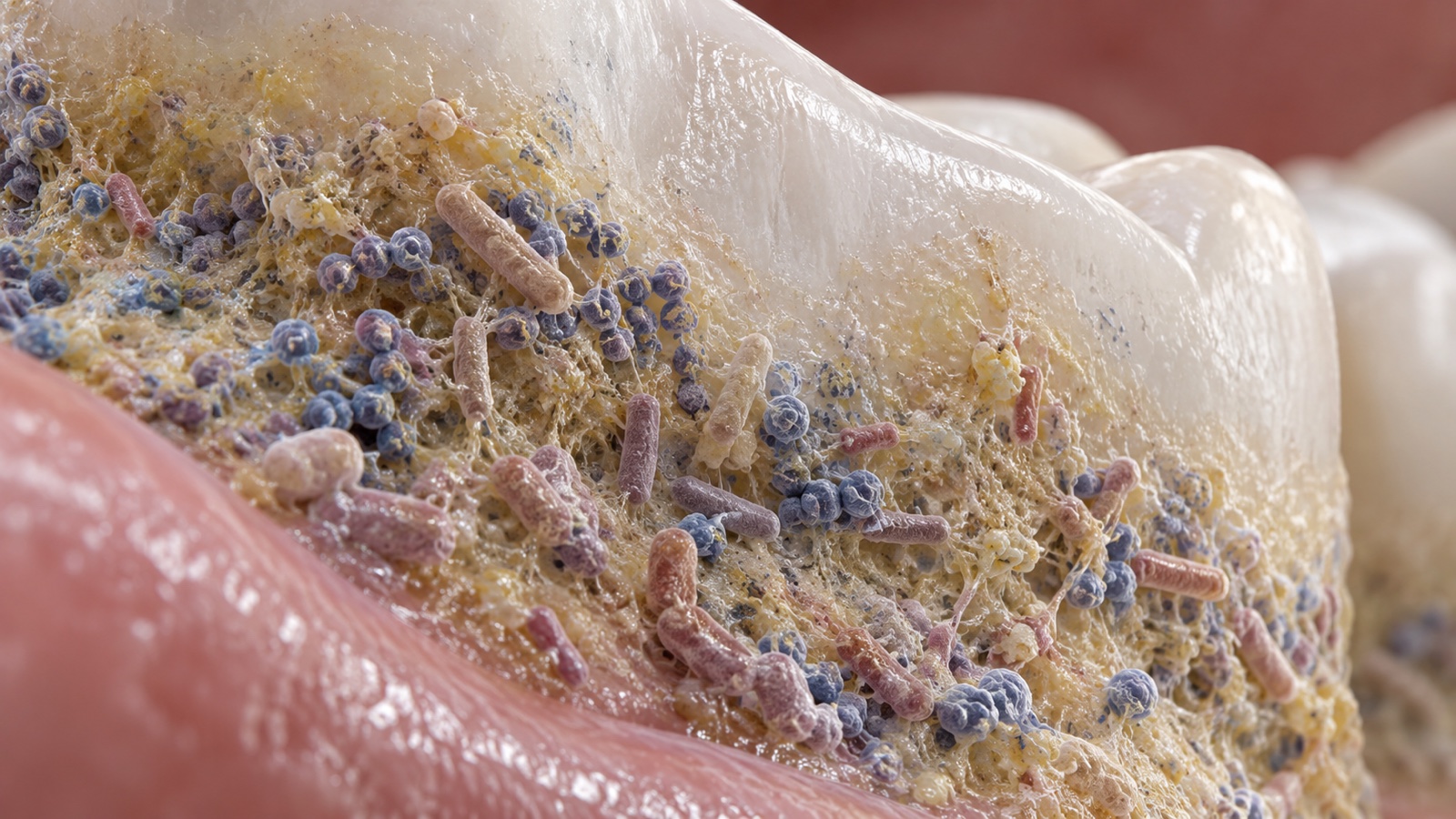
- Dental plaque is a structured microbial biofilm that sticks to teeth.
- Plaque contains bacteria embedded in a self-produced matrix.
- It begins reforming after cleaning rather than waiting days to appear.
- Food debris can become trapped in plaque, but plaque itself is not simply food stuck to teeth.
- Some plaque bacteria ferment dietary sugars.
- This fermentation produces acids that lower pH near the enamel surface.
- Repeated low-pH periods can shift the balance toward mineral loss and cavities.
- Frequent sugar exposure can be especially harmful because it creates repeated acid attacks.
- Total diet matters, but frequency of fermentable carbohydrate exposure matters too.
- Saliva helps neutralize acids after eating.
- Saliva also physically washes the mouth and supplies minerals.
- Reduced saliva flow sharply increases cavity risk.
- Many medications can cause dry mouth.
- Tartar is hardened mineralized plaque.
- Tartar is also called calculus.
- Once plaque mineralizes into calculus, normal brushing cannot remove it completely.
- Dental professionals use instruments to remove calculus.
- Flossing or interdental cleaning targets plaque between teeth where toothbrush bristles may miss.
- Brushing twice daily with fluoride toothpaste is a widely recommended foundation of cavity prevention.
- Plaque behaves more like a tiny organized city of microbes than a dusty coating, which is why simply rinsing with water does not make the residents pack up and leave.
Teeth record diet, age, development and even ancient history
- Teeth are among the hardest and most durable parts of the human skeleton.
- They often survive long after softer tissues decompose.
- Forensic specialists can use dental records to help identify unknown remains.
- Patterns of fillings, crowns, missing teeth, and anatomy can be individually distinctive.
- Tooth development can help estimate age in children and adolescents.
- Wear patterns can provide clues about diet and behavior.
- Microscopic growth lines form in developing enamel and dentin.
- Some developmental stresses can leave lasting marks in tooth structure.
- Enamel defects can preserve evidence of childhood illness or nutritional stress.
- Stable isotopes in teeth can provide clues about ancient diet or geographic movement.
- Tooth calculus can trap microscopic food particles and microbial DNA.
- Researchers have recovered ancient dietary and microbial evidence from dental calculus.
- Teeth can preserve DNA inside protected internal tissues.
- Animal teeth help paleontologists reconstruct extinct diets.
- Tooth shape is one of the major clues used to infer how extinct mammals ate.
- Human canine teeth are much smaller than those of many primates.
- Human molars reflect an omnivorous history rather than specialization for only meat or only leaves.
- Teeth do not keep growing continuously in humans the way rodent incisors do.
- Human adult teeth must therefore last decades without natural replacement once lost.
- A tooth can preserve a childhood event, a dietary signal, a bacterial community, and identifying dental work long after the person has forgotten most of the meals it helped chew.
Brushing, chewing and 5 final tooth facts
- Chewing begins digestion mechanically by breaking food into smaller pieces and mixing it with saliva.
- Human bite force is greatest at the back molars because jaw-muscle leverage is strongest there.
- Brushing immediately after a strongly acidic exposure can increase wear on temporarily softened enamel, so allowing saliva time to neutralize acids can be sensible.
- Teeth naturally vary in shade, shape, alignment, and translucency, and healthy teeth are not required to be paper white.
- After 145 facts, teeth look less like white pegs and more like mineralized sensory organs suspended in living bone, shaped by development, microbes, diet, mechanics, evolution, and decades of daily use.
Quick FAQ
Q: Is enamel the hardest substance in the body?
A: Yes. Tooth enamel is the body's hardest tissue, although it can still dissolve in acid and crack under excessive force.
Q: Are teeth bones?
A: No. Teeth and bones share some minerals, but teeth contain enamel, dentin, cementum, and pulp and do not remodel like bone.
Q: Why are my teeth naturally off-white?
A: Enamel is translucent, and the yellowish dentin beneath it contributes strongly to natural tooth color.
Q: Is plaque just food stuck to teeth?
A: No. Plaque is a living microbial biofilm. Food can become trapped in it, but bacteria and their matrix make up the biofilm itself.
Q: Why do wisdom teeth cause problems?
A: Some jaws do not have enough space for third molars to erupt normally, so they can remain impacted or emerge at difficult angles.

Ellie is the owner and sole author of Fun Facts, combining her mechanical engineering background with years of research-driven writing to deliver facts you can trust. Every article is thoroughly fact-checked and routinely updated as new science and sources emerge to keep information accurate and current. Her mission is to make learning delightful while upholding high standards of reliability and transparency.