
Alpacas have mastered the unfair combination of teddy-bear faces and genuinely useful biology. They grow luxurious fleece, hum to one another, use communal bathrooms, have padded feet, thrive at high altitude, produce babies called crias, and can spit with enough accuracy to ruin the mood of anyone standing too close to an argument.
Alpacas are small domesticated South American camelids
- The alpaca's scientific name is Vicugna pacos.
- Alpacas belong to the camel family Camelidae.
- Llamas, guanacos, vicuñas, and Old World camels are their relatives.
- Alpacas were domesticated thousands of years ago in the Andes.
- Genetic evidence links alpacas mainly with the wild vicuña.
- Historical hybridization with llamas makes their ancestry more complicated than one perfectly separate line.
- Alpacas are smaller than llamas.
- Adults commonly weigh around 100 to 200 pounds.
- They usually stand about 3 feet tall at the shoulder.
- The head sits much higher because of the long neck.
- Alpaca ears are relatively short and spear shaped.
- Llama ears tend to be longer and curved.
- Alpaca faces are generally shorter and more heavily fleeced than llama faces.
- Alpacas were bred primarily for fiber rather than heavy pack work.
- They are not well suited to carrying the same loads as adult llamas.
- Alpacas do not have humps.
- They have two toes on each foot.
- Each toe has a hard nail and a broad padded underside.
- Alpacas are naturally social herd animals.
- One alpaca alone is less “minimalist farm setup” and more “lonely camelid with questions.”
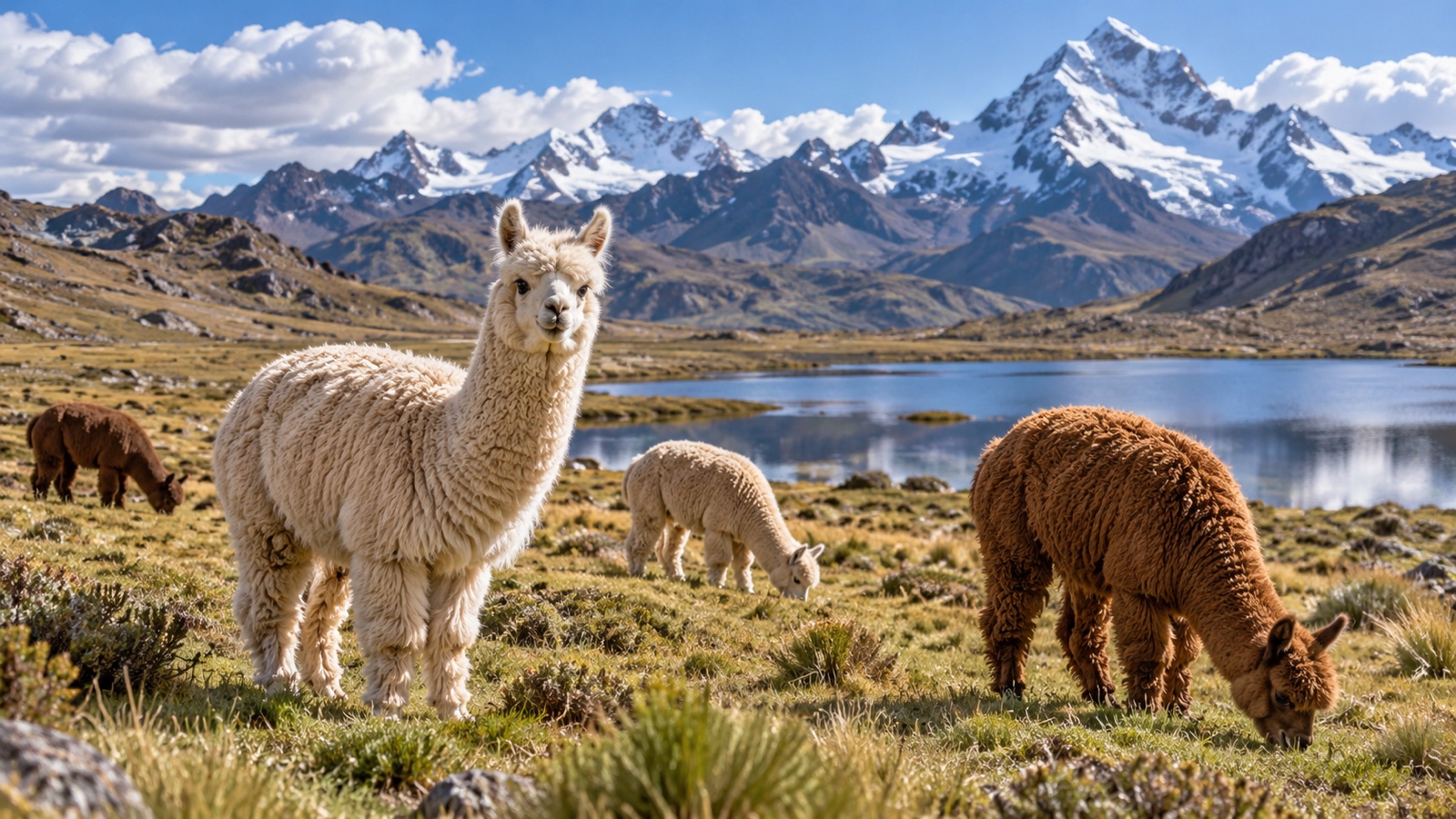
Their fleece can be remarkably fine
- Alpacas are famous for soft insulating fiber.
- The fiber is commonly called alpaca fleece.
- It grows continuously and usually requires annual shearing.
- Fine alpaca fiber can feel softer than many ordinary sheep wools.
- Fiber quality varies by animal, age, body location, nutrition, and genetics.
- The finest fiber is often collected from the blanket area along the back and sides.
- Coarser fiber grows on the legs, belly, chest, and other areas.
- Alpaca fiber contains little lanolin compared with sheep wool.
- Low lanolin content can make washing and processing different from sheep fleece.
- Alpaca fiber can still irritate people who are sensitive to dust, dyes, or other textile factors.
- It is not automatically allergy-proof.
- Fiber diameter is measured in microns.
- Lower micron measurements generally indicate finer fiber.
- Baby alpaca is a fiber-grade term and does not always mean the fleece literally came from a baby.
- Alpaca fiber is naturally warm because its structure traps insulating air.
- It can be spun into yarn.
- Alpaca is used for sweaters, socks, scarves, blankets, hats, and woven textiles.
- Natural fiber colors range from white through fawn, brown, gray, and black.
- Breeders recognize many distinct natural color classifications.
- Alpacas are basically renewable sweater factories that also expect breakfast.
Huacaya and suri alpacas grow very different coats
- Domestic alpacas occur in two main fiber types.
- Huacaya alpacas are the more common type.
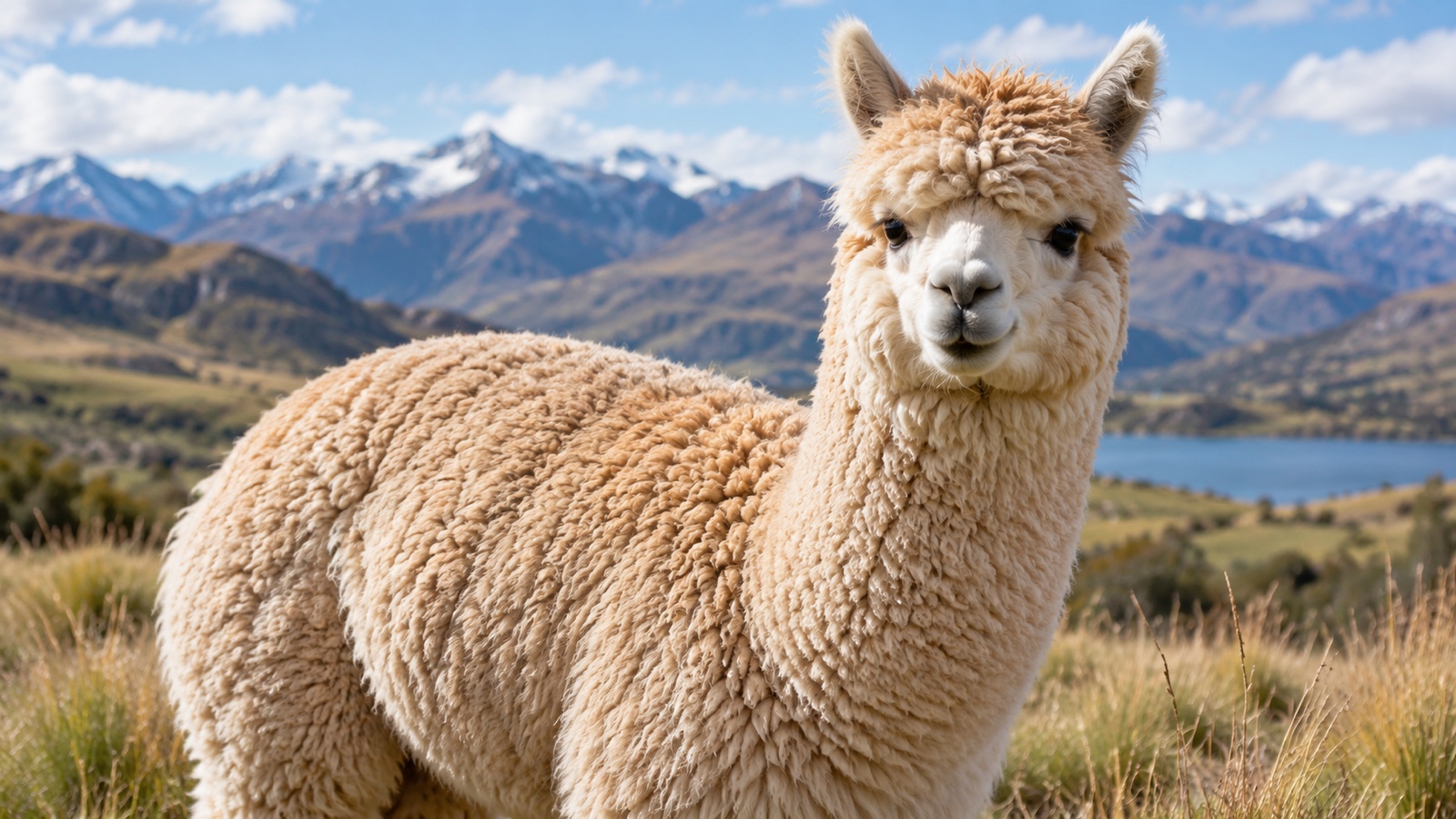
- Huacaya fleece grows with a fluffy crimped appearance.
- The fiber stands outward from the body.
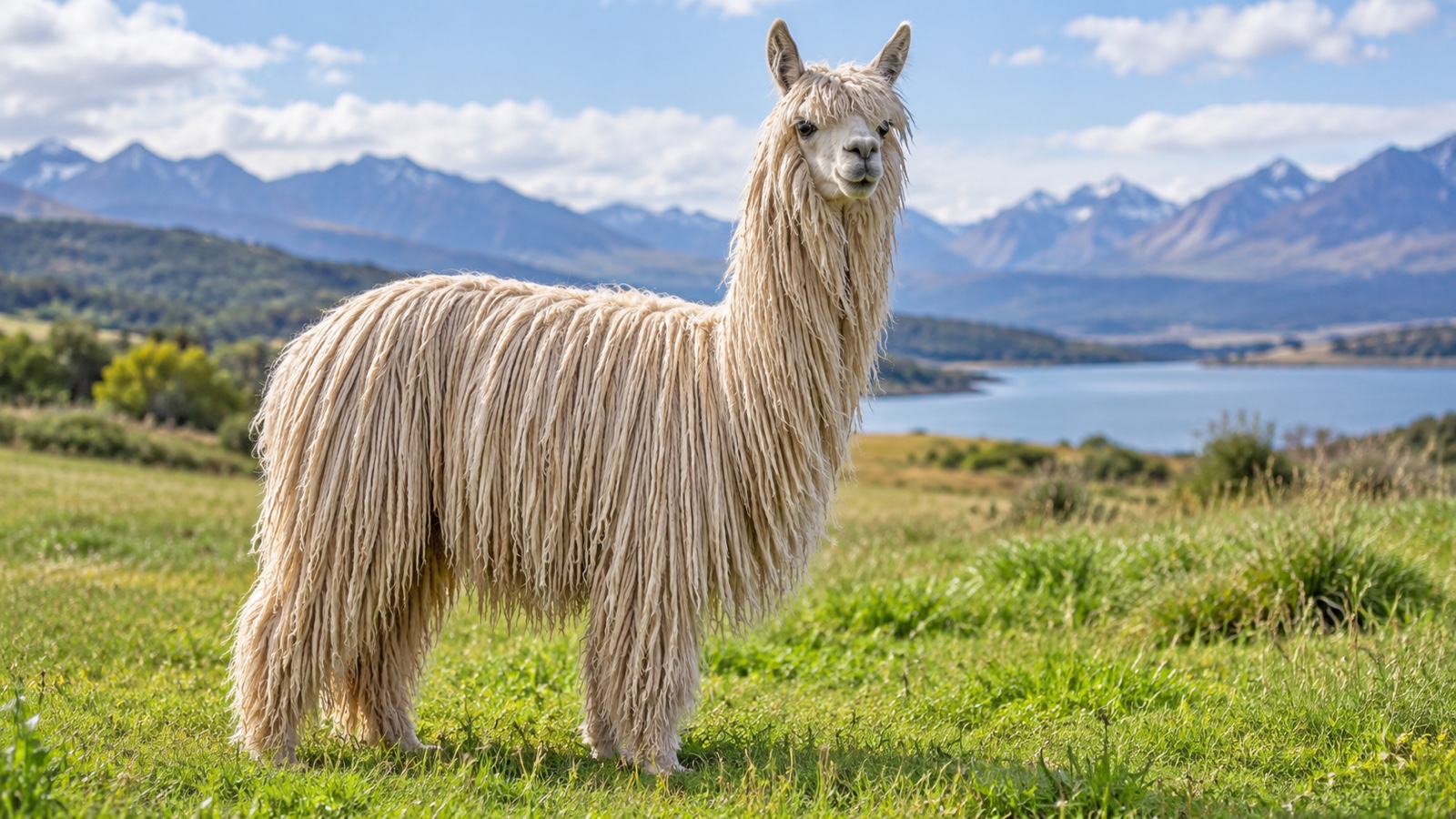
- Suri alpacas have longer fiber that hangs in silky locks.
- Suri fleece often forms rope-like or pencil-like twists.
- Suri alpacas make up a smaller share of the global alpaca population.
- The two types are the same domestic species.
- Fiber structure is strongly influenced by genetics.
- Nutrition and health also affect fleece quality.
- Stress or illness can create weak places in fiber.
- Older alpacas often produce coarser fiber than they did when young.
- Shearing helps prevent overheating in warm weather.
- Timing matters in climates with cold spring nights.
- Newly shorn alpacas can become chilled by cold rain and wind.
- Responsible owners provide shelter after shearing when weather requires it.
- Shearing also allows skin and body condition to be inspected more closely.
- Toenails and teeth may be checked during handling sessions.
- Experienced shearers restrain alpacas in ways designed to minimize injury and stress.
- A suri and huacaya standing together look like the same animal chose two completely different hair stylists.
Alpacas communicate with hums, ears, tails and body posture
Alpacas are quiet compared with many livestock species, but quiet does not mean expressionless. A herd constantly trades information through humming, ear position, tail posture, neck angle, scent, movement, and the occasional very clear message involving spit.
- Humming is one of the best-known alpaca sounds.
- Alpacas hum when curious, concerned, separated, content, or communicating with herd mates.
- The meaning depends on pitch, context, and accompanying behavior.
- Mothers and crias may hum to each other.
- Alpacas can make alarm calls when they notice possible danger.
- A high alert posture can quickly spread through the herd.
- Ears pointed forward often indicate attention.
- Ears pinned back can indicate irritation or fear.
- Tail position can provide social and reproductive cues.
- Males make a distinctive mating sound called orgling.
- Orgling is a prolonged guttural vocalization.
- Alpacas may cluck or make other soft sounds during interaction.
- They can scream when severely distressed.
- Herd mates often synchronize movement.
- One animal noticing danger can cause several others to stare in the same direction.
- Alpacas generally prefer to keep personal space from unfamiliar people.
- Calm animals may approach trusted handlers voluntarily.
- Chasing an alpaca to force affection usually teaches it that humans are worth avoiding.
- Reward-based handling can build useful cooperation for veterinary care.
- The alpaca face may look permanently serene, but the ears are writing footnotes.
They spit mostly at each other
- Alpacas can spit.
- Spitting is mainly a social behavior directed at other camelids.
- Food competition is a common trigger.
- Pregnant females may spit at males that attempt to breed.
- Dominant animals may use spit to enforce personal space.
- Early warning spits may contain mostly saliva and air.
- Escalated spits can contain partially digested stomach material.
- That material smells extremely unpleasant.
- Alpacas often provide warnings before a major spit.
- Pinned ears are one clue.
- A raised chin or tense neck may also signal escalation.
- Humans can get caught in the crossfire between arguing alpacas.
- An alpaca may deliberately spit at a person if frightened, mishandled, or poorly socialized.
- Regular respectful handling reduces many conflict behaviors.
- Hand-rearing without camelid companionship can cause unhealthy human-directed behavior in some males.
- Young males need clear boundaries and other camelids for normal social learning.
- Overcrowded feeders increase competition.
- Providing multiple feeding stations can reduce spitting during meals.
- Spitting is communication, not evidence that an alpaca is “mean.”
- Unfortunately, the distinction feels philosophical once green stomach contents have reached your jacket.
Three stomach compartments turn grass into high-altitude fuel
Alpacas chew cud like cattle, but their digestive anatomy is different. They have three stomach compartments instead of four, and microbial fermentation helps extract energy from fibrous plants that would be difficult for humans to digest.
- Alpacas are herbivores.
- Grass and good-quality hay form the basis of many domestic diets.
- They are foregut fermenters.
- The stomach has three major compartments called C1, C2, and C3.
- Microbes in the first compartments break down plant fiber.
- Alpacas regurgitate and rechew cud.
- They are often called pseudoruminants because true ruminants such as cattle have four compartments.
- Alpacas have lower front incisors.
- They lack ordinary upper front incisors.
- A tough dental pad opposes the lower incisors.
- The split upper lip helps select vegetation.
- Some teeth continue growing and can require veterinary monitoring.
- Male alpacas develop fighting teeth.
- Those sharp teeth may be blunted professionally to reduce injuries between males.
- Alpacas are efficient users of forage but still need nutritionally balanced diets.
- Overfeeding grain can cause serious digestive problems.
- Mineral needs vary with local forage and soil.
- Clean water should always be available.
- Body condition can be difficult to judge visually beneath thick fleece.
- The fluff is so convincing that responsible alpaca owners have to use their hands to discover whether the animal underneath is actually too thin or too heavy.
Crias, Andean history and 25 final alpaca facts
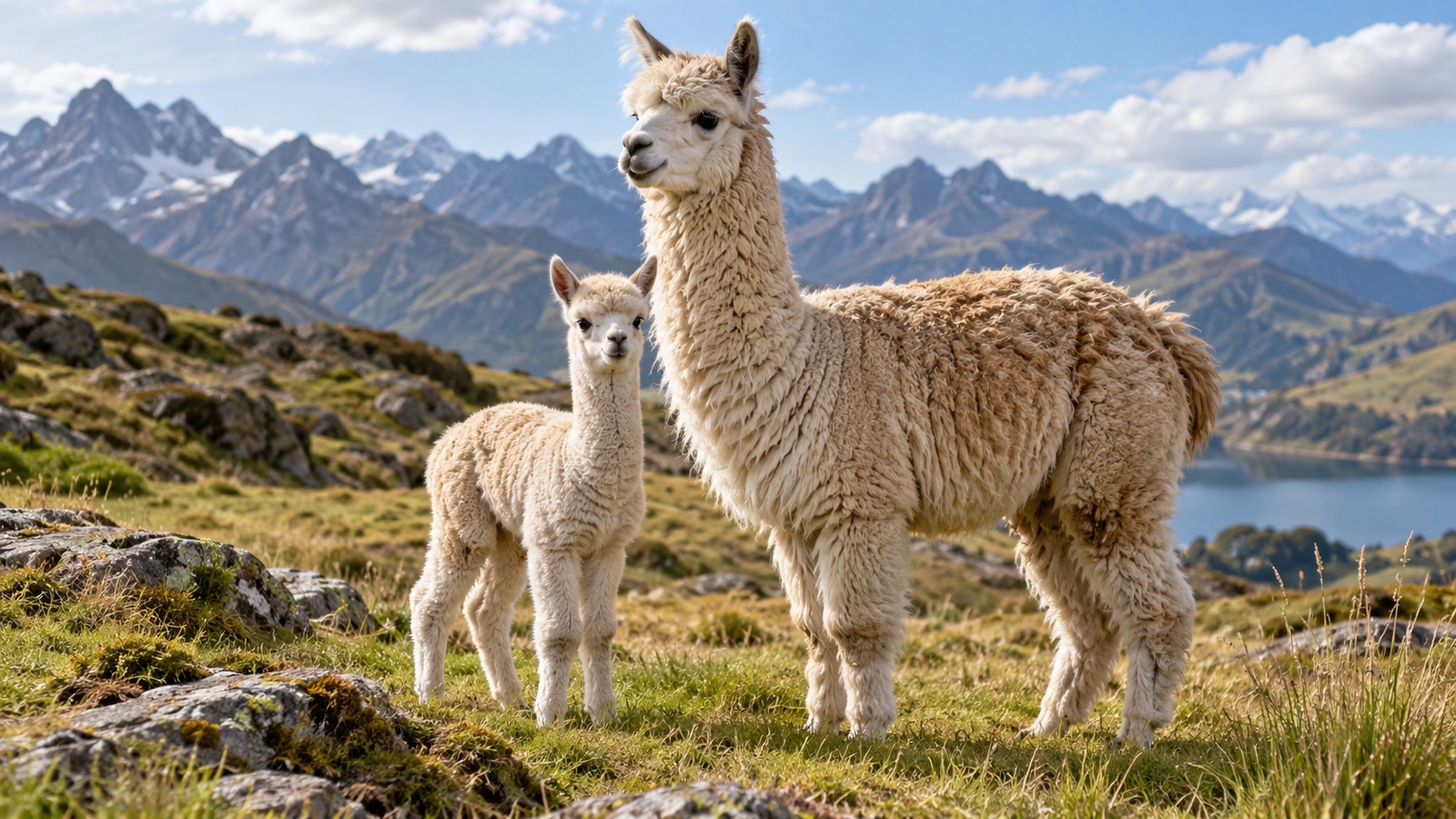
- A baby alpaca is called a cria.
- Alpaca gestation lasts roughly 11 to 12 months.
- Most births produce one cria.
- Twins are rare.
- Alpacas are induced ovulators.
- Mating triggers the hormonal process leading to ovulation.
- Birth often occurs during daylight.
- A healthy cria usually attempts to stand quickly.
- Early colostrum provides critical maternal antibodies.
- Crias begin nibbling forage while they are still nursing.
- Young alpacas learn normal social behavior from the herd.
- Alpacas were valuable fiber animals in pre-Columbian Andean societies.
- Fine camelid textiles carried wealth, status, and ritual meaning in the Inca world.
- Some especially fine ancient textiles were produced from vicuña or selected alpaca fiber.
- Spanish colonization disrupted Indigenous camelid breeding systems and introduced sheep.
- Andean communities continued raising alpacas despite those changes.
- Peru contains the world's largest alpaca population.
- Bolivia is another major alpaca-raising country.
- Alpacas are now raised in the United States, Canada, Europe, Australia, New Zealand, and elsewhere.
- They often use communal dung piles.
- Shared latrines can make pasture cleanup easier than with livestock that defecate randomly.
- Alpaca red blood cells are small and oval, helping support circulation in high-altitude conditions.
- They are adapted to environments where oxygen pressure is lower than at sea level.
- With good care, alpacas commonly live into their teens and sometimes beyond 20 years.
- After 145 facts, alpacas look less like novelty lawn decorations and more like high-altitude fiber specialists with efficient digestion, complicated herd etiquette, excellent feet, and a wardrobe that grows back every year.
Quick FAQ
Q: What is the difference between an alpaca and a llama?
A: Alpacas are smaller, have shorter ears, and were bred mainly for fine fiber. Llamas are larger and historically served heavily as pack animals.
Q: Do alpacas spit?
A: Yes, mostly at other alpacas during social disputes. Humans are more likely to be accidental targets or get spat at when an animal is stressed or poorly socialized.
Q: What is a baby alpaca called?
A: A baby alpaca is called a cria.
Q: Do alpacas have hooves?
A: No. They have two toes with hard nails and soft padded undersides.
Q: Do alpacas need to be sheared?
A: Yes. Most domestic alpacas are sheared annually so their continuously growing fleece does not become dangerously hot or difficult to manage.

Ellie is the owner and sole author of Fun Facts, combining her mechanical engineering background with years of research-driven writing to deliver facts you can trust. Every article is thoroughly fact-checked and routinely updated as new science and sources emerge to keep information accurate and current. Her mission is to make learning delightful while upholding high standards of reliability and transparency.