
Czechia is easy to reduce to Prague, beer, and castles, which is like describing a bakery as “mostly flour.” Beyond the capital are Moravian vineyards, karst caves, spa towns, glass workshops, mountain trails, medieval engineering, world-changing scientists, and enough castle towers to make directions unnecessarily dramatic.
Czechia sits almost exactly in the middle of Europe
- Czechia is a landlocked country in Central Europe.
- Prague is the national capital and largest city.
- Czechia borders Germany, Poland, Slovakia, and Austria.
- The country is also widely called the Czech Republic.
- “Czechia” is the official short-form English name.
- The long-form official name is the Czech Republic.
- The national currency is the Czech koruna, or crown.
- Czechia is a member of the European Union but does not use the euro as its national currency.
- Czech is the official language.
- Czech is a West Slavic language closely related to Slovak.
- The Czech alphabet uses the Latin script with several diacritical marks.
- The letter ř is famous among language learners because its sound is unusual.
- The national flag is white and red with a blue triangle at the hoist.
- The flag design was inherited from Czechoslovakia after the country peacefully split.
- Czechia is divided into 14 administrative regions including Prague.
- Bohemia occupies most of the western part of the country.
- Moravia occupies much of the east.
- A small part of historical Silesia lies in the northeast.
- Czechia uses Central European Time and observes summer-time clock changes.
- A country can be called Czechia, the Czech Republic, Bohemia in historical contexts, and still expect travelers to find the right train platform.
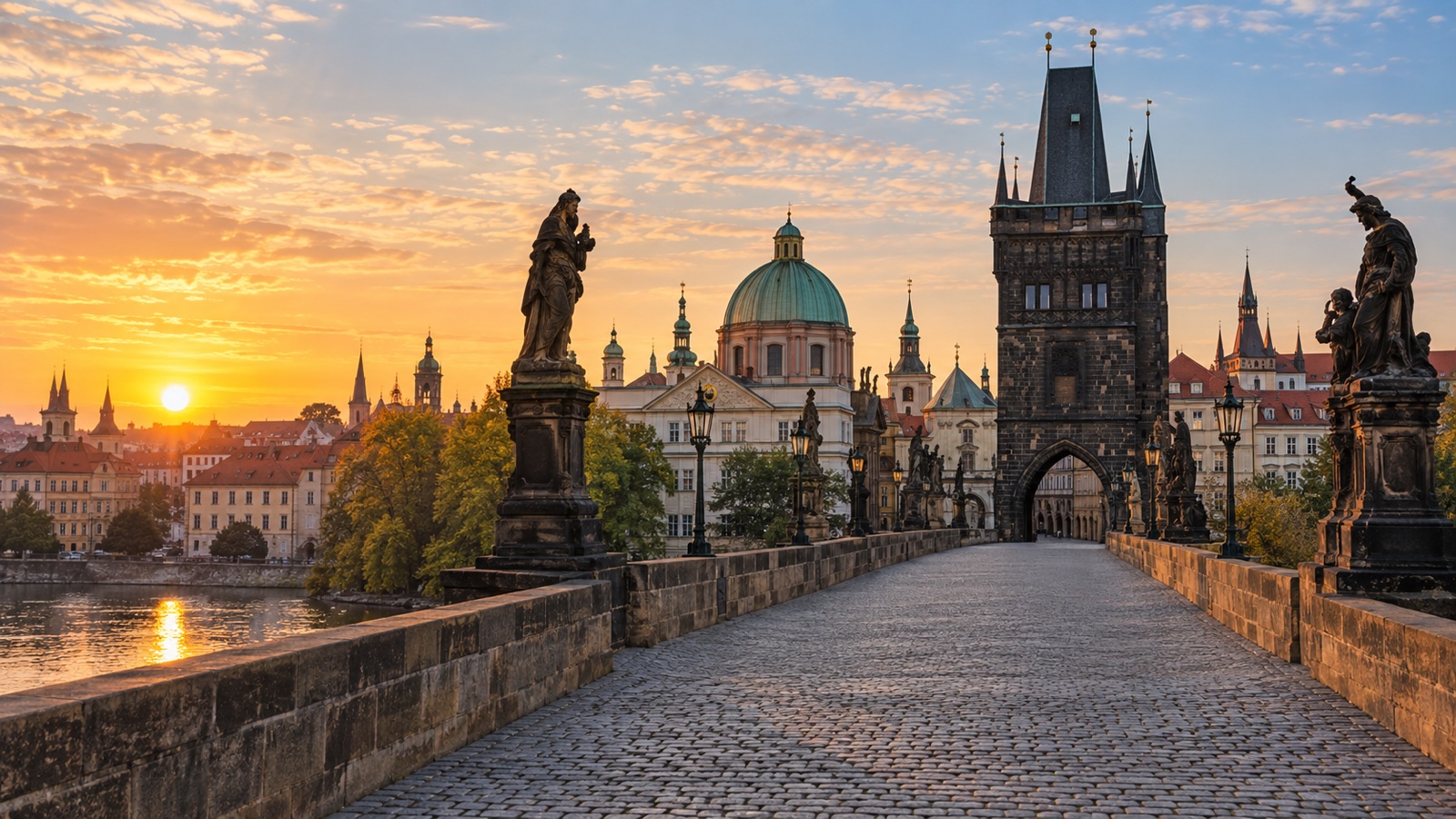
Rivers, mountains and caves shape the landscape
- Czechia has no ocean coastline.
- Its rivers eventually drain toward three different seas.
- The Elbe, called the Labe in Czech, ultimately flows to the North Sea.
- The Oder, or Odra, drains toward the Baltic Sea.
- The Morava River system ultimately connects with the Danube and Black Sea.
- The Vltava is the longest river entirely within Czechia.
- It flows through Prague before joining the Elbe.
- Bedřich Smetana’s symphonic poem “Vltava” was inspired by the river.
- Sněžka is Czechia’s highest mountain.
- It rises 5,259 feet on the border with Poland.
- The Krkonoše Mountains surround Sněžka.
- Krkonoše National Park protects alpine and subalpine habitats.
- The Šumava Mountains lie along the German and Austrian borders.
- Šumava National Park protects extensive forests and peat bogs.
- The Moravian Karst contains hundreds of caves.
- The Macocha Abyss is one of its best-known features.
- Macocha drops more than 450 feet from rim to lower cave passages.
- Visitors can ride boats through parts of the Punkva Cave system.
- Sandstone formations create dramatic rock cities in northern and eastern Bohemia.
- Czechia manages to fit three drainage basins, caves, sandstone towers, vineyards, and ski hills into a country smaller than South Carolina.
Bohemia became a major kingdom of medieval Europe
- Slavic peoples settled much of the region during the early medieval period.
- The Great Moravian Empire influenced parts of present-day Czechia during the ninth century.
- The Přemyslid dynasty built a powerful state centered in Bohemia.
- Prague Castle developed into a major seat of rulers.
- The Kingdom of Bohemia became part of the Holy Roman Empire.
- Charles IV became King of Bohemia and Holy Roman Emperor.
- His 14th-century reign is often considered a golden age for Prague.
- Charles University was founded in Prague in 1348.
- It is one of the oldest universities in Central Europe.
- Charles Bridge began construction during the reign of Charles IV.
- The bridge spans the Vltava River.
- Prague’s medieval New Town was also founded under Charles IV.
- Jan Hus became an influential religious reformer in Bohemia.
- Hus criticized corruption and church practices before the Protestant Reformation.
- He was executed for heresy in 1415.
- His death helped trigger the Hussite Wars.
- Hussite armies became famous for using wagon fortifications.
- The chalice became an important Hussite symbol.
- Bohemian lands later came under Habsburg rule.
- Czech history can make one Prague walking tour feel like a semester with cobblestones.
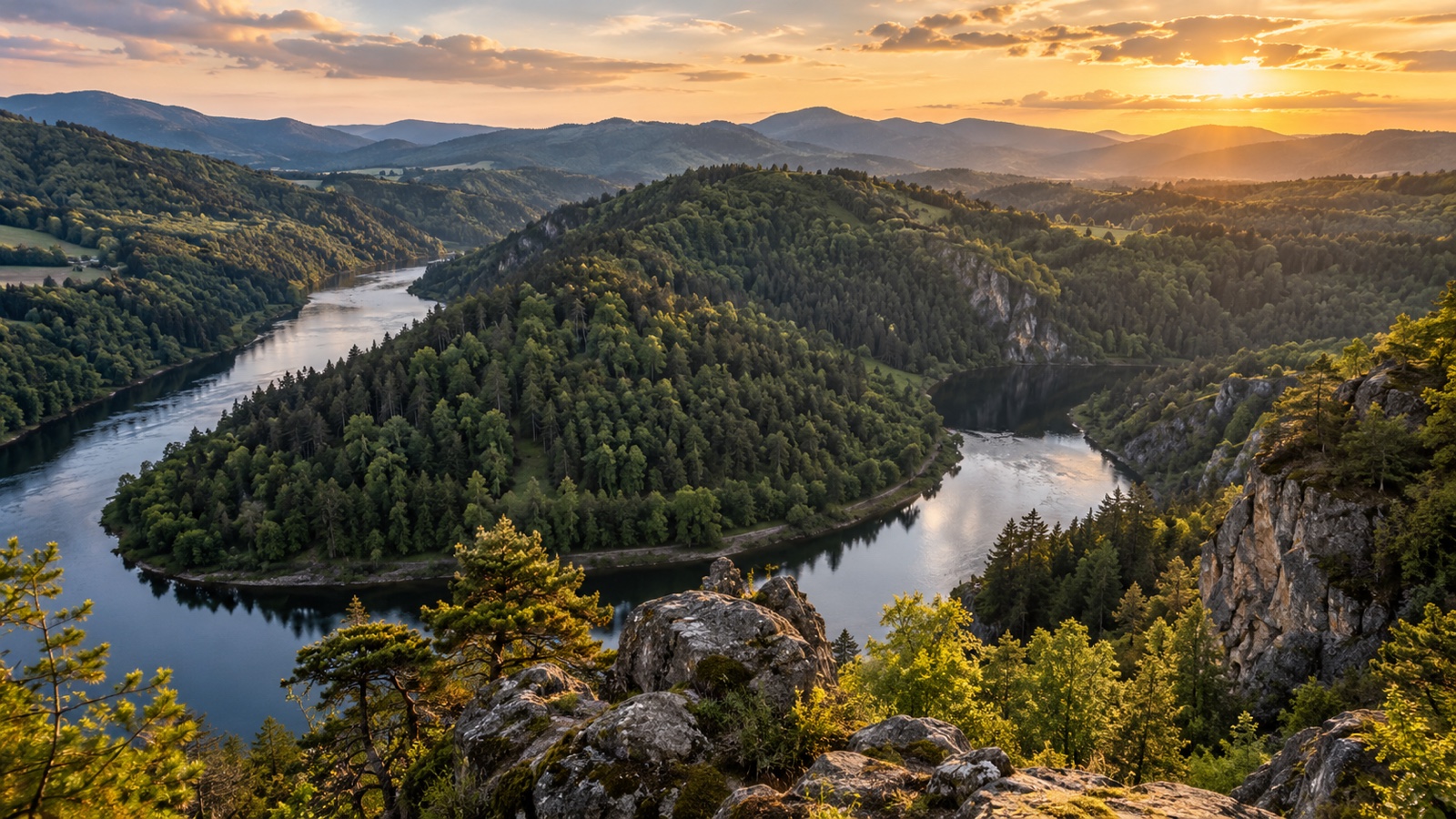
Prague's architecture is basically a timeline you can walk through
Prague survived World War II with far less physical destruction than cities such as Warsaw or Dresden, which helps explain why Romanesque, Gothic, Renaissance, Baroque, Art Nouveau, Cubist, communist-era, and modern architecture can all appear within a short walk.
- Prague Castle is one of the world's largest castle complexes by area.
- Its buildings were constructed and rebuilt across many centuries.
- St. Vitus Cathedral dominates the castle skyline.
- The cathedral took centuries to reach its modern completed form.
- Charles Bridge is lined with statues, most of which are later Baroque additions.
- The Old Town Astronomical Clock dates to the early 15th century.
- It is one of the world's oldest astronomical clocks still operating.
- The clock shows astronomical information as well as ordinary time.
- Its hourly procession of figures attracts large crowds.
- Prague's Jewish Quarter is called Josefov.
- The Old-New Synagogue dates to the 13th century.
- It is one of Europe's oldest active synagogues.
- The old Jewish cemetery contains densely packed historic gravestones.
- Prague is unusually famous for architectural Cubism.
- The House of the Black Madonna is a major Czech Cubist building.
- The Dancing House is a modern landmark designed by Vlado Milunić with Frank Gehry.
- Its two towers are sometimes nicknamed Fred and Ginger.
- Petřín Hill has a steel observation tower loosely inspired by the Eiffel Tower.
- Prague's metro opened in 1974.
- If Prague architecture had a dress code, it would apparently be “every century is invited.”
Czechoslovakia formed, fractured and split peacefully
- Czechoslovakia was created in 1918 after the collapse of Austria-Hungary.
- Tomáš Garrigue Masaryk became its first president.
- The new state combined Czech lands with Slovakia and, initially, Subcarpathian Ruthenia.
- Nazi Germany occupied the Czech lands during World War II.
- The Munich Agreement of 1938 forced Czechoslovakia to cede border territories to Germany without Czechoslovak participation in the final decision.
- Germany occupied the remaining Czech lands in March 1939.
- The Protectorate of Bohemia and Moravia was placed under Nazi rule.
- Jewish Czechs were deported and murdered during the Holocaust.
- Theresienstadt, or Terezín, functioned as a Nazi ghetto and transit camp.
- After the war, Czechoslovakia came under communist rule in 1948.
- The Prague Spring of 1968 attempted political liberalization.
- Warsaw Pact forces invaded Czechoslovakia in August 1968.
- The invasion ended most Prague Spring reforms.
- Václav Havel became a prominent dissident playwright.
- The Velvet Revolution of 1989 peacefully ended communist rule.
- Havel became president of Czechoslovakia.
- Czech and Slovak political leaders later agreed to separate the federation.
- Czechoslovakia split into Czechia and Slovakia on January 1, 1993.
- The peaceful separation is commonly called the Velvet Divorce.
- Czechia somehow managed to have both a Velvet Revolution and a Velvet Divorce within four years, which is unusually soft branding for major constitutional change.
Beer, glass and industry are serious national traditions
Czech beer culture is so established that the word pilsner comes from a Czech city, but the country's manufacturing story is much bigger than brewing. Glass, automobiles, machinery, engineering, musical instruments, firearms, chemicals, and precision manufacturing all have deep roots.
- Beer has been brewed in Czech lands for centuries.
- Pilsner-style lager originated in Plzeň, called Pilsen in German and English historical usage.
- Pilsner Urquell was first brewed there in 1842.
- The beer's pale color and clarity helped define a new lager style.
- Saaz hops from the Žatec region are famous in brewing.
- Czechia regularly ranks among the world's highest countries in beer consumption per person.
- Beer can be cheaper than some soft drinks in certain pubs, though the common claim that it is “cheaper than water everywhere” is exaggerated.
- South Moravia is better known for wine than beer.
- Moravian vineyards produce white, red, sparkling, and dessert wines.
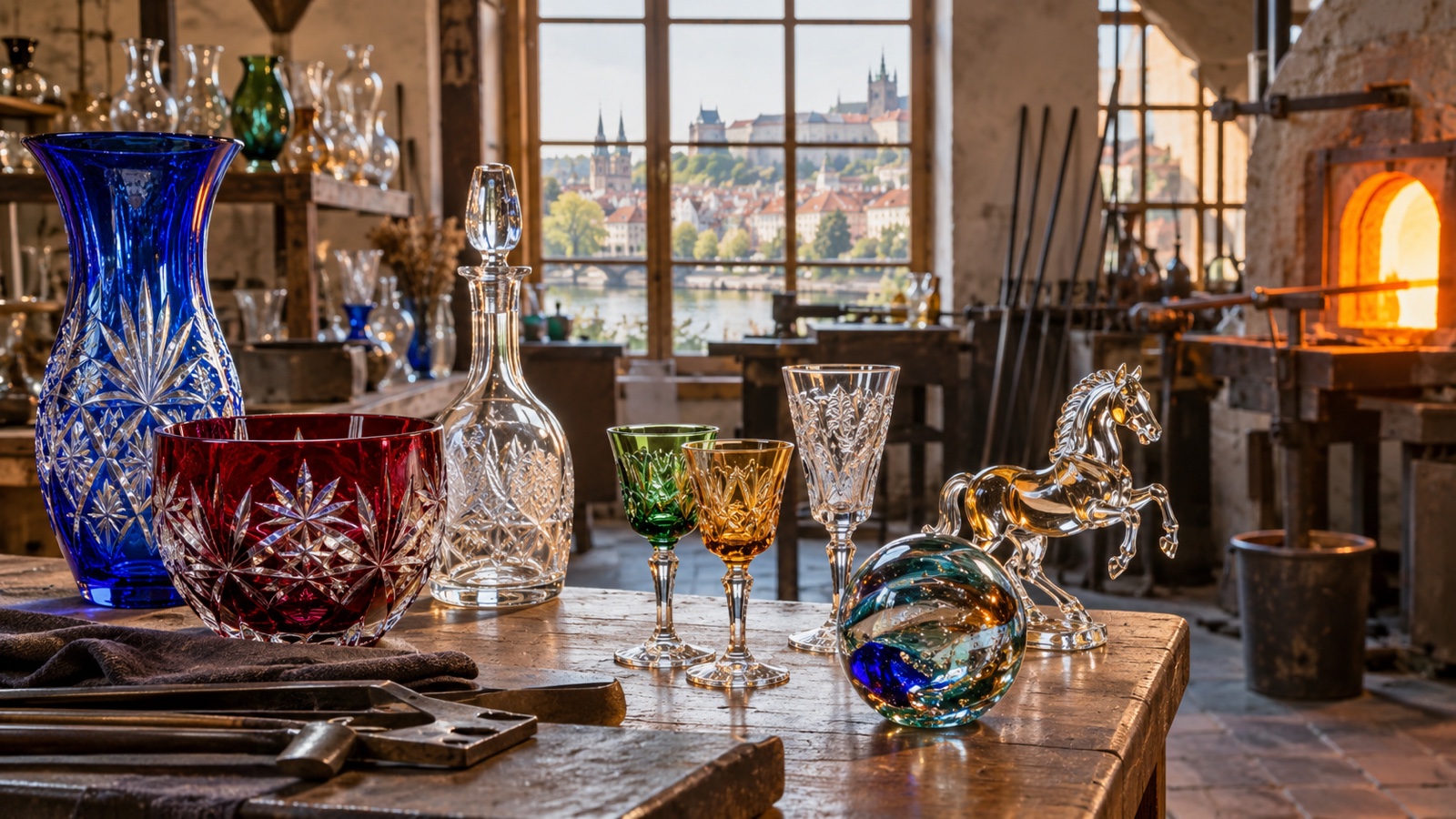
- Bohemian glassmaking has been internationally famous for centuries.
- Czech crystal is a major decorative and export tradition.
- Jablonec nad Nisou became famous for glass jewelry and beads.
- Škoda Auto has Czech roots dating to the 1890s.
- Its main automobile production is centered in Mladá Boleslav.
- Tatra is another historic Czech vehicle manufacturer.
- Tomáš Baťa founded the Bata shoe company in Zlín.
- Zlín developed distinctive functionalist architecture around the company.
- Czech manufacturing remains strongly integrated with European supply chains.
- Nano-fiber research and advanced engineering are modern Czech specialties.
- Czechia is proof that a country can make world-famous lager and still expect to be taken seriously in precision engineering meetings the next morning.
Robots, contact lenses, dumplings and 25 final Czech facts
- The word “robot” entered global vocabulary through Czech writer Karel Čapek's 1920 play “R.U.R.”
- Karel credited his brother Josef Čapek with suggesting the word.
- “Robot” came from a Slavic root connected with forced labor or drudgery.
- Otto Wichterle was a Czech chemist who helped invent soft contact lenses.
- Wichterle famously built an early lens-making device using a children's construction set.
- Gregor Mendel conducted his pea experiments in Brno, now Czechia's second-largest city.
- Mendel's work became foundational to genetics.
- He was an Augustinian friar and scientist.
- Antonín Dvořák was one of Czechia's greatest composers.
- Dvořák wrote his “New World Symphony” while working in the United States.
- Bedřich Smetana composed works strongly tied to Czech national identity.
- Franz Kafka was born in Prague when the city was part of Austria-Hungary.
- Kafka wrote primarily in German.
- Miloš Forman was born in Czechoslovakia and later became an Oscar-winning film director in the United States.
- Jaromír Jágr became one of the greatest Czech ice-hockey players.
- Ice hockey is one of Czechia's most popular sports.
- Svíčková combines sliced beef with a creamy root-vegetable sauce and dumplings.
- Vepřo knedlo zelo is pork served with dumplings and cabbage.
- Traditional Czech dumplings include bread-based and potato varieties.
- Koláče are pastries with sweet fillings.
- Trdelník is heavily marketed in Prague, but its origins are broader Central European rather than uniquely ancient Prague tradition.
- Karlovy Vary is an internationally famous spa town.
- The town is known for hot mineral springs and an annual film festival.
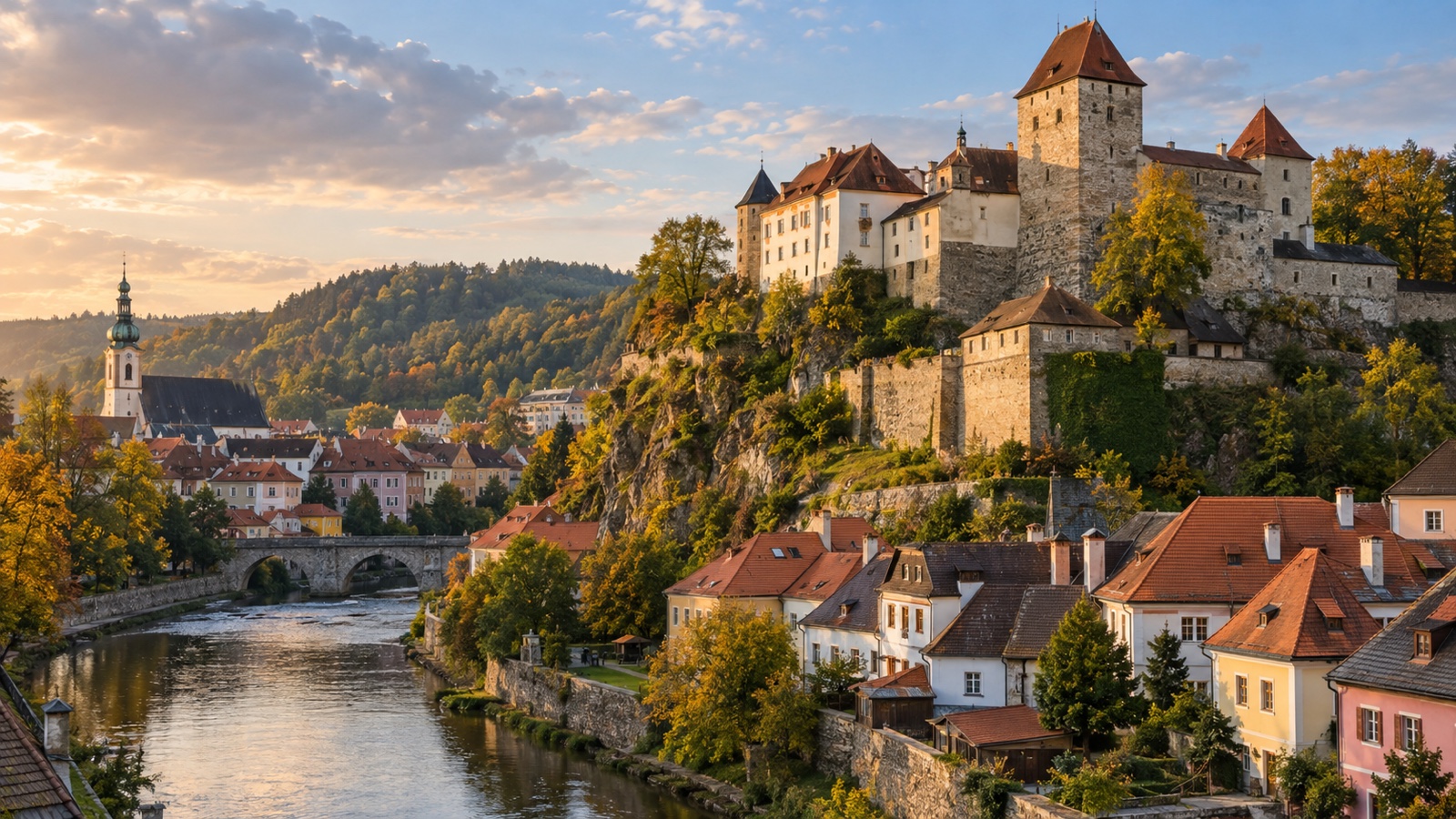
- Český Krumlov preserves a spectacular historic center around a bend in the Vltava.
- After 145 facts, Czechia still feels like a country where a robot, a lager, a genetics experiment, and a Gothic bridge could all plausibly appear in the same trivia round.
Quick FAQ
Q: Is Czechia the same as the Czech Republic?
A: Yes. Czechia is the official short-form country name, while the Czech Republic is the official long-form name.
Q: What is Czechia famous for?
A: Prague, castles, pilsner beer, Bohemian glass, Moravian wine, Charles Bridge, the astronomical clock, spa towns, hockey, engineering, and influential writers, composers, and scientists.
Q: What is the capital of Czechia?
A: Prague is both the capital and largest city.
Q: When did Czechia and Slovakia split?
A: Czechoslovakia peacefully divided into the Czech Republic and Slovakia on January 1, 1993.
Q: Did the word robot come from Czech?
A: Yes. It became internationally famous through Karel Čapek's play “R.U.R.,” and Čapek credited his brother Josef with suggesting the term.

Ellie is the owner and sole author of Fun Facts, combining her mechanical engineering background with years of research-driven writing to deliver facts you can trust. Every article is thoroughly fact-checked and routinely updated as new science and sources emerge to keep information accurate and current. Her mission is to make learning delightful while upholding high standards of reliability and transparency.