
Kenya is famous enough for lions and safaris that the rest of the country can disappear behind the binoculars. That misses snow-dusted Mount Kenya, Indian Ocean coral towns, tech startups, world-class runners, Swahili culture, tea farms, flamingo lakes, 40-plus ethnic communities, and a capital with a national park on its edge.
Kenya stretches from the Indian Ocean to high mountains
- Kenya is located in East Africa.
- The equator crosses the country.
- Nairobi is the capital and largest city.
- Mombasa is the largest city on Kenya’s coast.
- Kenya borders Tanzania, Uganda, South Sudan, Ethiopia, and Somalia.
- The Indian Ocean forms the southeastern coastline.
- Kenya has 47 counties.
- The Kenyan shilling is the national currency.
- Swahili and English are official languages.
- Kiswahili is the Swahili-language name for the language.
- Dozens of other African languages are spoken throughout the country.
- Kenya’s flag is black, red, green, and white with a central shield and crossed spears.
- Black represents the people, red the struggle for freedom, and green the land in common official explanations.
- The shield and spears symbolize defense.
- Kenya uses East Africa Time.
- It is three hours ahead of Coordinated Universal Time.
- Kenya does not use Daylight Saving Time.
- The country covers an area larger than California but smaller than Texas.
- Landscapes range from coast and savanna to highlands, deserts, lakes, and alpine mountain zones.
- Kenya is a good reminder that “safari country” is a tourism category, not a complete geography lesson.
The Great Rift Valley cuts through dramatic terrain
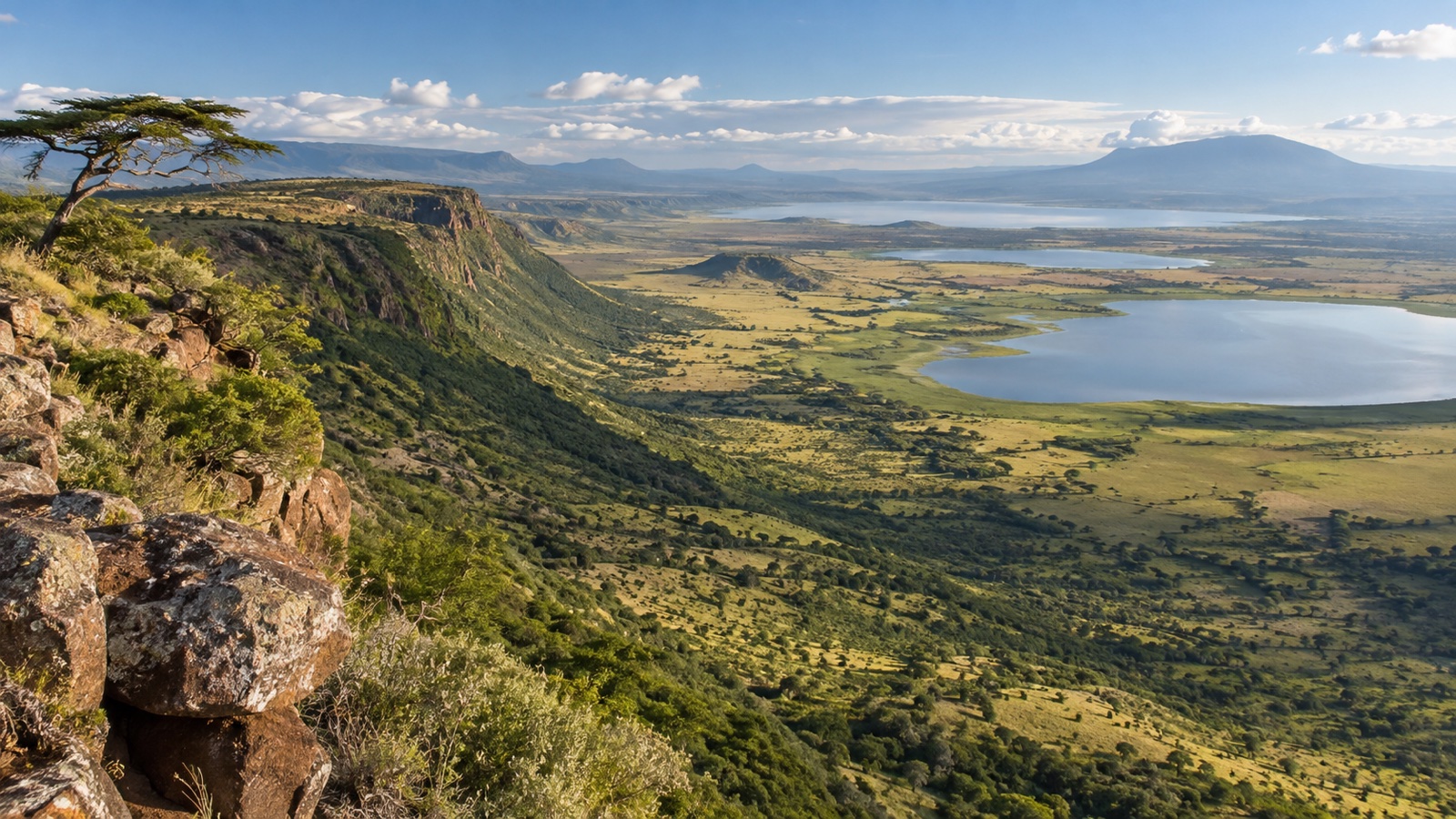
- The East African Rift system crosses Kenya.
- It formed as tectonic forces stretched and fractured Earth’s crust.
- Rift escarpments create dramatic elevation changes.
- Volcanoes and volcanic soils are common along the rift.
- Mount Kenya is the country’s highest mountain.
- Batian, its highest summit, reaches 17,057 feet.
- Mount Kenya is Africa’s second-highest mountain after Kilimanjaro.
- The mountain is an extinct volcano.
- Glaciers still survive near its summit.
- Those glaciers have shrunk dramatically because of climate change.
- Mount Kenya National Park is a UNESCO World Heritage Site.
- Lake Turkana lies in northern Kenya and extends slightly into Ethiopia.
- It is the world’s largest permanent desert lake.
- Lake Turkana’s water is alkaline.
- The lake region has produced major hominin fossil discoveries.
- Lake Nakuru is famous for birdlife, including flamingos whose numbers vary with water and food conditions.
- Lake Naivasha is a freshwater lake in the Rift Valley.
- Hell’s Gate National Park contains cliffs, volcanic features, and geothermal activity.
- Geothermal power generated in the Rift Valley supplies a substantial share of Kenya’s electricity.
- Kenya literally turns tectonic heat into grid power, which feels like geology paying rent.
Kenyan wildlife is spectacular, but conservation is complicated
- Kenya is home to lions, elephants, leopards, buffalo, and rhinoceroses.
- Those five animals are commonly called the Big Five.
- The term originally came from big-game hunting rather than wildlife photography.
- Kenya now earns major tourism revenue from viewing living wildlife.
- Maasai Mara National Reserve lies along Kenya’s border with Tanzania.
- The reserve is part of the larger Serengeti-Mara ecosystem.
- Large herds of wildebeest and zebra move through the ecosystem seasonally.
- The famous Great Migration crosses between Tanzania and Kenya depending on rainfall and grazing conditions.
- River crossings attract crocodiles and other predators.
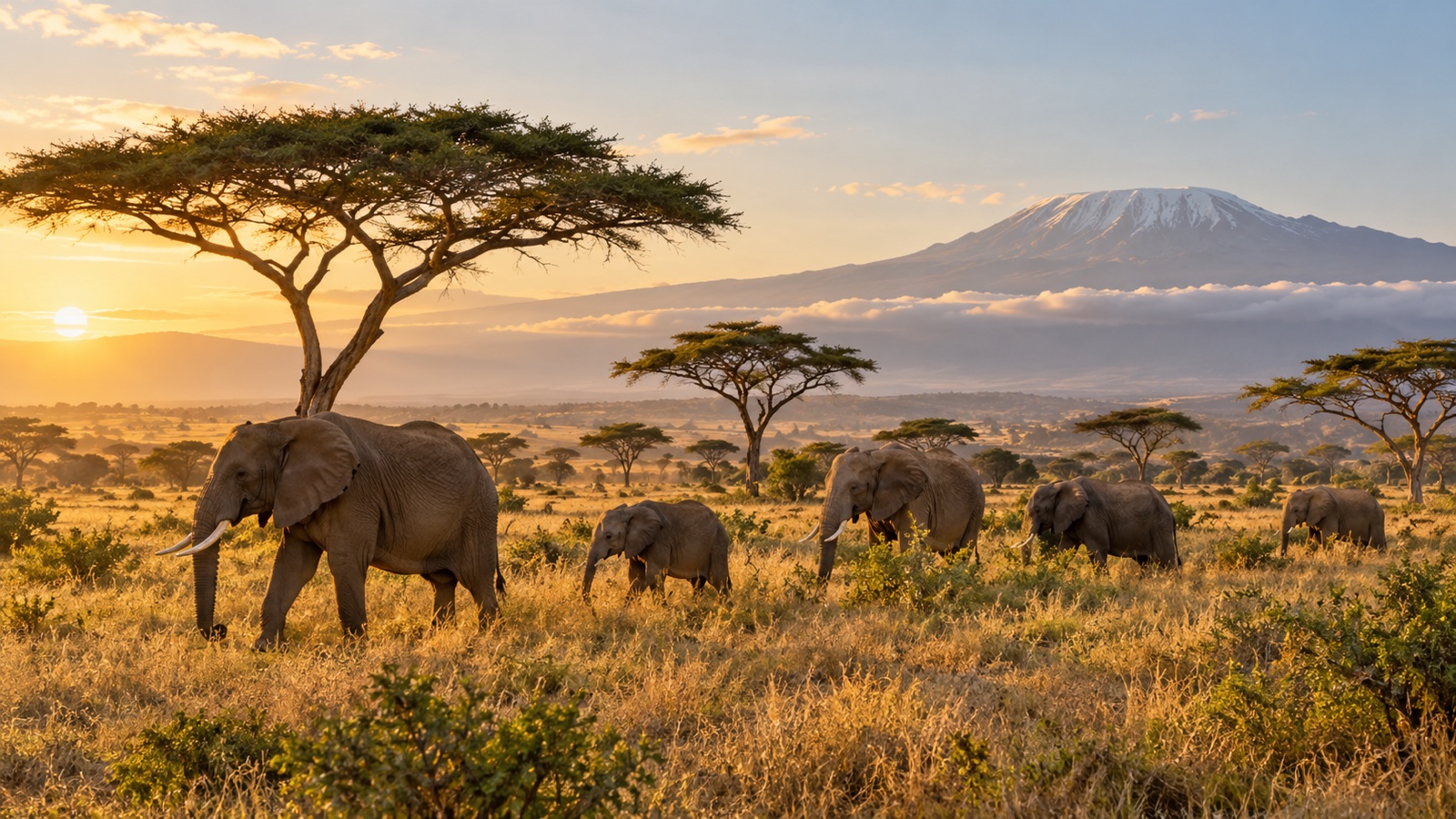
- Amboseli National Park is famous for elephants and views toward Mount Kilimanjaro in neighboring Tanzania.
- Tsavo East and Tsavo West together protect an enormous wildlife landscape.
- Some Tsavo elephants appear reddish because they coat themselves with local red soil.
- Black rhinos and white rhinos both occur in Kenya.
- “White rhino” does not describe the animal’s actual color.
- Ol Pejeta Conservancy protects critically endangered northern white rhinos.
- Only two northern white rhinos remain alive, both females, as of 2026.
- Scientists are using assisted-reproduction research in an effort to preserve the subspecies’ genetics.
- Wildlife corridors are essential because animals move beyond park boundaries.
- Human-wildlife conflict can occur where farms, livestock, roads, and animal ranges overlap.
- Conservation in Kenya involves local communities, private conservancies, government agencies, scientists, and tourism, not just fenced national parks.
Kenya has dozens of cultures, not one generic “tribal” identity
The Maasai are internationally recognizable, but using them as shorthand for all Kenyan culture erases a country with dozens of ethnic communities and languages. Kikuyu, Luhya, Kalenjin, Luo, Kamba, Somali, Kisii, Mijikenda, Turkana, Meru, Maasai, and many others have distinct histories and traditions.
- Kikuyu people form Kenya’s largest ethnic community.
- Luhya communities are concentrated mainly in western Kenya.
- Kalenjin communities include several related peoples of the Rift Valley region.
- Luo communities have strong historical connections with western Kenya and Lake Victoria.
- Kamba communities are associated especially with eastern Kenya.
- Somali Kenyans form a major population in the northeast and in cities.
- The Maasai are traditionally pastoralist communities of Kenya and Tanzania.
- Cattle have deep economic, social, and cultural importance in many Maasai traditions.
- Modern Maasai people work in every type of profession and do not all live pastoral lifestyles.
- The Turkana live mainly in northwestern Kenya.
- Mijikenda peoples have deep roots along the Kenyan coast.
- Sacred forest settlements called kaya are associated with Mijikenda history.
- Several kaya forests are UNESCO-listed.
- Swahili culture developed along the East African coast through African, Arab, Persian, Indian Ocean, and later European connections.
- Swahili is fundamentally a Bantu language despite substantial Arabic loan vocabulary.
- Islam has deep historical roots along the Kenyan coast and northeast.
- Christianity is the country’s largest religious tradition nationally.
- Indigenous religious practices continue within some communities and alongside other faiths.
- Urban Kenyans often blend local, national, global, and family identities.
- Kenyan culture is plural enough that any sentence beginning “Kenyans always...” should probably make you suspicious.
Colonial rule and independence reshaped modern Kenya
- Indian Ocean trade connected coastal Kenya with Arabia, Persia, India, and other regions for centuries.
- Portuguese forces seized several coastal positions beginning in the 16th century.
- Omani influence later became dominant along much of the East African coast.
- The British established control over the Kenya region during the late 19th century.
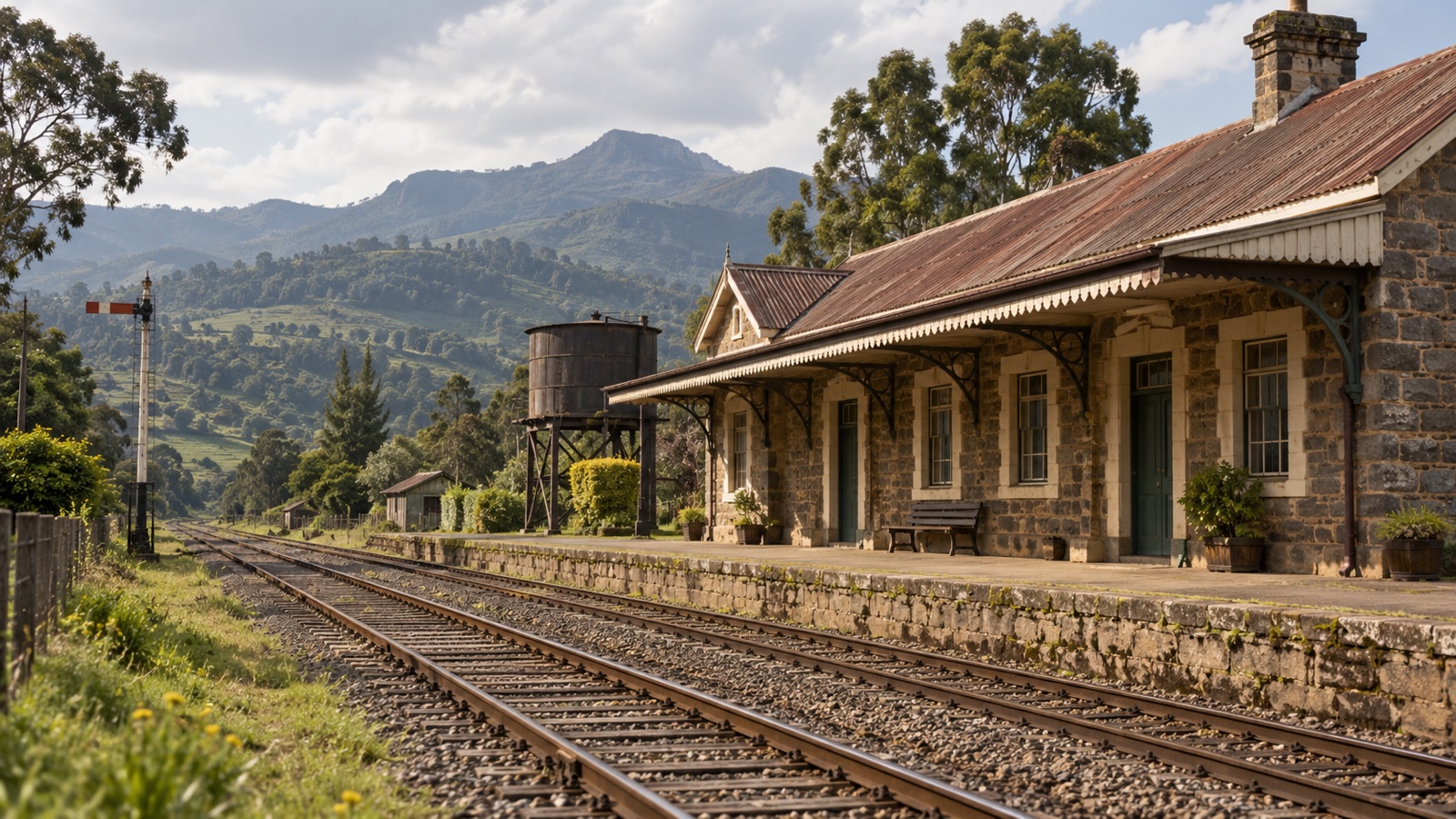
- The Uganda Railway connected the coast with the interior.
- Nairobi grew from a railway camp into a major city.
- British settlers took large areas of fertile highland land.
- African communities faced land loss, forced labor systems, taxes, and political exclusion under colonial rule.
- The Mau Mau uprising began during the 1950s.
- The revolt was centered strongly among Kikuyu communities but involved a broader colonial crisis.
- British authorities declared a state of emergency in 1952.
- Colonial detention, torture, forced relocation, and executions affected large numbers of Kenyans.
- Jomo Kenyatta was imprisoned during the emergency.
- Kenya became independent from Britain on December 12, 1963.
- The country became a republic in 1964.
- Jomo Kenyatta became the first president.
- Uhuru means freedom in Swahili.
- Uhuru Gardens in Nairobi commemorates independence.
- Jamhuri Day on December 12 celebrates independence and republican statehood.
- Kenya’s independence story makes more sense when colonial violence stays in the picture rather than being reduced to a flag-lowering ceremony.
Nairobi, mobile money and modern Kenyan innovation
Nairobi is one of Africa’s major business, diplomatic, and technology centers, which makes the giraffe-photo stereotype feel especially incomplete. A commuter can use mobile money, pass a startup office, see the United Nations complex, and still be within reach of wild lions at Nairobi National Park.
- Nairobi became Kenya’s capital because of its railway-era growth and later colonial administration.
- The city sits at more than 5,000 feet above sea level.
- Its elevation gives it cooler temperatures than Kenya’s coast.
- Nairobi National Park lies directly south of the city.
- Lions, giraffes, rhinos, zebras, and other wildlife live with the city skyline visible in the distance.
- The United Nations has a major office complex in Nairobi.
- It is one of the UN’s principal global office locations.
- The UN Environment Programme is headquartered in Nairobi.
- UN-Habitat is also headquartered there.
- Kenya has a large technology and startup sector.
- Nairobi is sometimes nicknamed Silicon Savannah.
- M-Pesa launched in Kenya in 2007.
- The mobile-money service lets users send, receive, store, and pay money through phones and agent networks.
- M-Pesa became influential far beyond Kenya as a financial-technology case study.
- Mobile money expanded financial access for people without traditional bank branches nearby.
- Kenya has invested heavily in mobile communications.
- The Standard Gauge Railway connects Mombasa and Nairobi.
- Mombasa remains the country’s largest seaport.
- Port activity connects landlocked East African countries with global shipping.
- Kenya can put lions and financial technology in the same urban paragraph without either one being a gimmick.
Running, tea, coast food and 25 final Kenya facts
- Kenyan distance runners have achieved extraordinary success internationally.
- Many elite runners come from highland communities in and around the Rift Valley.
- Eldoret and Iten are major distance-running training centers.
- Altitude is one factor in training, but genetics, culture, coaching, opportunity, economics, and individual talent also matter.
- Reducing Kenyan running success to one biological explanation oversimplifies a complex sporting system.
- Eliud Kipchoge is one of Kenya’s most famous marathon runners.
- He became the first person to cover the marathon distance in under two hours in a controlled exhibition event in 2019.
- That performance did not count as an official world record because of special pacing and race conditions.
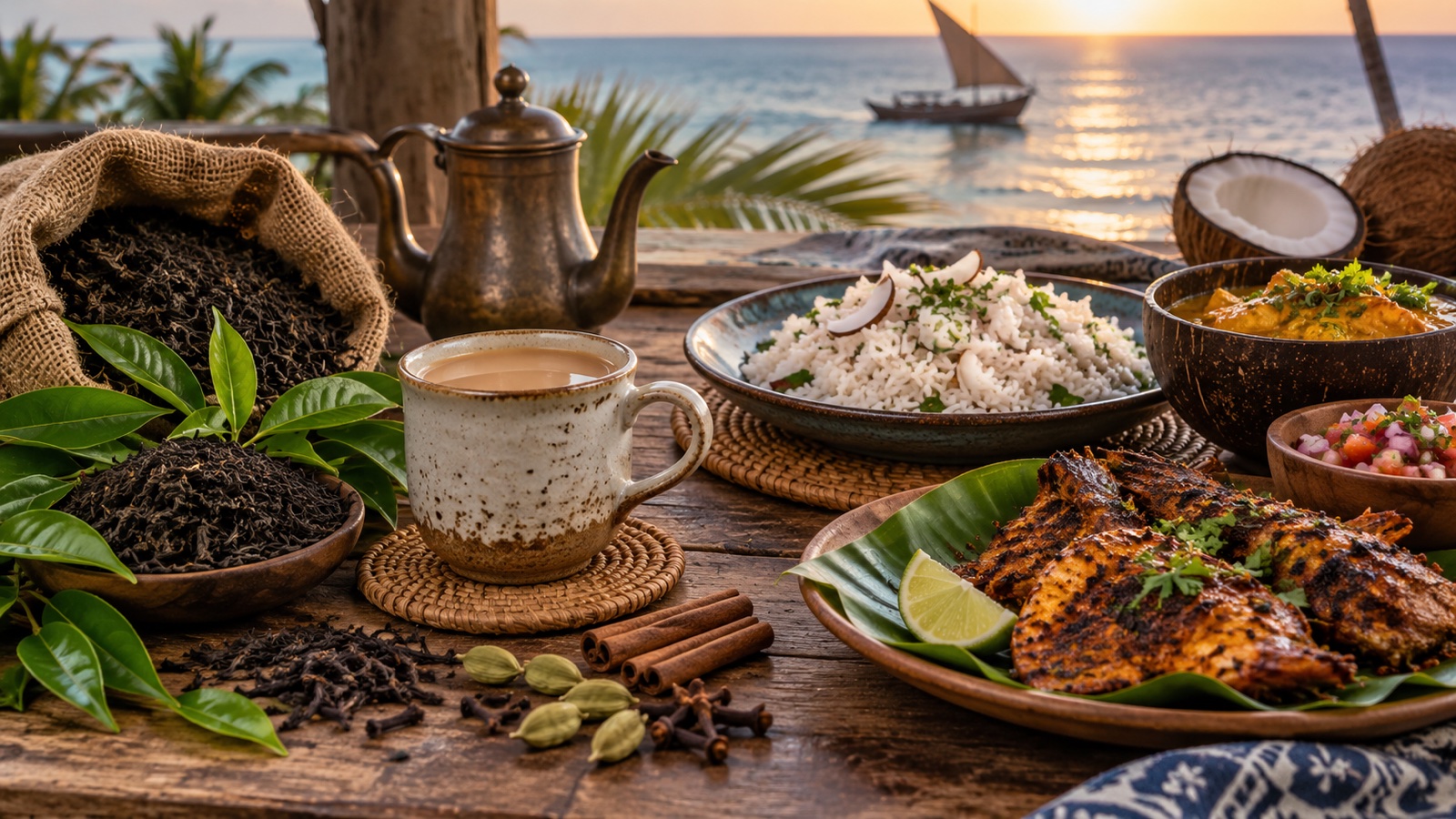
- Kenya is one of the world’s major tea producers.
- Tea grows especially well in highland regions.
- Coffee is another important export crop.
- Ugali is a stiff maize-meal staple eaten with many dishes.
- Nyama choma means roasted or grilled meat.
- Sukuma wiki is a common leafy-green dish.
- Chapati is widely eaten in Kenya and reflects Indian Ocean and South Asian culinary connections.
- Pilau rice is common along the coast and elsewhere.
- Swahili coastal cooking uses coconut, spices, seafood, and rice extensively.
- Diani Beach is one of Kenya’s best-known Indian Ocean beach destinations.
- Lamu Old Town is a UNESCO World Heritage Site with deep Swahili history.
- Fort Jesus in Mombasa was built by the Portuguese in the 16th century.
- The national animal often associated with Kenya is the East African lion, though Kenya does not rely on one single legally universal “national animal” designation in all official contexts.
- The lilac-breasted roller is a famously colorful Kenyan bird.
- Kenya has coral reefs, mangroves, seagrass beds, savannas, mountains, and deserts.
- Mount Kenya’s name gave the country its modern English name.
- After 145 facts, Kenya still feels like the country where every wildlife photo has an entire modern nation standing just outside the frame.
Quick FAQ
Q: What is Kenya famous for?
A: Wildlife safaris, the Maasai Mara, Mount Kenya, distance running, tea, the Great Rift Valley, Swahili culture, Indian Ocean beaches, Nairobi, and mobile-money innovation.
Q: What is the capital of Kenya?
A: Nairobi is both the capital and largest city.
Q: What languages are spoken in Kenya?
A: Swahili and English are official, while dozens of other languages including Kikuyu, Luo, Kalenjin, Kamba, Somali, and Luhya varieties are spoken.
Q: Is Mount Kilimanjaro in Kenya?
A: No. Kilimanjaro is in Tanzania, although it can be seen dramatically from parts of southern Kenya including Amboseli.
Q: Does Nairobi really have wild animals nearby?
A: Yes. Nairobi National Park borders the city and supports lions, rhinos, giraffes, zebras, and other wildlife.

Ellie is the owner and sole author of Fun Facts, combining her mechanical engineering background with years of research-driven writing to deliver facts you can trust. Every article is thoroughly fact-checked and routinely updated as new science and sources emerge to keep information accurate and current. Her mission is to make learning delightful while upholding high standards of reliability and transparency.