
Wyoming has fewer people than many American cities and somehow still contains Yellowstone, Grand Teton, pronghorn migrations, geothermal basins, fossil deserts, rodeos, coal mines, sagebrush seas, and the first U.S. territory to guarantee women voting rights. It is enormous, sparsely populated, and absolutely showing off.
Wyoming basics from the Equality State
- Wyoming became the 44th U.S. state on July 10, 1890.
- Cheyenne is the state capital.
- Cheyenne is also Wyoming’s largest city.
- Wyoming has 23 counties.
- The postal abbreviation is WY.
- The official nickname is the Equality State.
- The nickname reflects Wyoming’s early role in women’s suffrage.
- The state motto is “Equal Rights.”
- Wyoming is the least populous U.S. state.
- It is the 10th-largest state by total area.
- Wyoming borders Montana, South Dakota, Nebraska, Colorado, Utah, and Idaho.
- Its outline is almost rectangular, though Earth’s curvature and surveying make the borders less perfect than they look on a flat map.
- Most of Wyoming lies above 4,000 feet in elevation.
- Gannett Peak is the state’s highest point.
- It rises 13,804 feet above sea level.
- Wyoming lies entirely within the Mountain Time Zone.
- The Continental Divide crosses the state.
- Part of the divide splits around the Great Divide Basin.
- Water inside that basin does not naturally drain to an ocean.
- Wyoming can make “middle of nowhere” feel like a compliment.
Yellowstone changed the idea of a national park
- Yellowstone National Park was established in 1872.
- It is widely recognized as the world’s first national park.
- Most of Yellowstone lies in Wyoming.
- Small sections extend into Montana and Idaho.
- The park sits above a huge volcanic system.
- Yellowstone’s present caldera formed during a massive eruption about 631,000 years ago.
- The volcanic system remains active.
- That does not mean a giant eruption is “overdue.”
- Geologists monitor earthquakes, ground deformation, gas, and thermal features.
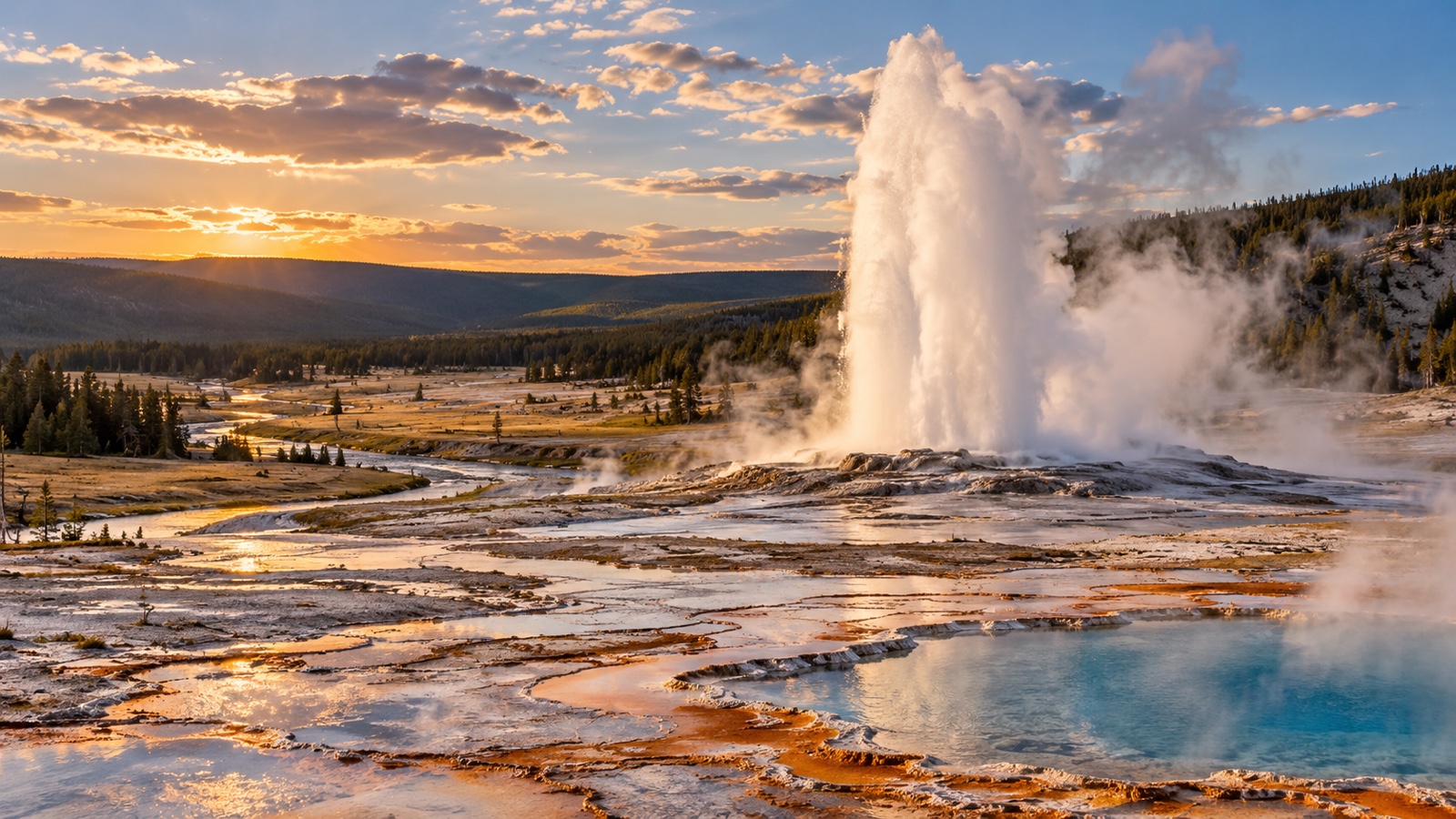
- Yellowstone contains more geysers than any other place on Earth.
- Old Faithful is its most famous geyser.
- Old Faithful eruptions are predictable within a range, not exactly on one fixed clock interval.
- Steamboat Geyser is the world’s tallest active geyser.
- Its major eruptions can exceed 300 feet.
- Grand Prismatic Spring is famous for vivid bands of color.
- Heat-loving microorganisms help create many of those colors.
- The park’s hot springs can be dangerously close to boiling.
- Boardwalk rules protect both people and fragile thermal ground.
- Hydrothermal areas can have thin crust over extremely hot water.
- Yellowstone is basically geology refusing to be subtle.
Grand Teton packs dramatic relief into a short distance
- Grand Teton National Park lies south of Yellowstone.
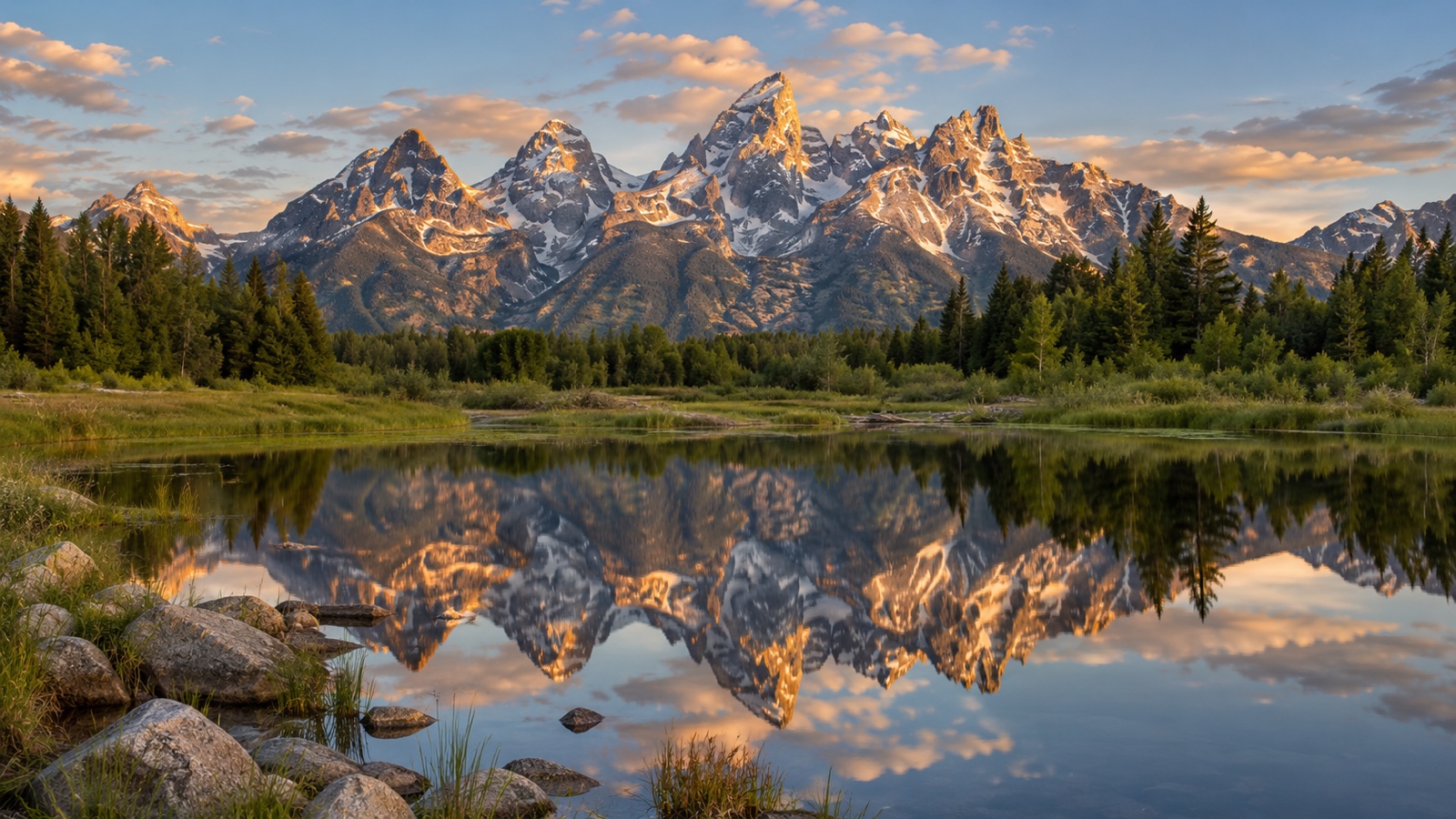
- The Teton Range rises sharply above Jackson Hole.
- Grand Teton is the range’s highest peak.
- It reaches 13,775 feet above sea level.
- The Tetons are geologically young compared with many older mountain ranges.
- Fault movement lifted the mountains while dropping the Jackson Hole basin.
- The range has very little foothill transition on its eastern side.
- That creates the famous sudden wall-of-mountains appearance.
- Glaciers still occupy high cirques in the Tetons.
- Jenny Lake was formed partly by glacial processes.
- Jackson Lake is a natural lake enlarged by a dam.
- The Snake River flows through Jackson Hole.
- Ansel Adams photographed the Tetons and Snake River in one of his famous landscapes.
- Jackson is a tourism center south of the park.
- The town square is known for arches made from shed elk antlers.
- Elk naturally shed and regrow antlers each year.
- The nearby National Elk Refuge winters thousands of elk.
- Sleigh rides operate on parts of the refuge in winter.
- Grand Teton and Yellowstone can be visited on one road trip but deserve very different mental postcards.
- One is geothermal chaos; the other looks like mountains arrived without bothering with an introduction.
Wyoming’s Indigenous history reaches far beyond park boundaries
Wyoming’s open basins, mountain passes, hot springs, and bison ranges were Indigenous homelands and travel corridors long before trails carried settlers west. Tribal nations remain part of the state today, especially on the Wind River Reservation.
- Many Indigenous nations have historical and cultural ties to Wyoming.
- They include Eastern Shoshone, Northern Arapaho, Lakota, Crow, Cheyenne, and others.
- The Wind River Reservation lies in west-central Wyoming.
- It is home to the Eastern Shoshone and Northern Arapaho tribes.
- The reservation is one of the largest in the United States.
- Fort Washakie is named for Eastern Shoshone leader Chief Washakie.
- Washakie negotiated with U.S. officials during a period of intense western expansion.
- Sacagawea’s burial place is claimed by tradition at the reservation, though historical accounts of her death differ.
- The Wind River Reservation includes mountains, valleys, rivers, and communities.
- Tribal governments operate schools, businesses, health services, cultural programs, and natural-resource departments.
- Devils Tower is sacred to several Plains tribes.
- Many Indigenous names and stories for the formation differ from the English name Devils Tower.
- Some tribes request voluntary climbing closures during June for ceremonial reasons.
- President Theodore Roosevelt designated Devils Tower in 1906.
- It became the first U.S. national monument.
- The formation is made of igneous rock with striking vertical columns.
- Its exact subsurface geologic origin remains debated among geologists.
- Climbers ascend cracks between the columns.
- Responsible interpretation presents Devils Tower as both geology and living sacred landscape.
- A landmark can have several names and meanings without one cancelling the others.
Wyoming earned the Equality State name early
- Wyoming Territory granted women the right to vote in 1869.
- It was the first U.S. territory to establish full women’s suffrage that remained in effect.
- Women voted in Wyoming elections before women had nationwide voting rights.
- Esther Hobart Morris became a justice of the peace in South Pass City in 1870.
- She is often described as the first woman to hold judicial office in the United States.
- Wyoming voters elected women to juries during the territorial period.
- Louisa Swain cast a ballot in Laramie in 1870.
- She is often cited as the first woman to vote in a general election under equal-suffrage law in the United States.
- Wyoming refused proposals to abandon women’s suffrage as a condition of statehood.
- The state entered the Union in 1890 with women’s voting rights intact.
- Nellie Tayloe Ross was elected governor of Wyoming in 1924.
- She became the first woman governor in U.S. history.
- Ross took office in 1925.
- She later became the first woman director of the U.S. Mint.
- The state adopted “Equal Rights” as its motto.
- Wyoming’s suffrage history included both genuine reform and political calculations about attracting settlers and strengthening territorial identity.
- Women of color still faced broader racial barriers and federal citizenship limits affecting voting in the 19th century.
- Native American citizenship and voting rights remained restricted nationally long after 1869.
- Equality history is strongest when the milestone stays important without pretending every inequality vanished with one law.
- Wyoming had women voters before it had statehood, which is a solid origin story for a nickname.
Rodeo, ranching & the Cowboy State identity
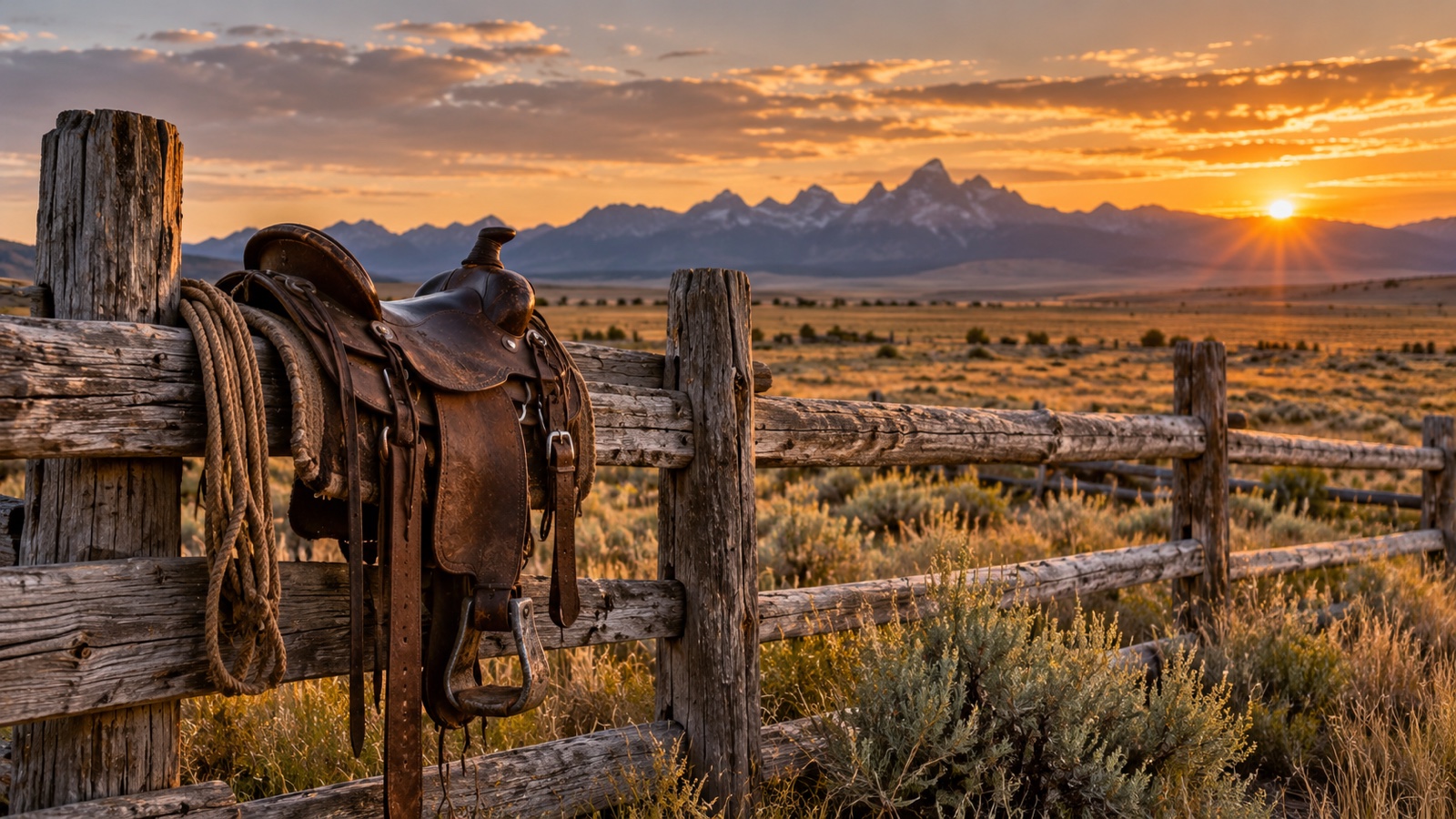
Wyoming’s cowboy image is commercial branding, real ranching history, Indigenous horse culture, military history, and modern sport all tangled together. There are still working ranches everywhere, but contemporary Wyoming is not a movie set where everyone rides to the grocery store.
- Wyoming is also nicknamed the Cowboy State.
- Cattle ranching became a major territorial industry during the late 19th century.
- Open-range ranching initially allowed cattle to graze over huge unfenced areas.
- The severe winter of 1886–1887 killed large numbers of cattle.
- That disaster helped change ranching practices.
- Barbed wire also transformed western land use by making fencing cheaper.
- Cheyenne Frontier Days began in 1897.
- It is one of America’s oldest and largest outdoor rodeo celebrations.
- The event calls itself the “Daddy of ’em All.”
- Rodeo events include bronc riding, barrel racing, steer wrestling, roping, and bull riding.
- Cody is named for William F. “Buffalo Bill” Cody.
- Cody helped found the town in the 1890s.
- The Buffalo Bill Center of the West contains several museums.
- Sheridan is another city strongly tied to ranching and western culture.
- The University of Wyoming is in Laramie.
- Its teams are the Cowboys and Cowgirls.
- The bucking-horse-and-rider symbol appears on Wyoming license plates.
- The image is based on a famous rodeo-style silhouette.
- Working ranches still contribute cattle, hay, wool, and rural livelihoods.
- Wyoming’s cowboy symbol is powerful enough to fit on a license plate with almost no explanation.
Energy, wildlife, fossils & 25 final Wyoming facts
- Wyoming is a major energy-producing state.
- The Powder River Basin contains enormous coal deposits.
- Wyoming has long been the largest coal-producing U.S. state.
- Oil and natural gas are also important industries.
- Wind-power development has expanded on Wyoming’s windy plains.
- Mineral taxes have historically funded a substantial share of state government.
- Energy transitions create major fiscal questions for Wyoming communities.
- Pronghorn are abundant across Wyoming’s open basins.
- Some pronghorn undertake long seasonal migrations.
- The Path of the Pronghorn route near Grand Teton is one of the first federally designated migration corridors.
- Greater sage-grouse depend on large sagebrush ecosystems.
- Wyoming contains some of the nation’s most extensive sage-grouse habitat.
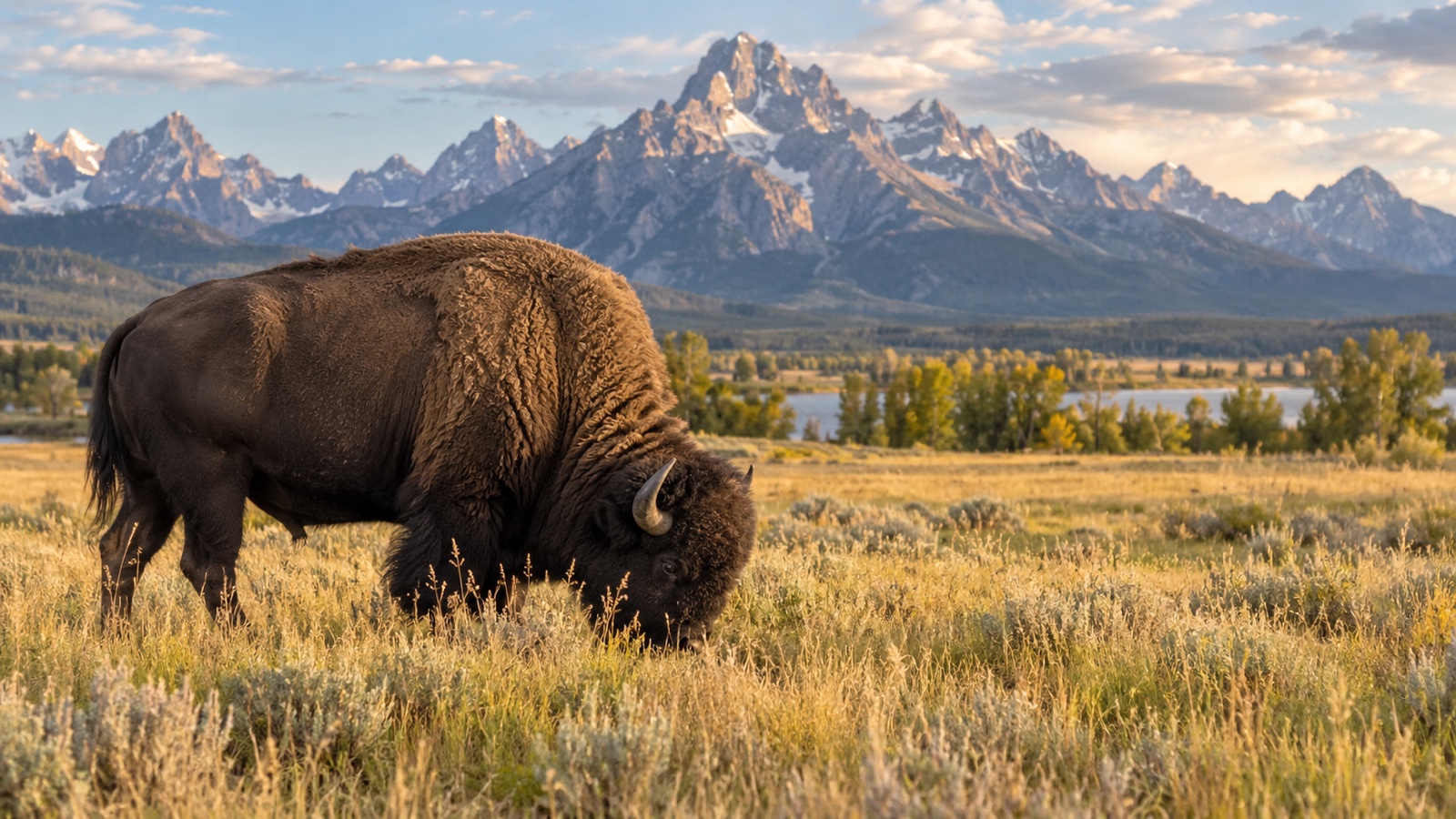
- Bison roam Yellowstone and other managed areas.
- Grizzly bears live in the Greater Yellowstone ecosystem.
- Gray wolves were reintroduced to Yellowstone in 1995 and 1996.
- Wyoming is rich in fossils.
- Fossil Butte National Monument preserves exceptionally detailed Eocene fish, plants, birds, and other organisms.
- The fossils formed in ancient lake sediments.
- The state fossil is Knightia, a small extinct fish common at Fossil Butte.
- The state bird is the western meadowlark.
- The state flower is Indian paintbrush.
- The state tree is plains cottonwood.
- The state mammal is the American bison.
- Yellowstone’s Old Faithful has probably appeared on more Wyoming vacation photos than any actual resident.
- After 145 facts, Wyoming still feels like America turned the scale slider up and forgot to increase the population.
Quick FAQ
Q: What is Wyoming famous for?
A: Yellowstone, Grand Teton, geysers, bison, rodeo, ranching, women’s suffrage history, coal and energy, pronghorn, fossils, and huge open landscapes.
Q: What is the capital of Wyoming?
A: Cheyenne is both the capital and largest city.
Q: Why is Wyoming called the Equality State?
A: Wyoming Territory granted women voting rights in 1869 and retained them through statehood, making equal suffrage central to state identity.
Q: Is Yellowstone entirely in Wyoming?
A: No. Most of the park is in Wyoming, but small sections extend into Montana and Idaho.
Q: What is Wyoming’s highest point?
A: Gannett Peak reaches 13,804 feet in the Wind River Range.

Ellie is the owner and sole author of Fun Facts, combining her mechanical engineering background with years of research-driven writing to deliver facts you can trust. Every article is thoroughly fact-checked and routinely updated as new science and sources emerge to keep information accurate and current. Her mission is to make learning delightful while upholding high standards of reliability and transparency.