
Christmas lights are one of the few household decorations that can turn a perfectly ordinary shrub into a neighborhood landmark. Behind the glow is a surprisingly good story about candles, early electricity, tiny filaments, LEDs, tangled cords, synchronized music, and the eternal mystery of the one section that refuses to turn on.
Before electric lights, Christmas trees used actual flames
- Candles were used to illuminate Christmas trees long before electric light strings existed.
- Small candles could be attached directly to branches with clips, holders, wax, or pins.
- Putting open flames on an evergreen created an obvious fire hazard.
- Families often lit tree candles only for short supervised periods.
- Water or sand might be kept nearby in case a branch caught fire.
- Evergreen branches become much more flammable as they dry indoors.
- Candlelight nevertheless created a dramatic effect because each flame was bright against a dark winter room.
- Light has carried religious and seasonal symbolism in winter celebrations for centuries.
- Christian Christmas traditions often connect light with the Nativity and the Star of Bethlehem.
- Winter festivals outside Christianity also use lamps, candles, or fire for their own distinct meanings.
- The modern Christmas-light tradition did not grow from one single ancient ceremony.
- It developed from changing holiday customs plus new lighting technology.
- Gas lighting illuminated many 19th-century buildings before household electricity became common.
- Gas flames were not a practical replacement for individual candles on tree branches.
- Electric bulbs finally offered a way to create points of light without exposed tree flames.
- Early electric lighting was still expensive enough to feel futuristic rather than ordinary.
- Homes needed electrical service before electric Christmas lights made sense for average families.
- That infrastructure spread gradually through American cities and then farther outward.
- Holiday lighting therefore grew alongside the broader electrification of daily life.
- I am grateful my decorating strategy no longer includes intentionally attaching fire to dry needles.
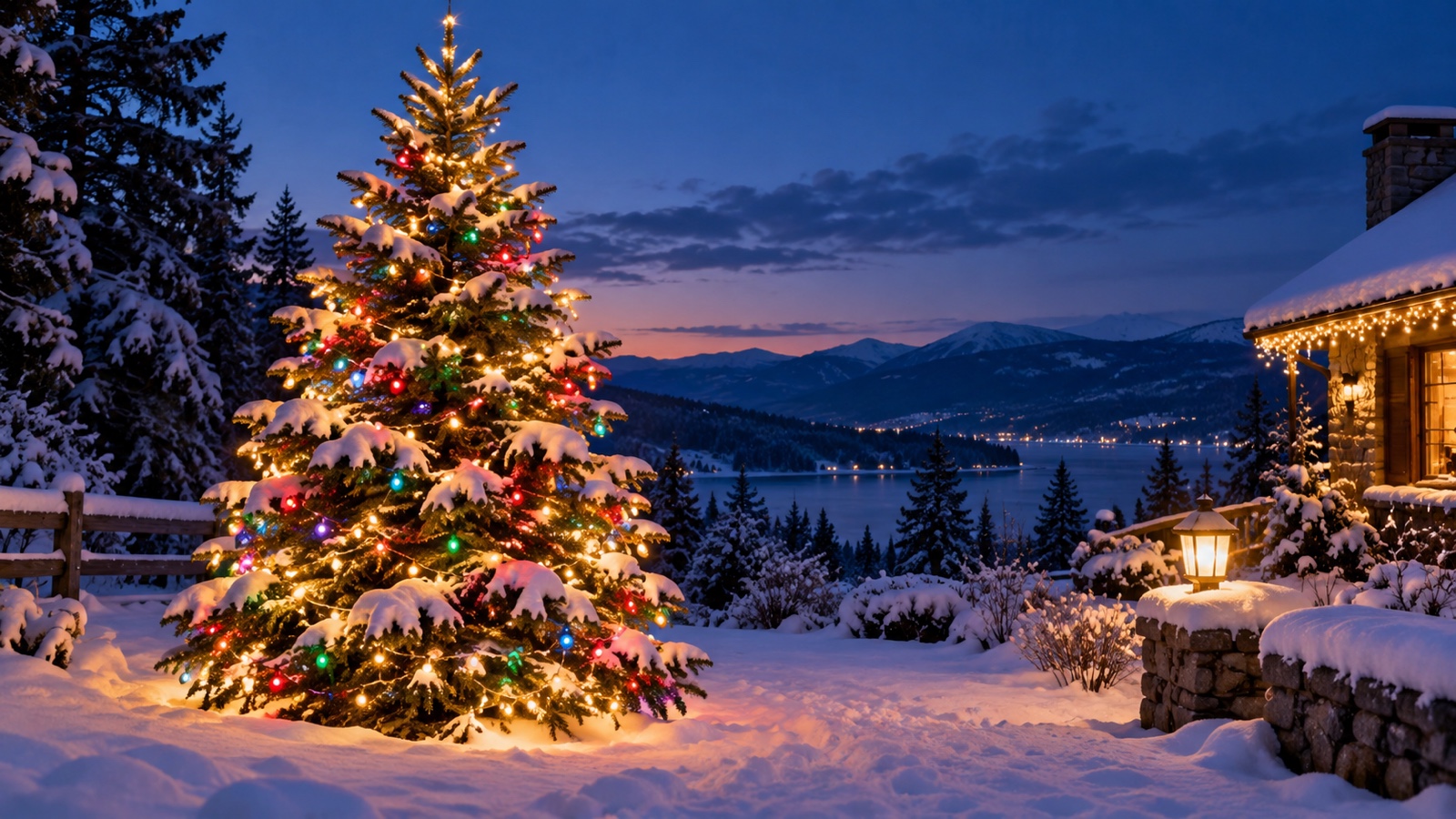
The first electric Christmas tree lights were a very fancy experiment
Electric Christmas lights arrived when electricity itself was still a novelty. Imagine seeing a tree glow without candles at a time when plenty of people had never flipped a wall switch because their house did not have one.
- Practical electric lighting systems began spreading in the late 19th century.
- Thomas Edison publicly demonstrated his incandescent lighting system at Menlo Park in late 1879.
- Electric lighting became commercially available during the early 1880s.
- Edward H. Johnson was an associate of Edison and an early promoter of electric lighting.
- Johnson displayed one of the earliest well-documented electrically illuminated Christmas trees in 1882.
- His tree stood in his New York City home.
- The electric bulbs were individually wired at a time when ready-made holiday light sets did not exist.
- The display attracted newspaper attention because electric tree lighting was so unusual.
- Early electric bulbs were expensive and difficult for ordinary households to install.
- Some early holiday-light customers hired electricians to wire their trees.
- Electric Christmas lighting therefore began as a luxury.
- Electricity reached the White House in 1891.
- The first documented electric lights on a White House family Christmas tree appeared in 1894.
- That tree was displayed during Grover Cleveland’s presidency.
- An 1896 account described a White House tree glowing with red, white, and blue electric lights.
- The first National Christmas Tree lighting took place in Washington, D.C., in 1923.
- President Calvin Coolidge participated in that first national ceremony.
- Public tree lightings helped demonstrate electricity as well as celebrate Christmas.
- By the early 20th century, prewired light strings made home decorating much more practical.
- Electric holiday lights turned a fire-reduction innovation into an entirely new decorating obsession.
How incandescent Christmas bulbs make light
- Traditional incandescent Christmas bulbs make light by heating a thin metal filament.
- Electric current passing through the filament encounters electrical resistance.
- That resistance heats the filament until it glows.
- Tungsten became the standard filament material because it tolerates extremely high temperatures.
- Much of an incandescent bulb’s electrical energy becomes heat rather than visible light.
- That is why old-style holiday bulbs can become noticeably warm.
- Miniature incandescent Christmas lights use much smaller bulbs than ordinary household lamps.
- C7 and C9 bulbs are larger traditional holiday-light shapes.
- The number names refer to standardized bulb diameters measured in eighths of an inch.
- A C7 bulb is about seven-eighths of an inch in diameter.
- A C9 bulb is about nine-eighths of an inch, or 1.125 inches, in diameter.
- Larger C9 bulbs became especially familiar on rooflines and outdoor displays.
- Colored incandescent bulbs can use tinted glass or colored coatings.
- Clear bulbs reveal more of the bright filament glow.
- Bulbs in one light string may be wired in series, parallel, or combinations of the two.
- Classic series wiring can make troubleshooting frustrating because one electrical break may affect an entire section.
- Modern miniature sets often include shunts that can help current bypass a failed filament.
- A missing or poorly seated bulb can still interrupt some strings.
- Tiny fuses in plugs help protect many holiday-light sets from excessive current.
- The annual search for one bad bulb is basically electrical diagnostics wearing a Santa hat.
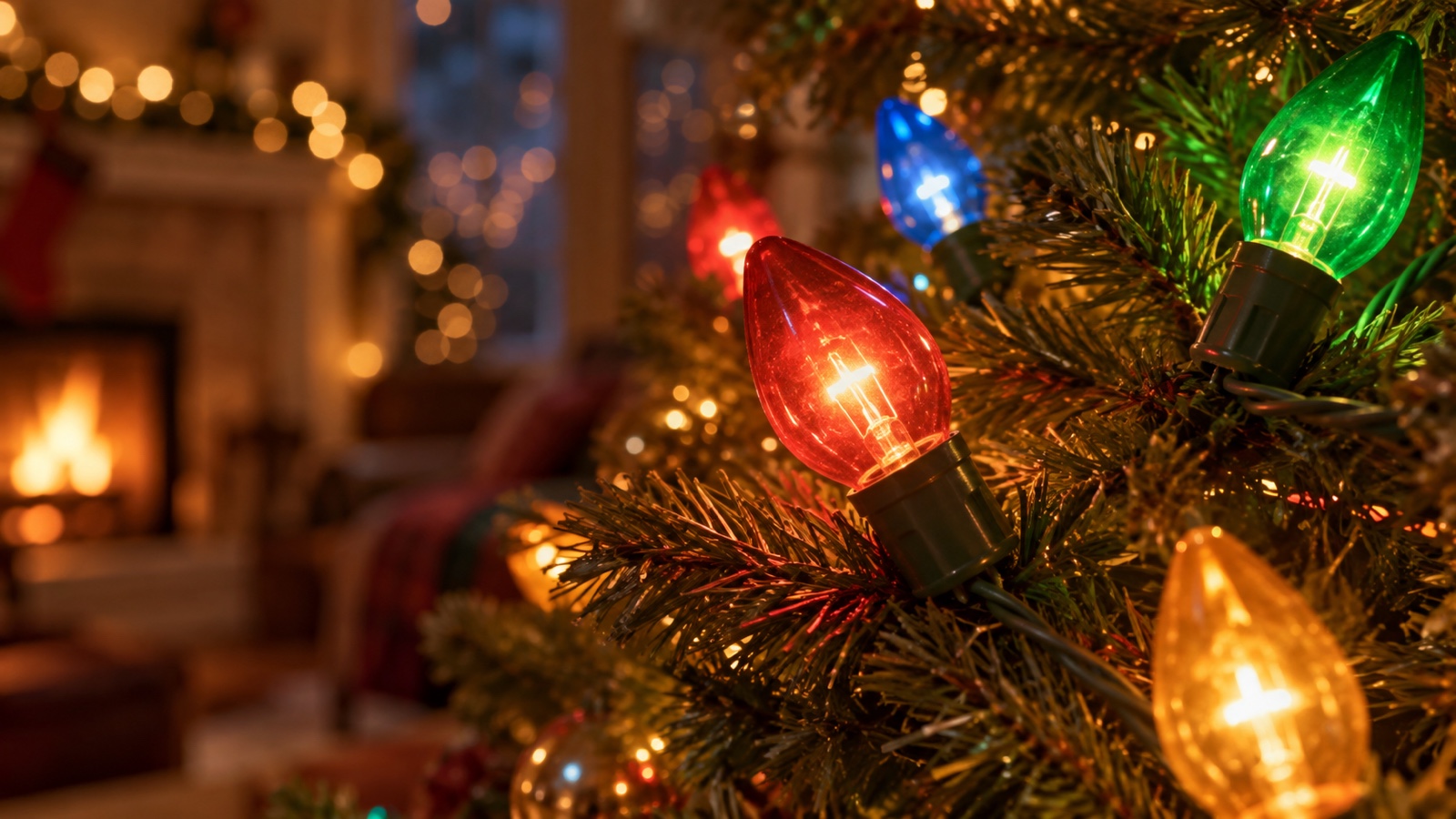
LEDs changed holiday lighting dramatically
LEDs solved several problems at once: they use less electricity, stay cooler, last much longer, and can produce vivid colors without relying on one scorching filament. They also gave people enough efficiency to cover entire houses in lights without needing a small power plant in the driveway.
- LED stands for light-emitting diode.
- An LED produces light when electrical current moves through a semiconductor junction.
- That process is called electroluminescence.
- LEDs do not need a glowing tungsten filament.
- They convert a larger share of electricity into useful light than incandescent bulbs do.
- LED holiday lights therefore use substantially less electricity for a comparable display.
- They also produce less unwanted heat at each light source.
- Lower heat can reduce the risk of scorching nearby decorations.
- LEDs can last for many thousands of operating hours.
- Their long lifespan is especially useful for commercial displays installed every year.
- LEDs can produce saturated colors efficiently.
- White LEDs usually begin with a blue LED plus light-converting phosphor materials.
- Warm-white LEDs are designed to imitate the yellower tone of incandescent bulbs.
- Cool-white LEDs have a bluer appearance.
- RGB LEDs combine red, green, and blue light sources.
- Changing the brightness of those channels creates many perceived colors.
- Addressable LEDs can be controlled individually rather than only as one entire string.
- That technology makes animated patterns and pixel-style displays possible.
- Some smart holiday lights connect to phones through Wi-Fi or Bluetooth.
- We have officially reached the point where the Christmas tree may have better connectivity than the guest bedroom.
Outdoor Christmas lights are an electrical safety project too
- Outdoor holiday lights should be rated for outdoor use.
- Outdoor-rated products are designed to handle moisture and temperature changes better than indoor-only products.
- Extension cords also carry indoor or outdoor ratings.
- Ground-fault circuit interrupter protection is especially important for outdoor electrical equipment.
- A GFCI can cut power quickly when it detects current leaking along an unintended path.
- Wet ground and outdoor wiring make that protection valuable.
- Electrical cords should not be run through standing water.
- Damaged insulation can expose conductors and create shock or fire hazards.
- Staples, nails, and sharp fasteners can damage electrical cords if driven through them.
- Plastic clips are commonly used to hold roofline lights without puncturing wiring.
- Manufacturers specify how many light strings can safely connect end to end.
- Exceeding those limits can overload wiring or fuses.
- LED sets often allow more strings to be connected because they draw less power.
- Electrical load should still be calculated from actual product ratings.
- Ladders add another major hazard to outdoor decorating.
- Metal ladders should be kept away from overhead electrical lines.
- Ice, snow, and wet leaves can make ladder footing unstable.
- Timers can switch outdoor lights off automatically overnight.
- Unplugging or switching off decorations before repair is safer than troubleshooting live wiring.
- Holiday spirit is considerably less festive when it requires an emergency-room visit.
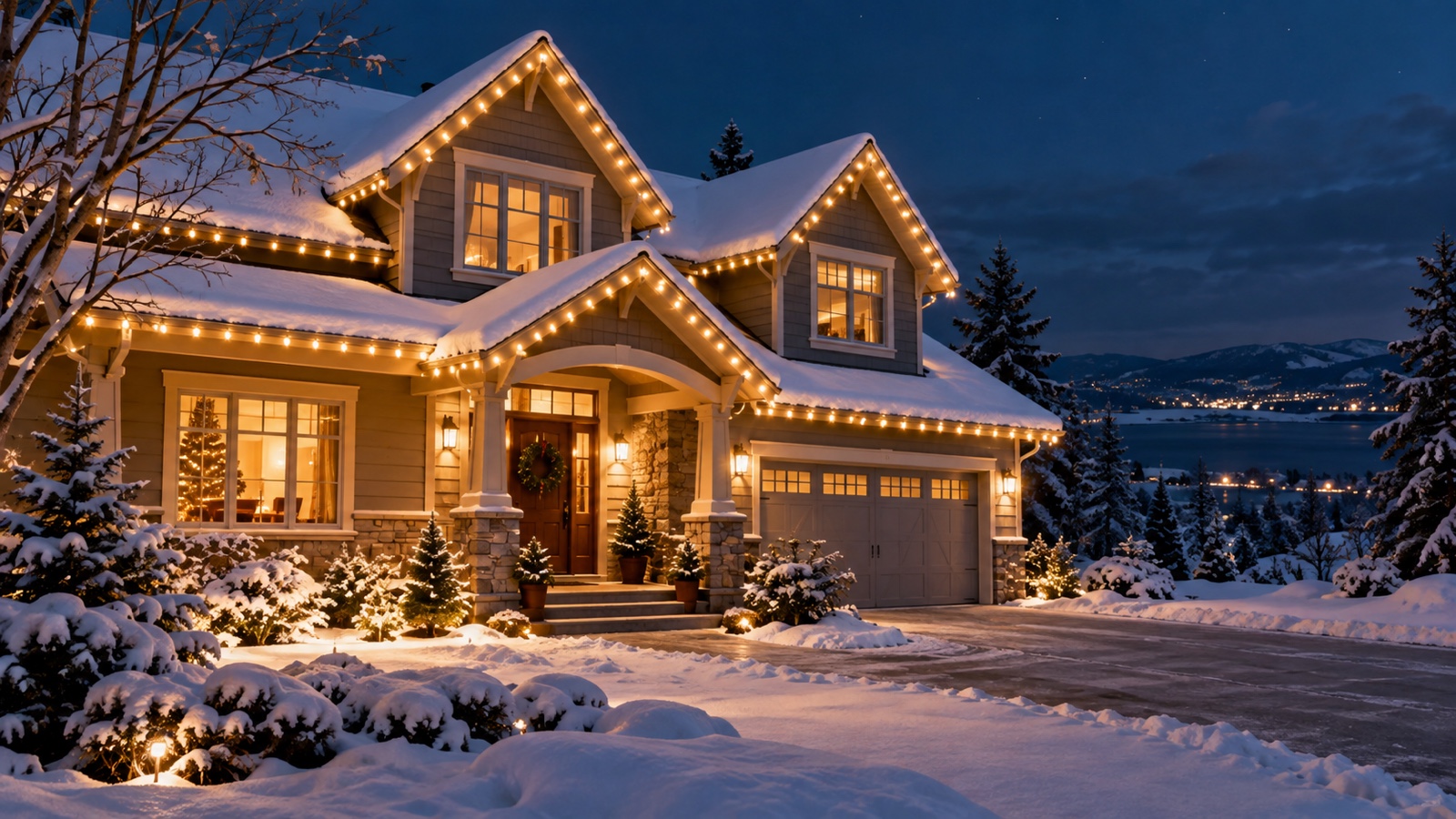
Synchronized displays turn a house into a tiny concert venue
A modern animated display is closer to theater lighting than to plugging in a string around the porch. Controllers divide lights into channels or individual pixels, software builds timed sequences, and a low-power radio transmitter can let parked viewers hear the matching music without making every neighbor hear it too.
- Animated Christmas displays use electronic controllers to switch or dim lights in patterns.
- Early home light shows often divided decorations into separate electrical channels.
- Modern pixel displays can control thousands of individual LED nodes.
- Each programmable pixel can contain multiple color channels.
- Sequencing software lets designers match lighting changes to music.
- A computer can store the entire show and trigger it automatically each evening.
- Some displays use low-power FM transmitters to send synchronized audio to nearby car radios.
- That keeps outdoor speakers from blasting the neighborhood continuously.
- Large displays may use dedicated electrical circuits to distribute load safely.
- Controllers need weather protection when installed outdoors.
- Data cables carry control signals separately from power in many advanced systems.
- Networked controllers let one computer coordinate lights spread across a large property.
- RGB pixels can create moving rainbows, text, faces, snowflakes, and video-like effects.
- Projection mapping can add animated imagery to buildings without attaching a bulb to every surface.
- Laser projectors can create bright effects but must be aimed safely away from aircraft and people’s eyes.
- Commercial displays may use cranes and bucket trucks to install lights in tall trees.
- Professional crews often begin installing major holiday displays weeks or months before opening night.
- Theme parks reuse extensive wiring, controllers, props, and programmed sequences from year to year.
- Some homeowners collect donations for charities rather than charging people to see elaborate displays.
- Nothing says “simple holiday decorating” like debugging network addresses for a six-foot singing snowman.
Famous displays, energy use & 25 final bright facts
- The National Christmas Tree lighting tradition in Washington, D.C., began in 1923.
- The ceremony takes place near the White House in President’s Park.
- Public Christmas-lighting ceremonies now take place in towns and cities across the United States.
- Rockefeller Center’s Christmas Tree is another famous annual New York lighting tradition.
- Large public trees require professional rigging because their light strings can weigh hundreds of pounds collectively.
- Many botanical gardens create seasonal walking displays using trees, tunnels, sculptures, and illuminated landscapes.
- Zoos also commonly operate ticketed holiday-light events after normal animal-viewing hours.
- Drive-through displays became especially popular because visitors can stay warm inside vehicles.
- Neighborhood lighting contests encourage homeowners to decorate for prizes or bragging rights.
- Some homeowners synchronize several properties into one coordinated street display.
- LEDs made very large displays cheaper to operate than comparable incandescent installations.
- An LED string can use a fraction of the electricity required by a similar incandescent string.
- Actual energy use still depends on bulb count, wattage, brightness, and operating hours.
- A plug-in energy meter can measure how much electricity a particular display consumes.
- Timers reduce electricity use by preventing lights from staying on after everyone is asleep.
- Solar-powered holiday lights store daytime energy in rechargeable batteries.
- Their performance depends on winter sunlight, panel placement, battery condition, and temperature.
- Cold weather can reduce the performance of some rechargeable batteries.
- Broken light strings should be handled as electronic or electrical waste where local recycling programs accept them.
- Holiday-light recycling programs can recover copper wiring and other materials.
- Old strings should not be placed loose in ordinary curbside recycling bins unless the local program specifically accepts them.
- Strings of lights can wrap around sorting equipment at recycling facilities.
- Warm-white and multicolor lights can make the exact same house feel completely different.
- The “best” display is therefore partly electrical engineering and partly extremely subjective neighborhood diplomacy.
- After 145 facts, my favorite Christmas-light technology is still the timer that remembers to shut everything off when I forget.
Quick FAQ
Q: Who invented electric Christmas tree lights?
A: Edward H. Johnson displayed one of the earliest well-documented electrically lit Christmas trees in New York in 1882, building on the new electric-lighting technology of his era.
Q: When did the White House first use electric Christmas tree lights?
A: The first documented electric lights on a White House family Christmas tree appeared in 1894 during Grover Cleveland’s presidency.
Q: Are LED Christmas lights cheaper to run?
A: Usually, yes. LEDs use substantially less electricity than comparable incandescent holiday bulbs and also produce less heat.
Q: Can indoor Christmas lights be used outside?
A: Only if the product is specifically rated for outdoor use. Outdoor sets are designed for moisture and weather exposure that indoor-only products may not tolerate safely.
Q: Why does one section of Christmas lights go out?
A: Depending on the wiring, a loose bulb, broken conductor, failed component, or blown fuse can interrupt power to a section of the string.

Ellie is the owner and sole author of Fun Facts, combining her mechanical engineering background with years of research-driven writing to deliver facts you can trust. Every article is thoroughly fact-checked and routinely updated as new science and sources emerge to keep information accurate and current. Her mission is to make learning delightful while upholding high standards of reliability and transparency.