
I know fall has arrived when I start pretending a sweater is a personality trait and suddenly want cinnamon in everything. Behind the cozy clichés, though, fall is packed with genuinely strange science, clever animal behavior, old traditions, and a surprising amount of history.
Fall basics that make the season different
Fall looks simple from the porch, but the season is really a giant transition happening all around us. These first facts cover the big-picture stuff.
- Fall is one of the four temperate seasons, sitting between summer and winter.
- In the Northern Hemisphere, meteorological fall includes September, October, and November.
- Meteorological seasons use complete calendar months because that makes weather records easier to compare.
- Astronomical fall begins at the September equinox and ends at the December solstice.
- The Southern Hemisphere experiences fall while the Northern Hemisphere is experiencing spring.
- The word “fall” comes from the older phrase “fall of the leaf.”
- “Autumn” entered English through French and ultimately traces back to Latin.
- Americans commonly use both “fall” and “autumn,” although “fall” is especially common in everyday speech.
- The exact date of the September equinox can vary from year to year.
- Earth’s tilted axis, not changing distance from the Sun, causes the seasons.
- Earth is actually closest to the Sun during Northern Hemisphere winter, not summer.
- As fall progresses, the Northern Hemisphere tilts increasingly away from direct sunlight.
- Lower sun angles mean sunlight is spread across a larger area, reducing its heating power.
- Days become shorter through fall in the Northern Hemisphere.
- Nights become longer through fall in the Northern Hemisphere.
- The change in daylight happens faster near the equinox than near the solstice.
- Locations near the equator experience much less seasonal change in daylight.
- Places near the Arctic Circle can experience dramatic fall changes in both temperature and daylight.
- Fall does not arrive everywhere at once, even within the same country.
- Elevation, latitude, local climate, and tree species all affect how fall looks and feels.
Why leaves change color
This is the part of fall that makes me stop mid-walk and take 14 nearly identical photos of one tree. The chemistry behind those colors is better than any filter.
- Leaves appear green during the growing season because chlorophyll strongly reflects green wavelengths of light.
- Chlorophyll helps plants capture light energy for photosynthesis.
- As days shorten, many deciduous trees begin reducing chlorophyll production.
- Existing chlorophyll then breaks down, allowing other pigments to become more visible.
- Yellow and orange pigments called carotenoids are present in many leaves all summer.
- Those carotenoids become easier to see after green chlorophyll fades.
- Carotenoids are also responsible for familiar colors in foods such as carrots and corn.
- Red and purple fall colors often come from pigments called anthocyanins.
- Some trees produce additional anthocyanins in their leaves during fall.
- Sugars trapped in leaves can help encourage anthocyanin production under the right conditions.
- Bright sunny days and cool nights can support especially vivid red coloration in some species.
- Hard freezes can shorten the display by damaging leaves or causing them to drop.
- Drought can make leaves turn brown or fall earlier than usual.
- Warm fall weather can delay color changes in some regions.
- Different tree species have characteristic fall color tendencies.
- Sugar maples are famous for mixtures of yellow, orange, and red.
- Aspens are especially known for brilliant yellow fall foliage.
- Oaks often produce deeper red, russet, or brown fall tones.
- Evergreens keep most of their foliage through winter, but even they replace older needles over time.
- Tamaracks and other deciduous conifers turn color and drop their needles every fall.
- Brown leaves contain tannins and other compounds that remain after brighter pigments fade.
- Trees form a protective separation layer where each leaf stem meets the branch.
- That layer eventually helps the leaf detach without leaving the tree with a permanently open wound.
- Wind and rain often finish the job once the leaf’s connection has weakened.
Cooler weather, shorter days & changing skies
- Fall temperatures generally decline because incoming solar energy decreases as the season advances.
- Oceans and large lakes can slow local cooling because water releases stored summer heat gradually.
- That is why coastal areas often have milder falls than inland locations at the same latitude.
- Clear fall nights can cool quickly because heat escapes efficiently into the atmosphere.
- The first frost date varies enormously across the United States.
- Mountain valleys can frost before nearby slopes because cold air settles into lower terrain.
- Frost can form even when an official air temperature reading is slightly above 32°F.
- Ground-level surfaces can cool below the temperature measured several feet above them.
- A freeze refers to air temperatures reaching 32°F or lower for a period of time.
- Fall is part of the Atlantic hurricane season, which officially continues through November 30.
- September is historically one of the most active months for Atlantic tropical cyclones.
- Cold fronts become increasingly noticeable across much of the United States during fall.
- Those fronts can produce sharp temperature swings from one day to the next.
- Fall thunderstorms can still be severe, especially when warm humid air meets strong cold fronts.
- Early-season snow is possible in northern states and high elevations before fall is over.
- Lake-effect snow can begin in fall when cold air moves over relatively warm lake water.
- Fog is common on cool fall mornings when moist air reaches its dew point.
- Low sun angles can make late-afternoon fall light look especially golden.
- Sunset shifts earlier rapidly in many midlatitude locations during September and October.
- Daylight Saving Time ending makes sunset suddenly appear about an hour earlier where the clock change is observed.
What animals do during fall
Animals do not get pumpkin spice, but they absolutely understand that winter is coming. Fall is basically nature’s version of checking the pantry and charging every battery.
- Many migratory birds travel south during fall to reach better winter food and habitat.
- Migration timing can be influenced by daylight, weather, food availability, and inherited behavior.
- Some birds migrate thousands of miles between breeding and wintering grounds.
- Broad-winged hawks can form huge migrating groups called kettles.
- Monarch butterflies from eastern North America migrate toward central Mexico in fall.
- No single eastern monarch completes the full round trip from Mexico north and back again.
- The southbound fall generation can live much longer than typical summer monarch generations.
- Gray squirrels cache nuts in many separate locations rather than relying on one giant stash.
- Squirrels use memory and spatial cues to recover many of their buried food stores.
- Some forgotten nuts survive and may eventually grow into new trees.
- Black bears enter a period of intense eating called hyperphagia before winter denning.
- During hyperphagia, bears can spend much of the day searching for calorie-rich food.
- Deer breeding season, commonly called the rut, occurs in fall across much of North America.
- Male deer become more active and less cautious during the rut.
- Elk bugling is strongly associated with their fall breeding season.
- Many insects seek protected places to survive colder months.
- Some lady beetles gather in large groups before winter.
- Woolly bear caterpillars overwinter in a dormant state and resume development later.
- The width of a woolly bear’s color bands does not reliably predict winter severity.
- Chipmunks store seeds and nuts in underground burrows for colder months.
- Beavers remain active in fall while preparing food caches near their lodges.
- Some frogs survive winter by entering dormancy in mud, leaf litter, or sheltered ground.
- Wood frogs can survive partial freezing because their bodies produce protective compounds.
- Many fish change feeding patterns as water temperatures cool.
Harvest season, pumpkins & fall food
- Fall is harvest season for many major crops across temperate parts of North America.
- Apples are commonly harvested from late summer through fall, depending on variety and region.
- Some apple varieties taste best after they have had time to mature late in the season.
- Pumpkins are fruits because they develop from flowers and contain seeds.
- Pumpkins belong to the squash family.
- Most carving pumpkins are bred for shape, size, and sturdy walls rather than the sweetest flavor.
- Smaller sugar pumpkins are generally better suited to pies and other cooking.
- Fresh pumpkin puree and canned pumpkin can differ in moisture content and flavor.
- Much canned “pumpkin” is made from cultivated squash varieties selected for smooth texture.
- Corn harvest timing varies depending on whether the crop is grown for sweet corn, grain, or silage.
- Cranberries ripen in fall in major U.S. growing regions.
- Cranberries contain internal air pockets, which help ripe berries float during wet harvesting.
- Sweet potatoes are commonly harvested before hard frost damages the crop.
- Freshly harvested sweet potatoes are often cured to improve sweetness and storage quality.
- Pecans mature in fall, making them a natural fit for holiday baking.
- Many winter squash varieties are harvested in fall and can keep for months when stored properly.
- Cinnamon comes from the inner bark of trees in the genus Cinnamomum.
- Nutmeg is the seed of a tropical evergreen tree, even though Americans strongly associate it with cool-weather baking.
- Apple cider in the United States usually means an unfiltered apple beverage, not necessarily an alcoholic drink.
- Hard cider is the alcoholic version produced through fermentation.
- Hot cider is often flavored with spices such as cinnamon, cloves, or allspice.
- Caramel apples became a popular American fall treat during the 20th century.
Fall traditions people wait for all year
This is where fall gets wonderfully specific. Somehow we collectively decided that corn should become a maze, pumpkins should get faces, and every porch needs at least one decorative gourd.
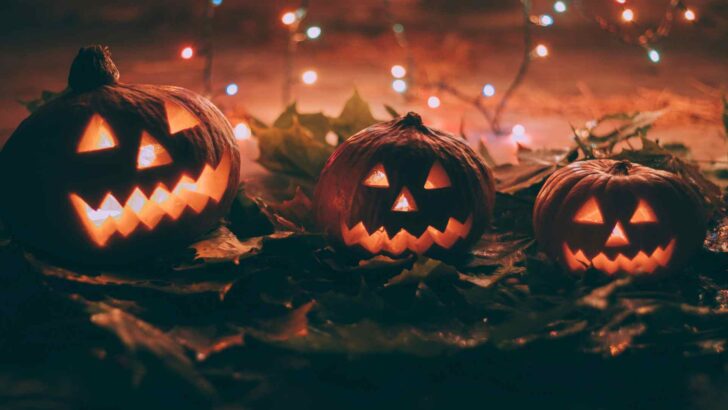
- Halloween is celebrated on October 31 each year.
- Modern Halloween traditions combine influences from religious observances, folk customs, immigration, and popular culture.
- Jack-o’-lantern traditions developed from older practices of carving root vegetables in parts of Britain and Ireland.
- Pumpkins became a natural American carving choice because they were large and widely available.
- Thanksgiving is celebrated on the fourth Thursday of November in the United States.
- Canadian Thanksgiving falls earlier, on the second Monday in October.
- Many U.S. communities hold fall festivals featuring food, crafts, hayrides, and harvest activities.
- Corn mazes became especially popular as farm entertainment in the late 20th century.
- “Leaf peeping” is an informal term for traveling specifically to enjoy fall foliage.
- New England is famous for fall foliage tourism, but colorful displays occur across many U.S. regions.
- College football occupies a huge part of American fall culture.
- The NFL regular season traditionally begins in September.
- Major League Baseball’s postseason takes place during fall.
- Homecoming celebrations at schools and colleges are strongly associated with fall.
- Oktoberfest in Munich actually begins in September and usually ends in early October.
- The original Oktoberfest was connected to a royal wedding celebration in 1810.
- Dia de los Muertos observances occur around November 1 and 2 and are especially associated with Mexico.
- Diwali often falls during October or November because its date follows a lunisolar calendar.
- Many families begin holiday decorating during late fall as Thanksgiving approaches.
- Black Friday follows Thanksgiving in the United States and became a major retail shopping day.
- Veterans Day is observed every November 11 in the United States.
- The Macy’s Thanksgiving Day Parade has been a New York City tradition since 1924.
Odd, historical & surprisingly useful fall facts
- Fallen leaves return nutrients to soil as fungi, insects, and microorganisms break them down.
- Leaving some leaf litter in garden areas can provide winter habitat for insects and other small animals.
- Wet leaves can become slippery on sidewalks and roads because they reduce tire and shoe traction.
- Dry fallen leaves can become a fire hazard during prolonged dry weather.
- Raking leaves is not biologically necessary for every lawn, although thick mats can smother grass.
- Mulching leaves with a mower can return organic material to a lawn.
- The familiar “fall smell” outdoors comes from a mixture of soil moisture, decomposing plant material, wood smoke, and other compounds.
- People can experience seasonal mood changes as daylight decreases.
- Fall allergies are often triggered by ragweed pollen and outdoor mold spores.
- Ragweed pollen can travel long distances in the wind.
- Mold spores can increase in damp piles of fallen leaves.
- The full moon closest to the September equinox is traditionally called the Harvest Moon.
- The Harvest Moon can provide unusually short gaps between successive evening moonrises around that time of year.
Quick FAQ
Q: When does fall start?
A: Meteorological fall starts September 1. Astronomical fall starts at the September equinox, usually around September 22 or 23 in the Northern Hemisphere.
Q: Why do leaves change color in fall?
A: Shorter days trigger changes in many deciduous trees. Chlorophyll breaks down, revealing yellow and orange pigments, while some leaves also produce red anthocyanins.
Q: Why is fall called fall?
A: The name developed from the old English expression “fall of the leaf,” describing the seasonal dropping of leaves.
Q: Is fall colder because Earth is farther from the Sun?
A: No. Seasonal cooling is caused mainly by Earth’s axial tilt, which changes sun angle and day length.
Q: What are some classic fall foods?
A: Apples, pumpkins, winter squash, cranberries, pecans, sweet potatoes, cider, and warm baking spices are all closely associated with American fall cooking.

Ellie is the owner and sole author of Fun Facts, combining her mechanical engineering background with years of research-driven writing to deliver facts you can trust. Every article is thoroughly fact-checked and routinely updated as new science and sources emerge to keep information accurate and current. Her mission is to make learning delightful while upholding high standards of reliability and transparency.