
Antarctica is the coldest, driest, highest, and windiest continent, yet it contains most of Earth’s ice and a huge share of its freshwater. Beneath kilometers of ice lie mountains, valleys, lakes, volcanoes, and bedrock far below sea level. No country owns it in the ordinary sense, no native human population exists, and winter darkness can last for months. These 145 Antarctica facts explore ice, wildlife, weather, exploration, science, treaties, and climate.
Antarctica basics
- Antarctica is Earth’s southernmost continent.
- The geographic South Pole lies on the continent.
- The Southern Ocean surrounds Antarctica.
- Antarctica covers roughly 14 million square kilometers depending on how ice shelves and islands are counted.
- It is larger than Europe.
- Antarctica is the coldest continent.
- It is also the driest continent.
- It has the highest average elevation of any continent.
- It is the windiest continent by broad climatological measures.
- About 98 percent of its land surface is covered by ice.
- The average elevation is around 2,500 meters.
- Most people who visit are scientists, support staff, tourists, or expedition personnel.
- There is no permanent Indigenous human population.
- No sovereign country governs Antarctica as an ordinary national territory.
- International agreements preserve the continent primarily for peaceful purposes and scientific cooperation.
The Antarctic ice sheet is enormous
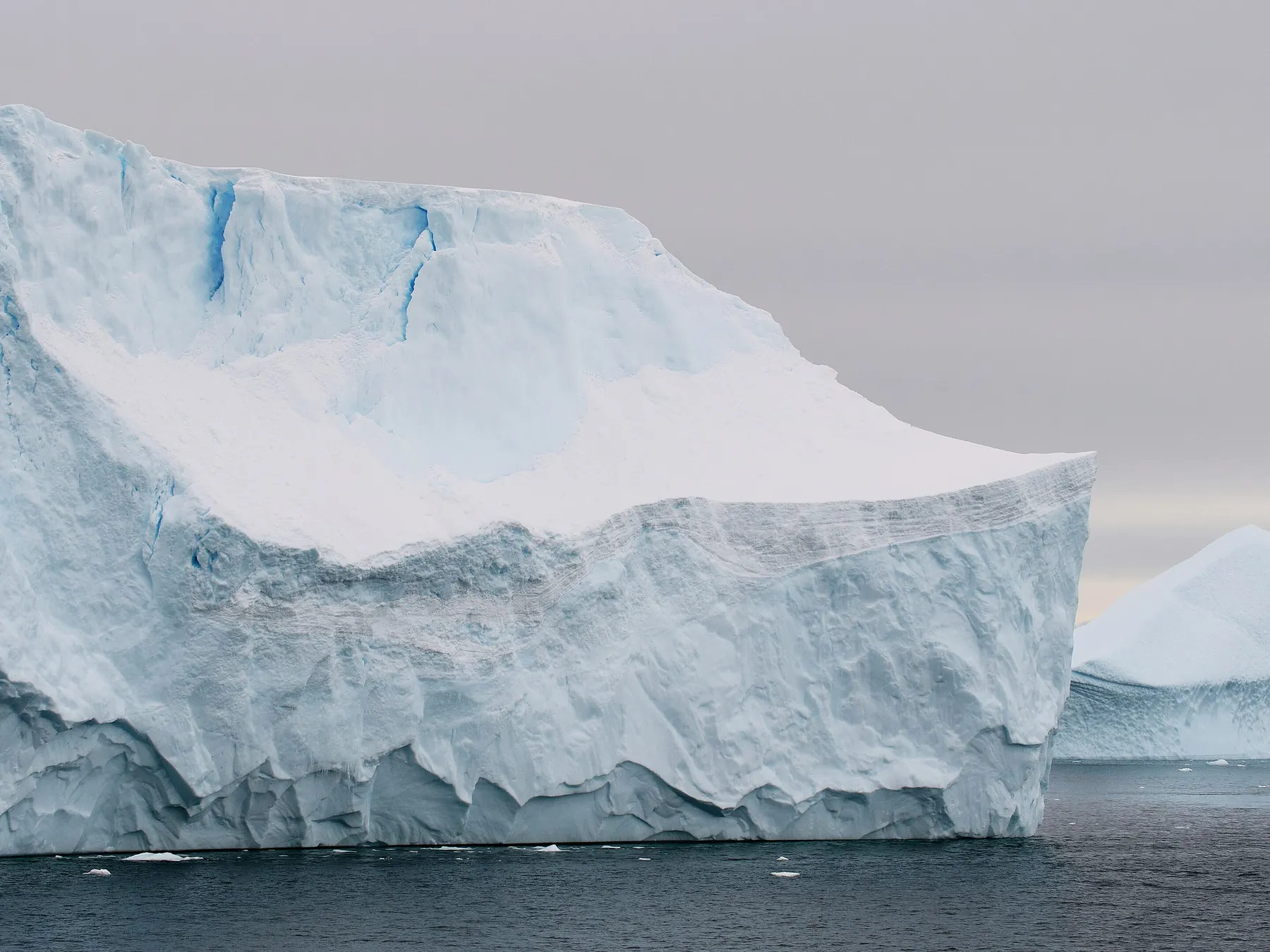
- The Antarctic ice sheet is the largest single mass of ice on Earth.
- Its mean thickness is more than two kilometers.
- Some locations contain more than four kilometers of ice.
- Snow accumulates year after year and compresses into firn and eventually glacial ice.
- The ice slowly flows outward under its own weight.
- Glaciers channel that movement toward the coast.
- Ice shelves form where grounded ice flows out over the ocean and begins floating.
- The Ross Ice Shelf is one of the largest ice shelves.
- The Filchner-Ronne system is another enormous floating ice area.
- Icebergs calve from ice shelves and glacier fronts.
- Calving itself is a natural part of ice-sheet behavior.
- Changes in calving and ice flow can nevertheless signal larger climate-driven instability.
- The Antarctic ice sheet contains enough frozen water to raise global sea level by many tens of meters if all of it melted.
- Such complete melting is not an immediate scenario, but portions of the ice sheet are already losing mass.
- Antarctic ice connects the continent directly to coastlines around the entire planet.
Most of Antarctica is a desert
- A desert is defined by low precipitation rather than high temperature.
- That makes Antarctica the world’s largest desert by area.
- The high interior receives extremely little annual snowfall in water-equivalent terms.
- Cold air can hold very little water vapor.
- Stormier coastal areas receive much more precipitation than the plateau.
- Snow can remain for centuries because melting is limited in the cold interior.
- Antarctic air is often exceptionally dry.
- Low humidity can cause skin and lips to dry quickly.
- Snowfall on the plateau may consist of tiny ice crystals rather than dramatic flakes.
- Diamond dust can form under clear skies.
- Diamond dust consists of suspended ice crystals sparkling in sunlight.
- Wind redistributes snow even when no new snow is falling.
- Blowing snow can reduce visibility to almost nothing.
- A whiteout can erase visual contrast between ground and sky.
- Antarctica demonstrates that a place can be covered in frozen water and still qualify as extremely dry.
Earth’s coldest temperatures
- The coldest directly measured surface-air temperature on Earth was recorded at Vostok Station.
- The reading was minus 89.2 degrees Celsius in 1983.
- Vostok sits deep in the high Antarctic interior.
- High elevation contributes to extreme cold.
- Long polar darkness allows intense winter cooling.
- Dry clear air also allows heat to radiate away efficiently.
- Satellite instruments have detected even colder snow-surface temperatures in small high-elevation hollows.
- Those satellite surface readings are not directly equivalent to standard weather-station air-temperature records.
- Coastal Antarctica is generally much milder than the interior plateau.
- The Antarctic Peninsula is milder than much of the rest of the continent.
- Summer temperatures near some coastal stations can approach or rise above freezing.
- Interior summer temperatures can remain deeply below freezing.
- Wind chill can make exposed conditions even more dangerous to people.
- Equipment must be designed for lubricants, batteries, plastics, and electronics to operate in severe cold.
- Antarctic cold is as much an engineering challenge as a personal comfort problem.
Katabatic winds race downhill
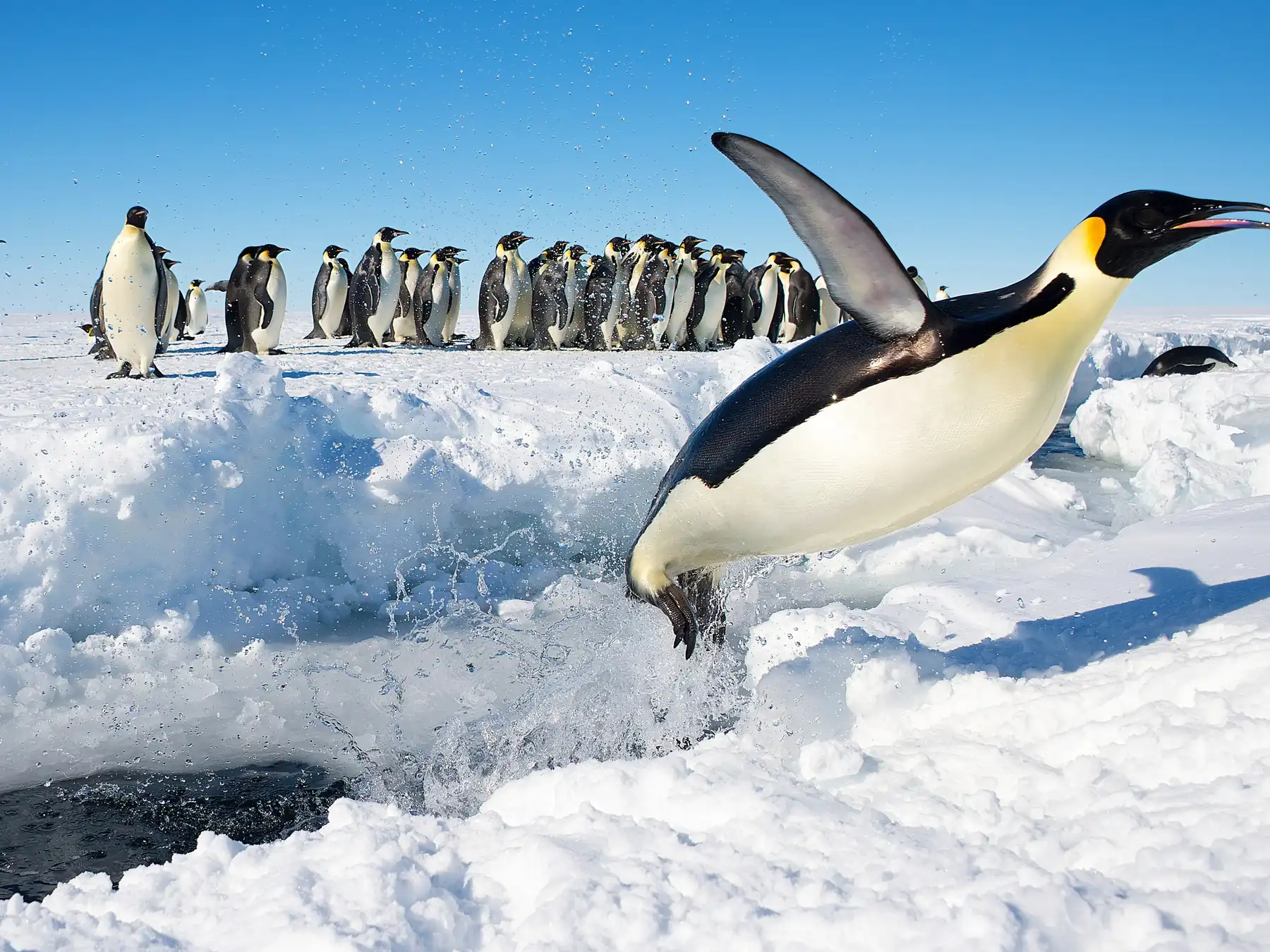
- Antarctica is famous for katabatic winds.
- Katabatic air becomes cold and dense over the elevated interior.
- Gravity pulls that dense air downslope toward the coast.
- Terrain can funnel the flow into very strong winds.
- Some Antarctic coastal locations experience extraordinary wind speeds.
- Recorded gusts have exceeded 300 kilometers per hour in extreme cases.
- Wind can scour snow away from exposed surfaces.
- It can also build large drifts behind structures.
- Stations are designed with snow accumulation and wind loading in mind.
- Some buildings are elevated on legs to reduce drifting.
- Others can be raised as snow levels change.
- Field camps must anchor tents securely.
- Blowing snow can make travel impossible even without falling precipitation.
- Wind-driven snow can abrade exposed surfaces.
- Antarctic weather combines cold, dryness, altitude, and wind in ways that magnify one another.
Months of daylight and darkness
- Earth’s axial tilt creates extreme seasonal daylight in Antarctica.
- At the South Pole, the Sun rises only once each year.
- It remains above the horizon for roughly six months.
- It then sets and stays below the horizon for roughly six months.
- The exact transition includes long periods of twilight.
- Austral summer occurs around December.
- Austral winter occurs around June.
- The December solstice brings maximum southern daylight.
- The June solstice occurs during polar darkness.
- Coastal locations north of the pole have shorter continuous-daylight periods.
- Researchers use blackout curtains and sleep routines during constant summer light.
- Winter darkness can affect circadian rhythms.
- Station crews maintain schedules independent of visible sunrise and sunset.
- The Moon and auroras can brighten winter skies.
- At the South Pole, one apparent day-night cycle effectively stretches across an entire year.
Penguins, seals, and ocean life
- Penguins are native to the Southern Hemisphere.
- Several penguin species breed in Antarctica or on nearby islands.
- Emperor penguins breed during the Antarctic winter.
- They are the largest living penguin species.
- Male emperor penguins incubate a single egg on their feet under a brood pouch.
- They fast for extended periods during incubation.
- Adélie penguins breed in ice-free coastal areas during summer.
- Seals are major Antarctic predators and prey species.
- Leopard seals hunt penguins and other animals.
- Weddell seals can dive beneath sea ice.
- Crabeater seals eat mostly krill rather than crabs.
- Antarctic krill are small crustaceans that support huge portions of the food web.
- Baleen whales feed heavily on krill.
- Most Antarctic animal biomass depends ultimately on productivity in the surrounding ocean.
- The continent’s interior has very little large animal life compared with its biologically rich coasts and seas.
There are no polar bears
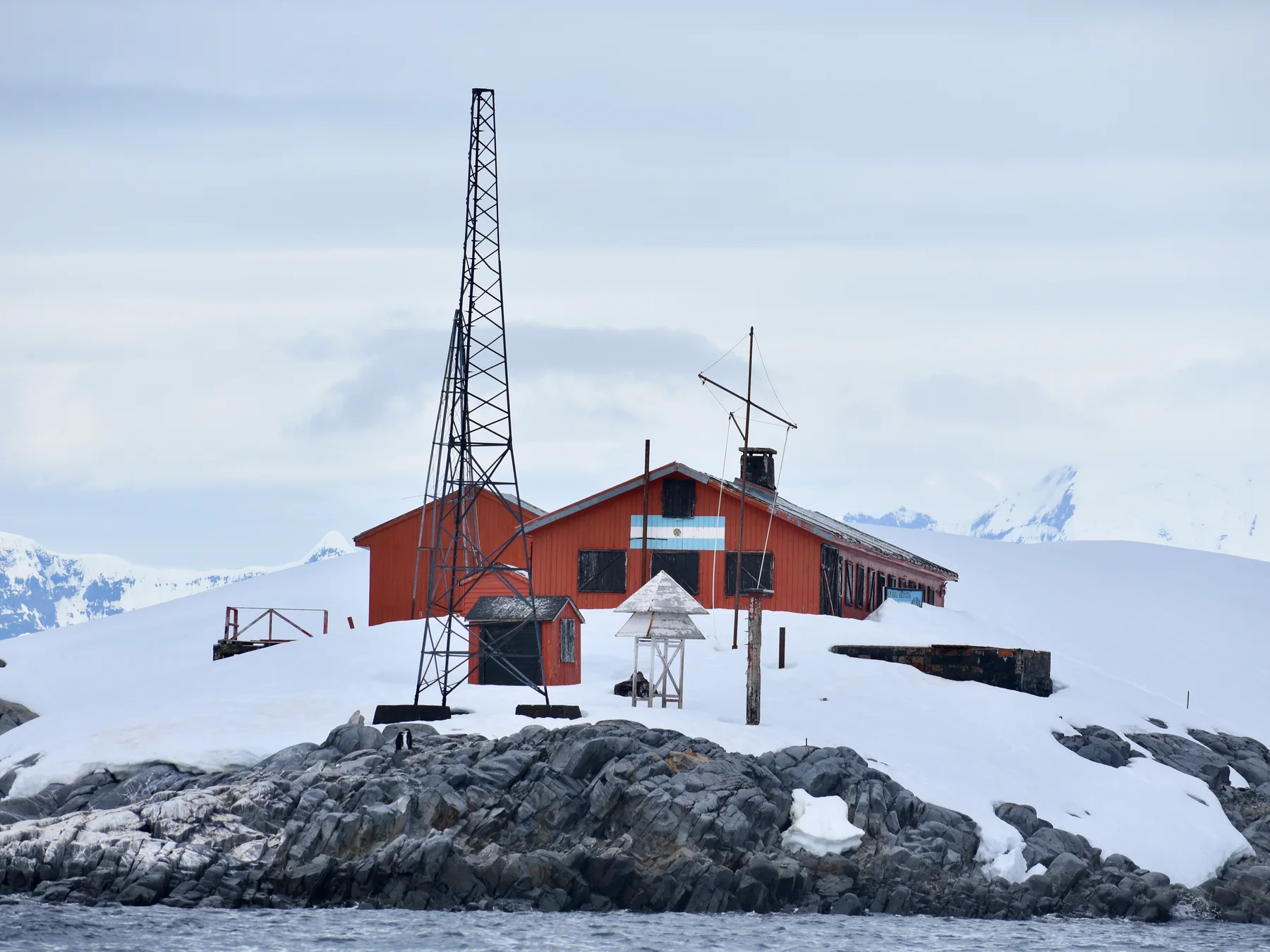
- Wild polar bears do not live in Antarctica.
- Polar bears are native to the Arctic.
- Penguins and polar bears therefore do not naturally meet.
- The word Arctic comes from a Greek root associated with the bear constellation.
- Antarctic means roughly opposite the Arctic.
- Antarctica has no native fully terrestrial land mammal.
- Its largest purely land animals are tiny invertebrates.
- The Antarctic midge is a wingless insect native to the Antarctic Peninsula region.
- It measures only a few millimeters long.
- Mites, springtails, and nematodes survive in ice-free habitats.
- Mosses and lichens dominate much of the visible plant life.
- Only a couple of native flowering plant species occur naturally on the Antarctic Peninsula and nearby areas.
- Life concentrates where liquid water and exposed ground become available.
- The surrounding ocean supports far more complex ecosystems than the frozen interior.
- Cartoons pairing polar bears with Antarctic penguins combine animals from opposite ends of Earth.
Mountains, volcanoes, and hidden lakes
- The Transantarctic Mountains divide East and West Antarctica geographically.
- They stretch for thousands of kilometers.
- Vinson Massif is Antarctica’s highest mountain.
- Mount Erebus is an active volcano on Ross Island.
- Erebus contains a persistent lava lake.
- Volcanic heat exists beneath parts of the ice sheet.
- Hundreds of subglacial lakes lie beneath Antarctic ice.
- Lake Vostok is one of the largest known subglacial lakes.
- It lies beneath roughly four kilometers of ice.
- Pressure and geothermal heat help keep subglacial water liquid.
- Subglacial rivers and lakes can influence ice-sheet movement.
- Bedrock beneath West Antarctica includes deep basins below sea level.
- Without its ice, Antarctica would reveal mountains, lowlands, and islands rather than one smooth white plate.
- Scientists map hidden terrain using radar, seismic methods, gravity, and satellite data.
- Some of the continent’s largest geographic features have never been seen directly by human eyes because they remain buried under ice.
Ten surprising Antarctica facts
- Antarctica is technically the world’s largest desert.
- Its average elevation is higher than any other continent’s.
- The directly measured world cold record, minus 89.2°C, came from Vostok Station.
- At the South Pole, the Sun rises and sets only once each year.
- Polar bears do not live in Antarctica.
- Crabeater seals mostly eat krill, not crabs.
- Mount Erebus is an active Antarctic volcano with a persistent lava lake.
- Large lakes exist beneath kilometers of Antarctic ice.
- Less than one percent of the continent is normally ice-free land.
- For more icy science, explore our snow facts, penguin facts, and Science facts.
Quick Antarctica FAQ
Is Antarctica a desert?
Yes. Deserts are defined by very low precipitation, and Antarctica’s interior receives extremely little moisture.
Does anyone live permanently in Antarctica?
There is no native permanent population. Scientists and support staff live at research stations for months or years, with populations changing seasonally.
Are there polar bears in Antarctica?
No. Polar bears are Arctic animals. Penguins native to Antarctica do not naturally encounter them.
How cold does Antarctica get?
The official lowest directly measured air temperature is minus 89.2°C at Vostok Station, with satellite instruments detecting even colder snow surfaces in small interior areas.
How much of Antarctica is covered by ice?
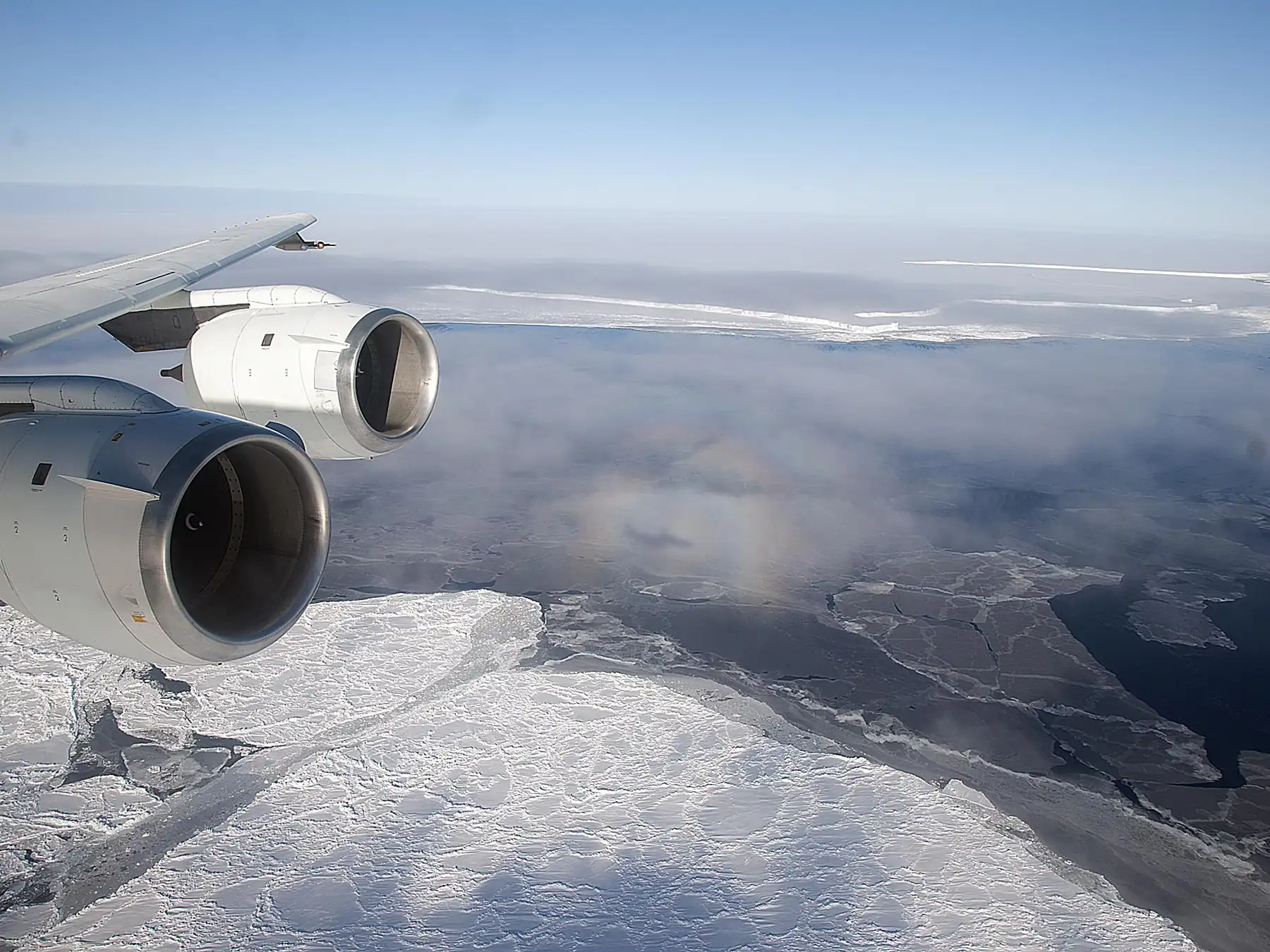
Roughly 98 percent of the continental land area is ice-covered, with the ice sheet averaging more than two kilometers thick.

Ellie is the owner and sole author of Fun Facts, combining her mechanical engineering background with years of research-driven writing to deliver facts you can trust. Every article is thoroughly fact-checked and routinely updated as new science and sources emerge to keep information accurate and current. Her mission is to make learning delightful while upholding high standards of reliability and transparency.