
Wrestling may be humanity’s oldest organized combat sport. Ancient art shows grapplers thousands of years ago, the original Olympics featured wrestling, modern freestyle allows attacks on the legs while Greco-Roman forbids them, and a single pin can end a match instantly even when the score says otherwise. These 145 wrestling facts explore ancient wrestling, Olympic history, Greco-Roman, freestyle, women’s wrestling, takedowns, throws, pins, scoring, weight classes, mats, collegiate rules, famous champions, safety, training, and the difference between competitive wrestling and scripted professional wrestling.
Wrestling basics
- Wrestling is a grappling sport based on controlling an opponent without striking.
- Competitive wrestlers use takedowns, throws, turns, holds, and positional control.
- Olympic wrestling includes freestyle and Greco-Roman.
- Women compete in Olympic freestyle wrestling.
- Greco-Roman Olympic competition is currently for men.
- A pin can end a match before time expires.
- A pin is also called a fall.
- Points can decide matches that do not end in a fall.
- Weight classes reduce size mismatches.
- Wrestlers compete on padded mats.
- Referees enforce legal holds and score actions.
- United World Wrestling is the international governing body for Olympic wrestling.
- UWW also recognizes additional wrestling styles.
- The official UWW discipline guide distinguishes freestyle from Greco-Roman by whether leg attacks and leg use are permitted.
- Modern wrestling looks simple from a distance but rewards tiny changes in balance, leverage, grip, timing, and hip position.

Humans have wrestled for thousands of years
- Wrestling appears in some of the world’s oldest sporting art.
- Ancient Mesopotamian images show grappling figures.
- Egyptian tomb art contains hundreds of wrestling scenes.
- The Beni Hasan tomb paintings show throws, grips, and ground positions.
- Ancient Greek athletes practiced wrestling.
- Wrestling entered the ancient Olympic Games in 708 BCE.
- Greek wrestling also formed part of the pentathlon.
- Pankration combined wrestling with striking and other combat techniques.
- Different cultures developed independent folk-wrestling traditions.
- Mongolian wrestling remains a major traditional sport.
- Indian kushti has deep historical roots.
- Turkish oil wrestling is centuries old.
- Scottish backhold, Cornish wrestling, and many other regional styles developed their own rules.
- No single ancient culture can claim to have invented all wrestling.
- Grappling is such a basic human form of competition that it emerged repeatedly around the world.
Greco-Roman is not actually ancient Greek wrestling
- Greco-Roman wrestling developed in modern Europe.
- It is not a perfectly preserved rule set from ancient Greece and Rome.
- French wrestler Jean Exbrayat is often credited with influential 19th-century rules.
- His style prohibited holds below the waist.
- The name Greco-Roman was added later to give the style a classical image.
- Modern Greco-Roman wrestlers may attack only the upper body.
- They cannot intentionally grab an opponent’s legs for takedowns.
- They also cannot use their own legs actively to execute holds in the same way freestyle wrestlers can.
- This rule makes upper-body throws especially important.
- Body locks are central techniques.
- Arm throws are common.
- Suplex-style throws can score highly.
- Par terre refers to ground wrestling positions.
- Greco-Roman was included at the first modern Olympic Games in 1896.
- The name sounds ancient, but the recognizable modern style is a 19th-century European reinvention.
Freestyle opens the legs to attack
- Freestyle wrestling permits attacks on the legs.
- Wrestlers can also use their legs actively in many techniques.
- Single-leg takedowns are common.
- Double-leg takedowns are common too.
- An ankle pick attacks one leg through timing and leverage.
- A low single targets near the ankle or lower leg.
- Sprawling is a major defense against leg attacks.
- A sprawl drives the hips backward and downward to resist a shot.
- Freestyle developed partly from catch-as-catch-can wrestling traditions.
- Freestyle entered the Olympic program in 1904.
- The 1904 Olympic wrestling competition was held in St. Louis.
- All medalists that year were from the United States.
- Freestyle later became globally competitive.
- Countries including the United States, Iran, Japan, Russia, Turkey, Georgia, Azerbaijan, and many others developed strong traditions.
- Allowing leg attacks makes freestyle movement patterns visibly different from Greco-Roman even to a new viewer.

A pin beats the scoreboard
- A fall occurs when a wrestler controls both of an opponent’s shoulders against the mat under the rule standard.
- A fall ends the match immediately.
- It does not matter who was leading on points beforehand.
- A wrestler losing badly can therefore win with one successful pinning action.
- Exposure positions can score without producing a full fall.
- Turning an opponent’s back toward the mat is valuable in freestyle and Greco-Roman.
- A takedown brings an opponent from standing into controlled contact with the mat.
- Different takedowns score different values depending on danger and amplitude under current rules.
- High-amplitude throws can earn more points.
- Step-out points reward forcing an opponent out of the competition area under specified conditions.
- Penalties can add points to the opponent’s score.
- Technical superiority can end a match before time expires when the scoring margin reaches the rule threshold.
- The threshold differs by style under international rules.
- Scoring rules are adjusted periodically by UWW.
- That means a fan watching historic footage may see actions scored differently from the way they would be today.
The mat has zones
- International wrestling takes place on a circular competition area.
- The mat is padded to reduce impact injuries.
- A central circle marks the starting area.
- An outer passivity zone warns wrestlers they are near the edge.
- The protection area lies outside the competition circle.
- Wrestlers normally begin standing in the center.
- The referee can restart action in different positions after stoppages.
- Going out of bounds can score for the opponent.
- Wrestlers therefore manage edge position strategically.
- A strong wrestler may pressure forward to force a step-out.
- A defensive wrestler can use the boundary to avoid exposure but risks conceding points.
- Mat surfaces must provide grip without causing excessive skin friction.
- Competition shoes use thin flexible soles.
- Wrestling headgear is required in some scholastic and collegiate systems but not standard in senior international freestyle and Greco-Roman.
- One circular mat becomes a constantly shifting geometry of center control, boundary pressure, and escape routes.
Women’s wrestling changed the Olympics
- Women competed in wrestling long before receiving Olympic inclusion.
- International women’s freestyle championships developed during the late 20th century.
- Women’s wrestling joined the Olympic program in 2004.
- The debut took place at the Athens Games.
- Only four women’s weight classes were initially included.
- The Olympic program later expanded to six women’s freestyle weights.
- Japan became an early dominant power in women’s wrestling.
- Kaori Icho won four consecutive Olympic gold medals.
- She became the first woman in any individual Olympic sport to win four consecutive gold medals in the same event.
- Saori Yoshida won three Olympic gold medals and one silver.
- Women’s wrestling has expanded rapidly at school and collegiate levels in several countries.
- The NCAA began adding women’s wrestling to its championship structure in the United States.
- Growing participation has improved competitive depth worldwide.
- Women’s wrestling follows freestyle rules with a small number of safety-specific differences.
- A sport historically framed as male became one of the most dynamic areas of modern wrestling growth.
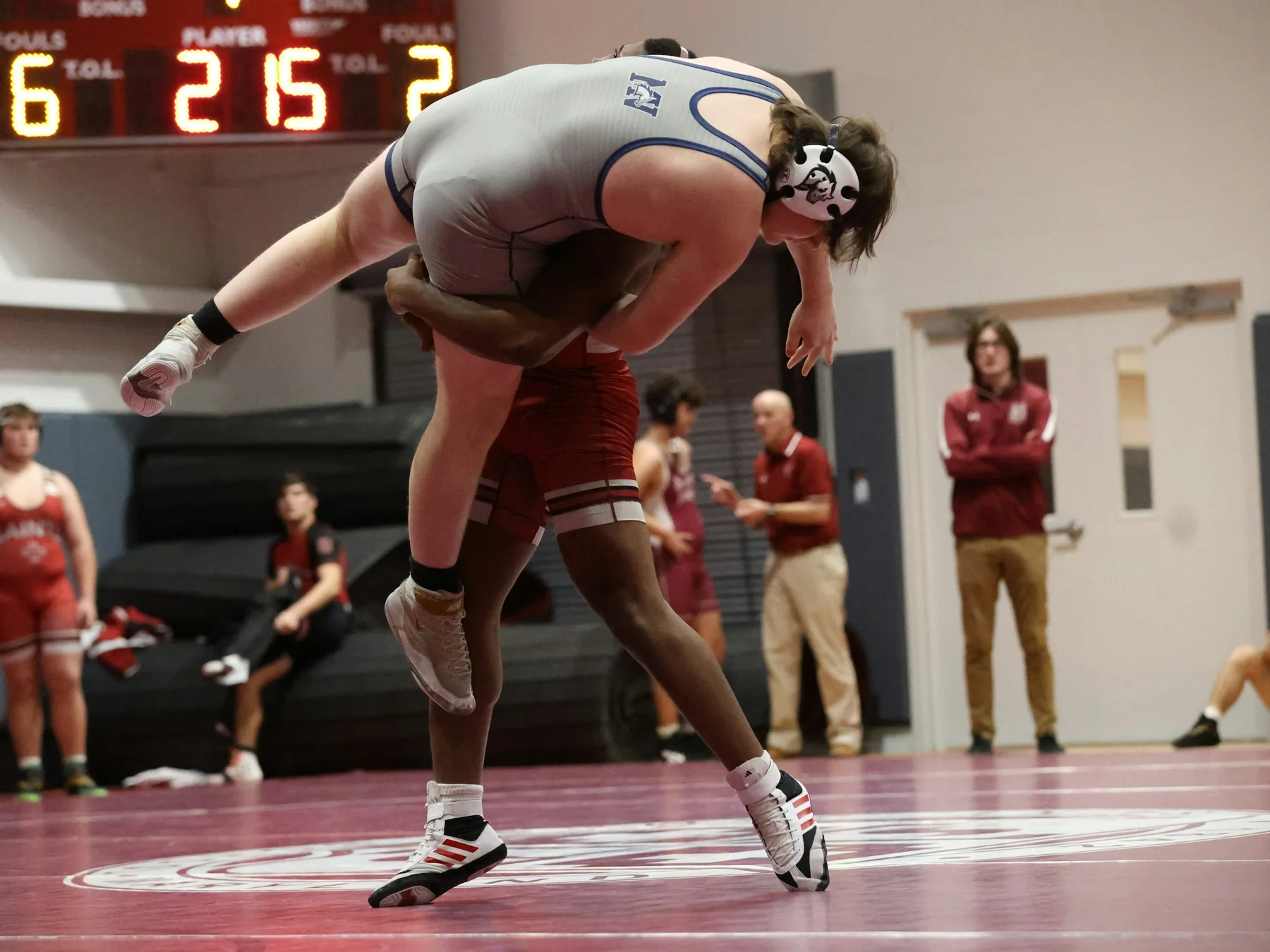
College wrestling is its own rule world
- American collegiate wrestling is not identical to international freestyle.
- The U.S. college style is often called folkstyle.
- It places greater emphasis on sustained control.
- Escapes score in collegiate wrestling.
- Reversals also have their own scoring value.
- Riding time can influence NCAA matches.
- International freestyle does not use riding time in the same way.
- Back exposure scoring differs between the systems.
- A collegiate pin has its own timing standard.
- High school wrestling uses similar folkstyle concepts with rule differences.
- American wrestlers often transition between folkstyle during school seasons and freestyle during international seasons.
- Techniques that work well in one style may need adjustment in another.
- Mat strategy changes because the scoring incentives differ.
- Some athletes compete in Greco-Roman as well.
- One wrestler can therefore learn several related sports whose shared techniques are rewarded by different rulebooks.
Professional wrestling is different
- Professional wrestling entertainment is different from Olympic-style competitive wrestling.
- Companies such as WWE present predetermined match outcomes and storylines.
- Performers still require substantial athletic skill.
- Falls and impacts can cause real injuries.
- The word “fake” therefore oversimplifies what performers physically do.
- The competitive result, however, is scripted rather than decided through open sporting competition.
- Professional wrestling grew historically from legitimate catch wrestling and carnival entertainment.
- Promoters learned that planned outcomes made shows easier to control.
- Storytelling became increasingly important.
- Characters and rivalries became central to the product.
- Some professional wrestlers have backgrounds in amateur wrestling.
- Olympic gold medalist Kurt Angle became a famous professional wrestler.
- Brock Lesnar won an NCAA heavyweight wrestling championship before entering professional wrestling and mixed martial arts.
- The two worlds share vocabulary and some technique but have fundamentally different goals.
- Competitive wrestling asks who can win under rules, while professional wrestling asks how athletes can safely perform a dramatic story whose ending is planned.
Ten surprising wrestling facts
- Wrestling appears in ancient art thousands of years old.
- It entered the ancient Olympics in 708 BCE.
- Greco-Roman wrestling is a modern 19th-century style rather than an unchanged survival from Greece and Rome.
- Greco-Roman forbids intentional attacks on the legs.
- Freestyle allows leg attacks.
- A pin can erase any points deficit instantly by ending the match.
- Women’s wrestling entered the Olympics only in 2004.
- Kaori Icho won four consecutive Olympic wrestling gold medals.
- American collegiate folkstyle uses different scoring incentives from international freestyle.
- For more combat-sport trivia, explore our boxing facts and sports facts.
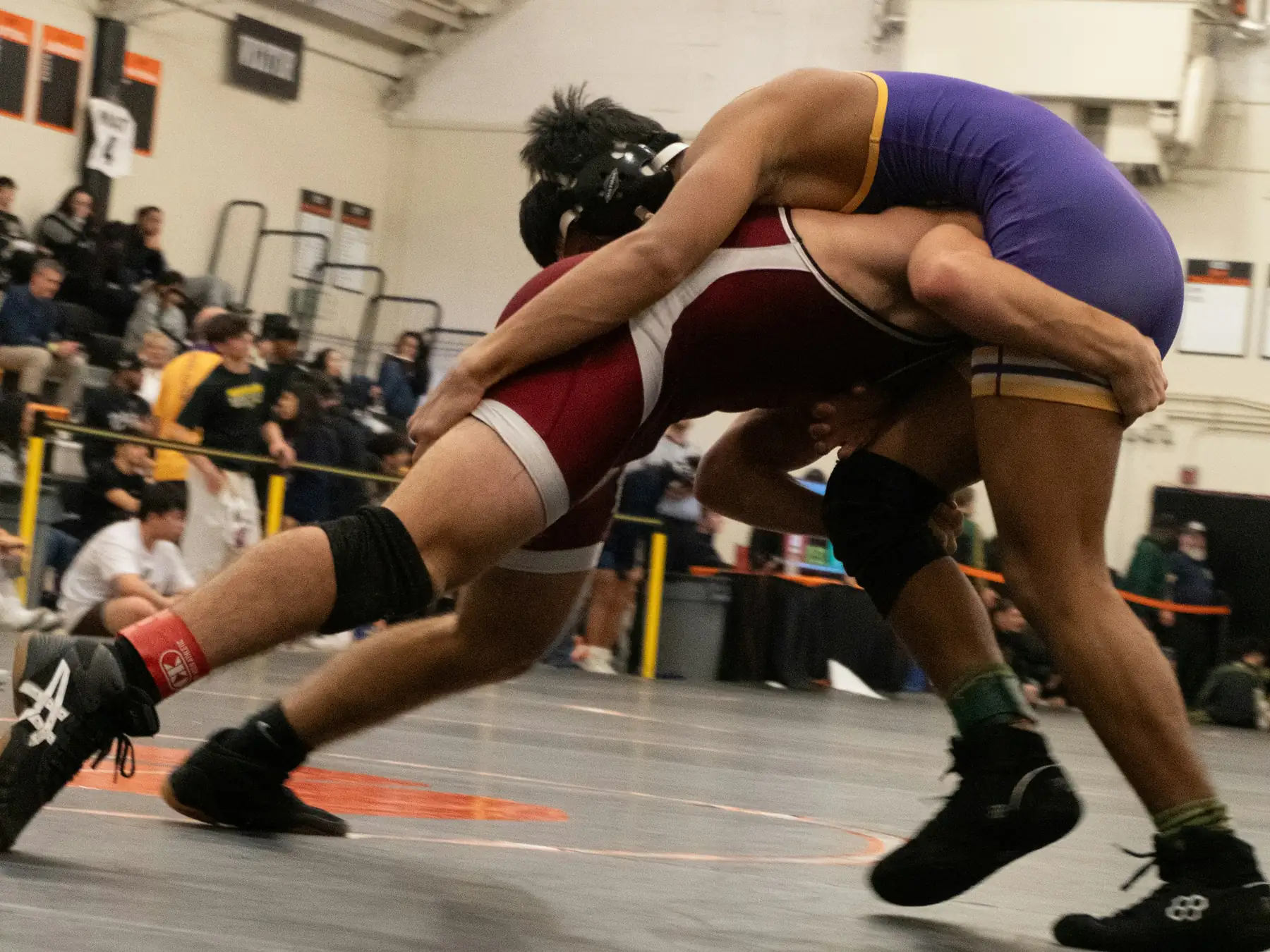
Quick wrestling FAQ
What is the difference between freestyle and Greco-Roman wrestling?
Freestyle allows attacks involving the legs, while Greco-Roman forbids holds below the waist and emphasizes upper-body throws and control.
What is a pin in wrestling?
A fall that occurs when a wrestler controls both of an opponent’s shoulders against the mat according to the rule standard, ending the match immediately.
When did women’s wrestling become an Olympic sport?
Women’s freestyle debuted at the Athens 2004 Olympic Games.
Is college wrestling the same as Olympic wrestling?
No. American collegiate wrestling uses folkstyle rules with different scoring for control, escapes, reversals, riding time, and back exposure.
Is WWE wrestling the same as Olympic wrestling?
No. WWE-style professional wrestling is scripted athletic entertainment, while Olympic wrestling is an unscripted competitive sport governed by scoring and pinning rules.

Ellie is the owner and sole author of Fun Facts, combining her mechanical engineering background with years of research-driven writing to deliver facts you can trust. Every article is thoroughly fact-checked and routinely updated as new science and sources emerge to keep information accurate and current. Her mission is to make learning delightful while upholding high standards of reliability and transparency.