
Formula 1 cars can exceed 350 km/h, generate enormous aerodynamic forces, harvest braking energy, change wing configurations on the move, and complete pit stops in less time than it takes most people to unlock a phone. Yet F1 began in 1950 with front-engined cars, leather helmets, hay bales, and almost none of today’s safety technology. These 145 Formula 1 facts explore Grand Prix history, cars, drivers, teams, circuits, tires, pit stops, aerodynamics, hybrid power, flags, qualifying, safety, famous records, and the sweeping new rules shaping the 2026 season.
Formula 1 basics
- Formula 1 is the highest class of international single-seater circuit racing governed by the FIA.
- The name refers to a technical and sporting formula that cars and competitors must follow.
- The official championship began in 1950.
- Each major championship race is called a Grand Prix.
- Drivers compete for the Drivers’ Championship.
- Teams compete for the Teams’ Championship, historically known as the Constructors’ Championship.
- Each current team fields two race cars.
- The 2026 grid contains 11 teams and 22 race drivers.
- Cadillac became the 11th team in 2026.
- Formula 1 races on permanent circuits and temporary street tracks.
- Monaco is the sport’s most famous street race.
- Silverstone hosted the first World Championship Grand Prix.
- Ferrari is the only team to have competed in every championship season since 1950.
- Modern F1 cars use hybrid power units.
- The official Formula 1 guide notes that current cars can exceed 370 km/h under suitable conditions.
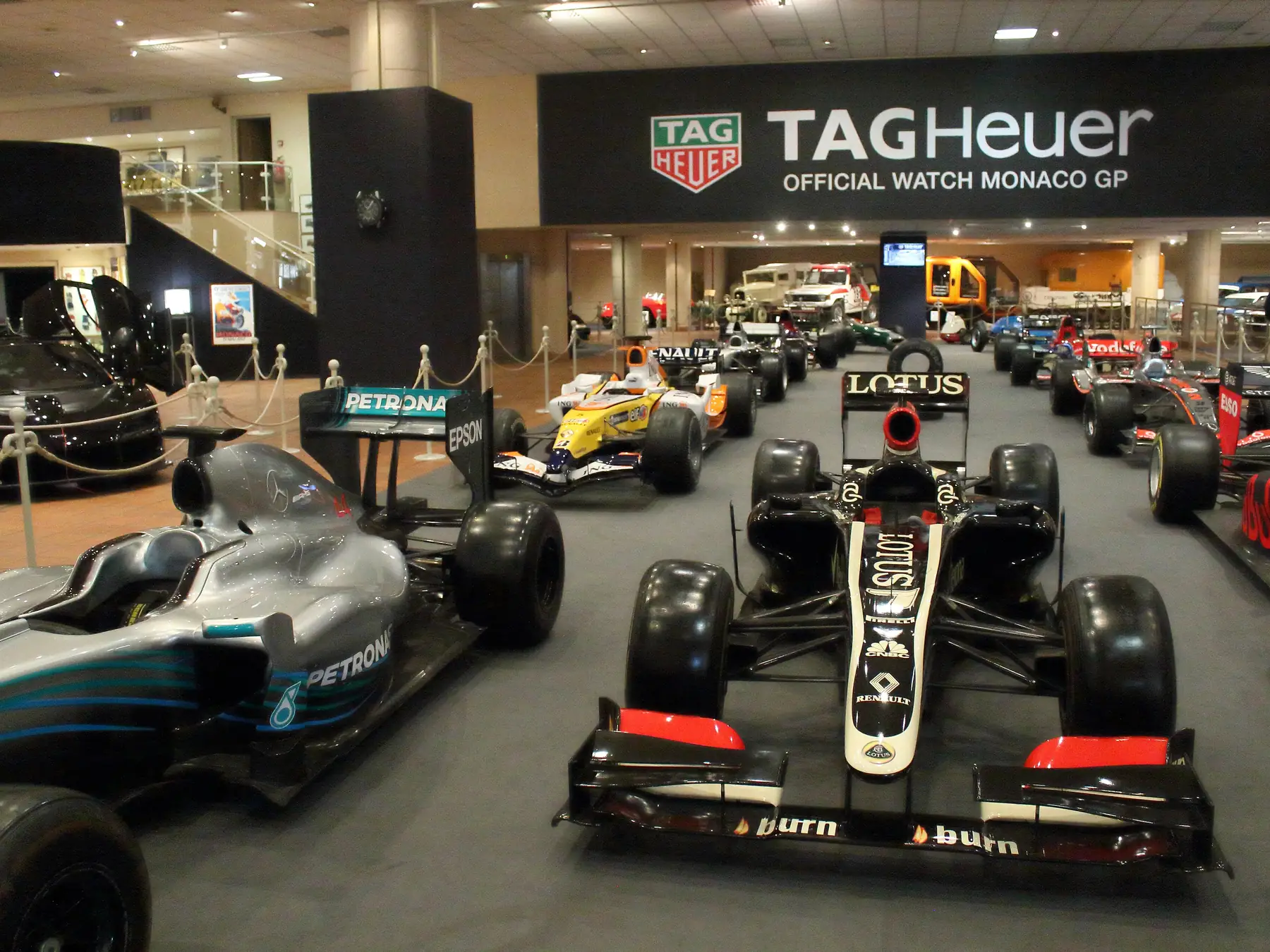
The championship begins in 1950
- Grand Prix motor racing existed decades before the Formula 1 World Championship.
- European championship competitions ran during the 1930s.
- World War II interrupted international racing.
- Postwar regulators created a new Formula One rules category.
- The FIA confirmed a World Championship for 1950.
- The first championship race took place at Silverstone on May 13, 1950.
- Britain’s King George VI attended.
- Giuseppe Farina won the race for Alfa Romeo.
- Alfa Romeo filled the first three finishing positions.
- Farina became the first Formula 1 World Drivers’ Champion later that year.
- Juan Manuel Fangio finished second in the championship.
- Fangio went on to win five world titles.
- His championship record stood for nearly half a century.
- Early cars were front-engined.
- The championship’s first season looked mechanically and visually very different from modern F1 despite sharing the same lineage.
Cars moved from front engine to rear engine
- Early Formula 1 cars placed engines in front of the driver.
- Cooper pioneered successful rear-engined designs during the late 1950s.
- Placing the engine behind the driver improved weight distribution and handling.
- Jack Brabham won championships with Cooper.
- Other teams quickly copied the concept.
- Front-engined F1 cars disappeared from serious championship contention.
- Monocoque chassis construction later replaced many traditional space frames.
- Lotus became especially influential in lightweight chassis design.
- Wings arrived during the late 1960s.
- Aerodynamic downforce lets cars corner faster without simply adding dead weight.
- Ground-effect concepts used shaped underbodies to create low pressure beneath cars.
- Modern F1 aerodynamics manage airflow around wings, floors, wheels, suspension, cooling openings, and bodywork.
- Small aerodynamic changes can be worth fractions of a second per lap.
- Those fractions can separate the front and middle of the grid.
- Formula 1 became as much an aerodynamic engineering competition as an engine race.
Why an F1 car can drive upside down in theory
- Formula 1 cars generate aerodynamic downforce.
- Downforce pushes the tires harder against the track as speed increases.
- More normal force can increase available tire grip.
- Wings create part of that downforce.
- The floor creates an enormous share on modern cars.
- Venturi-shaped tunnels and pressure differences accelerate airflow beneath the car.
- Teams carefully control the gap between floor and track.
- If airflow separates, downforce can disappear suddenly.
- High downforce also creates aerodynamic drag.
- Engineers therefore balance cornering grip against straight-line speed.
- At sufficiently high speed, an F1 car can theoretically generate downforce greater than its own weight.
- This inspires the claim that it could drive upside down on a ceiling.
- That statement is a physics thought experiment, not an actual F1 operating mode.
- Fuel, lubrication, suspension, tires, driver safety, and track transitions would create huge practical problems.
- The important fact is that aerodynamic force can exceed gravitational weight at racing speed.
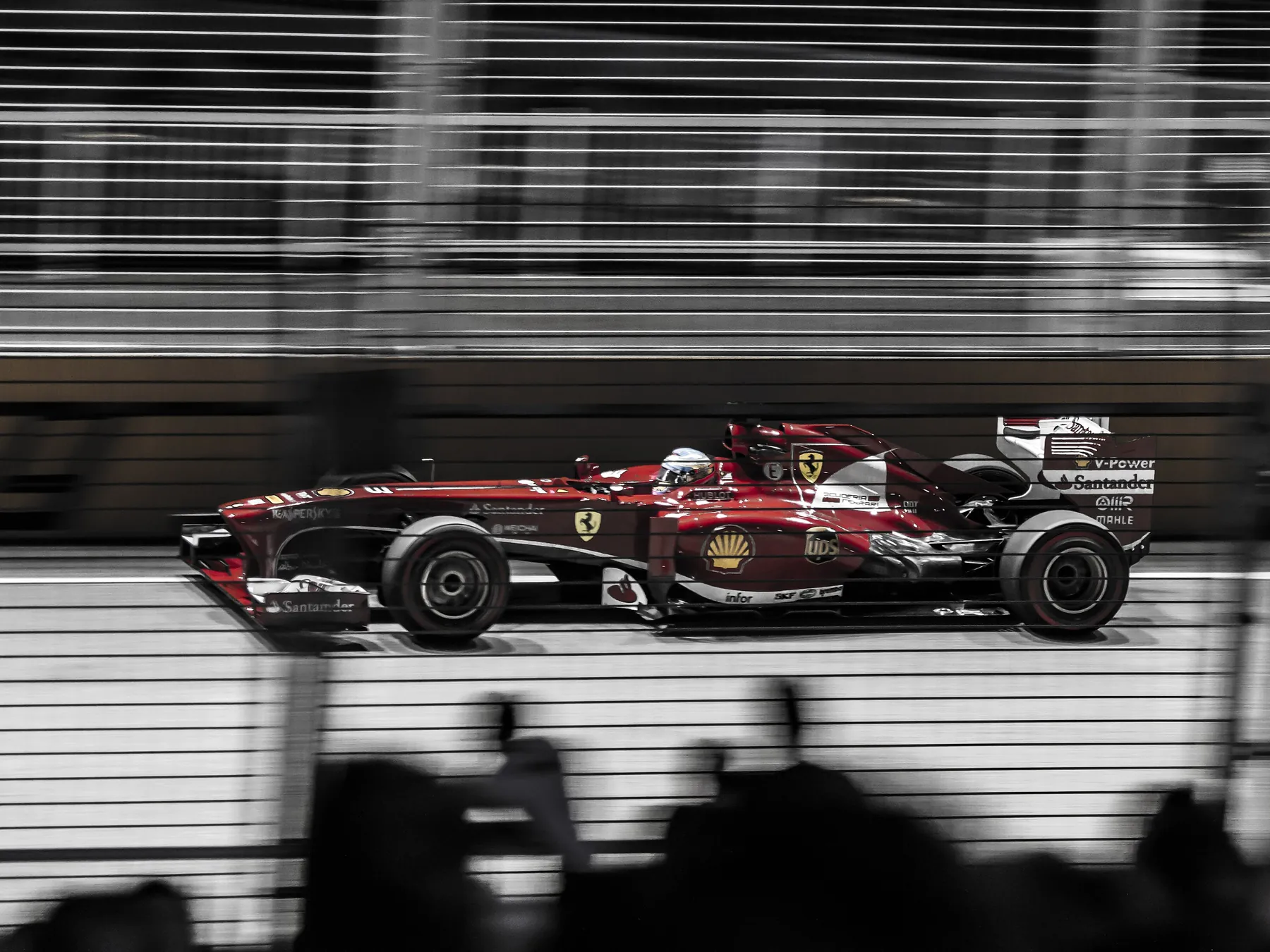
Tires are part of the strategy
- Formula 1 uses specially designed racing tires.
- Pirelli is the current official tire supplier.
- Dry-weather slick tires have no tread pattern.
- Maximum rubber contact improves dry grip.
- Intermediate tires handle damp or light-wet conditions.
- Full wet tires move much more water.
- Dry compounds vary in hardness.
- Softer compounds usually offer more grip but wear faster.
- Harder compounds can last longer.
- Tire temperature strongly affects grip.
- Too-cold tires can slide.
- Overheated tires can lose performance.
- Drivers manage wheelspin, braking, steering, and pace to preserve tires.
- A pit stop can trade time now for faster tires later.
- Race strategy is therefore partly an optimization problem involving tire life, traffic, weather, safety cars, and track position.
Pit stops are astonishingly fast
- Modern F1 pit crews can change four tires in around two seconds.
- More than 20 team members may participate in the choreography.
- Three crew members commonly work around each wheel.
- One operates the wheel gun.
- One removes the old wheel.
- Another fits the new one.
- Front and rear jack operators lift the car.
- Other crew members stabilize the car or adjust the front wing.
- Every movement is rehearsed repeatedly.
- Wheel nuts are designed for rapid removal and installation.
- The pit lane has a speed limit.
- Drivers use a limiter to avoid speeding penalties.
- Refueling during ordinary races has been banned since 2010.
- That means modern scheduled stops focus mainly on tires and minor adjustments.
- A tiny mistake in a two-second stop can erase seconds of advantage built over many racing laps.
Qualifying decides the grid
- Qualifying determines starting positions for a Grand Prix under the standard format.
- Modern qualifying is divided into three knockout segments.
- They are called Q1, Q2, and Q3.
- The slowest drivers are eliminated after Q1.
- More are eliminated after Q2.
- The fastest group competes for pole position in Q3.
- Pole position is first place on the starting grid.
- Track conditions can improve as more rubber is deposited.
- Rain can reverse that pattern suddenly.
- Drivers must find open track without losing tire temperature.
- Traffic can ruin a fast lap.
- Yellow flags can force drivers to slow.
- Track-limit violations can delete lap times.
- A qualifying lap requires balancing maximum attack with the risk of one mistake ending the session.
- Sprint weekends use additional competitive sessions and formats that have evolved across seasons.
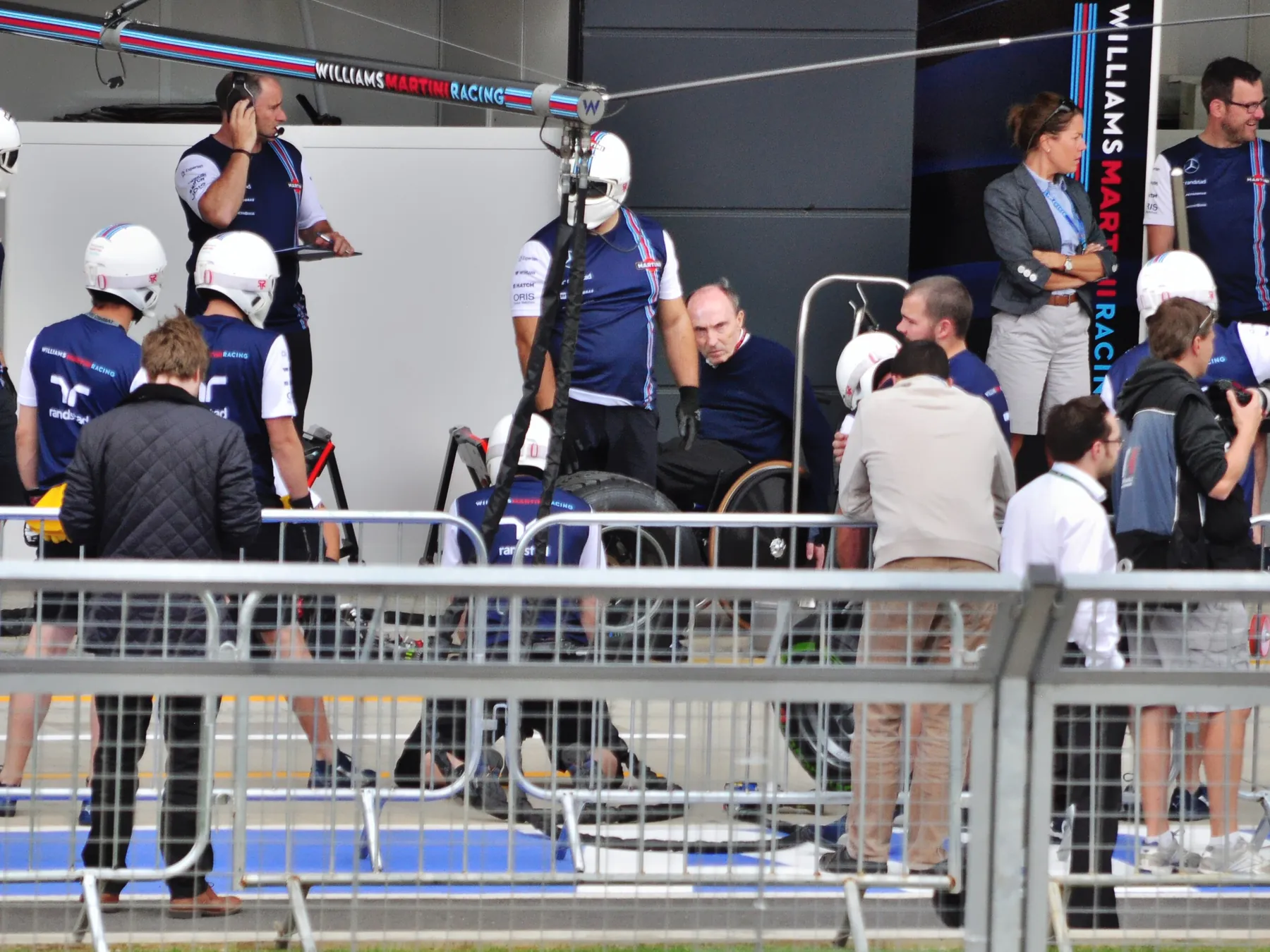
Safety transformed the sport
- Early Formula 1 was extraordinarily dangerous.
- Drivers raced with far less crash protection than today.
- Circuits often had trees, walls, ditches, spectators, or buildings close to the racing line.
- Fatal crashes were tragically common.
- Drivers including Jackie Stewart pushed strongly for safer circuits and medical response.
- Modern cars use carbon-fiber survival cells.
- Crash structures absorb energy.
- Wheel tethers reduce the chance of detached wheels flying away.
- The HANS device protects the head and neck.
- The halo cockpit structure became mandatory in 2018.
- It protects the driver’s head from large objects and impacts.
- The halo initially faced criticism for appearance.
- It has since been credited with protecting drivers in several major accidents.
- Medical cars and trained rescue crews respond rapidly.
- Safety remains an evolving engineering process rather than proof that racing has become risk-free.
The 2026 rules changed the cars again
- Formula 1 introduced a major new technical-regulation era in 2026.
- The FIA designed the cars to be smaller and lighter than the previous generation.
- The 2026 concept reduced car weight by roughly 30 kilograms compared with the initial prior-regulation baseline.
- Cars use active aerodynamics.
- Movable front and rear wing elements change configuration.
- Low-drag settings improve straight-line efficiency.
- Higher-downforce settings support cornering.
- The 2026 power unit keeps the turbocharged 1.6-liter V6 internal-combustion engine.
- Electrical power contributes a much larger share of total power.
- The MGU-H component was removed.
- Energy recovery under braking became more important.
- The rules require fully sustainable fuel.
- A Manual Override system can provide additional electrical deployment for attacking cars under defined conditions.
- Cadillac joined the grid as an 11th team in 2026 with Sergio Perez and Valtteri Bottas.
- Formula 1’s constant rule changes make the sport a moving engineering target rather than a fixed vehicle formula.
Ten surprising Formula 1 facts
- The Formula 1 World Championship began in 1950, but Grand Prix racing is much older.
- Ferrari has competed in every championship season.
- F1 cars switched from front engines to rear engines because the layout proved decisively faster.
- Aerodynamic downforce can exceed the car’s own weight at high speed.
- Modern pit crews can replace four tires in around two seconds.
- Race refueling has been banned since 2010.
- The halo went from a controversial visual change to one of modern F1’s most important safety devices.
- The 2026 cars use movable front and rear aerodynamic elements.
- Cadillac made the 2026 grid the first 11-team F1 field since the 2016-era grid contracted.
- For more racing trivia, explore our upcoming NASCAR guide and sports facts.
Quick Formula 1 FAQ
When did Formula 1 start?
The official FIA Formula One World Championship began in 1950, with the first championship Grand Prix at Silverstone on May 13.
How many F1 teams are there in 2026?
Eleven teams and 22 race drivers, after Cadillac joined the grid for the 2026 season.
How fast are Formula 1 cars?
They can exceed 350 km/h and have surpassed 370 km/h in suitable conditions, although maximum speed varies by circuit setup and aerodynamic configuration.
What changed in Formula 1 for 2026?
Major changes include smaller and lighter cars, active aerodynamics, much greater electrical power, removal of the MGU-H, sustainable fuel, and new energy-deployment rules.
Why do F1 cars have so much downforce?
Downforce pushes the tires harder into the track at speed, increasing available grip and allowing much faster cornering.

Ellie is the owner and sole author of Fun Facts, combining her mechanical engineering background with years of research-driven writing to deliver facts you can trust. Every article is thoroughly fact-checked and routinely updated as new science and sources emerge to keep information accurate and current. Her mission is to make learning delightful while upholding high standards of reliability and transparency.