
Denmark is a small country with an outsized cultural footprint: Viking ships, fairy tales, LEGO bricks, bicycles, wind turbines, open-faced sandwiches, modern furniture, a centuries-old monarchy, and a word for cozy togetherness that traveled around the world. Its kingdom also includes Greenland and the Faroe Islands, giving Denmark a geographic reach far beyond the Jutland peninsula. These 145 Denmark facts explore Copenhagen, islands, Vikings, monarchy, Greenland, hygge, design, cycling, food, renewable energy, Hans Christian Andersen, LEGO, and the traditions behind one of Europe’s oldest states.
Denmark basics
- Denmark is a Nordic country in northern Europe.
- Copenhagen is the capital and largest city.
- Denmark occupies the Jutland peninsula and hundreds of islands.
- Germany is Denmark’s only land neighbor on the mainland.
- Sweden lies across the Øresund Strait.
- Norway lies across the Skagerrak.
- Denmark is a constitutional monarchy.
- The national parliament is called the Folketing.
- The currency is the Danish krone.
- Denmark joined what became the European Union in 1973.
- It has not adopted the euro.
- Danish is the principal language.
- The Kingdom of Denmark also includes Greenland and the Faroe Islands.
- Both Greenland and the Faroes have extensive self-government.
- Denmark’s small mainland size hides a kingdom stretching deep into the North Atlantic and Arctic.
A country made of islands
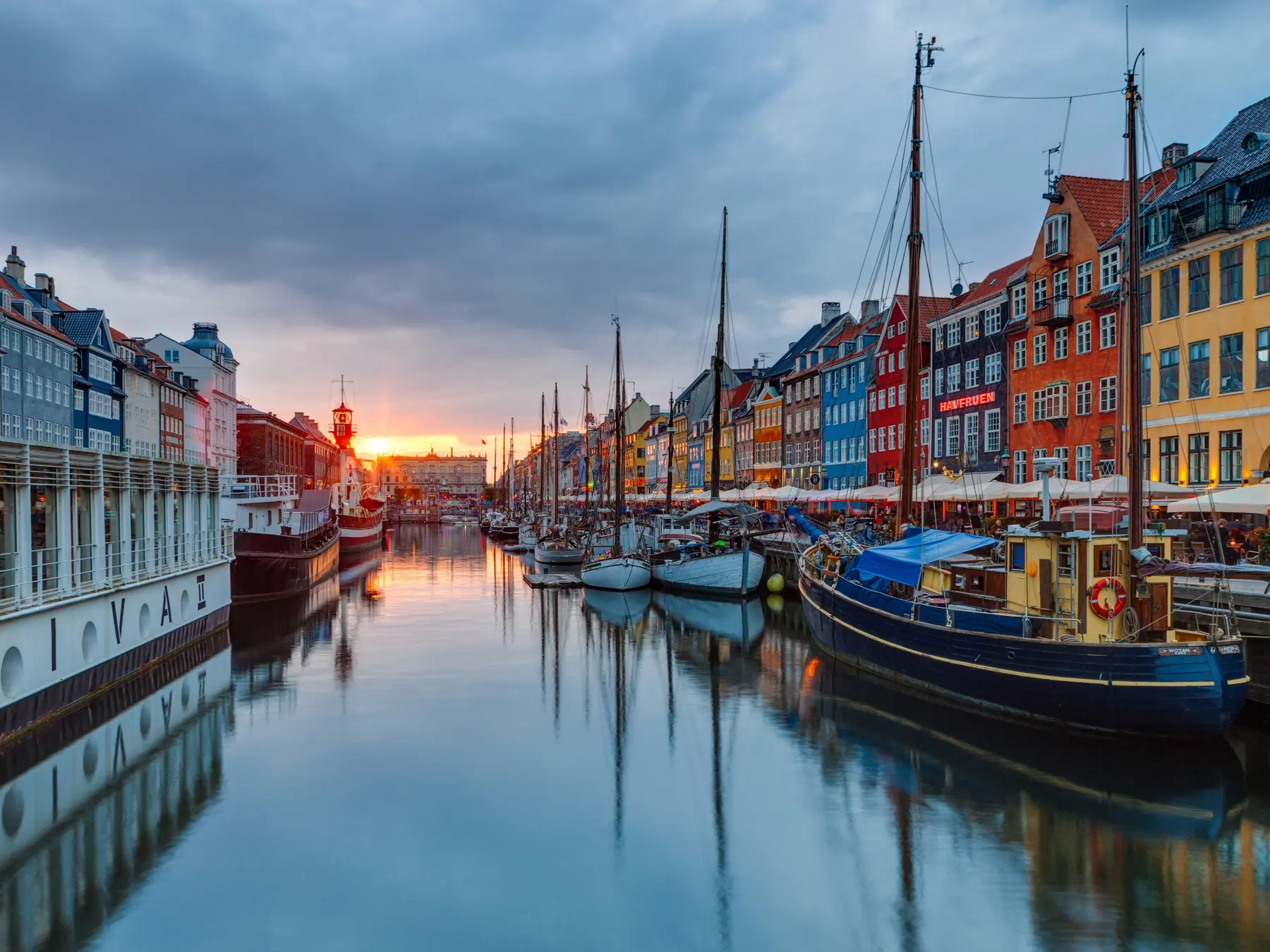
- Denmark consists of the Jutland peninsula plus a large archipelago.
- Official island counts vary depending on minimum size and definition.
- More than 400 named islands are commonly counted.
- Only a minority are inhabited.
- Zealand is Denmark’s largest island.
- Copenhagen sits partly on Zealand and partly on Amager.
- Funen is another major island.
- Bornholm lies far east in the Baltic Sea.
- Bridges connect several major islands.
- The Great Belt Fixed Link connects Zealand and Funen.
- The Øresund Bridge links the Copenhagen region with Malmö, Sweden.
- Part of the Øresund connection uses an artificial island and tunnel.
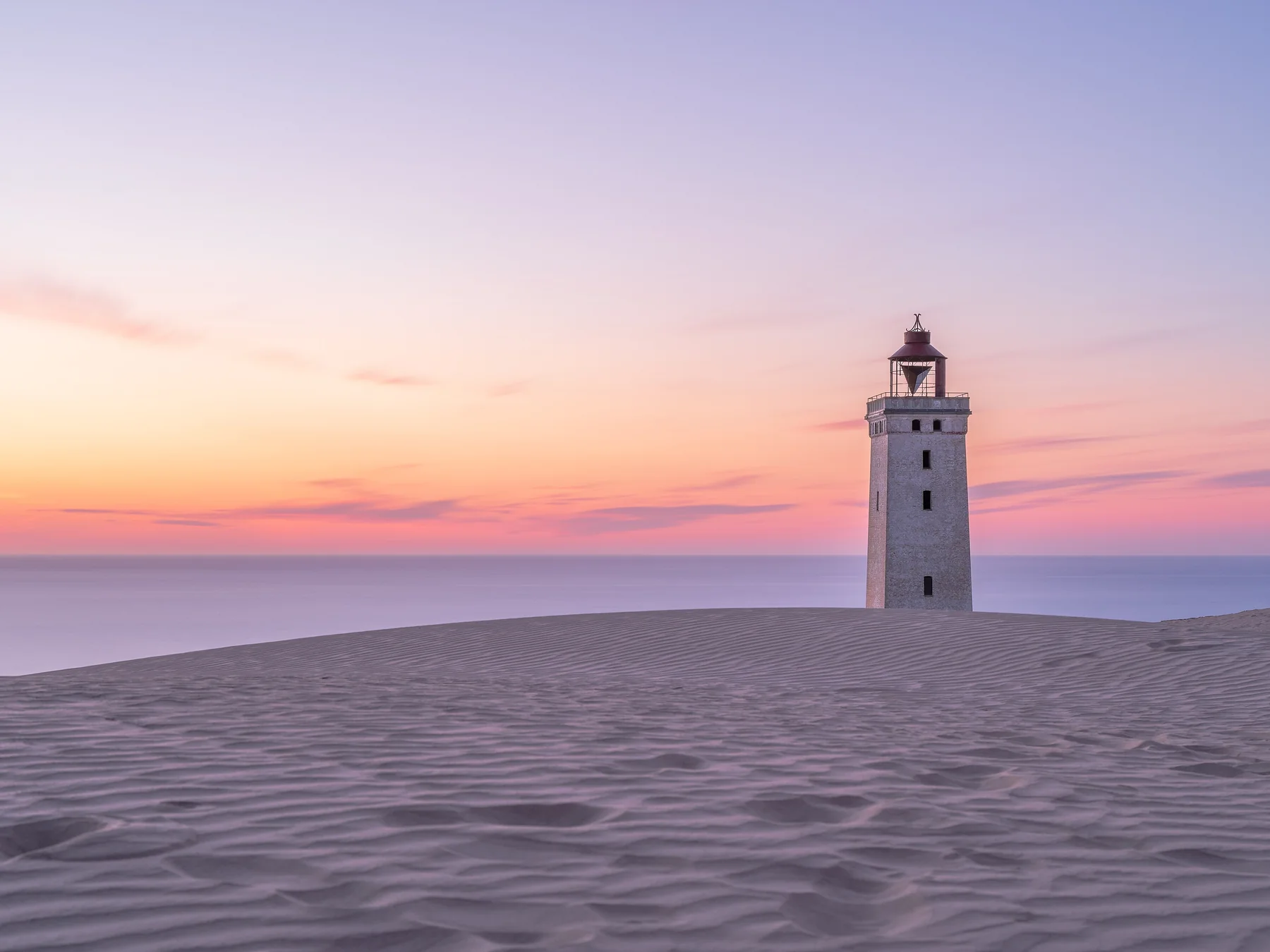
- Denmark’s highest natural point is only about 171 meters above sea level.
- There are no true mountains on the Danish mainland.
- Low elevation and long coastlines make sea-level rise an important climate concern.
Viking Denmark
- Denmark was one of the central regions of the Viking Age.
- Danish Vikings traveled through the North Sea and western Europe.
- They raided and settled parts of England.
- Large areas of England came under Scandinavian influence known as the Danelaw.
- King Harald Bluetooth ruled Denmark during the 10th century.
- The Jelling stones are closely associated with Harald and his father Gorm the Old.
- One Jelling stone records Harald’s claim to have won Denmark and Norway and made the Danes Christian.
- The stones are sometimes called Denmark’s birth certificate.
- Jelling is a UNESCO World Heritage site.
- Viking ring fortresses were built with striking geometric precision.
- Denmark has several preserved or excavated ring-fortress sites.
- Roskilde Fjord yielded five deliberately sunk Viking ships.
- Those vessels are preserved and interpreted at the Viking Ship Museum.
- Viking helmets were not normally horned.
- The horned-helmet image became popular centuries later through art, costume, and opera.
Bluetooth is named after a Danish king
- The wireless technology Bluetooth is named after Harald Bluetooth.
- Engineers developing the standard needed a temporary project name.
- Harald was famous for uniting parts of Denmark and Norway.
- The technology aimed to unite different communication devices.
- The nickname stuck.
- The Bluetooth logo combines two runic characters.
- They represent Harald’s initials H and B.
- The runes are based on Younger Futhark forms.
- The name was never intended as a statement that Vikings invented wireless communication.
- It was a historical metaphor used by engineers.
- Bluetooth began as a short-range wireless standard during the 1990s.
- It became embedded in phones, headphones, cars, computers, keyboards, medical devices, and countless other products.
- Millions of people therefore see a stylized Viking king’s initials every day without knowing it.
- Harald’s historical nickname has several possible explanations and is not securely tied to one simple dental story.
- A 10th-century Danish king unexpectedly became one of the most visible names in modern electronics.
One of the world’s oldest monarchies
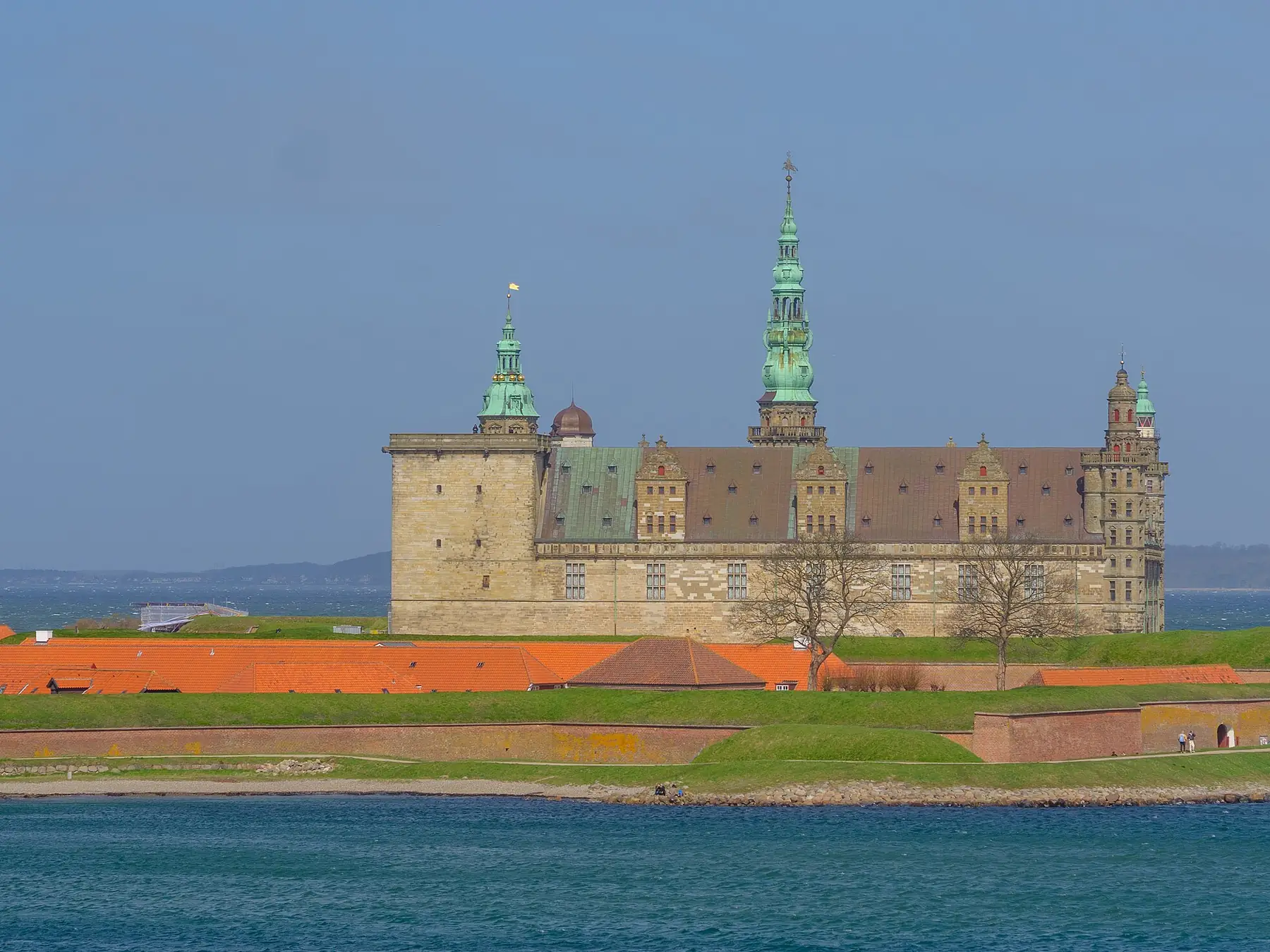
- The Danish monarchy traces its line back more than a thousand years.
- Gorm the Old is one of the earliest historically well-attested Danish kings.
- Denmark became a constitutional monarchy in the 19th century.
- The monarch no longer governs as an absolute ruler.
- Political power rests with elected institutions under the constitution.
- King Frederik X became monarch in January 2024.
- He succeeded Queen Margrethe II.
- Margrethe abdicated after 52 years on the throne.
- Abdication is unusual in modern Danish royal history.
- Frederik’s wife is Queen Mary.
- She was born in Australia.
- The royal family uses several palaces.
- Amalienborg in Copenhagen is the primary royal residence complex.
- Guards perform ceremonial duties there.
- The monarchy remains a cultural institution while Denmark functions as a parliamentary democracy.
Greenland and the Faroe Islands
- The Kingdom of Denmark includes Denmark proper, Greenland, and the Faroe Islands.
- Greenland is the world’s largest island that is not a continent.
- Most of Greenland is covered by an ice sheet.
- Greenland has its own parliament and government.
- It gained home rule in 1979.
- Self-government expanded in 2009.
- Greenlandic is the official language of Greenland.
- Most Greenlanders are Inuit.
- The Faroe Islands lie in the North Atlantic between Scotland, Iceland, and Norway.
- The Faroes also have their own parliament and government.
- Faroese is a North Germanic language related to Icelandic and Norwegian.
- Neither Greenland nor the Faroe Islands is part of the European Union.
- Denmark handles important areas including parts of foreign affairs and defense under the kingdom’s constitutional arrangements.
- Debates about independence and autonomy continue in both territories.
- Denmark’s political geography is therefore much more complicated than a map of the Jutland peninsula suggests.
Hygge is more than candles
- Hygge is a Danish word associated with coziness, comfort, and pleasant togetherness.
- It can describe an atmosphere as well as an activity.
- Sharing coffee with friends can be hyggelig.
- A warm dinner at home can be hyggelig too.
- Candles are strongly associated with modern hygge imagery.
- But hygge does not require candles, blankets, or expensive interior design.
- The word has roots connected with Norwegian usage.
- It became deeply integrated into Danish culture.
- International lifestyle publishing popularized hygge globally during the 2010s.
- Foreign interpretations sometimes turn it into a shopping aesthetic.
- Danes often use the word more casually.
- It can apply to summer picnics as easily as dark winter evenings.
- Social ease is often more important than décor.
- Denmark’s long winter darkness likely helps explain why indoor comfort carries cultural weight.
- A one-word lifestyle trend outside Denmark is an ordinary flexible adjective and concept inside Danish speech.
Bicycles shape Copenhagen
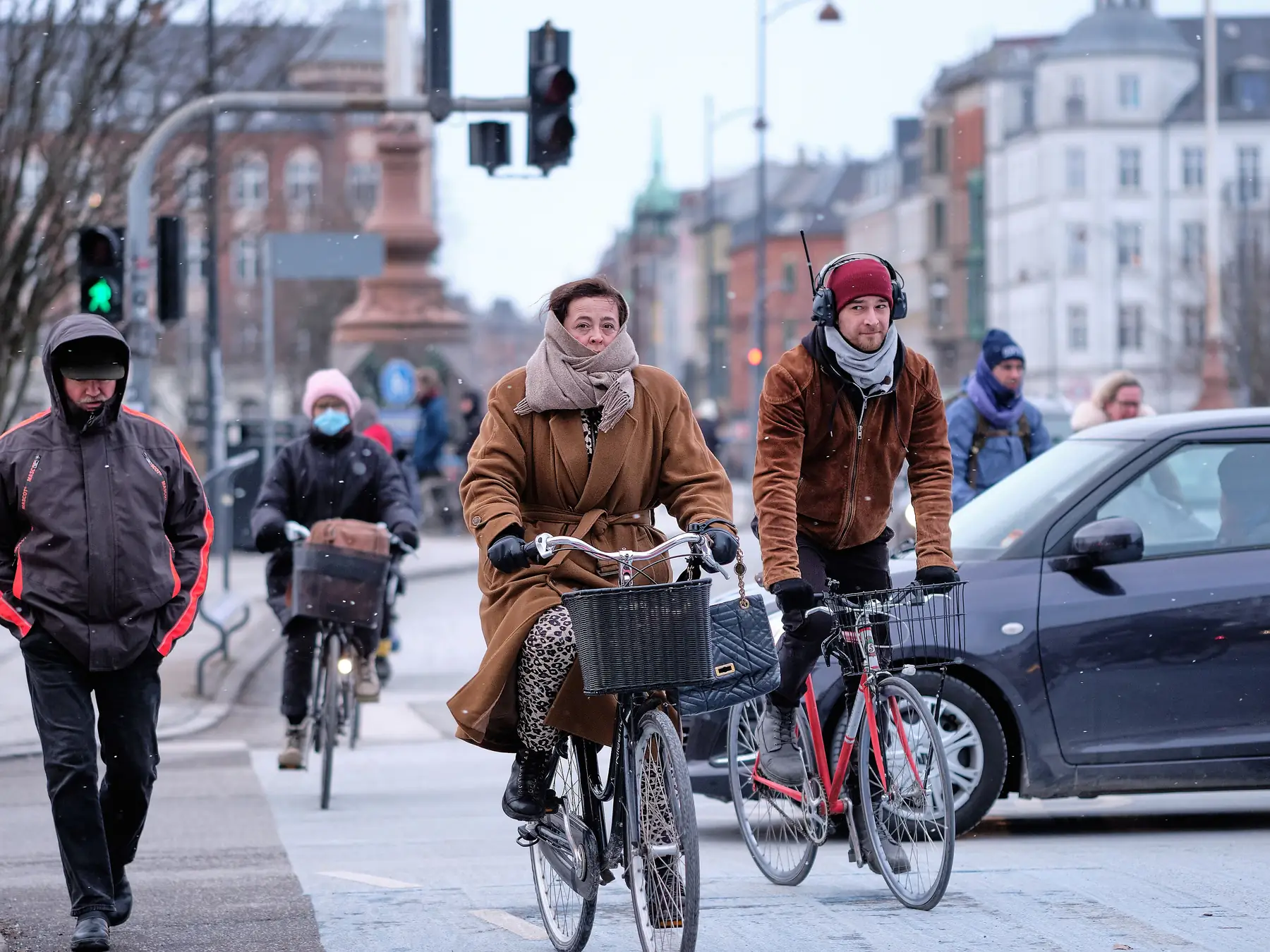
- Cycling is a major form of transportation in Copenhagen.
- The city has extensive protected bicycle infrastructure.
- Many commuters ride bicycles year-round.
- Bike lanes often have their own traffic signals.
- Some intersections are designed to reduce conflicts between bicycles and turning cars.
- Cargo bikes are common for carrying children and groceries.
- Modern Danish cargo-bike designs helped popularize the format internationally.
- Copenhagen was not always as bicycle-friendly as it is today.
- Car traffic expanded during the mid-20th century.
- Public activism and planning gradually reclaimed street space for bicycles and pedestrians.
- High cycling rates reflect infrastructure and policy rather than simply a national personality trait.
- Flat terrain also helps.
- Cold weather does not stop most cycling because infrastructure remains useful year-round.
- Danish cycling planning is studied by cities around the world.
- Copenhagen demonstrates that transportation habits can change dramatically when streets make one option safe and convenient.
LEGO, design, and Danish inventions
- LEGO was founded in Billund, Denmark.
- Carpenter Ole Kirk Christiansen founded the company.
- It began with wooden toys.
- The name LEGO comes from the Danish phrase leg godt, meaning play well.
- Plastic interlocking bricks became the company’s defining product.
- The modern stud-and-tube brick system was patented in 1958.
- Modern LEGO bricks remain compatible with many bricks produced decades ago.
- Billund later became home to the original LEGOLAND park.
- Danish modern furniture became internationally influential during the 20th century.
- Designers including Arne Jacobsen and Hans J. Wegner became famous worldwide.
- Danish design often emphasizes function, craftsmanship, clean forms, and natural materials.
- Denmark became a major pioneer in commercial wind power.
- Wind turbines now provide a large share of Danish electricity in many years.
- Vestas, one of the world’s major wind-turbine manufacturers, is Danish.
- From toy bricks to wind turbines, Danish design culture repeatedly combines engineering with simple visual form.
Ten surprising Denmark facts
- Bluetooth is named after a 10th-century Danish king.
- The Bluetooth logo combines runes for Harald Bluetooth’s initials.
- Denmark’s kingdom includes Greenland and the Faroe Islands.
- Neither Greenland nor the Faroes is part of the European Union.
- Denmark’s highest natural point is only about 171 meters above sea level.
- King Frederik X took the throne in 2024 after Queen Margrethe II abdicated.
- Hygge can describe a summer gathering just as easily as a candlelit winter room.
- LEGO began as a Danish wooden-toy company.
- The name LEGO comes from words meaning “play well.”
- For more Nordic trivia, explore our Norway facts, Sweden facts, and Iceland facts.
Quick Denmark FAQ
What is the capital of Denmark?
Copenhagen, located mainly on the islands of Zealand and Amager.
Is Greenland part of Denmark?
Greenland is a self-governing part of the Kingdom of Denmark, with its own parliament and government and extensive control over domestic affairs.
What does hygge mean?
A flexible Danish concept describing comfort, coziness, pleasant atmosphere, and easy social togetherness.
Why is Bluetooth called Bluetooth?
The technology was named after Danish king Harald Bluetooth as a metaphor for uniting different devices, just as Harald was associated with uniting Scandinavian territories.
Where was LEGO invented?
Billund, Denmark, where Ole Kirk Christiansen founded the company as a wooden-toy maker before it became famous for plastic bricks.

Ellie is the owner and sole author of Fun Facts, combining her mechanical engineering background with years of research-driven writing to deliver facts you can trust. Every article is thoroughly fact-checked and routinely updated as new science and sources emerge to keep information accurate and current. Her mission is to make learning delightful while upholding high standards of reliability and transparency.