
Coca-Cola began as a pharmacy fountain drink in 1886 and became one of the most recognizable products on Earth. Its history includes a handwritten logo, a five-cent glass, independent bottlers, a contour bottle designed to be recognized in the dark, wartime bottling plants, Santa Claus advertising, a disastrous 1985 formula change, and a secret recipe surrounded by more mythology than most beverages. These 145 Coca-Cola facts explore John Pemberton, Asa Candler, bottling, ingredients, advertising, the contour bottle, Coke during World War II, New Coke, global expansion, and the difference between company history and persistent rumors.
Coca-Cola basics
- Coca-Cola is a carbonated soft drink created in Atlanta, Georgia.
- Pharmacist John Stith Pemberton developed the original beverage.
- The first Coca-Cola was served on May 8, 1886.
- It was sold at Jacobs’ Pharmacy in Atlanta.
- The drink was originally dispensed from a soda fountain.
- A glass cost five cents.
- Pemberton’s bookkeeper Frank M. Robinson suggested the name Coca-Cola.
- Robinson also wrote the name in the flowing script that inspired the famous logo.
- The two C words were chosen partly because Robinson thought they would look good in advertising.
- The Coca-Cola Company was incorporated in 1892.
- Businessman Asa Candler turned the drink into a rapidly expanding national brand.
- Coca-Cola later spread worldwide.
- The company now owns many beverage brands beyond Coca-Cola itself.
- The familiar nickname Coke became an official trademarked brand term.
- The company’s official history documents the drink’s 1886 Atlanta origin.
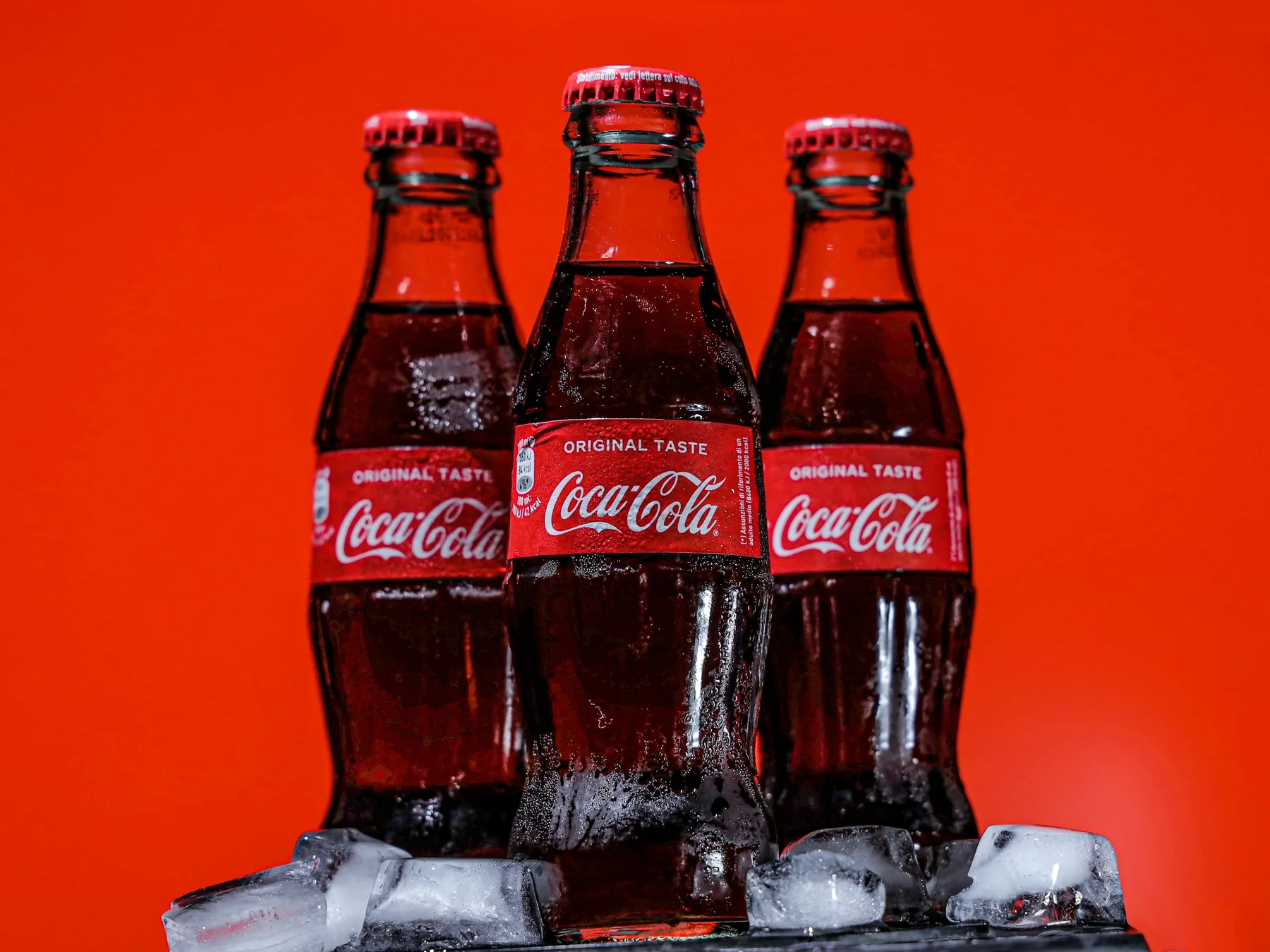
John Pemberton creates the drink
- John Pemberton was a pharmacist and Confederate veteran.
- He was wounded during the American Civil War.
- Pemberton became dependent on morphine while managing pain.
- He experimented with patent medicines and tonics.
- An earlier product called Pemberton’s French Wine Coca contained wine.
- Local temperance pressure encouraged development of a nonalcoholic version.
- The resulting syrup became Coca-Cola.
- The original formula contained extracts associated with coca leaves and kola nuts.
- The name Coca-Cola reflects those ingredients.
- Early Coca-Cola was marketed with medicinal-style claims typical of the patent-medicine era.
- Advertisements promoted it as a tonic and fountain beverage.
- Such claims predated modern drug and food advertising regulation.
- Pemberton struggled financially and sold portions of his rights.
- He died in 1888.
- He did not live to see Coca-Cola become a global business.
Asa Candler builds the brand
- Asa Griggs Candler was an Atlanta businessman and pharmacist.
- He gradually acquired control of Coca-Cola rights.
- Candler aggressively marketed the beverage.
- He distributed coupons for free samples.
- That strategy encouraged people to try an unfamiliar drink.
- He supplied pharmacies with branded signs, clocks, calendars, and serving equipment.
- The advertising turned Coca-Cola’s name into a visual presence.
- Candler founded The Coca-Cola Company in 1892.
- Sales expanded beyond Atlanta.
- Soda fountains became important social spaces.
- Coca-Cola syrup was shipped to fountain operators.
- Carbonated water was added when serving.
- Candler initially focused more on fountain sales than bottling.
- That decision created an unexpected opportunity for independent entrepreneurs.
- Coca-Cola’s future scale depended heavily on a bottling system Candler did not initially prioritize.
Bottling changes everything
- Coca-Cola was bottled experimentally during its early years.
- Large-scale franchised bottling began after a major 1899 agreement.
- Lawyers Benjamin Thomas and Joseph Whitehead secured bottling rights for much of the United States.
- The agreement reportedly cost them only a nominal amount.
- They developed a network of local bottling franchises.
- Bottlers purchased Coca-Cola syrup.
- They added carbonated water and packaged the drink locally.
- This reduced the need to ship finished heavy beverages long distances.
- Local bottlers invested in plants, trucks, bottles, and sales territories.
- The system expanded distribution dramatically.
- Bottled Coke could reach groceries, workplaces, rural communities, and events beyond soda fountains.
- Early bottles were not standardized.
- Competitors could imitate labels and bottle shapes.
- Coca-Cola therefore needed packaging customers could identify instantly.
- That problem produced one of industrial design’s most famous bottles.
The contour bottle
- Coca-Cola asked bottlers to develop a distinctive bottle in the 1910s.
- The goal was a package recognizable even in darkness or when broken.
- The Root Glass Company of Terre Haute, Indiana, developed the winning design.
- Designers researched ingredients associated with Coca-Cola.
- They mistakenly used the shape of a cacao pod as inspiration rather than a coca leaf or kola nut.
- The resulting bottle had a curved ribbed form.
- A design patent was granted in 1915.
- The bottle entered wider use beginning in 1916.
- Its shape became known as the contour bottle.
- People also called it the hobble-skirt bottle.
- The design evolved over time.
- The Coca-Cola script was eventually embossed or printed prominently.
- The contour silhouette became recognizable without a label.
- The bottle has appeared in fine art and popular culture.
- A research mistake about a cacao pod accidentally contributed to one of the world’s most famous package designs.
Did Coca-Cola contain cocaine?
- Early Coca-Cola did contain coca-leaf extract.
- Coca leaves naturally contain cocaine alkaloids.
- Historical formulas therefore contained some cocaine.
- The amount changed during the drink’s early decades.
- Cocaine was not illegal in the United States when Coca-Cola was invented.
- Medical understanding and regulation were very different in the 19th century.
- The company moved toward decocainized coca-leaf extract around the beginning of the 20th century.
- Modern Coca-Cola does not contain cocaine.
- Decocainized coca-leaf extract has historically remained a flavoring component under tightly regulated processing.
- The exact modern flavor formula is proprietary.
- Kola nuts contributed caffeine to early recipes.
- Modern Coca-Cola also contains caffeine unless sold as a caffeine-free version.
- Claims that today’s ordinary Coke contains cocaine are false.
- Claims that the original beverage never had a cocaine connection are also false.
- The accurate history requires understanding how ingredients, laws, and medical standards changed over time.
Five cents for decades
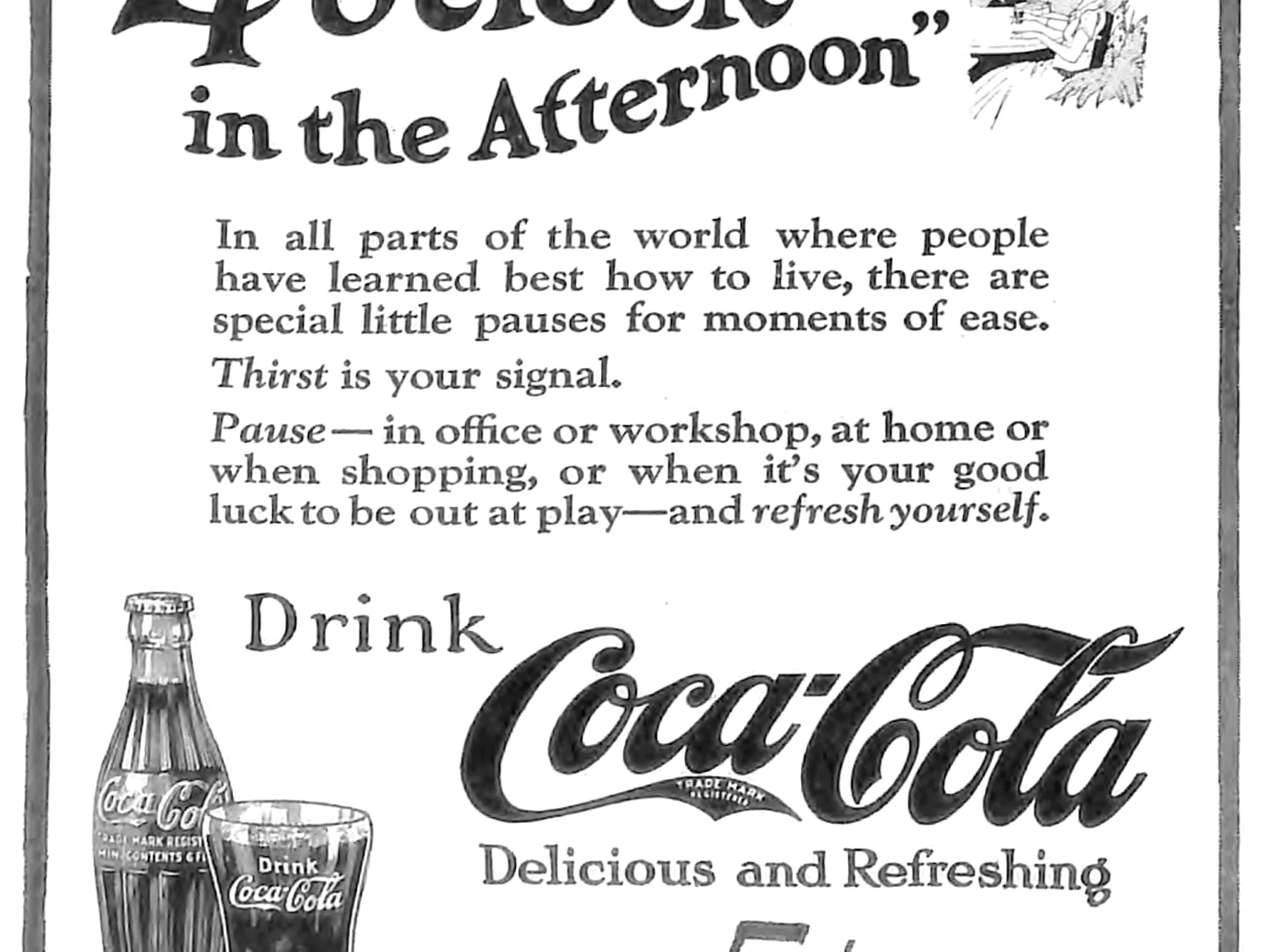
- A glass or bottle of Coca-Cola famously cost five cents for many decades in the United States.
- The nickel price began in the early years of the brand.
- National advertising reinforced the five-cent expectation.
- Bottling contracts also made syrup pricing difficult to adjust.
- Vending machines were designed around nickel payments.
- Inflation made the price increasingly difficult to maintain.
- The company experimented with ways to escape the fixed nickel price.
- One unusual idea involved vending machines that would occasionally require an extra nickel.
- That plan was never a practical long-term solution.
- The five-cent era finally faded around the middle of the 20th century.
- The episode became a famous economics case study.
- It shows how advertising can turn a price into part of a brand identity.
- Consumers resist price changes more strongly when the old number feels culturally permanent.
- Modern Coca-Cola pricing varies enormously by package and market.
- The nickel Coke lasted far longer than ordinary inflation would suggest.
Coke and Santa Claus
- Coca-Cola did not invent Santa Claus.
- Santa had been depicted in red before Coca-Cola’s famous campaigns.
- The company did help popularize a particular warm modern visual image.
- Artist Haddon Sundblom began painting Coca-Cola Santa advertisements in 1931.
- His Santa was large, cheerful, rosy-cheeked, and human.
- Sundblom drew inspiration from Clement Clarke Moore’s famous Christmas poem.
- The paintings appeared in magazines and advertisements for decades.
- They showed Santa drinking Coca-Cola during his Christmas work.
- The campaign associated a cold soft drink with winter.
- This was useful because soda sales could be seasonal.
- Sundblom sometimes used real people as models.
- He initially modeled Santa partly on his friend Lou Prentiss.
- After Prentiss died, Sundblom used his own reflection for some work.
- The ads became enormously influential Christmas imagery.
- The accurate claim is that Coca-Cola popularized a famous Santa depiction, not that it invented Santa’s red suit.
New Coke becomes a business legend
- In 1985, Coca-Cola changed the formula of its flagship U.S. cola.
- The new version was commonly called New Coke.
- The company officially marketed it simply as Coke at first.
- Blind taste tests had suggested many consumers preferred the sweeter new formula.
- Executives underestimated emotional attachment to the original product.
- The change triggered intense complaints.
- Consumers called and wrote the company in huge numbers.
- Some people stockpiled old-formula Coke.
- The company restored the original formula after only 79 days.
- It returned under the name Coca-Cola Classic.
- New Coke remained available for years under changing branding.
- Conspiracy theories claim the failure was an intentional marketing stunt.
- Company accounts and historical evidence support a genuine product strategy that backfired rather than a planned hoax.
- The episode became one of marketing history’s most famous lessons about brand attachment.
- A formula can be preferred in a sip test and still lose when consumers care about identity, memory, packaging, and habit.
Ten surprising Coca-Cola facts
- Coca-Cola began at an Atlanta pharmacy fountain in 1886.
- The famous script logo traces back to bookkeeper Frank Robinson’s handwriting.
- The contour bottle was inspired partly by a cacao pod because designers researched the wrong plant.
- Early Coca-Cola did contain cocaine-related coca ingredients.
- Modern Coca-Cola contains no cocaine.
- A Coke stayed around five cents in the United States for an astonishingly long period.
- Coca-Cola did not invent Santa’s red suit.
- It did help popularize Haddon Sundblom’s influential modern Santa imagery.
- The original Coke formula returned only 79 days after New Coke launched.
- For more food-and-drink trivia, explore our coffee facts and Food facts.
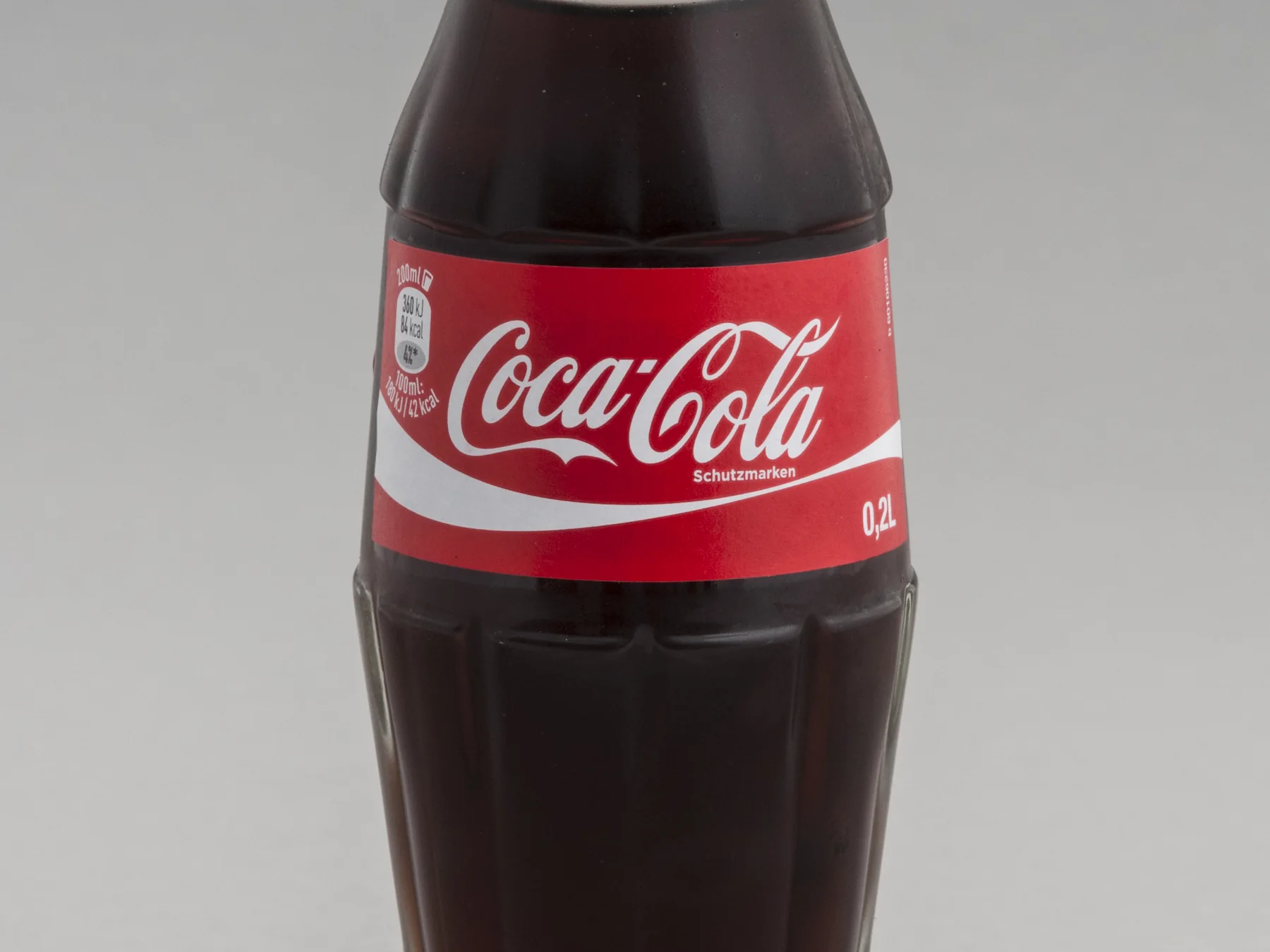
Quick Coca-Cola FAQ
Who invented Coca-Cola?
Atlanta pharmacist John Stith Pemberton created the drink in 1886, while his bookkeeper Frank Robinson suggested the name and wrote the famous script.
Did Coca-Cola originally contain cocaine?
Early Coca-Cola used coca-leaf extract and contained some cocaine alkaloid. The formula moved to decocainized coca extract around the beginning of the 20th century, and modern Coca-Cola contains no cocaine.
Did Coca-Cola invent Santa Claus?
No. Santa traditions and red clothing predate Coca-Cola. The company’s Haddon Sundblom advertisements helped popularize one especially influential 20th-century Santa image.
What was New Coke?
A reformulated Coca-Cola launched in 1985. Consumer backlash was so strong that the company restored the original formula as Coca-Cola Classic after 79 days.
Why is the Coca-Cola bottle shaped that way?
The contour bottle was intentionally designed to be recognizable by shape alone, even in darkness or when broken. Its designers drew visual inspiration from a cacao pod.

Ellie is the owner and sole author of Fun Facts, combining her mechanical engineering background with years of research-driven writing to deliver facts you can trust. Every article is thoroughly fact-checked and routinely updated as new science and sources emerge to keep information accurate and current. Her mission is to make learning delightful while upholding high standards of reliability and transparency.