
Mushrooms are not plants, the part we eat is usually only a fungus’s temporary fruiting body, and most of the organism may be hidden underground as microscopic threads. Some fungi glow, some farm relationships with trees, some digest wood, some launch spores with extraordinary precision, and a few form organisms that stretch across acres. These 145 mushroom facts explore fungi, mycelium, spores, gills, forests, decomposition, edible species, poisonous lookalikes, truffles, cultivation, bioluminescence, fairy rings, and the strange biology beneath every cap.
Mushroom basics
- Mushrooms are reproductive structures produced by certain fungi.
- Fungi form their own major kingdom of life.
- They are not plants.
- Fungi do not perform photosynthesis like green plants.
- They obtain nutrients by absorbing dissolved organic compounds.
- A typical mushroom is only one temporary part of a larger fungal organism.
- Much of the fungus may exist as mycelium hidden in soil, wood, leaves, or another substrate.
- Mycelium is made of microscopic filaments called hyphae.
- Hyphae grow through and around food sources.
- Mushrooms produce spores for reproduction and dispersal.
- Fungal spores are not the same as plant seeds.
- Mushroom shapes include caps, cups, shelves, clubs, corals, puffballs, stars, nests, and many stranger forms.
- Scientists who study fungi are called mycologists.
- Mycology is the study of fungi.
- Kew Gardens estimates that millions of fungal species may exist, far more than scientists have formally described.
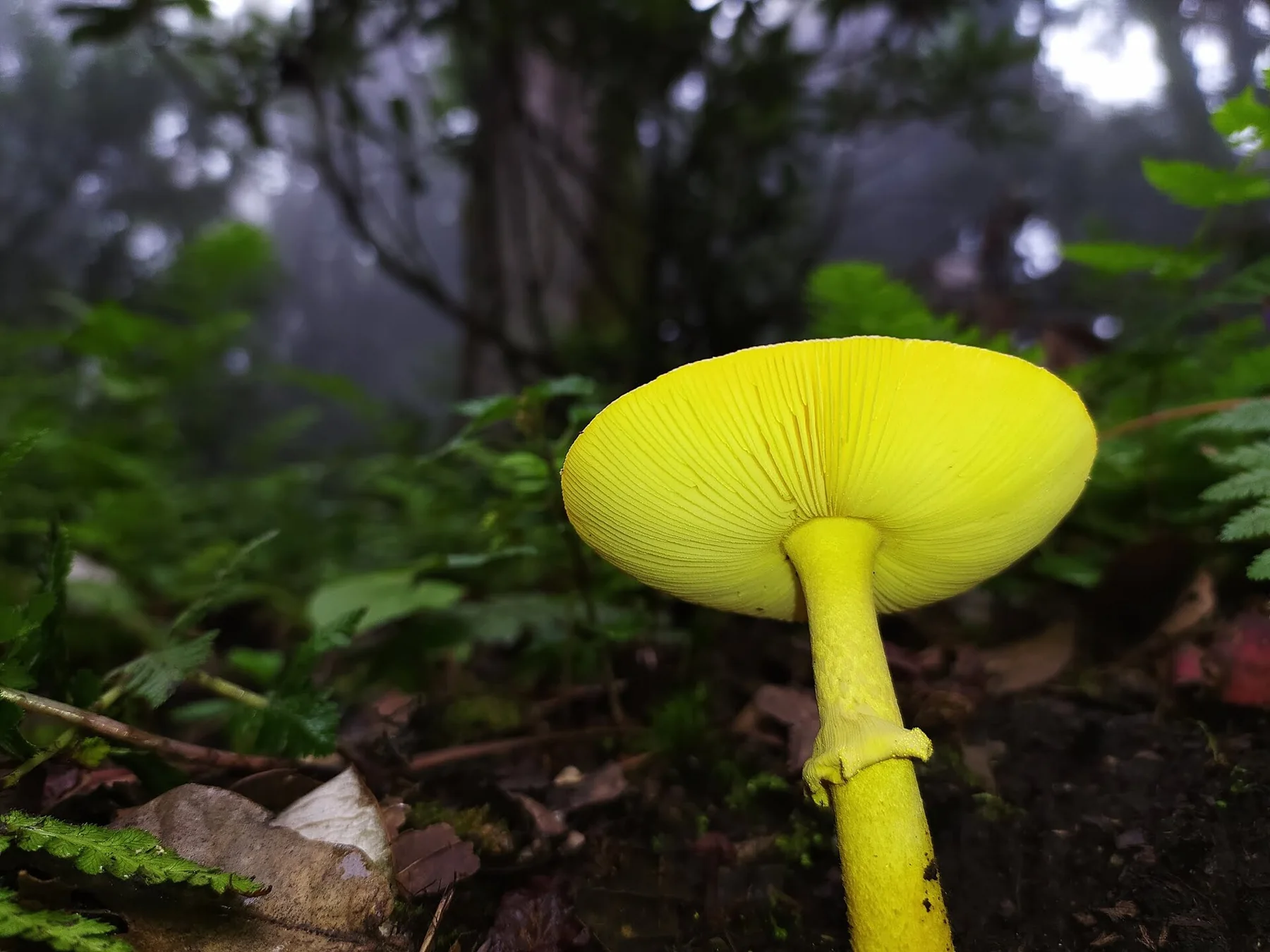
The mushroom is like a fruit
- Calling a mushroom the entire fungus is a little like calling an apple the entire apple tree.
- The visible mushroom is often a fruiting body.
- Its job is mainly reproduction.
- The hidden mycelium can live much longer than the mushroom itself.
- A fruiting body may emerge only when temperature, moisture, nutrients, and season are suitable.
- Some mushrooms appear overnight after rain.
- That does not mean the fungus grew from nothing overnight.
- The mycelium may have been present for months or years.
- Rapid expansion of preformed tissues can make mushrooms seem to appear suddenly.
- Water contributes heavily to fresh mushroom mass.
- Many mushrooms are roughly 90 percent water.
- The fruiting body then releases spores.
- After reproduction, it may decay quickly.
- The underlying mycelium can remain alive.
- That is why mushrooms may return to the same patch year after year.
Gills, pores, and teeth
- Many familiar mushrooms have gills under the cap.
- Gills create a huge surface area for producing spores.
- Not every mushroom has gills.
- Boletes commonly have sponge-like pores instead.
- Bracket fungi can also release spores through pores.
- Hedgehog mushrooms have tooth-like spines beneath their caps.
- Chanterelles have blunt ridges rather than true blade-like gills.
- Puffballs produce spores inside enclosed fruiting bodies.
- Mature puffballs release clouds of spores through openings.
- Earthstars open into star-shaped structures that expose a central spore sac.
- Bird’s nest fungi resemble tiny nests containing egg-like packets.
- Raindrops can splash those packets outward.
- Stinkhorns produce foul-smelling spore-bearing slime.
- Flies visit the odor and help spread spores.
- Fungi evolved many completely different engineering solutions to the same reproductive challenge.
Spores can launch themselves
- Many mushroom-forming fungi actively discharge spores.
- Basidiospores can be launched from microscopic structures called basidia.
- A tiny droplet known as Buller’s drop forms near a spore.
- Surface-tension changes help catapult the spore away.
- The launch distance is microscopic but crucial.
- It moves the spore far enough to clear the gill surface.
- Gravity then carries it downward between gills.
- Air currents can transport spores much farther.
- A single mushroom may release millions or billions of spores.
- Most spores never establish a new successful fungus.
- Successful spores germinate when they reach suitable conditions.
- Hyphae then begin growing.
- Compatible fungal cells may need to meet before a reproductive mycelium forms.
- Fungal life cycles can contain many nuclear and genetic stages unfamiliar from animal reproduction.
- A mushroom cap is therefore a giant spore-launching platform built from microscopic machinery.
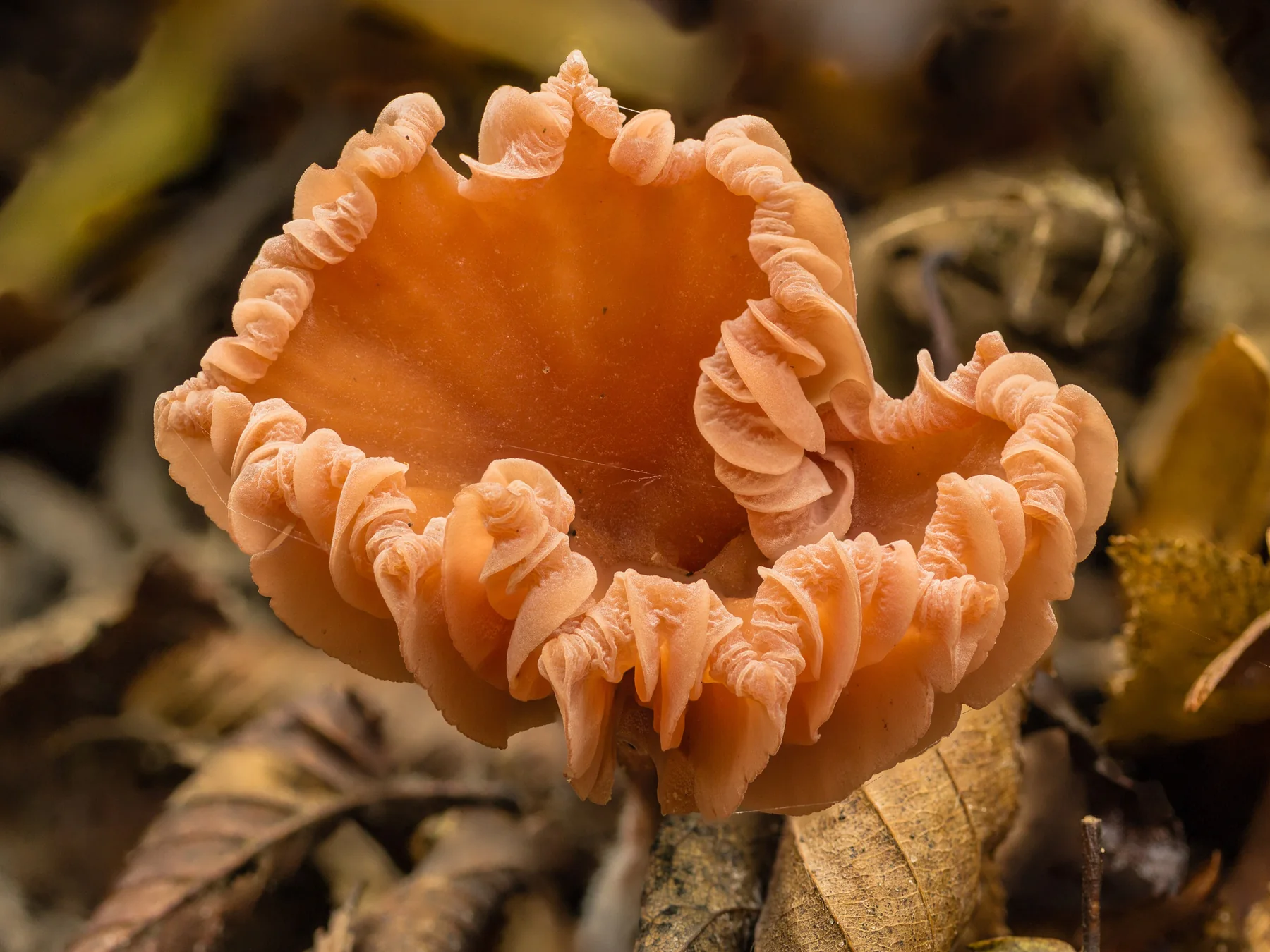
Fungi run forest partnerships
- Many forest fungi form mycorrhizal relationships with plant roots.
- Mycorrhiza means fungus-root.
- The fungus receives sugars produced by the plant.
- The plant gains improved access to water and mineral nutrients through fungal hyphae.
- Hyphae can explore tiny soil spaces roots cannot reach efficiently.
- Different fungi partner with different plant species.
- Some mushrooms appear only near particular trees.
- Many boletes form mycorrhizae.
- Truffles are mycorrhizal fungi too.
- Chanterelles also depend on living plant partners.
- This makes some prized wild mushrooms difficult to cultivate commercially.
- Scientists study nutrient and signaling movement through mycorrhizal networks.
- Popular descriptions sometimes call these networks a “wood wide web.”
- That phrase can oversimplify complex ecological relationships and should not be interpreted as trees consciously using a fungal internet.
- What is certain is that fungi are physically and chemically integrated into plant nutrient systems throughout many ecosystems.
Other fungi are nature’s recyclers
- Saprotrophic fungi feed on dead organic matter.
- They secrete enzymes outside their bodies.
- Those enzymes break large molecules into smaller compounds.
- The fungus then absorbs the nutrients.
- Fungi are essential decomposers in forests.
- They help break down fallen leaves.
- Many fungi digest dead wood.
- White-rot fungi can break down lignin, a tough component of wood.
- Brown-rot fungi remove cellulose and related carbohydrates while leaving modified lignin behind.
- Without decomposers, dead plant material would accumulate much more rapidly.
- Decomposition returns carbon and nutrients to ecosystems.
- Fungal activity affects the global carbon cycle.
- Some fungi specialize on dung.
- Others decompose cones, needles, animal remains, or very specific plant tissues.
- A rotting log is often an active fungal ecosystem rather than simply dead wood disappearing on its own.
The largest organism question
- A famous honey fungus in Oregon covers an enormous area.
- It belongs to the genus Armillaria.
- Genetic testing showed fungal growth across thousands of acres was part of one clone.
- The organism lives mainly underground and inside tree roots.
- Its mushrooms are only seasonal reproductive structures.
- The Oregon clone is often called the Humongous Fungus.
- It is frequently described as the world’s largest known organism by area.
- Definitions of one individual organism become complicated in clonal life forms.
- Aspen clones and marine organisms create similar biological questions.
- The Armillaria fungus spreads through mycelium and rootlike structures called rhizomorphs.
- Rhizomorphs can move through soil toward new hosts.
- Some Armillaria species cause root disease in trees.
- The fungus can persist for centuries or potentially millennia.
- Its true body is almost entirely invisible from the forest surface.
- A handful of mushrooms can therefore be the visible tips of an organism spanning a landscape.
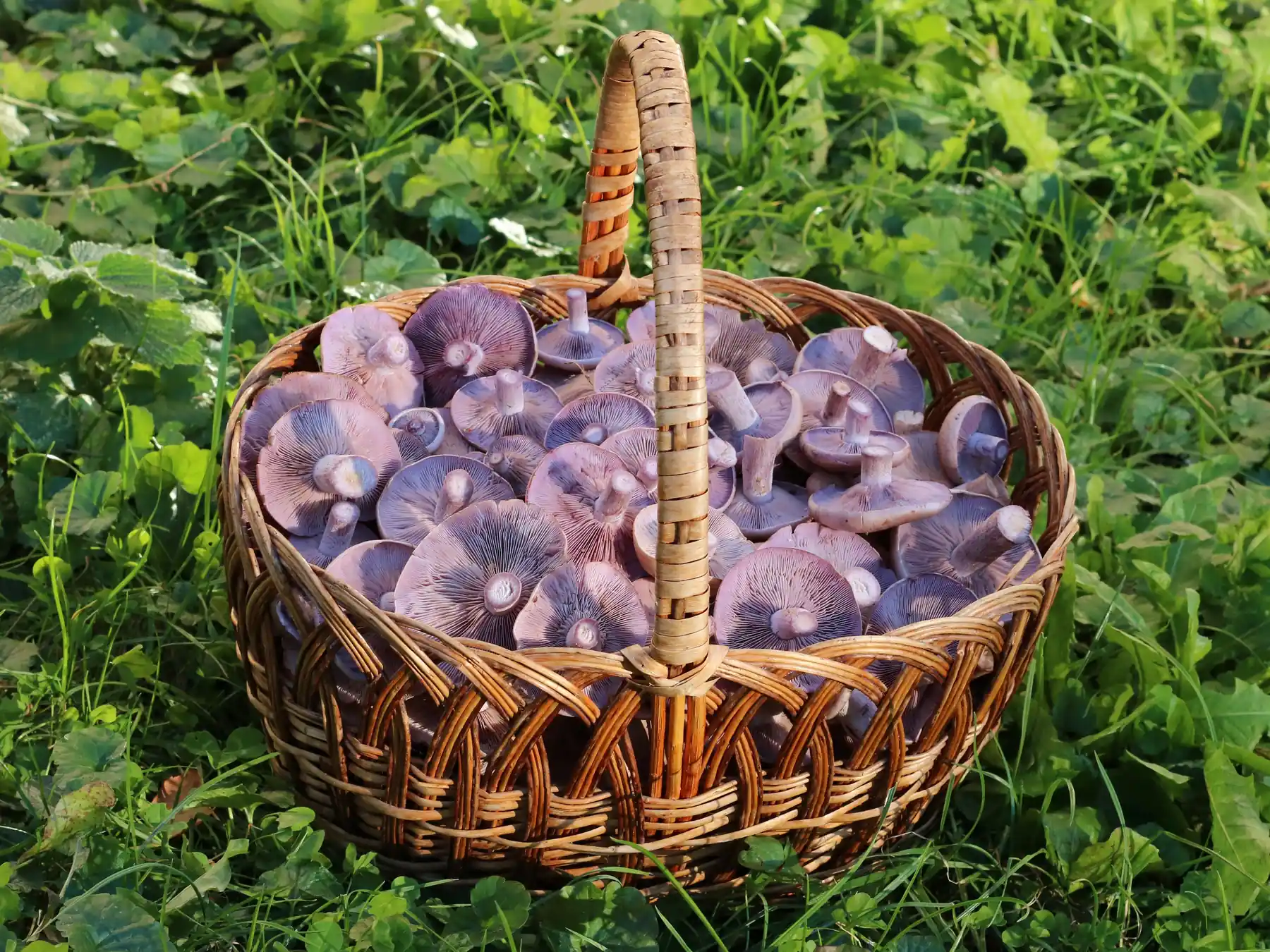
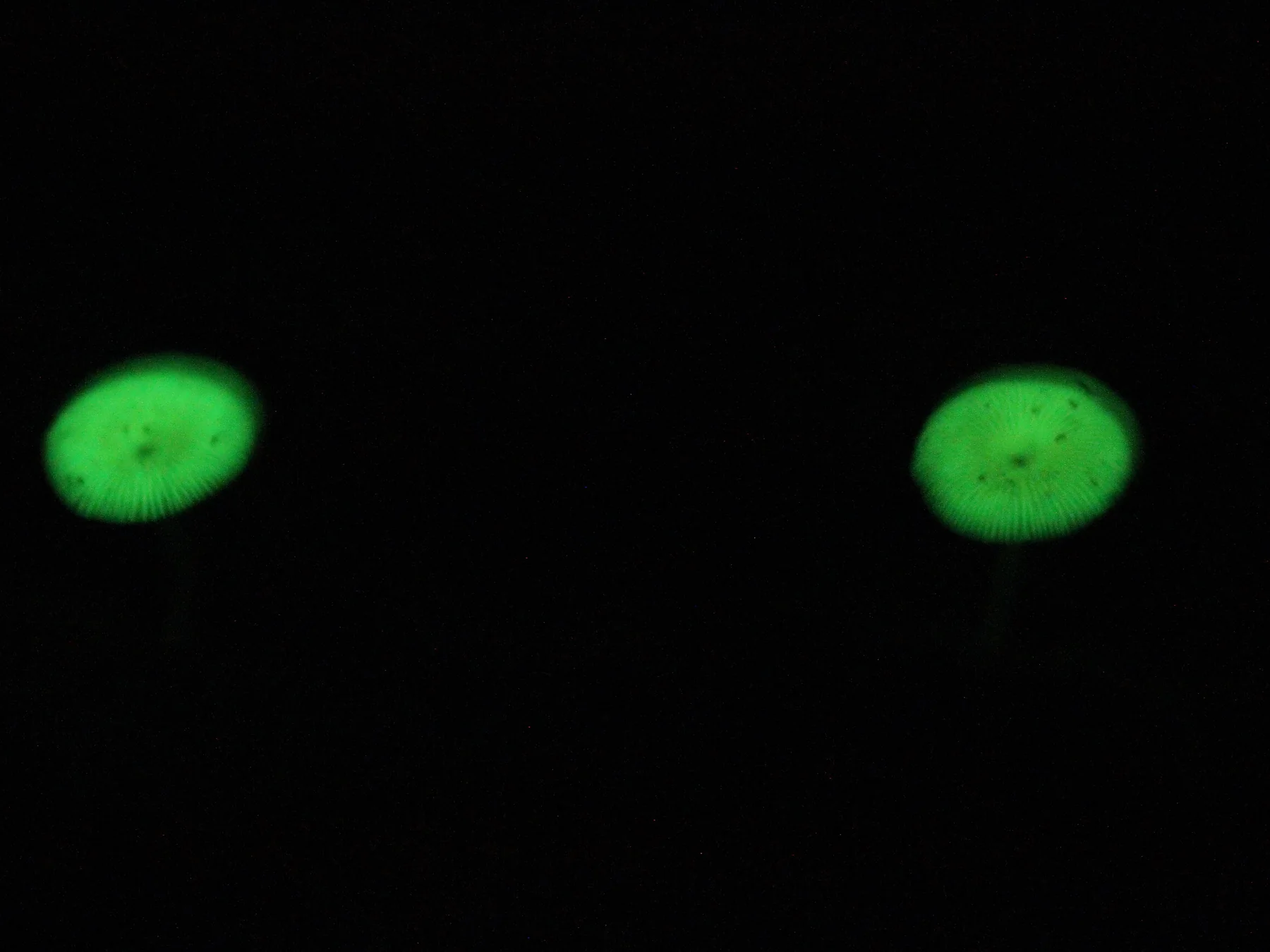
Some mushrooms glow
- Some fungi are bioluminescent.
- They produce visible light through chemical reactions.
- More than 100 glowing fungal species are known.
- The light is often greenish.
- Some species glow mainly in the mycelium.
- Others glow in fruiting bodies.
- Jack-o’-lantern mushrooms are famous bioluminescent fungi.
- They are poisonous and should not be confused with edible chanterelles.
- Fungal bioluminescence uses luciferin and luciferase-related chemistry.
- Researchers have identified a distinct fungal bioluminescence pathway.
- In some mushrooms, light may attract insects that help disperse spores.
- Other ecological functions remain under study.
- Bioluminescence costs metabolic energy.
- Its repeated presence in related fungi suggests evolutionary benefits.
- A glowing mushroom is creating its own light rather than merely reflecting moonlight.
Edible does not mean easy to identify
- Many mushroom species are edible.
- Others are poisonous.
- Some toxic mushrooms closely resemble edible species.
- No universal folk test can reliably determine whether an unknown mushroom is safe.
- Silver spoons, onion color, animal bites, peeling caps, or cooking do not provide dependable safety tests.
- Death cap mushrooms contain amatoxins that can cause fatal liver failure.
- Symptoms may be delayed for hours after eating.
- False morels contain toxins that can cause serious illness.
- Some mushrooms are edible only after correct preparation.
- Alcohol interacts badly with certain mushroom toxins.
- Wild mushroom identification requires species-level expertise.
- Commercially cultivated mushrooms are far safer than experimenting with unidentified wild specimens.
- Button, cremini, and portobello mushrooms are different maturity stages or forms of the same cultivated species, Agaricus bisporus.
- Oyster mushrooms are widely cultivated on plant-based substrates.
- Shiitake cultivation has a long history in East Asia.
Ten surprising mushroom facts
- Mushrooms are fungi, not plants.
- The visible mushroom can be only a temporary fruiting structure of a much larger hidden organism.
- Some spores launch themselves using microscopic droplets and surface tension.
- Many trees rely on intimate partnerships with fungi around their roots.
- Some fungi can digest lignin, one of wood’s toughest structural compounds.
- An Oregon honey fungus spans thousands of acres as one genetic clone.
- Some mushrooms produce their own greenish light.
- Button mushrooms, cremini, and portobellos are all Agaricus bisporus.
- There is no reliable folk trick for deciding whether an unknown wild mushroom is safe to eat.
- For more strange-organism trivia, explore our jellyfish facts and Science facts.
Quick mushroom FAQ
Are mushrooms plants?
No. Mushrooms are reproductive structures produced by fungi, which belong to their own kingdom of life.
What is mycelium?
The network of microscopic fungal filaments, called hyphae, that forms much of a fungus’s feeding and growing body.
How do mushrooms reproduce?
They produce spores. Different fungi release spores through gills, pores, teeth, enclosed sacs, slime, or other specialized structures.
Are portobello and button mushrooms the same species?
Yes. Button, cremini, and portobello mushrooms are all cultivated forms or maturity stages of Agaricus bisporus.
Can you tell a poisonous mushroom with a simple test?
No. There is no universal color, smell, cooking method, silver-spoon test, or other folk rule that reliably separates safe mushrooms from poisonous ones.

Ellie is the owner and sole author of Fun Facts, combining her mechanical engineering background with years of research-driven writing to deliver facts you can trust. Every article is thoroughly fact-checked and routinely updated as new science and sources emerge to keep information accurate and current. Her mission is to make learning delightful while upholding high standards of reliability and transparency.