
Thomas Edison did not invent the first light bulb, and that fact makes his real story more interesting, not less. He built teams, laboratories, factories, power stations, sound machines, movie equipment, batteries, telegraph systems, and a repeatable process for turning experiments into products. He earned 1,093 U.S. patents while relying on talented collaborators he called his “muckers.” These 145 Edison facts explore his childhood, telegraph career, Menlo Park, phonograph, electric light, Pearl Street, motion pictures, patents, rivalries, hearing loss, and invention-factory legacy.
Thomas Edison basics
- Thomas Alva Edison was born on February 11, 1847.
- He was born in Milan, Ohio.
- Edison grew up mainly in Port Huron, Michigan.
- He received relatively little formal classroom education.
- His mother, Nancy Edison, played a major role in his education.
- Edison read widely and experimented from a young age.
- He developed substantial hearing loss.
- The exact cause of that hearing loss remains uncertain.
- Edison worked as a telegraph operator before becoming a full-time inventor.
- Telegraphy taught him practical electrical systems.
- He became one of the most prolific American patentees in history.
- Edison received 1,093 U.S. patents.
- He also obtained many foreign patents.
- Newspapers nicknamed him the Wizard of Menlo Park.
- The National Park Service preserves his later laboratory and home at Thomas Edison National Historical Park.
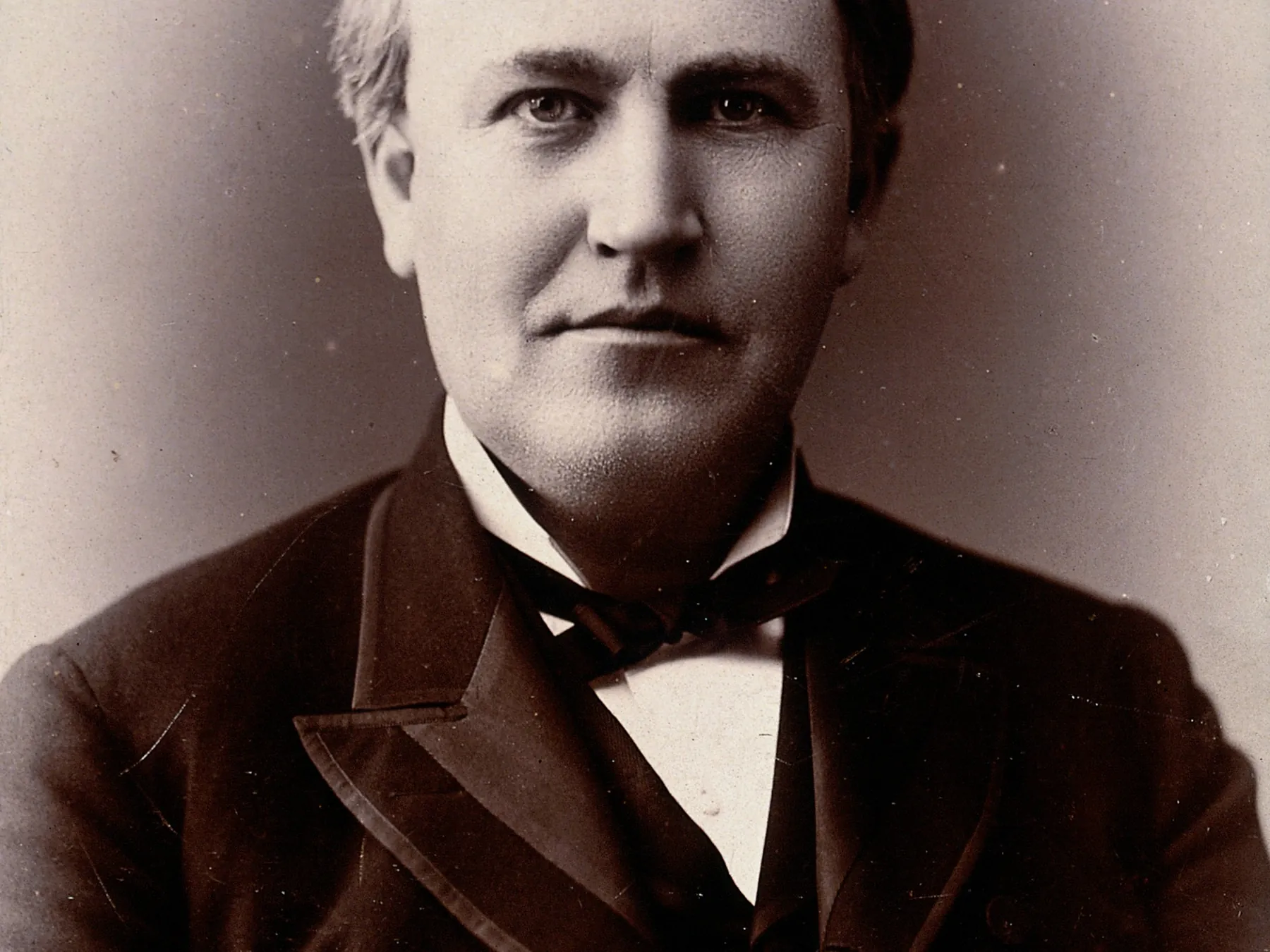
A teenage telegraph operator
- Edison sold newspapers and snacks on trains as a teenager.
- He used access to railway travel to build a small business.
- Edison even printed a newspaper connected with his train work.
- He experimented with chemistry during his youth.
- Telegraph technology became his first major professional specialty.
- Edison learned Morse code.
- Telegraph operators could work in different cities because the technical skill traveled well.
- He moved around the United States taking telegraph jobs.
- Night shifts gave him time to experiment.
- Edison became interested in making telegraph systems faster and more automatic.
- He developed devices that could send or record messages efficiently.
- His knowledge was practical rather than purely academic.
- He learned by repairing machines and observing failures.
- Telegraphy connected electricity directly with business value.
- Edison’s later invention career grew from this world of wires, relays, batteries, signals, and information networks.
His first patent was a flop
- Edison received his first U.S. patent in 1869.
- The invention was an electric vote recorder.
- It was intended to make legislative voting faster.
- Lawmakers were not interested in adopting it.
- Slow voting procedures could be politically useful for debate and negotiation.
- The commercial failure taught Edison an important lesson.
- He increasingly focused on inventions with clear customer demand.
- Edison improved stock tickers and telegraph equipment.
- Those inventions proved much more profitable.
- He used earnings to finance larger laboratories.
- Edison opened a workshop in Newark, New Jersey.
- Skilled machinists helped build experimental devices.
- He learned that invention required both ideas and manufacturing capability.
- This business-minded approach distinguished him from the stereotype of a solitary tinkerer.
- His career became an early model of industrial research tied directly to markets.
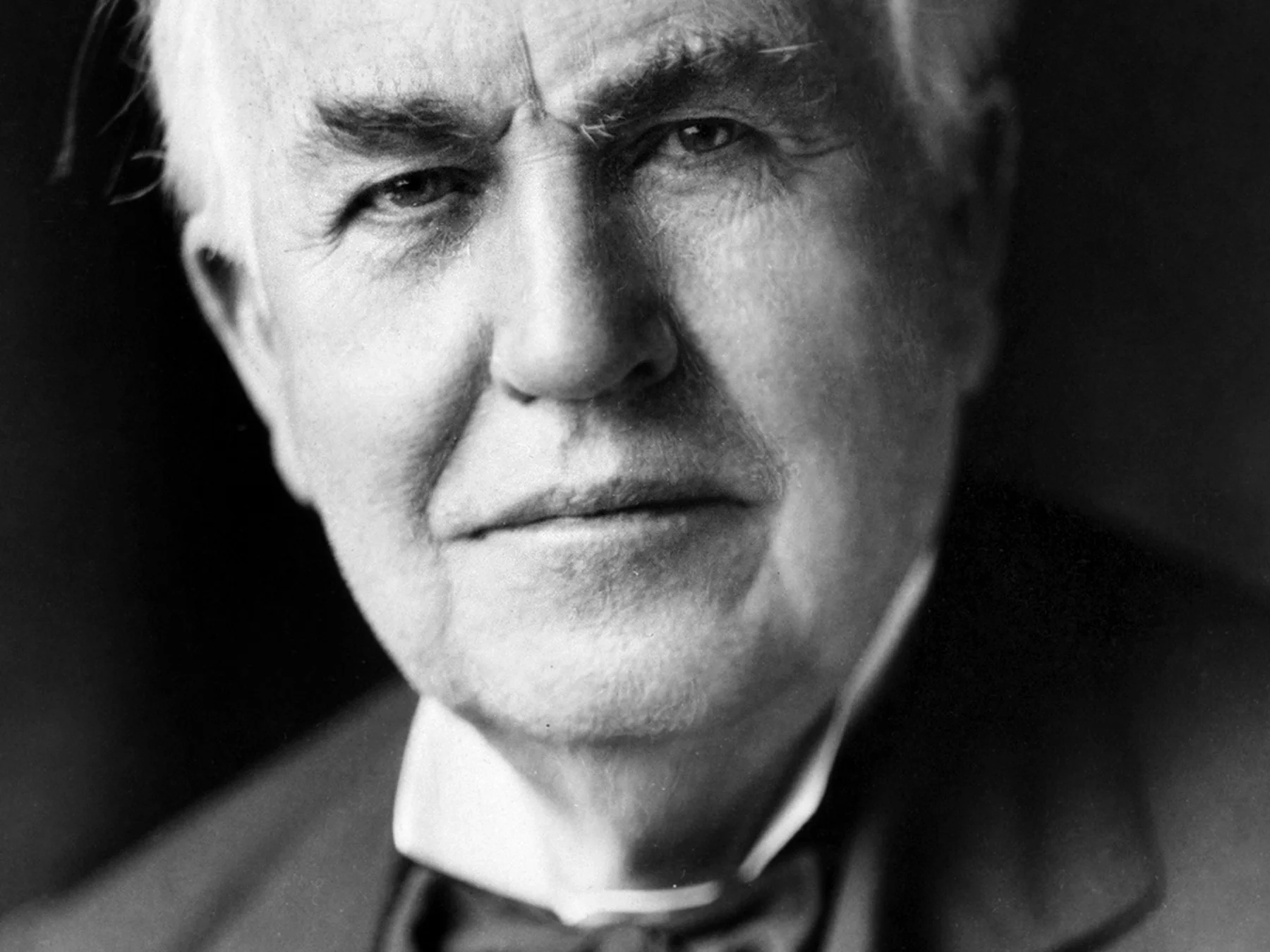
Menlo Park becomes an invention factory
- Edison established his Menlo Park laboratory in New Jersey in 1876.
- The site included laboratory space, a machine shop, office facilities, and a library.
- Edison gathered machinists, chemists, draftsmen, experimenters, and other specialists.
- He informally called workers his muckers.
- The laboratory aimed to produce inventions systematically.
- Experiments could be designed, machined, tested, changed, and retested in one place.
- Materials from around the world were collected for experiments.
- Workdays could stretch late into the night.
- Edison became famous for intense work habits.
- The team rather than Edison alone physically built and tested many devices.
- Francis Upton brought advanced mathematical training to electric-light research.
- Charles Batchelor became one of Edison’s closest technical collaborators.
- John Kruesi was a highly skilled machinist who built experimental devices.
- The Smithsonian describes Menlo Park as an early “invention factory.”
- Modern corporate research laboratories owe part of their history to this team-based model.
The phonograph shocked the world
- Edison invented the phonograph in 1877.
- It could both record and reproduce sound.
- Earlier devices had recorded sound vibrations visually without playing them back.
- Edison’s first phonograph used tinfoil wrapped around a cylinder.
- A stylus traced sound vibrations into the foil.
- Another pass could reproduce the recorded vibration as audible sound.
- Early tinfoil recordings wore out quickly.
- The ability to hear a recorded human voice seemed astonishing to contemporary audiences.
- The phonograph made Edison internationally famous.
- He demonstrated it for President Rutherford B. Hayes at the White House.
- Edison called the phonograph his “baby.”
- He returned to sound-recording technology repeatedly for decades.
- Later systems used wax cylinders and improved recording materials.
- Disc records eventually became more commercially dominant than cylinders.
- Recorded sound transformed music, speech, entertainment, education, and memory.
Edison did not invent the first light bulb
- Electric lighting existed before Edison’s famous 1879 lamp.
- Inventors had experimented with incandescent lamps for decades.
- Arc lamps were already useful for some outdoor and industrial lighting.
- The real challenge was creating practical indoor electric lighting.
- A useful incandescent lamp needed a durable filament.
- It also needed the right electrical resistance.
- A good vacuum inside the bulb improved filament life.
- Edison’s team tested enormous numbers of materials.
- A carbonized sewing-thread filament produced an important 1879 success.
- That lamp burned for more than 13 hours.
- Later carbonized bamboo filaments lasted much longer.
- British inventor Joseph Swan independently developed practical incandescent lighting too.
- Edison and Swan eventually became business partners in Britain.
- The National Park Service explicitly notes that Edison was not the first person to make an electric light bulb.
- His major achievement was making incandescent lighting practical as part of a complete electrical system.
The bulb needed an entire power system
- A useful light bulb is useless without reliable electricity.
- Edison’s team therefore developed generators, wiring, sockets, switches, meters, fuses, and distribution equipment.
- The system had to be safe enough for homes and businesses.
- It also had to be economically competitive with gas lighting.
- Menlo Park was illuminated publicly with Edison’s incandescent system in late 1879.
- Visitors traveled by train to see the electric lights.
- Edison built central generating stations.
- Pearl Street Station began commercial operation in lower Manhattan in 1882.
- It supplied direct-current electricity to nearby customers.
- Early service covered a relatively compact area.
- Direct current was difficult to transmit efficiently over long distances at the low voltages used by Edison’s system.
- Alternating-current systems later gained major advantages for broader power distribution.
- The resulting War of the Currents involved Edison companies, Westinghouse, Tesla patents, and intense public competition.
- Modern grids use AC widely while also using high-voltage DC for specialized transmission.
- Edison’s lasting contribution was helping create the idea of electricity as an integrated public utility service.
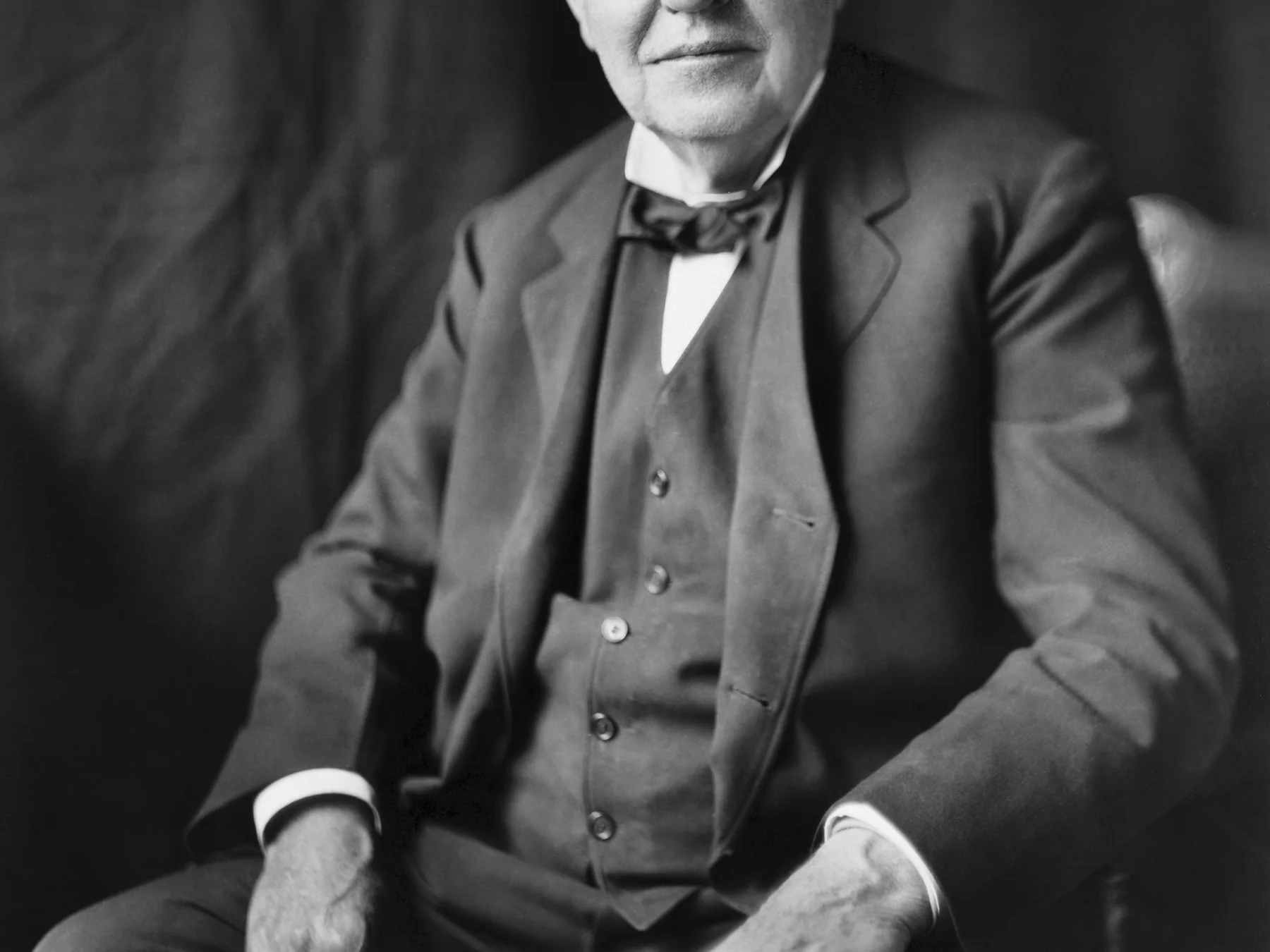
Edison enters motion pictures
- Edison began serious motion-picture work in the late 1880s.
- His team developed the Kinetograph motion-picture camera.
- William Kennedy Laurie Dickson was central to that work.
- The Kinetoscope was a viewing machine for short motion pictures.
- Early viewers watched individually through a peephole.
- The system did not initially project films onto a theater screen for a large audience.
- Edison’s West Orange laboratory included a motion-picture studio.
- The studio was nicknamed the Black Maria.
- Its dark exterior helped control light.
- The building could rotate to follow the sun.
- A roof section opened to admit daylight.
- Early films showed dancers, athletes, performers, workers, and staged scenes.
- Edison companies later produced and distributed motion pictures commercially.
- Patent disputes became a major part of the early American film industry.
- The Library of Congress preserves hundreds of surviving Edison-company motion pictures and sound recordings.
West Orange and 1,093 patents
- Edison opened a much larger laboratory complex in West Orange, New Jersey, in 1887.
- The new site was far larger than Menlo Park.
- It combined research laboratories with nearby manufacturing facilities.
- Edison worked there for the rest of his life.
- More than half of his U.S. patents were developed during the West Orange period.
- He improved phonographs there.
- He worked extensively on alkaline storage batteries.
- Edison hoped batteries could support electric vehicles.
- He experimented with ore milling.
- He entered the cement business.
- He investigated synthetic rubber sources late in life.
- Some Edison projects were commercial failures.
- His reputation sometimes hides how frequently he pursued ideas that never succeeded.
- The West Orange archive preserves hundreds of thousands of artifacts and millions of pages of documents.
- Those records reveal invention as repeated team experimentation rather than a sequence of effortless flashes of genius.
Ten surprising Thomas Edison facts
- Edison did not invent the first electric light bulb.
- His first patented invention was a commercial failure.
- The phonograph, not the light bulb, was the invention he called his baby.
- He had substantial hearing loss while becoming a pioneer of recorded sound.
- Edison’s greatest inventions were usually team efforts involving skilled collaborators.
- His Menlo Park lab helped pioneer the modern industrial research laboratory.
- The Black Maria movie studio could rotate to follow sunlight.
- Edison received 1,093 U.S. patents.
- He spent years developing batteries partly because he believed electric vehicles had a future.
- For the other side of the electricity story, explore our Nikola Tesla facts and History facts.
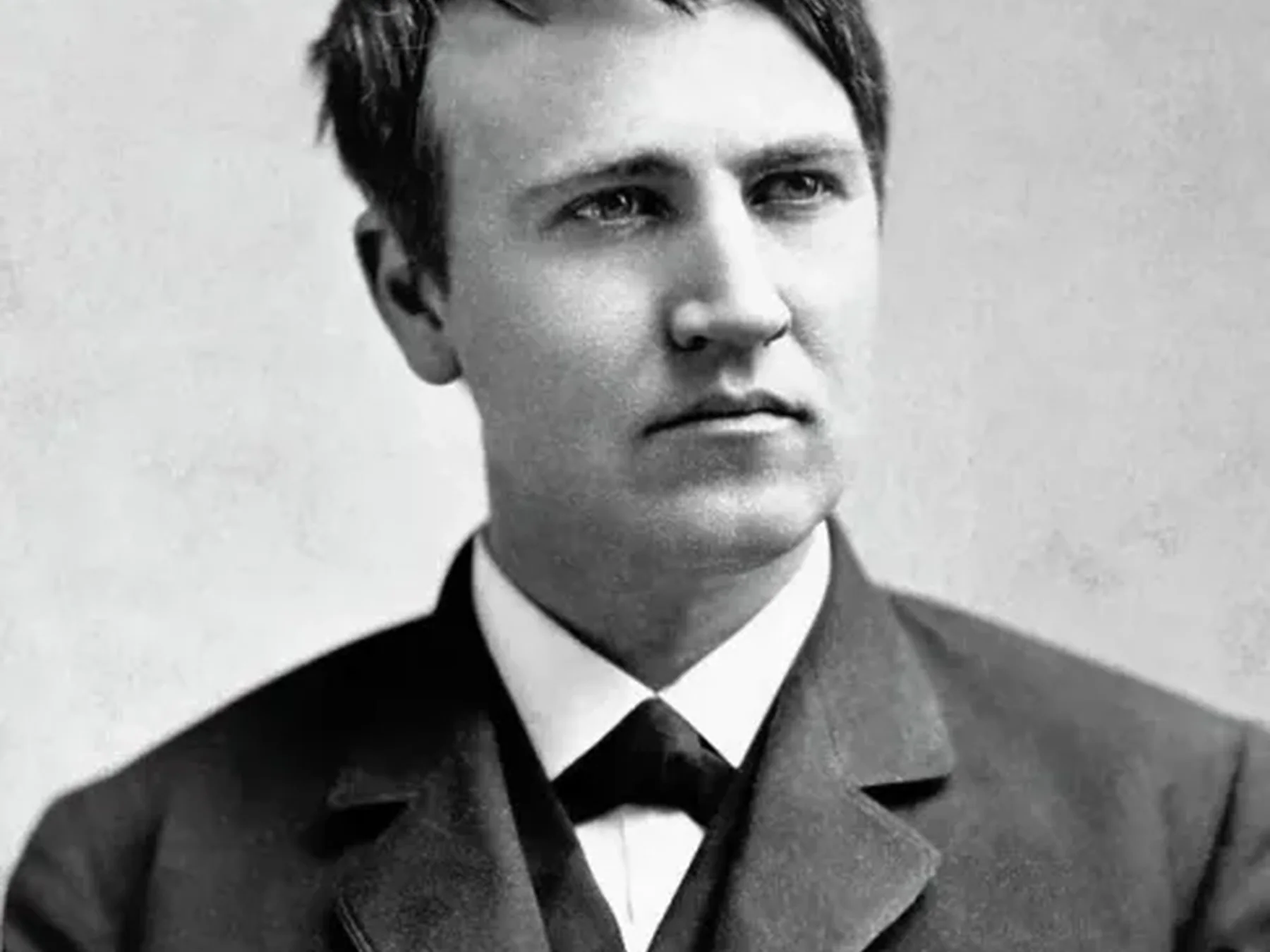
Quick Thomas Edison FAQ
Did Thomas Edison invent the light bulb?
Not the first one. He and his team developed a practical long-lasting incandescent lamp and, just as importantly, the power system needed to use electric lighting commercially.
What did Edison invent?
Major inventions and systems associated with his laboratories include the phonograph, practical incandescent lighting, electrical distribution equipment, motion-picture technology, telegraph improvements, and storage batteries.
How many patents did Edison have?
He received 1,093 United States patents plus many foreign patents.
What was Menlo Park?
Edison’s New Jersey research complex established in 1876, where teams of skilled workers developed inventions including the phonograph and practical incandescent-lighting system.
Did Edison work alone?
No. He directed large teams of machinists, chemists, engineers, draftsmen, and experimenters. The collaborative laboratory system was central to his success.

Ellie is the owner and sole author of Fun Facts, combining her mechanical engineering background with years of research-driven writing to deliver facts you can trust. Every article is thoroughly fact-checked and routinely updated as new science and sources emerge to keep information accurate and current. Her mission is to make learning delightful while upholding high standards of reliability and transparency.