
New Zealand has glowworm caves, flightless parrots, dramatic fjords, active volcanoes, Southern Alps, Māori place names, sheep farms, film landscapes, and a national identity shaped by both Polynesian settlement and British colonization. It is also one of the last large land areas humans settled. These 145 facts explore Aotearoa New Zealand’s islands, wildlife, Māori culture, Treaty history, geography, food, inventions, sports, language, film, and the natural forces that keep reshaping the country.
New Zealand basics
- New Zealand is an island country in the southwestern Pacific Ocean.
- Its largest landmasses are the North Island and South Island.
- Stewart Island, or Rakiura, is the third-largest main island.
- Wellington is the capital.
- Auckland is the largest urban area.
- New Zealand is often called Aotearoa in Māori.
- English is the most widely spoken language.
- Te reo Māori and New Zealand Sign Language have legal official-language status.
- The currency is the New Zealand dollar.
- New Zealand lies southeast of Australia across the Tasman Sea.
- It is part of the wider region of Oceania.
- The country has numerous smaller offshore islands.
- Its national flag contains the Union Jack and four red Southern Cross stars.
- The silver fern is an important national symbol.
- New Zealanders are commonly nicknamed Kiwis after the native bird.
New Zealand was one of the last major lands settled
- Humans reached New Zealand much later than most other habitable regions.
- The ancestors of Māori arrived from East Polynesia.
- Most archaeological evidence places major settlement around the 13th century.
- These settlers brought Polynesian languages, crops, technologies, and cultural traditions.
- They adapted rapidly to a cooler and very different environment.
- Māori society developed distinctive iwi, hapū, and whānau structures.
- Iwi are broadly tribal groupings.
- Hapū are subtribal kinship groups.
- Whānau refers to family and extended-family relationships.
- Settlers hunted the enormous flightless moa.
- Moa eventually became extinct.
- The giant Haast’s eagle also disappeared after its main prey vanished.
- Māori developed extensive horticulture despite New Zealand’s cooler climate.
- Kūmara, or sweet potato, became an important crop in warmer regions.
- Oral traditions preserved genealogies, migration histories, places, and ancestral knowledge.
European contact and colonization
- Dutch navigator Abel Tasman became the first known European to reach New Zealand in 1642.
- His encounter with Māori at Golden Bay turned violent.
- Tasman never landed for extended exploration.
- James Cook mapped much of New Zealand’s coastline beginning in 1769.
- Cook’s voyages increased European geographic knowledge of the islands.
- Whalers, sealers, missionaries, traders, and settlers arrived in increasing numbers.
- Introduced diseases affected Māori communities.
- Muskets transformed warfare among iwi during the early 19th century.
- European settlement created increasing disputes over land and authority.
- Britain became more directly involved during the 1830s.
- James Busby served as British Resident.
- The Declaration of Independence of the United Tribes of New Zealand was signed by a group of northern chiefs beginning in 1835.
- British colonization accelerated in 1840.
- The New Zealand Company organized large settler-migration schemes.
- Colonization fundamentally reshaped land ownership, law, population, economy, and political power.
The Treaty of Waitangi
- Te Tiriti o Waitangi, the Treaty of Waitangi, was first signed on February 6, 1840.
- The first signing took place at Waitangi in the Bay of Islands.
- British Crown representative William Hobson signed for Queen Victoria.
- More than 500 Māori rangatira eventually signed copies around the country.
- The treaty exists in Māori and English texts.
- The two versions are not exact translations.
- Important differences concern concepts of sovereignty, governance, and chiefly authority.
- Those differences became central to later disputes.
- The Crown failed to uphold many treaty promises during colonization.
- Māori lost huge areas of land through purchases, confiscations, legislation, and other processes.
- The New Zealand Wars involved armed conflict over land and sovereignty during the 19th century.
- The Waitangi Tribunal was established in 1975.
- It investigates claims concerning Crown breaches of Treaty principles.
- Historical settlements have included apologies, financial redress, land, and cultural recognition.
- Waitangi Day on February 6 is New Zealand’s national day.
Two islands, very different landscapes
- The North Island is more volcanically active than the South Island.
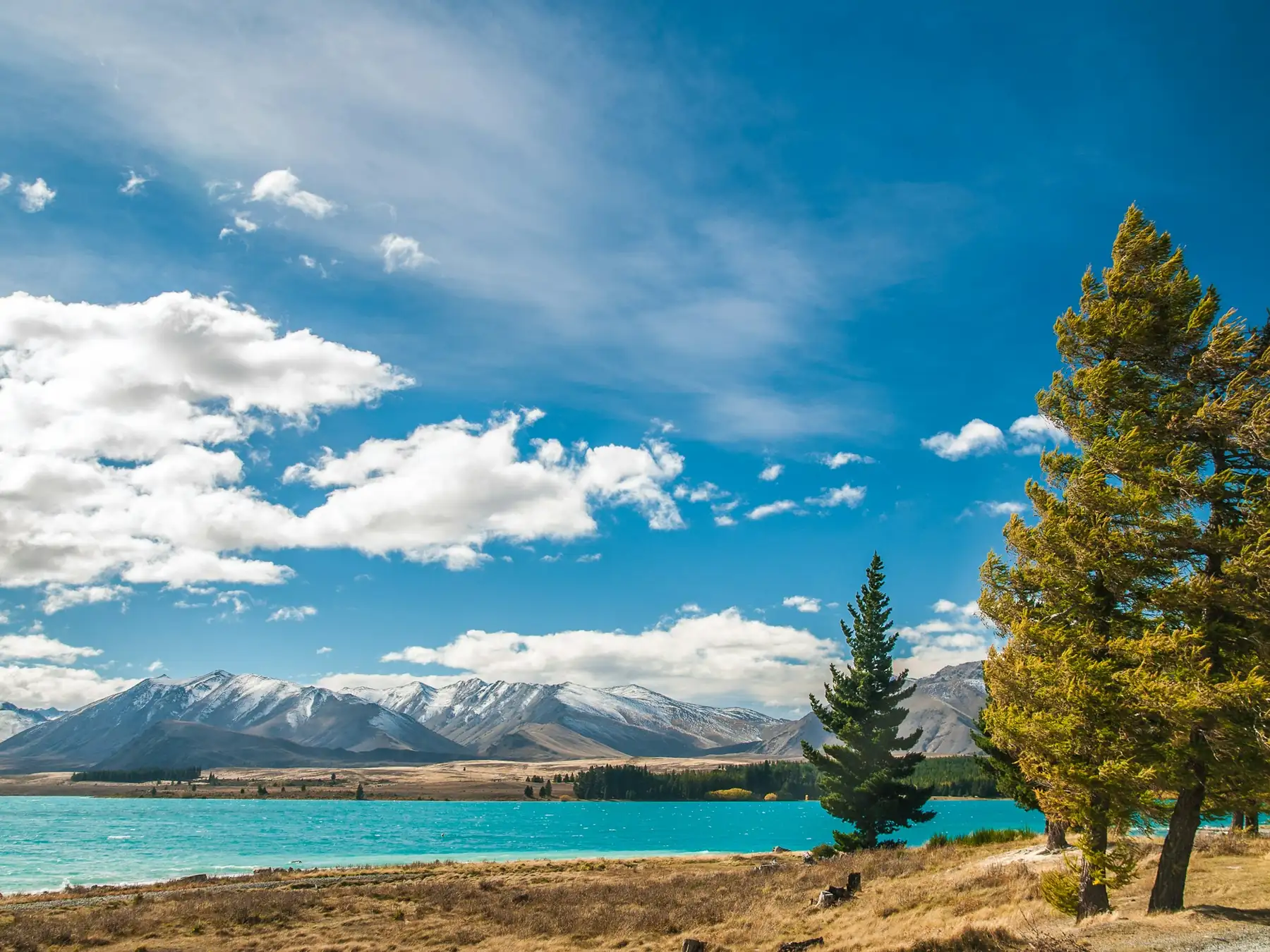
- The South Island contains the high Southern Alps.
- Aoraki/Mount Cook is New Zealand’s highest mountain.
- Its summit reaches more than 3,700 meters, or about 12,200 feet.
- The South Island’s west coast receives exceptionally heavy rainfall in some areas.
- Mountains create a rain-shadow effect farther east.
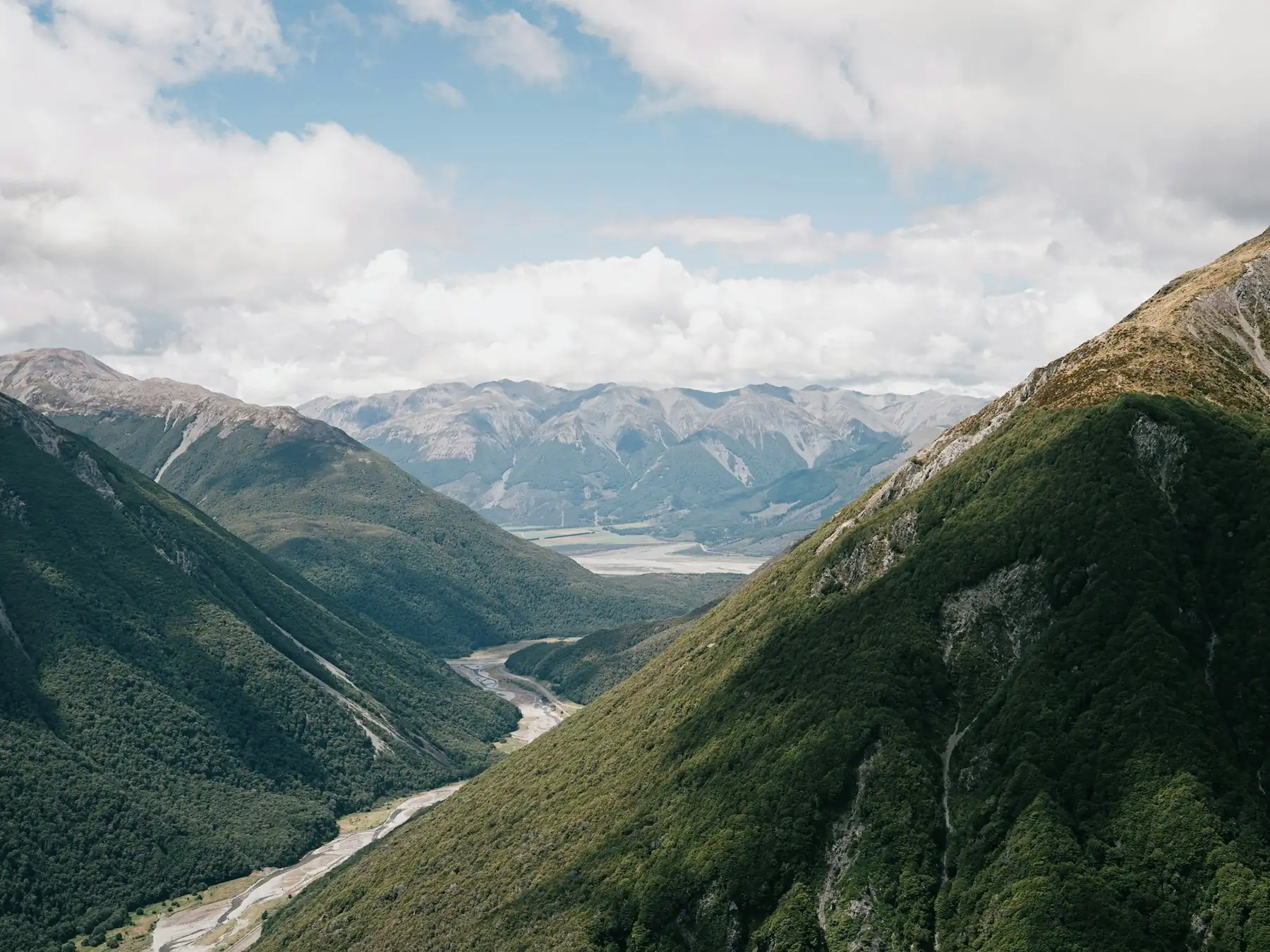
- Canterbury contains broad alluvial plains.
- Central Otago has a comparatively dry climate.
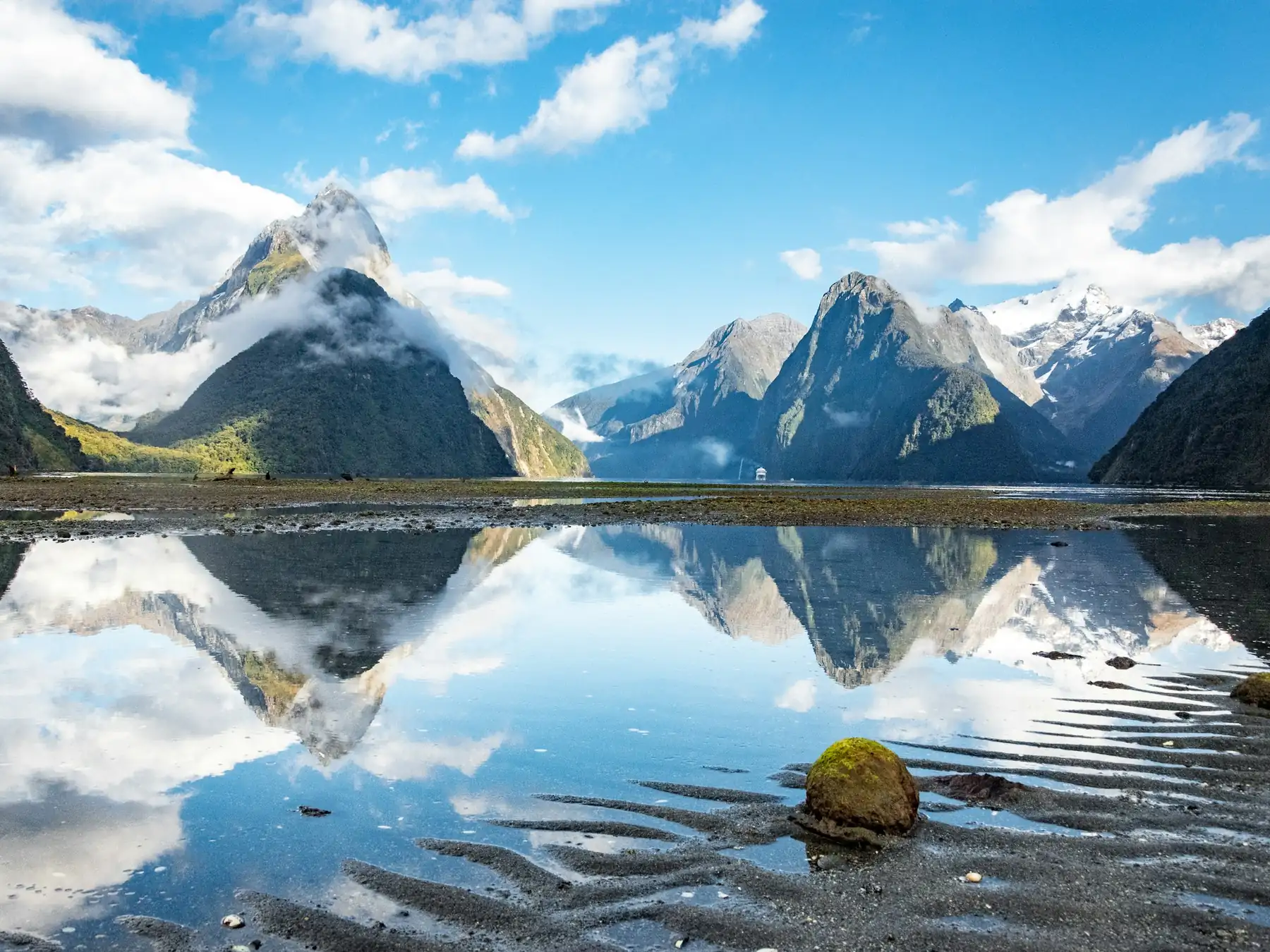
- Fiordland contains steep glacial valleys flooded by the sea.
- Milford Sound/Piopiotahi is one of the country’s most famous scenic locations.
- Despite its name, Milford Sound is technically a fjord.
- Fjords are carved by glaciers.
- Sounds are usually drowned river valleys.
- The North Island contains major geothermal regions.
- New Zealand’s narrow shape means mountains, coasts, farmland, and forests often lie remarkably close together.
Earthquakes and volcanoes
- New Zealand sits across the boundary between the Pacific and Australian tectonic plates.
- This boundary drives frequent earthquakes.
- The Alpine Fault runs along much of the South Island.
- The fault accommodates major plate motion.
- New Zealand experiences thousands of detectable earthquakes each year.
- Most are too small to cause serious damage.
- Major earthquakes have repeatedly shaped New Zealand history.
- The 2011 Christchurch earthquake caused severe destruction and loss of life.
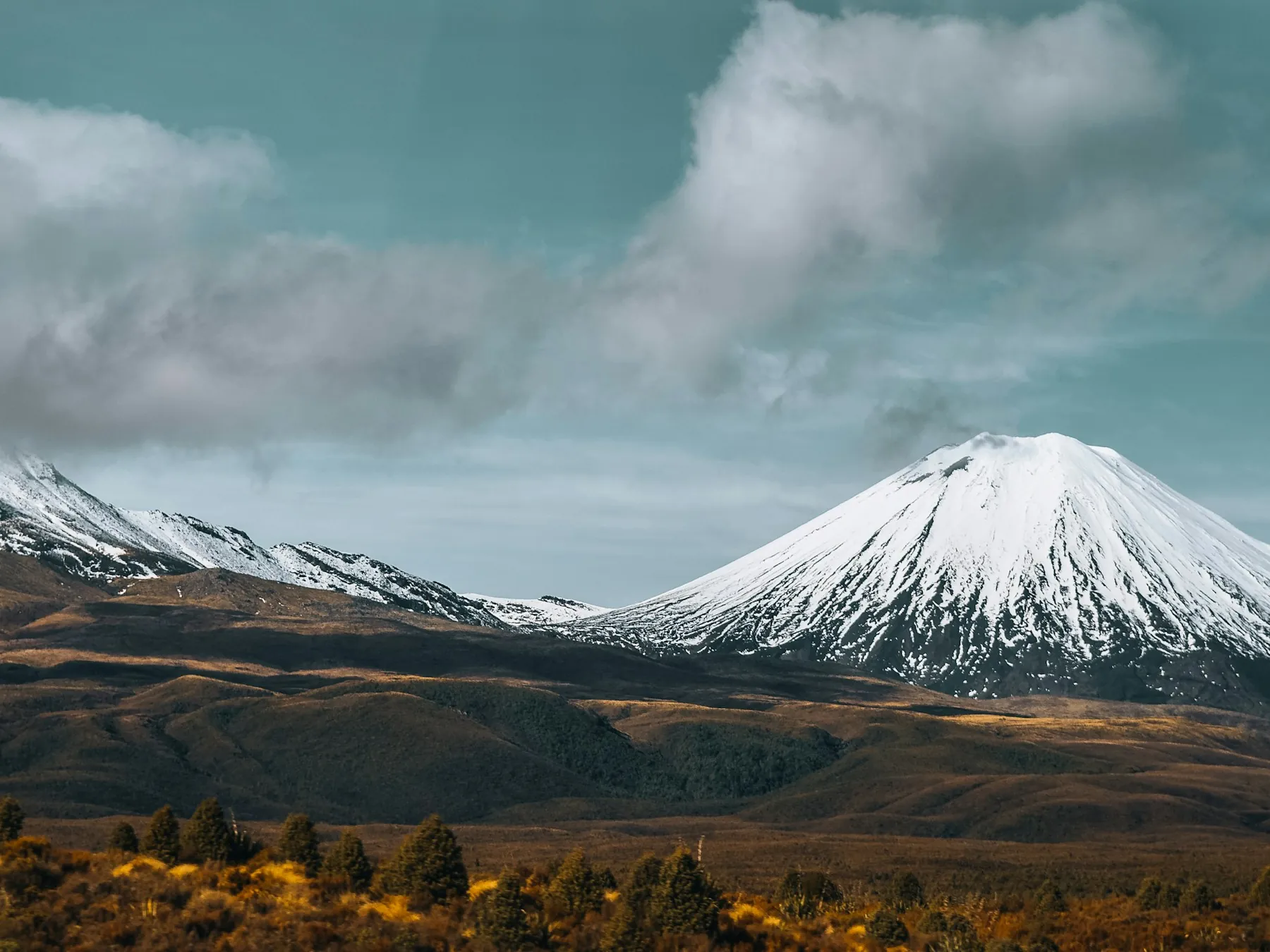
- The North Island contains active volcanic zones.
- Ruapehu is an active volcano and the North Island’s highest mountain.
- Tongariro is another active volcanic complex.
- Taupō is a huge volcanic caldera containing Lake Taupō.
- The Taupō volcanic system has produced enormous eruptions in the past.
- White Island, or Whakaari, is an active offshore volcano.
- Geothermal energy is used for electricity and direct heating in parts of the country.
New Zealand wildlife evolved in isolation
- New Zealand separated from other landmasses tens of millions of years ago.
- Its wildlife evolved with very few native land mammals.
- Native terrestrial mammals are primarily bats.
- Birds filled ecological roles occupied by mammals elsewhere.
- Several New Zealand bird species became flightless.
- Kiwi are flightless nocturnal birds.
- They have nostrils near the tips of their long bills.
- Kākāpō are critically endangered flightless parrots.
- They are nocturnal and unusually heavy for parrots.
- Kea are intelligent alpine parrots.
- Takahē are large flightless rails once thought extinct.
- They were rediscovered in 1948.
- Tuatara are reptiles representing an ancient lineage distinct from lizards.
- Introduced rats, stoats, cats, possums, and other mammals devastated many native species.
- New Zealand runs some of the world’s most ambitious invasive-predator control and island-restoration projects.
Māori language and culture
- Te reo Māori belongs to the Polynesian branch of the Austronesian language family.
- It is closely related to languages spoken across eastern Polynesia.
- Colonization caused severe decline in Māori language use.
- Revitalization efforts expanded during the late 20th century.
- Kōhanga reo are Māori-language early-childhood education programs.
- Kura kaupapa Māori provide schooling through Māori language and cultural frameworks.
- Māori Television strengthened language visibility in broadcasting.
- Aotearoa is widely used as a Māori name for New Zealand.
- Many places now officially use dual Māori and English names.
- Aoraki/Mount Cook is one famous example.
- Haka are posture dances involving movement, rhythm, voice, and expression.
- Haka are used for many purposes beyond war challenges.
- They can welcome guests, honor people, express identity, or mark important events.
- Whakairo is the tradition of Māori carving.
- Marae are culturally important communal meeting spaces centered on kinship and identity.
Food, sport, and modern Kiwi culture
- New Zealand is famous for sheep farming.
- The country historically had many more sheep than people.
- Dairy farming became increasingly important to agricultural exports.
- New Zealand produces internationally known wines.
- Sauvignon blanc from Marlborough became particularly famous.
- Pavlova is a meringue dessert claimed by both New Zealand and Australia.
- The exact national origin remains a friendly but persistent culinary argument.
- Hokey pokey ice cream contains small crunchy pieces of honeycomb toffee.
- Meat pies are popular everyday foods.
- Fish and chips reflect British culinary influence.
- Rugby union is deeply embedded in national sporting culture.
- The men’s national rugby union team is called the All Blacks.
- The All Blacks perform a haka before international matches.
- New Zealand landscapes became globally famous through film productions including The Lord of the Rings.
- Wētā Workshop and New Zealand’s screen industry became internationally influential in practical and digital effects.
Ten surprising New Zealand facts
- New Zealand was one of the last major habitable land areas settled by humans.
- The country’s name commonly appears alongside the Māori name Aotearoa.
- Milford Sound is technically a fjord.
- New Zealand’s only native land mammals are bats.
- A flightless parrot called the kākāpō is one of its most extraordinary endangered animals.
- The tuatara is not a lizard even though it resembles one.
- The Treaty of Waitangi exists in English and Māori texts with important differences in meaning.
- New Zealand became the first self-governing country in the world to grant women the right to vote in parliamentary elections in 1893.
- “Kiwi” can mean the bird, a New Zealander, or informally something associated with New Zealand.
- For more Pacific trivia, explore our Australia facts and Culture facts.
Quick New Zealand FAQ
What is the capital of New Zealand?
Wellington, located at the southern end of the North Island.
What does Aotearoa mean?
It is a widely used Māori name for New Zealand. A common English rendering is “land of the long white cloud,” although Māori place-name meanings can carry richer cultural context.
What is the Treaty of Waitangi?
An 1840 agreement between the British Crown and many Māori rangatira. Differences between its Māori and English texts remain central to New Zealand law, politics, and historical redress.
Does New Zealand have active volcanoes?
Yes. The North Island contains major active volcanic systems including Ruapehu, Tongariro, Taupō, and Whakaari.
Why are New Zealanders called Kiwis?
The nickname comes from the native kiwi bird, which became a powerful national symbol.

Ellie is the owner and sole author of Fun Facts, combining her mechanical engineering background with years of research-driven writing to deliver facts you can trust. Every article is thoroughly fact-checked and routinely updated as new science and sources emerge to keep information accurate and current. Her mission is to make learning delightful while upholding high standards of reliability and transparency.