
Nikola Tesla helped build the alternating-current electrical world, demonstrated wireless lighting, designed the induction motor, experimented with radio control, imagined global wireless communication, and spent his later years chasing ideas far beyond what technology could deliver. He was brilliant, theatrical, obsessive, and later surrounded by myths that sometimes bury the real achievements. These 145 Tesla facts explore his childhood, AC system, motors, Westinghouse, Tesla coils, Niagara Falls, radio, Wardenclyffe, eccentric habits, rivalries, and legacy.
Nikola Tesla basics
- Nikola Tesla was an inventor and electrical engineer.
- He was born on July 10, 1856.
- Tesla was born in Smiljan in the Austrian Empire.
- His birthplace is now in Croatia.
- He was born into a Serbian family.
- His father, Milutin Tesla, was a Serbian Orthodox priest.
- His mother, Đuka Mandić, was known for practical mechanical ingenuity.
- Tesla credited his mother with encouraging his inventive abilities.
- He had an exceptional memory.
- Tesla often described visualizing devices mentally before constructing them.
- He studied engineering in Europe but did not complete a university degree.
- Tesla worked in telegraphy and electrical engineering before moving to the United States.
- He arrived in New York in 1884.
- Tesla became a U.S. citizen in 1891.
- He became one of the most famous electrical inventors of the late 19th century.
Tesla before America
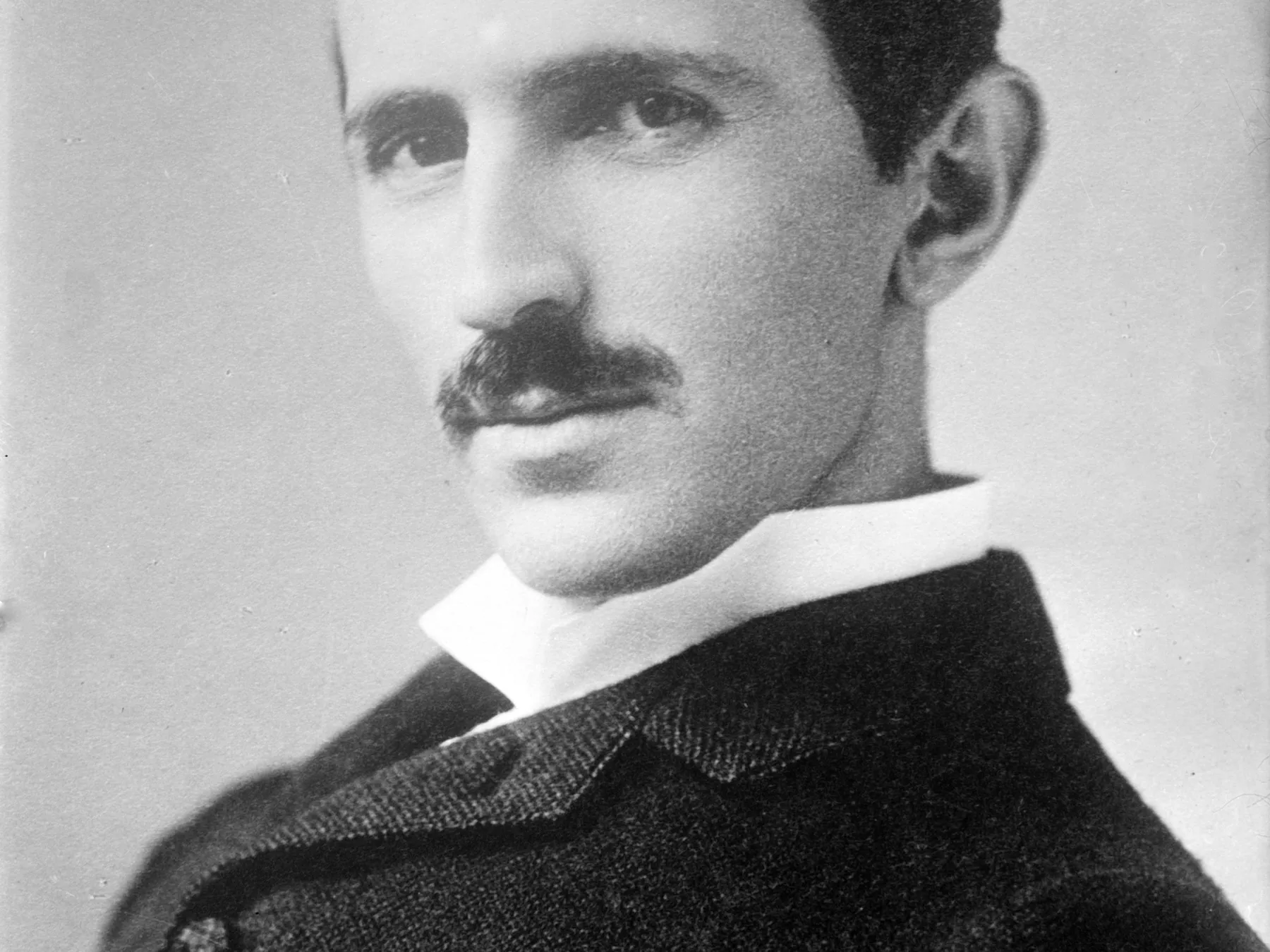
- Tesla attended school in Karlovac, Croatia.
- He studied at the Austrian Polytechnic in Graz.
- His early studies included mathematics and electrical engineering.
- Tesla became fascinated by electric motors.
- Direct-current motors of the era used mechanical commutators.
- Tesla became convinced a motor could work without that troublesome switching arrangement.
- He later studied briefly in Prague.
- Tesla worked for a telegraph company in Budapest.
- He also worked for Continental Edison in Europe.
- His jobs exposed him to practical generators, lighting systems, and motors.
- Tesla claimed the rotating magnetic-field idea came to him dramatically while walking in Budapest.
- He drew an imagined motor in the dirt while explaining the concept to a friend.
- Whether every detail of the story happened exactly as later told is impossible to verify.
- The rotating magnetic field nevertheless became central to his induction-motor work.
- Tesla’s European experience prepared him for the rapidly growing American electrical industry.
Tesla briefly worked for Edison
- Tesla traveled to the United States in 1884.
- He found work with Thomas Edison’s electrical organization.
- Edison was already famous for electric lighting and direct-current systems.
- Tesla and Edison had very different technical personalities.
- Tesla was strongly interested in alternating-current systems.
- Edison had major investments in direct-current infrastructure.
- Tesla left Edison’s organization after a relatively short period.
- A famous story says Edison promised Tesla $50,000 for redesign work and then dismissed the payment as a joke.
- Historians have difficulty confirming the exact details of that popular anecdote.
- Tesla later established his own business ventures.
- His first company did not immediately make him wealthy.
- Tesla reportedly went through a period of manual labor and financial hardship.
- Investors later backed his alternating-current motor ideas.
- Those patents placed Tesla at the center of a huge technological transition.
- The Tesla-versus-Edison story is real in broad technical conflict but often exaggerated into a simple personal duel.
Alternating current was Tesla’s great arena
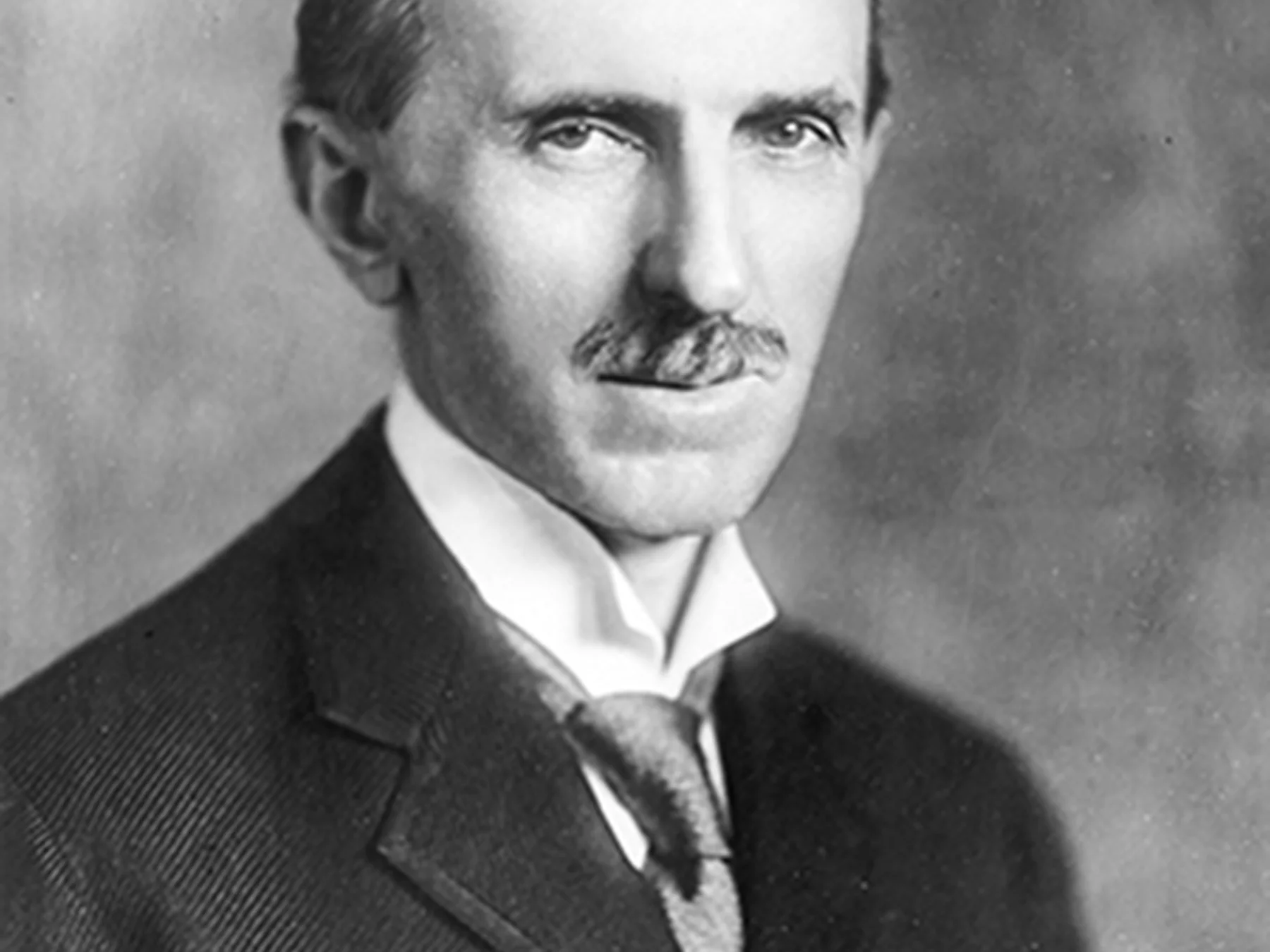
- Alternating current periodically reverses direction.
- Direct current flows primarily in one direction.
- AC voltage can be changed efficiently using transformers.
- High-voltage transmission reduces current for a given power level.
- Lower current reduces resistive losses in transmission lines.
- This makes AC practical for transmitting power over long distances.
- Tesla developed a polyphase AC system.
- Polyphase currents create rotating magnetic fields naturally.
- A rotating magnetic field can drive an induction motor.
- An induction motor does not require brushes and a commutator to energize a rotating armature in the same way classic DC motors do.
- Tesla patented important AC motors and power-system components in 1888.
- He presented his work to the American Institute of Electrical Engineers.
- Engineer and businessman George Westinghouse recognized the commercial importance.
- Westinghouse acquired rights to important Tesla patents.
- Tesla’s work helped make polyphase AC motors and power distribution practical at industrial scale.
The War of the Currents
- The War of the Currents describes competition among rival electrical power systems during the late 1800s.
- Edison’s companies promoted direct current.
- Westinghouse strongly promoted alternating current.
- Tesla’s patents supported the Westinghouse AC system.
- The dispute involved technology, patents, business, public relations, and safety.
- High-voltage AC could be dangerous if mishandled.
- Direct-current systems also posed electrical hazards.
- Edison allies publicly emphasized AC electrocution risks.
- Animals were electrocuted in demonstrations intended to make AC appear dangerous.
- The electric chair used alternating current in part amid this public battle.
- AC ultimately became dominant for large-scale power transmission.
- Modern electrical grids can use both AC and high-voltage DC depending on application.
- Today’s infrastructure therefore cannot be reduced to one inventor completely defeating another.
- Edison contributed major practical systems while Tesla and Westinghouse advanced crucial AC technology.
- The real history is richer than the internet meme version of Tesla versus Edison.
The 1893 Chicago World’s Fair
- The World’s Columbian Exposition opened in Chicago in 1893.
- Westinghouse won the contract to illuminate the fair using alternating current.
- The exposition became a spectacular public demonstration of electric lighting.
- Thousands of electric lamps illuminated the famous White City.
- Tesla demonstrated high-frequency electrical effects at the fair.
- He used glowing lamps without conventional wired connections in theatrical demonstrations.
- Tesla allowed high-frequency currents to pass through his body during some public demonstrations.
- The demonstrations looked dangerous and magical to audiences.
- Frequency, voltage, current path, and duration determine electrical injury risk, so these demonstrations should not be imitated.
- Tesla’s showmanship made complex electrical ideas visually memorable.
- He understood that public spectacle could help build confidence in unfamiliar technology.
- The Chicago fair helped establish AC as a practical power system in the public imagination.
- The event also showcased elevators, machinery, architecture, food, and technologies from around the world.
- Electric lighting became one of its defining visual memories.
- Tesla’s reputation as an electrical wizard grew substantially during this period.
Niagara Falls becomes an AC landmark
- Engineers long dreamed of using Niagara Falls to generate electricity.
- The challenge was transmitting useful power beyond the immediate falls.
- The Niagara Falls Power Company chose a polyphase alternating-current system.
- Westinghouse built generators based on polyphase AC principles associated with Tesla’s work.
- The first major generators began operating in 1895.
- Power was transmitted to Buffalo, New York, in 1896.
- Buffalo lies about 20 miles, or 32 kilometers, from Niagara Falls.
- The project became a landmark demonstration of large-scale hydroelectric power transmission.
- Tesla’s name became permanently associated with the Niagara project.
- A monument to Tesla stands near Niagara Falls.
- Hydroelectric generators convert mechanical rotation from turbines into electrical energy.
- Alternating current made voltage transformation and distribution practical.
- The Niagara system helped accelerate electrification of industry and cities.
- Tesla did not single-handedly build the entire Niagara plant.
- His polyphase patents were one crucial part of a much larger engineering achievement.
Tesla coils and high-frequency experiments
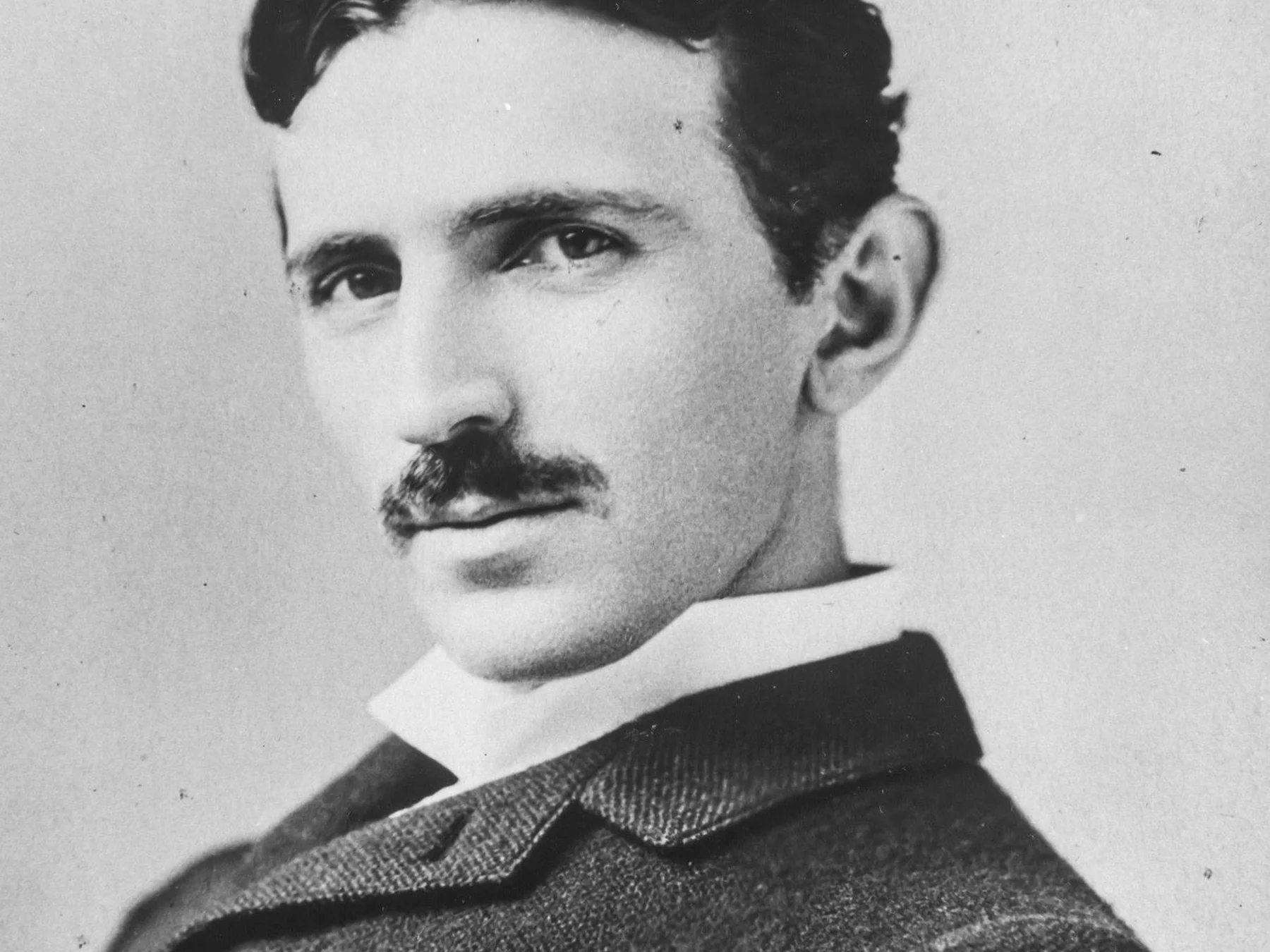
- Tesla developed the resonant transformer now called the Tesla coil.
- A Tesla coil can generate very high-voltage high-frequency alternating current.
- It uses coupled resonant circuits.
- Electrical resonance lets energy build efficiently at particular frequencies.
- Tesla used coils to investigate high-frequency phenomena.
- He demonstrated wireless illumination of gas-filled tubes.
- Large Tesla coils can produce dramatic branching electrical discharges.
- These sparks can extend through air as electrical breakdown occurs.
- Tesla coils later became popular in science demonstrations.
- They also influenced radio-frequency technology development.
- Modern musical Tesla coils can modulate sparks to produce audible tones.
- The sound comes from rapid heating and pressure changes in air.
- Tesla’s spectacular photographs often showed him sitting near huge artificial lightning bolts.
- Some famous images were composite or long-exposure studio-style photographs rather than snapshots of Tesla calmly sitting beneath simultaneous strikes.
- The underlying experiments were real even when publicity imagery amplified the drama.
Radio control, Colorado Springs, and Wardenclyffe
- Tesla demonstrated a radio-controlled boat at Madison Square Garden in 1898.
- He called the system teleautomatics.
- The boat responded to wireless commands.
- Some spectators reportedly suspected hidden magic or intelligence inside it.
- The demonstration anticipated modern remote-control systems.
- Tesla moved experiments to Colorado Springs in 1899.
- He built a large experimental station there.
- Tesla produced enormous electrical discharges and studied resonance and wireless transmission.
- He later planned a wireless station at Wardenclyffe on Long Island.
- Financier J. P. Morgan initially backed the project.
- Architect Stanford White designed the Wardenclyffe laboratory building.
- A large tower rose beside it.
- Tesla hoped Wardenclyffe could support global wireless communication and more ambitious power ideas.
- Funding collapsed before the system became commercially operational.
- Tesla Science Center at Wardenclyffe now preserves the surviving laboratory site associated with this ambitious project.
Ten surprising Nikola Tesla facts
- Tesla became a U.S. citizen in the same year he patented the Tesla coil.
- He demonstrated a radio-controlled boat before practical radio broadcasting existed.
- The Chicago World’s Fair helped make AC electricity a public spectacle.
- Tesla’s work at Niagara was essential but involved large teams of engineers and companies rather than a lone inventor wiring the falls.
- He had obsessive habits and strong aversions, including a famous fixation on numbers divisible by three.
- Tesla spent his later years living in New York hotels.
- He became deeply attached to pigeons and fed them regularly.
- Tesla died in New York City in January 1943.
- The SI unit of magnetic flux density was later named the tesla in his honor.
- For more inventor history, explore our upcoming Thomas Edison guide and Isaac Newton facts.
Quick Nikola Tesla FAQ
Did Nikola Tesla invent electricity?
No. Electricity was studied for centuries before Tesla. His major contributions involved alternating-current motors, polyphase power systems, high-frequency technology, and related inventions.
Did Tesla invent alternating current?
No single person invented AC. Tesla developed crucial polyphase AC motors and systems that made alternating-current power far more useful and practical.
Did Tesla and Edison hate each other?
They had real technical and business differences, but popular culture often exaggerates the relationship into a lifelong personal feud more dramatic than the documentation supports.
What is a Tesla coil?
A resonant transformer that creates very high-voltage, high-frequency alternating current and can produce dramatic electrical discharges.
What happened to Wardenclyffe?
Tesla’s ambitious Long Island wireless station lost funding before becoming operational. The surviving laboratory is now preserved by the Tesla Science Center at Wardenclyffe.

Ellie is the owner and sole author of Fun Facts, combining her mechanical engineering background with years of research-driven writing to deliver facts you can trust. Every article is thoroughly fact-checked and routinely updated as new science and sources emerge to keep information accurate and current. Her mission is to make learning delightful while upholding high standards of reliability and transparency.