
Pokémon began as a pair of Game Boy cartridges about catching imaginary creatures and grew into games, cards, anime, movies, toys, competitive tournaments, mobile apps, and one of entertainment’s most recognizable mascots. Behind Pikachu are bug-collecting childhood memories, version-exclusive monsters, trading cables, hidden stats, type matchups, evolving hardware, and more than a thousand species. These 145 Pokémon facts explore the franchise’s origin, games, Pokédex, evolution, battles, cards, anime, and cultural impact.
Pokémon basics
- Pokémon is a Japanese multimedia franchise centered on fictional creatures called Pokémon.
- The name Pokémon is a shortened form of Pocket Monsters.
- The franchise began as video games.
- The first games were released in Japan in 1996.
- They were developed by Game Freak.
- Nintendo published the games on the Game Boy.
- Creatures can be caught, trained, traded, collected, and used in battles.
- Players commonly take the role of Pokémon Trainers.
- A Pokédex is an in-game encyclopedia of Pokémon species.
- The franchise expanded into animation, trading cards, toys, films, comics, apps, and competitive events.
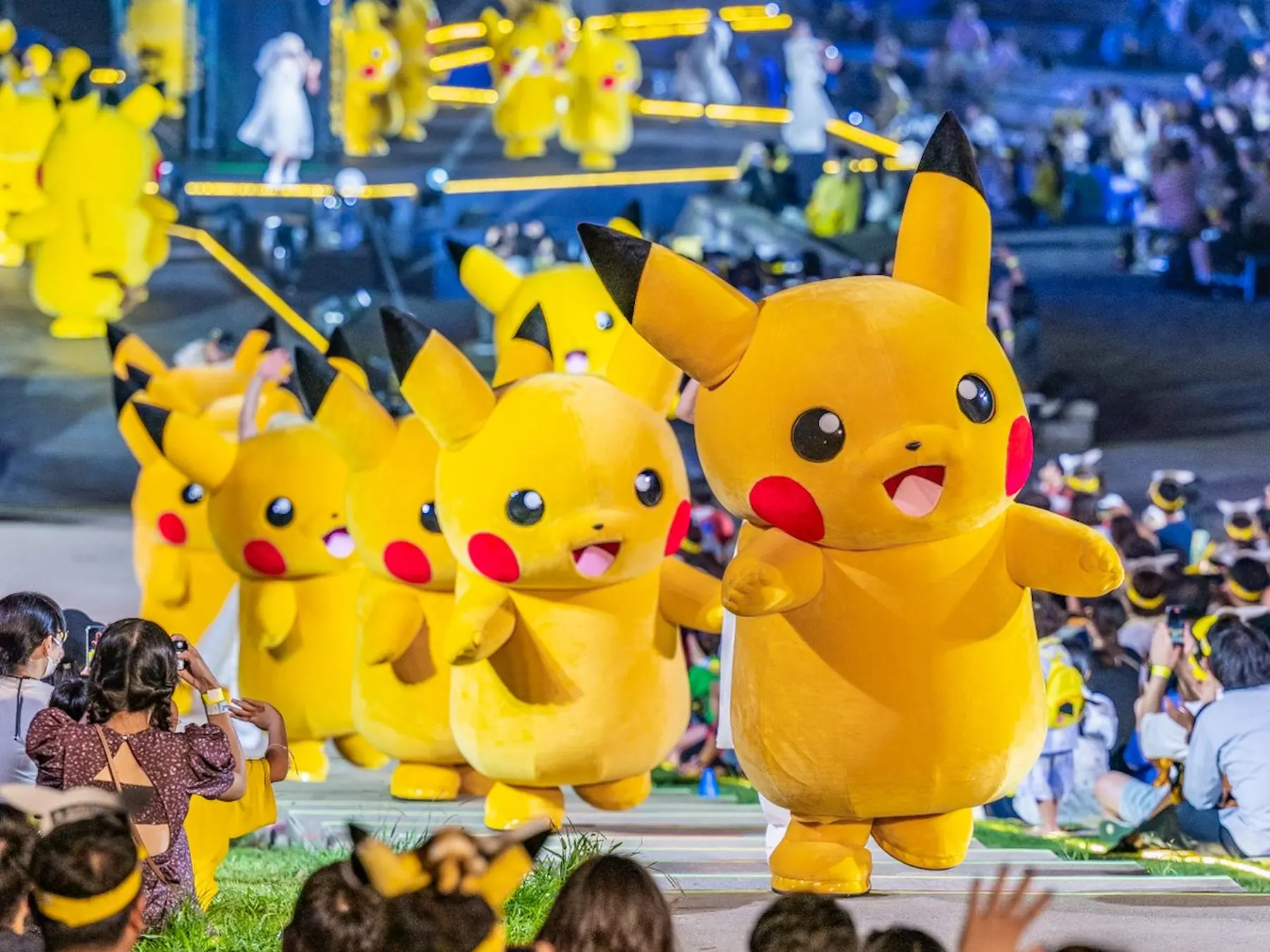
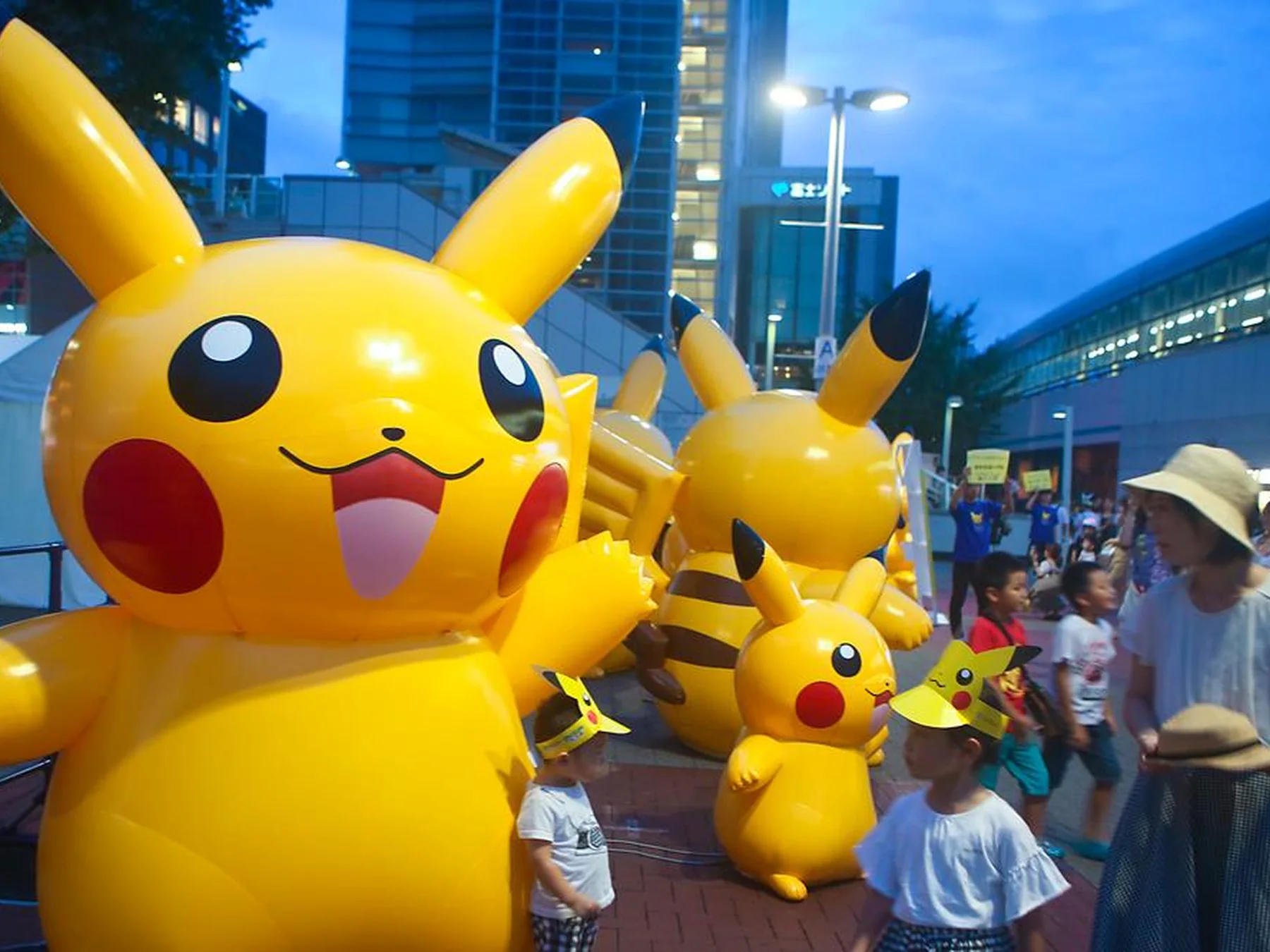
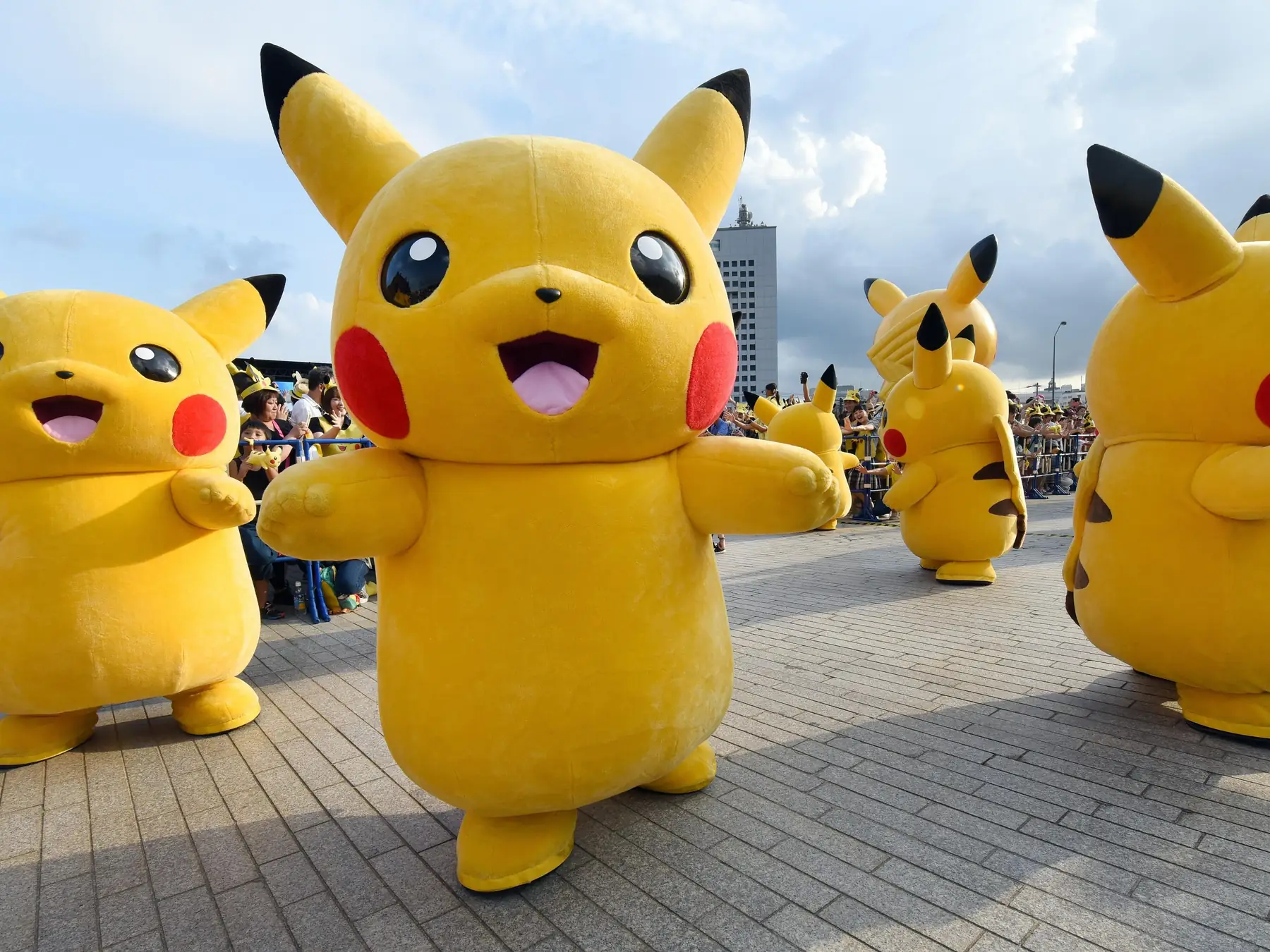
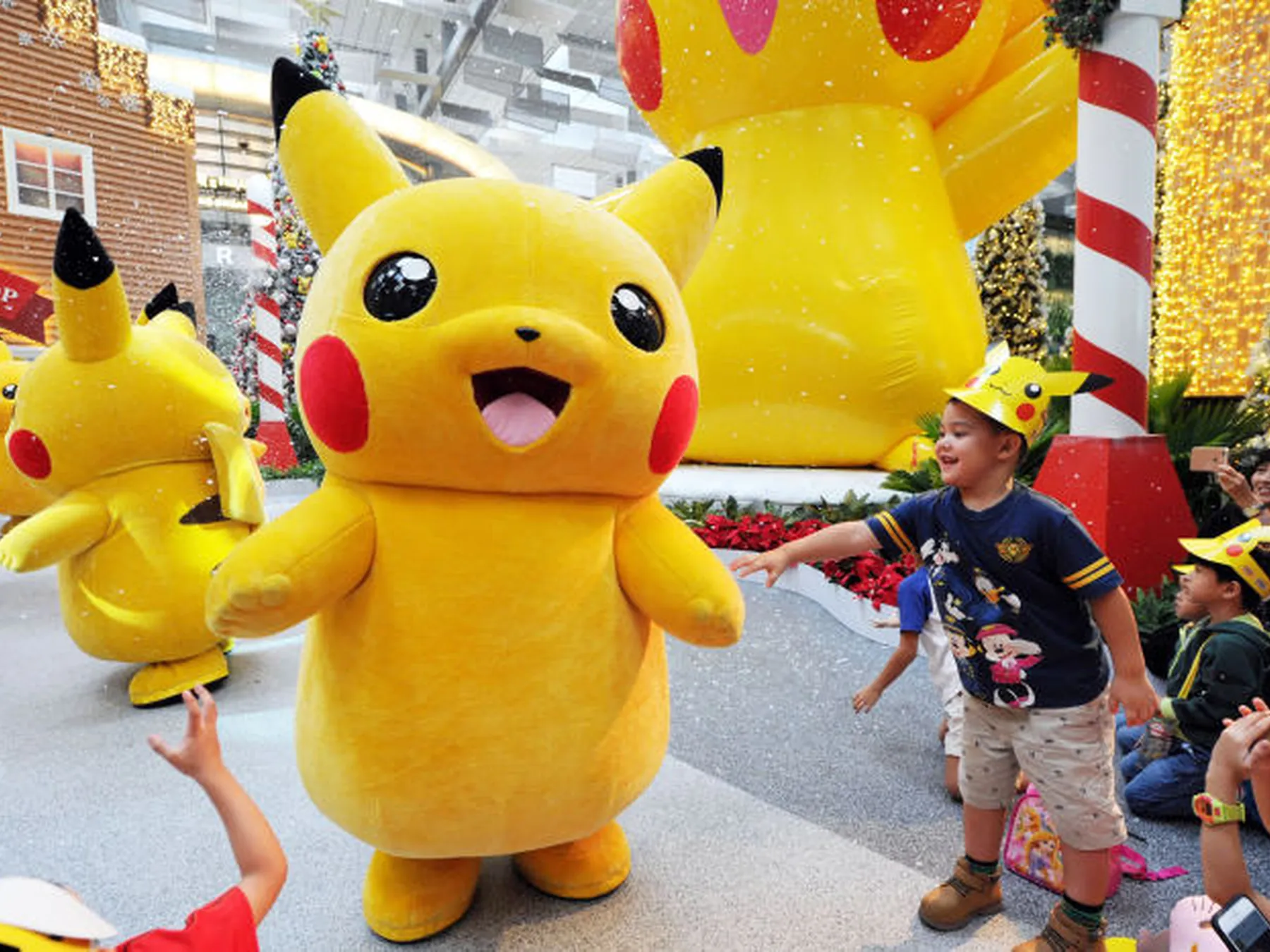
- Pikachu became the franchise’s most recognizable mascot.
- Pokémon games have appeared on multiple generations of Nintendo hardware.
- Different games introduce new regions, creatures, characters, and mechanics.
- By the 2020s, the franchise contained more than 1,000 officially recognized Pokémon species.
- Pokémon became one of the defining franchises in video-game history.
Satoshi Tajiri and bug collecting
- Pokémon creator Satoshi Tajiri loved collecting insects as a child.
- Friends reportedly nicknamed him Dr. Bug.
- Urban development reduced the natural collecting areas around his hometown.
- Tajiri later became fascinated by arcade and video games.
- He created a gaming fanzine called Game Freak.
- Game Freak eventually evolved from a magazine project into a game-development company.
- Illustrator Ken Sugimori became an important early collaborator.
- Tajiri imagined creatures moving between connected handheld game systems.
- The Game Boy’s Link Cable was crucial to that idea.
- The cable let two Game Boys exchange data directly.
- Tajiri imagined a creature crawling through the cable from one player’s system to another.
- Trading therefore became foundational rather than an optional afterthought.
- Collecting reflected Tajiri’s childhood interest in insects.
- Battling turned collected creatures into a strategy game.
- Pokémon’s central loop combines the urge to discover, collect, train, and share.
The first Pokémon games
- Pokémon Red and Pokémon Green launched in Japan on February 27, 1996.
- The games were released for Nintendo’s original Game Boy family.
- Japan later received an improved Pokémon Blue version.
- International Red and Blue releases used the improved graphics and code base associated with the Japanese Blue version.
- The first generation introduced 151 Pokémon species.
- Bulbasaur, Charmander, and Squirtle became the familiar first-partner choices in the original games.
- Players explored the Kanto region.
- Kanto was inspired by the real Kanto region of Japan.
- The player challenged Gym Leaders to earn badges.
- Eight badges were required to reach the Pokémon League challenge.
- The Elite Four formed the final major gauntlet.
- The player’s rival repeatedly appeared throughout the journey.
- Many Pokémon were unavailable in one version but available in another.
- This encouraged players to trade with friends.
- The two-version strategy became a lasting Pokémon release tradition.
Mew was a famous secret
- Mew is Pokémon number 151 in the original National Pokédex order.
- It was not ordinarily obtainable through normal gameplay in the original releases.
- Mew’s existence helped create enormous playground rumors.
- Players traded stories about secret trucks, impossible button combinations, and hidden locations.
- Most of those rumors were false.
- Official Mew distributions became special promotional events.
- The creature’s secrecy strengthened early Pokémon mystique.
- Mewtwo is a different Pokémon from Mew.
- In the games’ fiction, Mewtwo resulted from genetic experimentation connected with Mew.
- Mewtwo became one of the original games’ most powerful legendary Pokémon.
- Players could encounter Mewtwo only after becoming Pokémon League Champion.
- It was found deep in Cerulean Cave in the original games.
- Mew appeared prominently in the first Pokémon animated movie.
- Modern games provide much clearer official distribution information than 1990s playgrounds did.
- Few game secrets demonstrate pre-social-media rumor culture better than Mew.
Types shape every battle
- Pokémon species and attacks are organized into elemental or thematic types.
- Examples include Fire, Water, Grass, Electric, Psychic, and Dragon.
- Type matchups determine whether attacks are especially effective, resisted, or ineffective.
- Water attacks are generally strong against Fire Pokémon.
- Fire attacks are generally strong against Grass Pokémon.
- Grass attacks are generally strong against Water Pokémon.
- This creates a simple beginner-friendly triangle.
- The complete matchup chart is much more complicated.
- Some Pokémon have one type.
- Others have two types simultaneously.
- Dual typing combines strengths, weaknesses, and resistances from both.
- Immunities can make certain attacks deal no damage at all.
- Ground-type attacks normally do not affect Flying-type Pokémon.
- Normal-type attacks normally do not affect Ghost-type Pokémon.
- Understanding type matchups is one of the first major strategic skills new players learn.
Evolution is not biological evolution
- Many Pokémon transform into stronger forms through a mechanic called evolution.
- Pokémon evolution happens within an individual creature’s life.
- That differs fundamentally from biological evolution across populations and generations.
- Some Pokémon evolve when reaching a particular level.
- Others require special stones or items.
- Some evolve only when traded.
- Trading evolutions reinforced the franchise’s social design.
- Friendship can trigger evolution for certain species.
- Time of day matters for some evolutions.
- Location, moves, held items, gender, weather, and other conditions can matter too.
- Some species have branching evolutions.
- Eevee is famous for evolving into multiple different forms.
- Fans call the Eevee evolutions Eeveelutions.
- Not every Pokémon evolves.
- Evolution mechanics became increasingly creative as the series expanded.
Pokémon battles hide lots of math
- Pokémon battles are turn-based in the main traditional role-playing games.
- Each Pokémon has numerical stats controlling battle performance.
- Common stats include HP, Attack, Defense, Special Attack, Special Defense, and Speed.
- Speed usually helps determine which Pokémon acts first.
- Moves have different power, accuracy, type, and additional effects.
- Some moves deal no direct damage and instead change battle conditions.
- Status conditions include effects such as sleep, paralysis, poison, burn, and freeze.
- Abilities give Pokémon passive effects in later generations.
- Held items can modify battle performance.
- Weather can strengthen or weaken particular moves and abilities.
- Critical hits can deal extra damage.
- Same-type attack bonus rewards Pokémon using attacks matching their own type.
- Hidden values help make two Pokémon of the same species perform differently.
- Competitive players study detailed damage formulas and probability.
- A colorful children’s game therefore contains enough mathematics for deep strategic optimization.
The anime made Pikachu a superstar
- The Pokémon animated television series began in Japan in 1997.
- Ash Ketchum became the long-running lead character in the international English version.
- His Japanese name is Satoshi, matching creator Satoshi Tajiri’s first name.
- Ash’s first partner is Pikachu.
- Pikachu initially resists entering its Poké Ball in the anime.
- The pair eventually develop a close partnership.
- The anime helped Pikachu become more famous than the original game mascots.
- Team Rocket’s Jessie, James, and Meowth became recurring comic villains.
- Meowth is unusual because the famous Team Rocket individual speaks human language.
- The English theme song popularized the phrase “Gotta catch ’em all.”
- The anime introduced millions of viewers to Pokémon before they owned the games.
- Animated films expanded the franchise into theaters.
- Ash’s story continued for more than two decades.
- The television series later shifted to new lead characters.
- Pokémon became a rare franchise where games, animation, cards, and toys all reinforce one another.
The Pokémon Trading Card Game
- The Pokémon Trading Card Game debuted in Japan during the 1990s.
- Players build decks and battle using Pokémon, Trainer, and Energy cards.
- Cards also became major collectibles.
- Rarity, condition, artwork, edition, and competitive usefulness affect collector demand.
- Holographic cards became especially memorable in early sets.
- Charizard from the original English Base Set became one of the hobby’s most famous cards.
- Not every expensive Pokémon card is powerful in competitive play.
- Professional grading services evaluate card condition.
- Small differences in centering, corners, edges, or surface can strongly affect grades.
- Counterfeit cards are a persistent problem in collectible markets.
- Official tournament rules change as new card sets enter competitive formats.
- Pokémon Championship Series events include trading-card and video-game competitions.
- Junior players can compete in age divisions.
- The trading-card game developed its own strategy separate from the video games.
- Pokémon succeeded partly because collecting remained satisfying even for people who never competed.
Ten surprising Pokémon facts
- Pokémon grew from Satoshi Tajiri’s childhood love of collecting insects.
- The Game Boy Link Cable inspired the idea of creatures traveling between players.
- The first games launched as Red and Green in Japan, not Red and Blue.
- Mew’s secrecy helped create some of gaming’s most legendary schoolyard rumors.
- Pokémon evolution is biologically nothing like Darwinian evolution.
- Pikachu was not one of the original three starter choices.
- Ash is called Satoshi in Japanese.
- Competitive Pokémon battles rely on layers of hidden math beneath simple animations.
- Pokémon became a global franchise by making collecting social rather than solitary.
- For more Nintendo trivia, explore our upcoming Nintendo guide and Tech facts.
Quick Pokémon FAQ
When did Pokémon start?
The first Pokémon games, Red and Green, launched in Japan for the Game Boy on February 27, 1996.
Who created Pokémon?
Satoshi Tajiri developed the original concept, with Game Freak, Nintendo, Ken Sugimori, and many collaborators helping turn it into the franchise known today.
What does Pokémon mean?
It is a contraction of Pocket Monsters, the original Japanese franchise name.
Why are there different game versions?
Version-exclusive creatures encourage players to trade with one another, reflecting the social collecting idea built into Pokémon from the beginning.
How many Pokémon are there?
The number has grown with each generation and surpassed 1,000 species during the 2020s. The exact total depends on the latest officially released games and forms being counted.

Ellie is the owner and sole author of Fun Facts, combining her mechanical engineering background with years of research-driven writing to deliver facts you can trust. Every article is thoroughly fact-checked and routinely updated as new science and sources emerge to keep information accurate and current. Her mission is to make learning delightful while upholding high standards of reliability and transparency.