
LEGO began with a Danish carpenter making wooden toys and became a building system where a brick molded decades ago can still connect with one made today. Behind those colorful studs are precision molds, a famous 1958 patent, minifigure design rules, theme parks, robotics, movies, fan conventions, and enough combinations to keep builders busy for lifetimes. These 145 LEGO facts explore the company, brick engineering, history, sets, minifigures, LEGOLAND, and the logic behind the clutch.
LEGO basics
- The LEGO Group is a Danish toy company.
- It was founded in Billund, Denmark, in 1932.
- Founder Ole Kirk Kristiansen was a master carpenter.
- The company originally made wooden toys and household items.
- The name LEGO comes from the Danish words leg godt.
- Leg godt means “play well.”
- The LEGO name was adopted during the 1930s.
- LEGO is a brand name and is officially written in capital letters.
- The company remains connected with the Kristiansen founding family.
- Billund remains the historic home of the LEGO Group.
- LEGO bricks are building elements designed to connect through studs and tubes.
- The modern system lets pieces from different sets work together.
- That compatibility is central to the LEGO System in Play.
- LEGO products include bricks, minifigures, gears, electronics, robotics components, and many specialized elements.
- The company’s official history archive traces its development from wooden toys to the modern building system.
Ole Kirk Kristiansen starts a toy company
- Ole Kirk Kristiansen ran a woodworking business in Billund.
- The Great Depression created severe economic pressure.
- He shifted toward making smaller wooden products and toys.
- Early toys included pull-along animals, vehicles, and building items.
- A famous wooden duck became one of the company’s historical symbols.
- Kristiansen emphasized workmanship even when money was tight.
- The company adopted the motto “Only the best is good enough.”
- A workshop fire destroyed much of the business in 1942.
- Kristiansen rebuilt rather than abandoning toy production.
- His son Godtfred Kirk Christiansen became increasingly involved in the company.
- The family experimented with new manufacturing technologies after World War II.
- Plastic was still unusual and controversial as a toy material in the 1940s.
- The company purchased an injection-molding machine.
- This machinery could mass-produce precise plastic parts.
- That technological gamble eventually transformed the business.
Before the modern LEGO brick
- The LEGO Group began producing plastic interlocking bricks before the final 1958 design existed.
- Early plastic bricks were called Automatic Binding Bricks.
- They were inspired partly by earlier interlocking-brick concepts.
- The company later renamed them LEGO Mursten, meaning LEGO bricks in Danish.
- Early versions lacked the modern internal tube structure.
- Without tubes, the clutch between pieces was less dependable.
- Models could come apart more easily.
- Godtfred Kirk Christiansen pushed the idea of a complete system rather than isolated toys.
- The System in Play concept emphasized compatibility across products.
- A child could reuse basic pieces instead of treating each set as a sealed toy.
- This made a growing brick collection increasingly valuable.
- Standard dimensions became essential to compatibility.
- Precision manufacturing let many different elements align on the same geometric grid.
- The familiar stud spacing became the language of LEGO construction.
- The system approach became as important as any individual set.
The 1958 brick design changed everything
- The LEGO brick in its recognizable modern form dates to 1958.
- The LEGO Group filed an important Danish patent application on January 28, 1958.
- The patent described an improved toy building element.
- The key improvement involved internal tubes interacting with studs.
- The stud-and-tube structure creates controlled friction called clutch power.
- Clutch must be strong enough to hold a model together.
- It must also be weak enough for a child to separate pieces by hand.
- That balance requires extremely accurate dimensions.
- The tube system allows bricks to connect in more positions than early hollow bricks.
- It also strengthens the brick walls.
- Modern basic bricks preserve the same fundamental geometry.
- A well-preserved brick from around 1958 can connect with a current basic brick.
- This backward compatibility is extraordinarily unusual in consumer toys.
- LEGO’s own history describes the 1958 design as the foundation of the brick known today.
- The humble tube hidden underneath may be more important to LEGO engineering than the visible studs on top.

How LEGO bricks are made
- Most standard LEGO bricks are made by injection molding.
- Plastic granules are heated until they can flow.
- Molten plastic is injected into precision metal molds.
- The plastic cools and hardens inside the mold cavity.
- The mold then opens and ejects the finished element.
- Tiny dimensional errors can noticeably change clutch power.
- LEGO molds are therefore engineered to very tight tolerances.
- A single mold can contain multiple cavities depending on the element.
- Molds experience wear and eventually require maintenance or replacement.
- Color is mixed into plastic material before molding.
- Different elements can require different plastics according to function.
- Transparent pieces need material properties different from flexible tires or ordinary bricks.
- Technic pins need controlled flexibility.
- Quality-control systems check dimensions, appearance, and function.
- Mass production works only because every part is treated as a precise component rather than a rough plastic shape.
LEGO geometry is secretly mathematical
- LEGO construction follows a regular geometric grid.
- Stud spacing provides the horizontal unit system.
- Brick height is different from plate height.
- Three ordinary plates stacked together equal the height of one standard brick.
- This relationship makes vertical offsets predictable.
- Technic holes add another alignment system.
- Brackets let builders turn studs sideways.
- Tiles remove studs from upper surfaces.
- Jumper plates create half-stud offsets.
- Hinges create angles outside the ordinary rectangular grid.
- Builders call advanced sideways-stud construction SNOT.
- SNOT stands for Studs Not On Top.
- Legal building techniques avoid stressing pieces beyond intended tolerances.
- Illegal techniques are fan terms for connections that bend, squeeze, or stress pieces improperly.
- Complex models emerge from combining a relatively small number of dimensional rules.
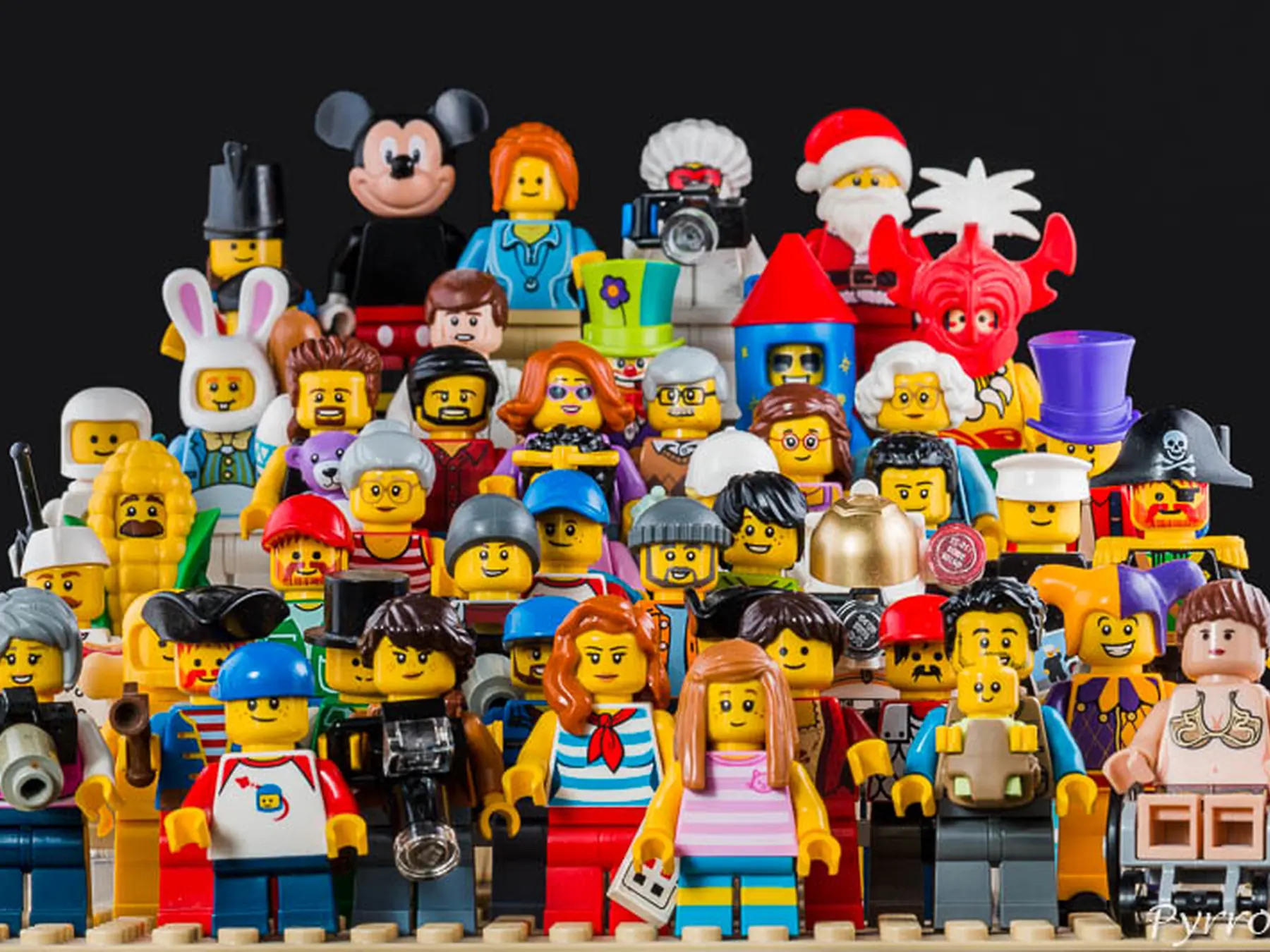
The LEGO minifigure
- The familiar modern LEGO minifigure debuted in 1978.
- Earlier LEGO figures had simpler bodies and less articulation.
- A standard minifigure has a head, torso, arms, hands, hips, and legs.
- The hands are shaped to grip compatible accessories.
- The classic head originally used a simple yellow color and basic smile.
- Early neutral faces let children imagine many different characters.
- Printed facial expressions became more varied over time.
- Licensed themes eventually introduced skin-tone colors for characters based on specific real or fictional people.
- Minifigure legs can sit on studs.
- Hands rotate within the wrists.
- Arms rotate at the shoulders.
- Heads rotate on the neck stud.
- Hair, hats, helmets, capes, tools, and weapons expand character variety.
- Collectible Minifigure series turned individual figures into standalone products.
- The minifigure became a recognizable design icon independent of any one LEGO theme.

Themes, licenses, and LEGO worlds
- Classic LEGO themes included Town, Castle, and Space.
- LEGO Space became famous for colorful astronauts and futuristic vehicles.
- LEGO Castle developed generations of knights, fortresses, factions, and fantasy elements.
- LEGO Technic focuses on gears, axles, beams, steering, suspension, and mechanical functions.
- LEGO DUPLO uses larger elements for younger children.
- DUPLO bricks remain compatible with standard LEGO bricks in specific ways.
- LEGO introduced licensed Star Wars sets in 1999.
- Star Wars became one of the most important licensed LEGO themes.
- Other licensed worlds include superheroes, films, games, cars, and television franchises.
- LEGO Ideas lets fan-designed concepts compete for consideration as official products.
- LEGO Architecture focuses on famous buildings and skylines.
- Botanical sets use ordinary and specialized pieces to represent plants and flowers.
- LEGO Education products combine construction with classroom activities.
- Programmable LEGO robotics systems introduced many learners to coding and engineering.
- The brick became a platform flexible enough to represent almost any subject.
LEGOLAND and LEGO culture
- The first LEGOLAND park opened in Billund in 1968.
- It was built near the company’s factory.
- Model displays made from bricks became a major attraction.
- LEGOLAND parks later opened in multiple countries.
- LEGO House opened in Billund as an interactive experience dedicated to creativity and the brick.
- Adult fans commonly use the abbreviation AFOL.
- AFOL means Adult Fan of LEGO.
- Fan conventions display enormous custom models.
- Builders often call original fan creations MOCs.
- MOC stands for My Own Creation.
- Bricklink became an important online marketplace and catalog for individual LEGO elements and sets.
- The LEGO Group acquired BrickLink in 2019.
- LEGO video games became a major entertainment category.
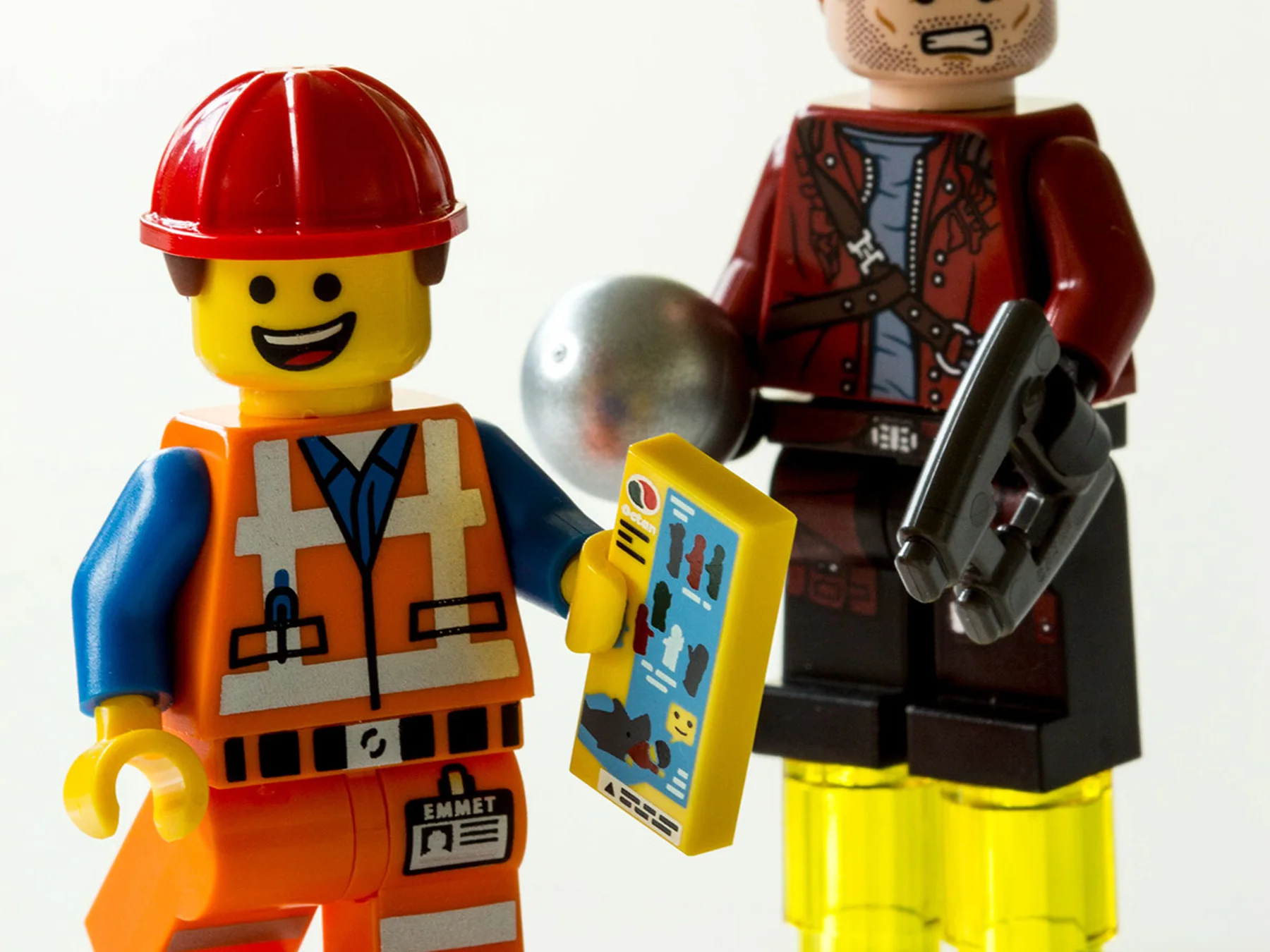
- The LEGO Movie turned the physical toy system into a successful animated film world.
- LEGO culture now spans toys, games, films, parks, education, engineering, collecting, and serious adult design.
Ten surprising LEGO facts
- The LEGO Group began with wooden toys, not plastic bricks.
- The name LEGO literally comes from Danish words meaning “play well.”
- The modern basic brick has kept the same fundamental connection geometry since 1958.
- The tubes underneath the brick are central to its famous clutch power.
- Three LEGO plates equal the height of one ordinary brick.
- A basic brick made more than six decades ago can still connect with a current one.
- The modern articulated minifigure arrived 20 years after the 1958 brick patent.
- LEGO builders use the acronym SNOT for advanced Studs Not On Top construction.
- The first LEGOLAND opened in Billund before the minifigure existed.
- For more playful tech trivia, explore our Minecraft facts and Tech facts.
Quick LEGO FAQ
What does LEGO mean?
The name comes from the Danish words leg godt, meaning “play well.”
When was LEGO founded?
Ole Kirk Kristiansen founded the company in Billund, Denmark, in 1932 as a woodworking and toy business.
When was the modern LEGO brick invented?
The company filed its famous stud-and-tube brick patent in 1958, establishing the basic connection system still used today.
Can old LEGO bricks fit new ones?
Yes. Well-preserved basic bricks made under the modern 1958 system can connect with compatible current bricks because the geometry has remained consistent.
When did LEGO minifigures appear?
The familiar articulated minifigure debuted in 1978.

Ellie is the owner and sole author of Fun Facts, combining her mechanical engineering background with years of research-driven writing to deliver facts you can trust. Every article is thoroughly fact-checked and routinely updated as new science and sources emerge to keep information accurate and current. Her mission is to make learning delightful while upholding high standards of reliability and transparency.