
St. Patrick’s Day has become a sea of green hats, shamrocks, parades, music, and very enthusiastic rivers, but the holiday began as a Christian feast honoring a real late-Roman missionary. The history is packed with legends that grew long after Patrick lived. These 145 facts separate what historians know from the snakes, shamrocks, leprechauns, green beer, Irish American parades, and global traditions added over centuries.
St. Patrick’s Day basics
- St. Patrick’s Day is celebrated every year on March 17.
- The date honors Saint Patrick, the patron saint most strongly associated with Ireland.
- March 17 is traditionally regarded as the date of Patrick’s death.
- The holiday began as a Christian feast day.
- It is observed by several Christian traditions as well as secular celebrants.
- Modern celebrations often emphasize Irish heritage and culture.
- Green clothing, shamrocks, parades, music, and dancing are familiar symbols.
- The holiday is commonly shortened informally to St. Paddy’s Day.
- “Paddy” comes from the Irish form of Patrick, Pádraig.
- “St. Patty’s Day” is common in American speech but is not the traditional Irish nickname.
- St. Patrick’s Day is a public holiday in the Republic of Ireland.
- It is also a bank holiday in Northern Ireland.
- Irish communities around the world celebrate the date.
- Some of the biggest modern parades happen outside Ireland.
- The holiday blends religion, migration history, national identity, tourism, and popular culture.

Who was Saint Patrick?
- Patrick lived during the fifth century.
- He was not born in Ireland.
- Patrick was born in Roman Britain.
- His exact birthplace is uncertain.
- Patrick wrote that raiders captured him when he was about 16.
- He was taken to Ireland as an enslaved captive.
- Patrick spent years tending livestock while enslaved.
- His own writings describe intense prayer during this period.
- He eventually escaped Ireland.
- Patrick later returned as a Christian missionary.
- He became a bishop.
- Patrick’s two surviving works are commonly called the Confessio and Letter to the Soldiers of Coroticus.
- These texts are more reliable historical evidence than many later legends.
- Patrick wrote in Latin.
- His life occurred centuries before many familiar St. Patrick stories were written down.
Patrick and the conversion of Ireland
- Christian communities existed in Ireland before Patrick’s mission.
- Patrick therefore did not single-handedly introduce Christianity to an entirely non-Christian island.
- Pope Celestine I sent a bishop named Palladius to Irish Christians in 431.
- Patrick’s mission became the more famous tradition in later Irish memory.
- Patrick describes baptizing many people.
- He also describes facing danger and opposition during his mission.
- His writings show concern for enslaved people and vulnerable converts.
- Patrick’s reputation grew enormously in the centuries after his death.
- Medieval biographies added miracles and dramatic stories to his life.
- Those later texts helped shape the saint remembered today.
- Patrick became one of Ireland’s most important national religious figures.
- He is often called Ireland’s patron saint.
- Ireland also honors saints Brigid and Columba as major patron figures.
- The historical Patrick and the legendary Patrick are not always easy to separate.
- Patrick’s own writings are available through the Royal Irish Academy’s Saint Patrick’s Confessio project.
Did St. Patrick really banish snakes?
- The story that Patrick drove all snakes from Ireland is a legend.
- Ireland has no native snake populations today.
- Geologists and biologists do not believe Patrick is the reason.
- Ireland was covered by ice during the last Ice Age.
- After the ice retreated, rising seas isolated Ireland from mainland Europe.
- Snakes apparently never naturally recolonized the island.
- Britain has native snakes because its geographic history differed enough for them to arrive.
- The snake story may have symbolic religious meanings in later tradition.
- Snakes were frequently used in Christian imagery to represent evil or paganism.
- Later storytellers may have transformed spiritual conquest into a literal reptile story.
- No contemporary fifth-century source documents Patrick clearing Ireland of snakes.
- The legend became deeply embedded in popular culture anyway.
- It remains one of the most repeated St. Patrick’s Day “facts.”
- Good history distinguishes an influential legend from a documented event.
- Ireland’s snake-free ecology is more interesting when explained through glaciers and island biogeography.

Shamrocks and the color green
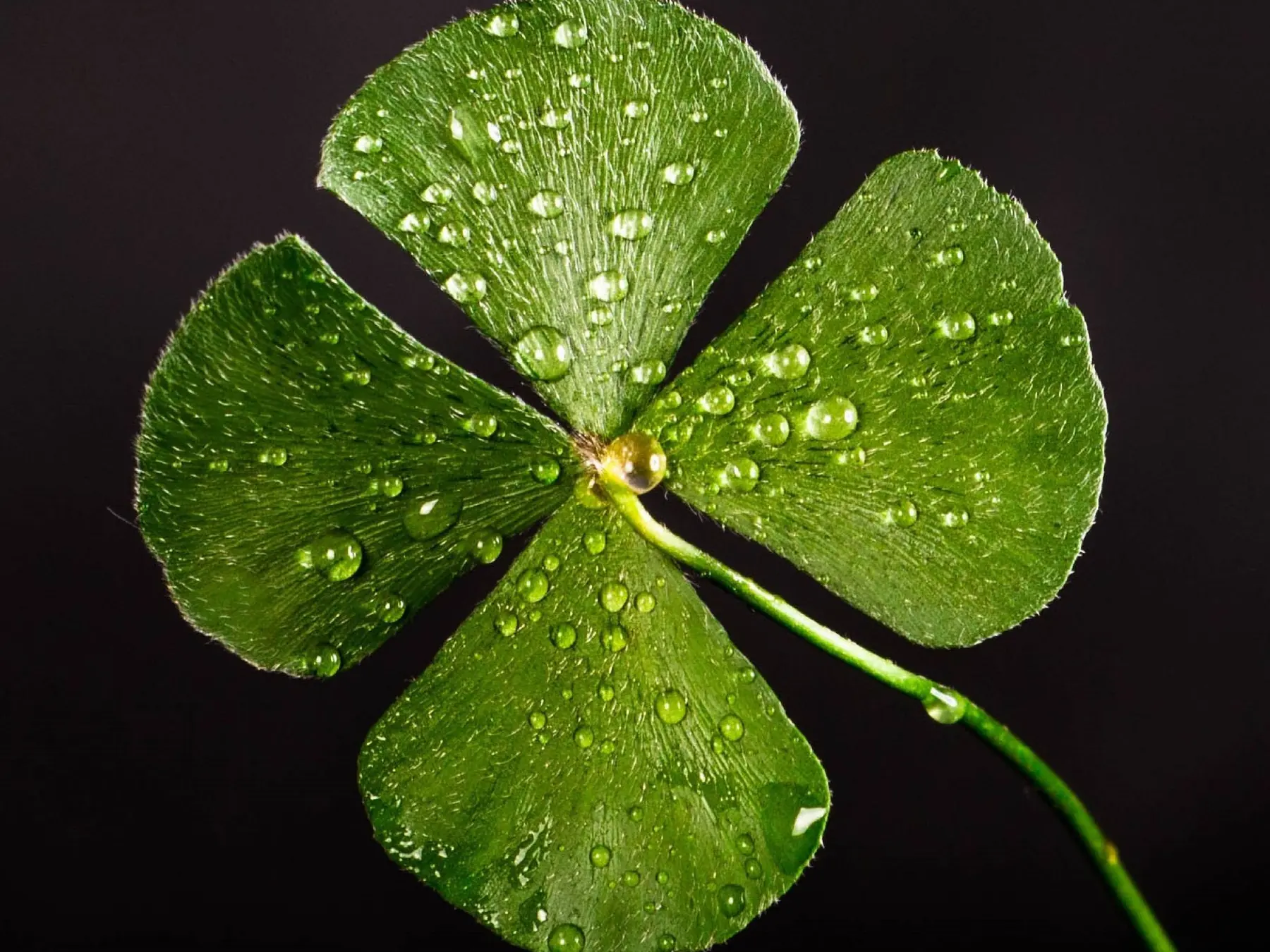
- A shamrock is a young sprig of clover.
- Several clover species can be called shamrocks.
- There is no universally agreed single botanical “true shamrock.”
- Later tradition says Patrick used a three-leaf shamrock to explain the Christian Trinity.
- Patrick’s surviving writings do not mention that teaching story.
- The shamrock legend became popular centuries after Patrick lived.
- Three-leaf plants nevertheless became powerful symbols of Irish identity.
- The shamrock appears in Irish organizations, uniforms, logos, and decorations.
- Green became strongly associated with Ireland over time.
- Ireland is nicknamed the Emerald Isle because of its famously green landscape.
- Green is central to modern St. Patrick’s Day clothing and decorations.
- Blue also has historical associations with Saint Patrick and Irish heraldic tradition.
- A shade called St. Patrick’s blue appears in older symbolic contexts.
- The shift toward green was influenced by Irish nationalism and popular culture.
- Modern celebrations have made green so dominant that many people assume it was always Patrick’s color.
Leprechauns are folklore, not Patrick’s sidekicks
- Leprechauns come from Irish folklore.
- They were not part of the historical Saint Patrick’s life.
- The Irish term behind “leprechaun” is often linked with leipreachán or related forms.
- Traditional leprechauns are solitary supernatural beings.
- Folklore often describes them as shoemakers.
- They are famous for hidden treasure in later stories.
- The pot of gold at the rainbow’s end became a modern popular image.
- Folkloric leprechauns were not always dressed entirely in bright green.
- Older illustrations sometimes show red clothing.
- American St. Patrick’s Day imagery helped standardize the green-suited version.
- Leprechauns are one small part of a much larger Irish fairy tradition.
- Irish folklore contains banshees, púcaí, fairies, giants, and many other beings.
- Commercial holiday decorations simplify that much richer folklore.
- Calling every Irish supernatural being a leprechaun erases important distinctions.
- Folklore evolves as stories move between oral tradition, books, advertising, film, and tourism.
Parades became an Irish diaspora tradition
- St. Patrick’s Day parades developed strongly among Irish communities outside Ireland.
- Irish soldiers serving abroad helped organize early public celebrations.
- New York’s parade tradition dates to the colonial era.
- Irish soldiers serving in the British military marched in New York in 1762.
- That was years before the United States declared independence.
- Irish immigrant organizations later turned parades into major demonstrations of community identity.
- New York’s St. Patrick’s Day Parade became one of the world’s largest.
- Its traditional route runs along Fifth Avenue.
- Boston also has a long history of St. Patrick celebrations.
- Philadelphia, Savannah, and Chicago developed major traditions too.
- Large parades gave immigrant communities visibility and political influence.
- They also helped descendants celebrate Irish identity generations after immigration.
- Modern Irish cities now host major parades as part of festival programming.
- Dublin’s St. Patrick’s Festival expanded the holiday into a multi-day cultural event.
- Parades demonstrate how diaspora traditions can eventually reshape celebrations in the ancestral homeland.
Chicago turns a river green
- Chicago is famous for dyeing part of its river green for St. Patrick’s Day.
- The tradition began in 1962.
- Local plumbers originally used dye to trace pollution and leaks.
- That tracing idea inspired the holiday river-coloring event.
- The dye used today is an environmentally reviewed formula kept closely guarded by organizers.
- Boats spread the coloring through the river.
- The bright green appearance lasts for a limited time.
- The tradition attracts large crowds downtown.
- It has become one of Chicago’s most recognizable annual spectacles.
- Other cities have copied the idea on smaller bodies of water.
- Green fountains, buildings, and landmarks appear around the world during the holiday.
- Tourism campaigns have illuminated major monuments in green.
- The phenomenon shows how a local publicity stunt can become a civic ritual.
- The Chicago tradition is younger than many people assume.
- It began less than a century after the city’s major Irish immigrant communities were established.
Food, drink, and modern customs
- Corned beef and cabbage is strongly associated with Irish American St. Patrick’s Day meals.
- It is less central to traditional Irish holiday food than many Americans assume.
- Irish immigrants in the United States adapted food traditions to local ingredients and prices.
- Corned beef became an affordable substitute for other meats in immigrant neighborhoods.
- Irish bacon and cabbage has deeper roots in Ireland.
- Soda bread is another food strongly associated with Irish cooking.
- Irish soda bread uses baking soda rather than yeast as its main leavening agent.
- Potatoes became central to Irish cuisine after their introduction from the Americas.
- Green beer is mainly a modern North American novelty.
- Food coloring, not a special green grain, creates most green beer.
- Irish stout is naturally dark rather than green.
- Traditional Irish music sessions often accompany public celebrations.
- Irish dancing is another major festival attraction.
- Celtic knots, harps, and tricolor flags often appear alongside shamrocks in decorations.
- For more Ireland trivia, explore our 145 fun facts about Ireland.
Ten surprising St. Patrick’s Day facts
- Saint Patrick was born in Britain, not Ireland.
- Christianity existed in Ireland before Patrick began his famous mission.
- The snake story conflicts with Ireland’s geological and biological history.
- Patrick’s own writings never tell the famous shamrock lesson.
- Blue has an older association with Saint Patrick than many modern revelers realize.
- Some of the earliest major St. Patrick parades happened outside Ireland.
- New York’s parade tradition began before the American Revolution.
- Chicago has dyed its river green only since 1962.
- Corned beef and cabbage tells an Irish American immigration story more than a purely Irish one.
- Modern St. Patrick’s Day is a layered mixture of religion, folklore, migration, nationalism, and celebration.

Quick St. Patrick’s Day FAQ
Was Saint Patrick Irish?
Not by birth. Patrick was born in Roman Britain, was kidnapped and enslaved in Ireland as a teenager, escaped, and later returned as a Christian missionary.
Did St. Patrick drive snakes out of Ireland?
No historical or biological evidence supports a literal snake banishment. Ireland apparently lacked native snakes after the last Ice Age because sea barriers prevented recolonization.
Why do people wear green?
Green became tied to Ireland through landscape, nationalism, the shamrock, and later popular culture. Older traditions also associated Saint Patrick with blue.
Why is St. Patrick’s Day on March 17?
March 17 is the traditional feast date associated with Saint Patrick’s death.
Is corned beef and cabbage traditional in Ireland?
It is especially an Irish American tradition. Irish immigrants in the United States adapted older food habits to ingredients and meat prices available in their new communities.

Ellie is the owner and sole author of Fun Facts, combining her mechanical engineering background with years of research-driven writing to deliver facts you can trust. Every article is thoroughly fact-checked and routinely updated as new science and sources emerge to keep information accurate and current. Her mission is to make learning delightful while upholding high standards of reliability and transparency.