
Easter mixes ancient Christian worship with springtime traditions that now look very different around the world. Its date moves, its symbols range from crosses to decorated eggs, and even the famous bunny has a surprisingly complicated history. These 145 Easter facts separate documented history from popular myths while exploring Holy Week, eggs, rabbits, foods, music, and celebrations across cultures.
Easter basics
- Easter is the principal Christian celebration of the resurrection of Jesus Christ.
- Christians celebrate Easter on a Sunday.
- Easter does not fall on the same calendar date every year.
- In Western Christianity, Easter can fall between March 22 and April 25.
- The season leading to Easter includes Lent in many Christian traditions.
- Lent is traditionally a period of prayer, fasting, repentance, and preparation.
- Holy Week is the week immediately before Easter.
- Palm Sunday begins Holy Week in many churches.
- Holy Thursday, also called Maundy Thursday, commemorates events associated with Jesus’s Last Supper.
- Good Friday commemorates the crucifixion of Jesus.
- Holy Saturday comes between Good Friday and Easter Sunday.
- The Easter Vigil is celebrated after nightfall in many Christian traditions.
- The English word “Easter” is not the word most languages use for the feast.
- Many languages use names related to the Hebrew word Pesach, or Passover.
- The Vatican Catechism refers to Easter as the Christian Passover.
Why Easter changes dates
- Easter’s date is calculated using both the solar year and a church-based lunar cycle.
- The Council of Nicaea met in A.D. 325.
- The Catholic Catechism states that at Nicaea the churches agreed Easter should be celebrated on the Sunday following the first full moon after the vernal equinox.
- The “full moon” used in Easter calculations is an ecclesiastical calculation, not simply an observation of the astronomical full moon from your backyard.
- The Western calculation treats March 21 as the ecclesiastical approximation of the spring equinox.
- The relevant church full moon is commonly called the Paschal full moon.
- Easter is always the Sunday after that Paschal full moon under the Western system.
- If the Paschal full moon itself falls on a Sunday, Easter is celebrated the following Sunday in that calculation.
- The Gregorian calendar was introduced under Pope Gregory XIII in 1582.
- Western churches generally use Gregorian-calendar calculations for Easter.
- Many Eastern Orthodox churches use calculations tied to the Julian calendar.
- That difference can cause Western and Eastern Easter dates to fall on different Sundays.
- Some years the dates coincide.
- The Vatican’s Catechism explicitly discusses the Nicaea rule and calendar difference.
- Because Easter moves, many other Christian observances move with it.
Easter and the Christian calendar
- Ash Wednesday marks the beginning of Lent in many Western churches.
- Its date depends on the date of Easter.
- Palm Sunday falls one week before Easter Sunday.
- Good Friday falls two days before Easter Sunday.
- Ascension observances are traditionally counted 40 days from Easter.
- Pentecost is traditionally celebrated 50 days from Easter Sunday.
- The period from Easter through Pentecost is called the Easter season in Catholic liturgy.
- White and gold are commonly used liturgical colors for Easter celebrations in Western churches.
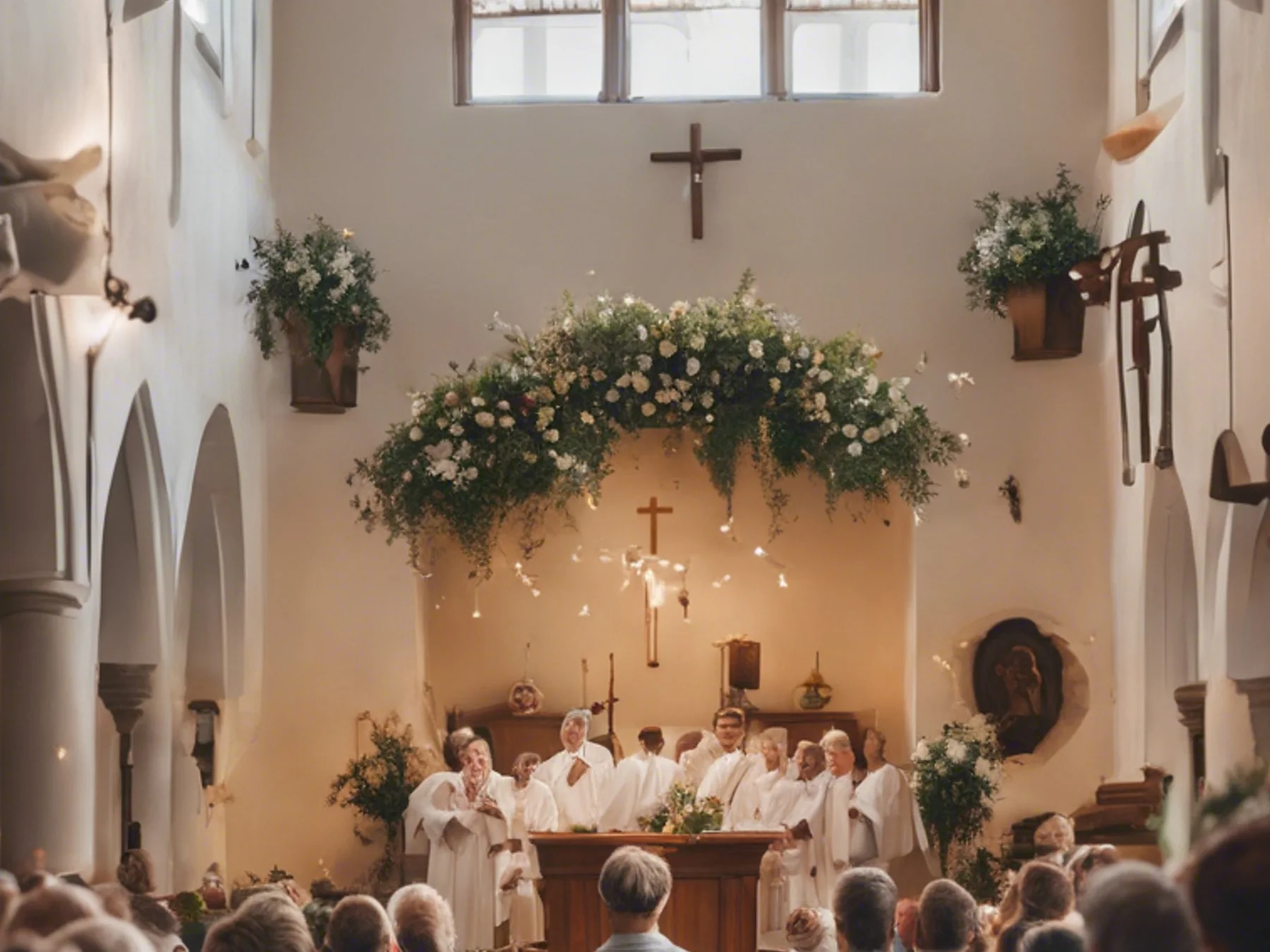
- Churches often decorate Easter sanctuaries with flowers.
- Easter lilies became especially popular Easter decorations in the United States.
- The Paschal candle is a large candle used prominently during the Easter season in several Christian traditions.
- At the Easter Vigil, the Paschal candle symbolizes the risen Christ in Catholic liturgy.
- Baptisms have a particularly strong traditional connection with the Easter Vigil.
- Church bells, candles, processions, choral music, and sunrise services are part of Easter worship in different communities.
- Easter traditions vary substantially among Catholic, Orthodox, Protestant, and other Christian communities.
Why eggs became Easter symbols
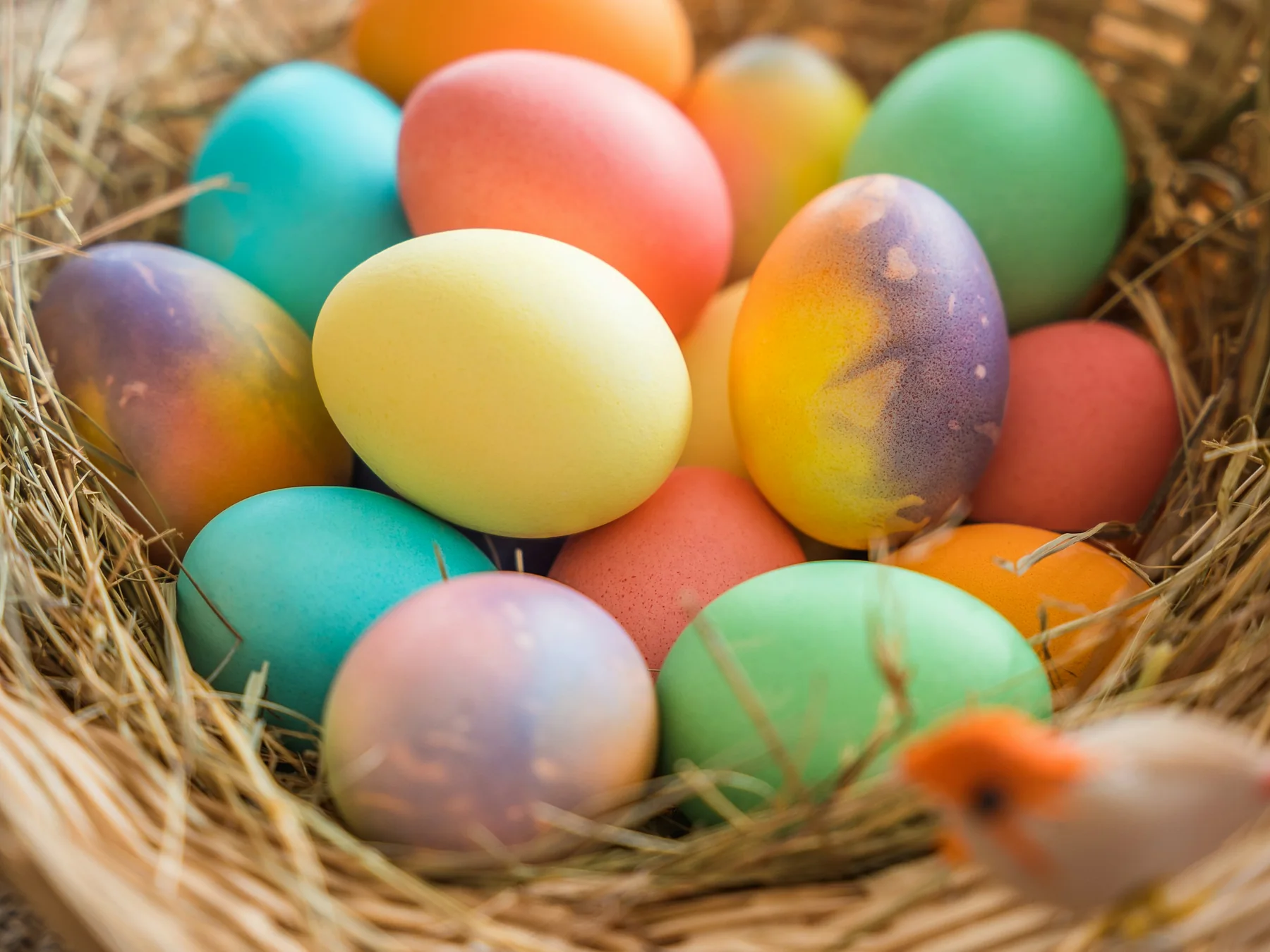
- Eggs have symbolized life, fertility, renewal, and rebirth in many cultures for thousands of years.
- Decorated eggs existed long before modern commercial Easter candy.
- Christians came to use eggs as a symbol associated with resurrection and new life.
- Eggs also fit naturally into spring celebrations because many birds lay eggs seasonally.
- In parts of Christian Europe, eggs were restricted during certain fasting periods.
- That made eggs a festive food when fasting ended.
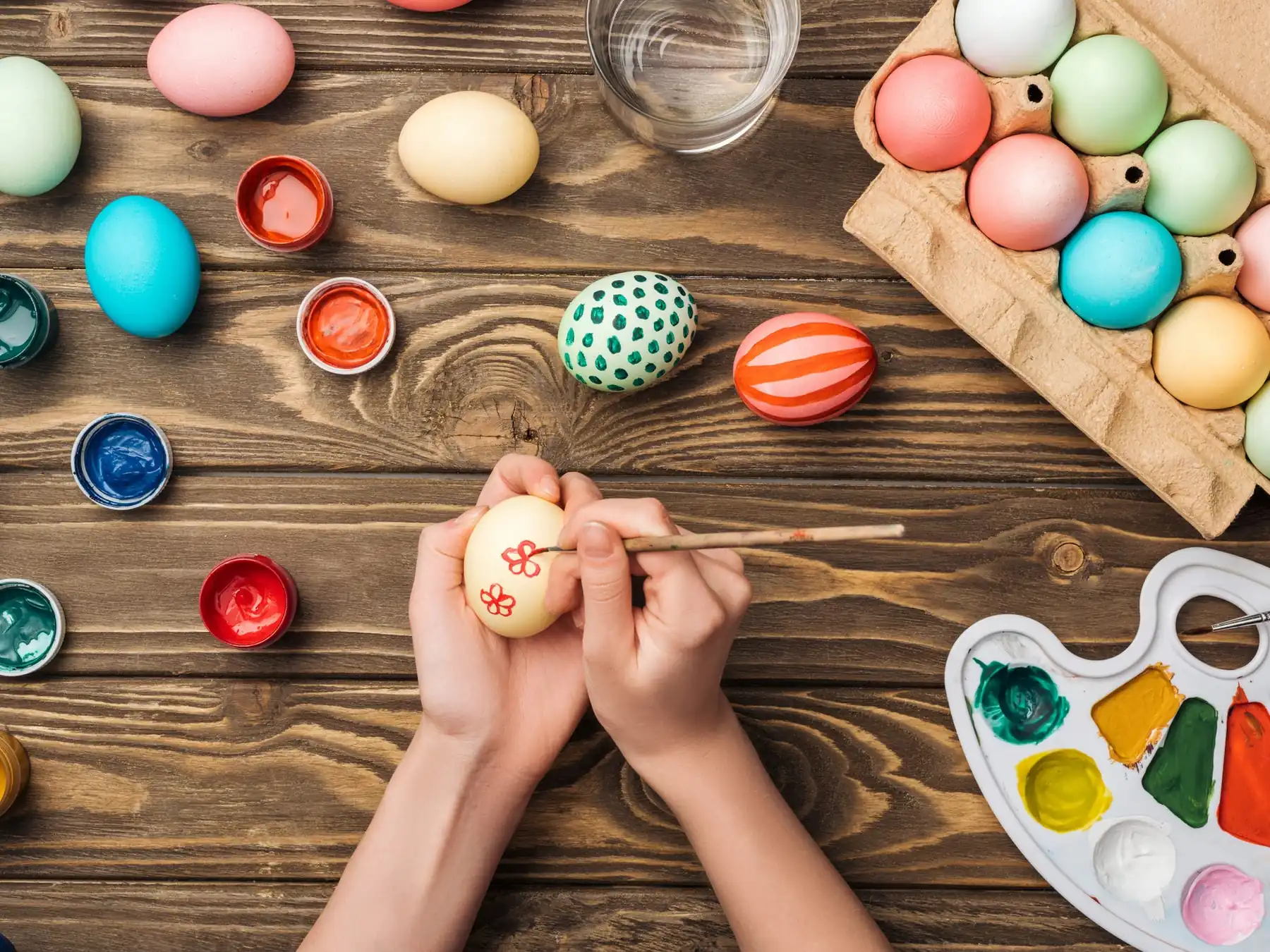
- People have dyed eggs using onion skins, plants, bark, roots, spices, and other natural materials.
- Red eggs have special significance in several Eastern Christian traditions.
- Ukrainian pysanky are elaborately decorated eggs made with a wax-resist technique.
- The word pysanky comes from a Ukrainian verb related to writing.
- Traditional pysanky designs can carry symbolic meanings through colors, lines, plants, animals, and geometric motifs.
- The Library of Congress notes that decorated-egg traditions are extremely old and widespread across cultures.
- Wax-resist decorating works by covering selected areas with wax before applying layers of dye.
- Removing the wax reveals a multicolored pattern underneath.
- The Library of Congress explores these traditions in its history of decorated eggs.
The Easter Bunny story
- Rabbits and hares became springtime symbols partly because of their strong association with fertility.
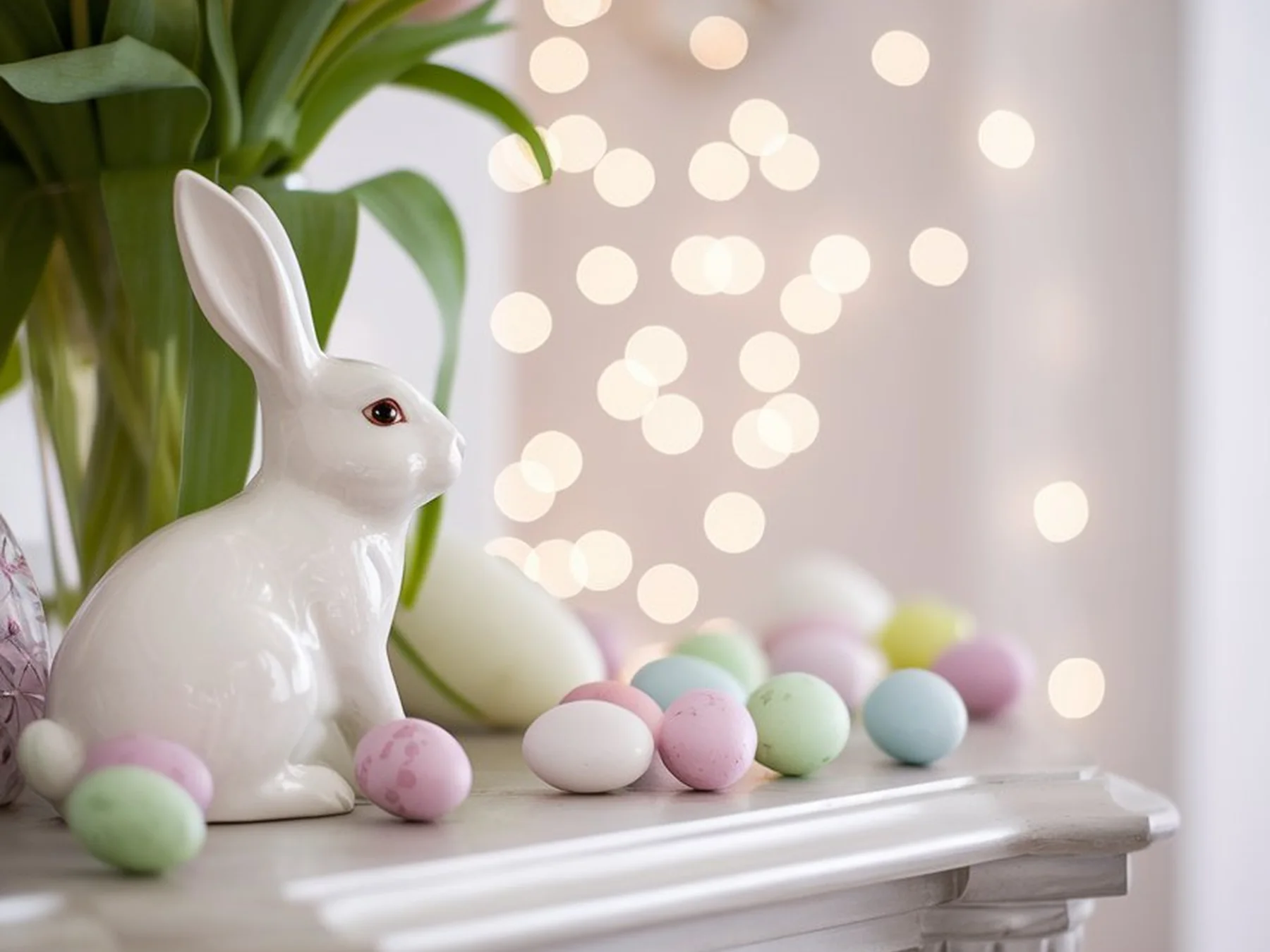
- The modern Easter Bunny developed from European folklore rather than from the biblical Easter story.
- German-speaking traditions included an Easter hare that brought or judged gifts for children.
- German immigrants helped carry Easter-hare traditions to North America.
- English-language American newspapers often used the phrase “Easter Hare” during the 1800s.
- The Library of Congress documents newspaper references to Easter hares, rabbits, nests, candy, and eggs.
- Children traditionally made nests in some communities for the Easter hare to fill.
- Baskets gradually became a convenient modern version of those nests.
- Chocolate rabbits turned the folklore animal into an edible Easter symbol.
- Real rabbits do not lay eggs, of course.
- The egg-laying bunny is a combination of separate spring symbols rather than a claim about animal biology.
- The Easter Bunny is especially prominent in secular family celebrations in the United States and several other countries.
- Some cultures use different gift-bringers or Easter symbols instead of a rabbit.
- In Australia, conservation campaigns have promoted the Easter bilby as an alternative to the rabbit because introduced rabbits are an ecological pest.
- The Library of Congress warns that popular internet claims linking Easter directly to goddesses such as Ishtar are not supported by mainstream scholarship.
Easter candy and food traditions
- Chocolate eggs became possible on a large scale as chocolate manufacturing improved during the 19th century.
- Hollow chocolate eggs require chocolate to set in a mold around an empty center.
- Foil wrapping protects chocolate eggs while turning them into colorful decorations.
- Jelly beans became strongly associated with Easter baskets in the United States during the 20th century.
- Marshmallow chicks and bunnies are another familiar American Easter candy.
- Hot cross buns are spiced sweet buns traditionally eaten around Good Friday in Britain and other countries.
- The cross on a hot cross bun gives the food an obvious Christian association.
- Simnel cake is a traditional British fruitcake associated with Easter and Mothering Sunday.
- Greek Easter celebrations commonly include breads and red-dyed eggs.
- Italian Easter foods vary dramatically by region and include breads, cakes, pies, and lamb dishes.
- Colomba di Pasqua is an Italian Easter cake shaped to suggest a dove.
- Polish Easter baskets may contain foods taken to church for blessing.
- Lamb became an important Easter food and symbol through both Christian and Jewish religious associations.
- Ham became a common American Easter main dish in many households.
- For a sweeter rabbit hole, our chocolate facts explain the ingredient behind countless Easter treats.
Egg hunts, egg rolls, and games
- Easter egg hunts hide decorated, plastic, or candy-filled eggs for children to find.
- Modern plastic eggs make it easy to hide small toys or candy without using fragile real eggs.
- Egg rolling is a game in which participants roll eggs across a lawn or down a slope.
- Washington residents once gathered on the U.S. Capitol grounds for Easter egg rolling.
- Congress restricted use of the Capitol grounds in 1876 after concerns about damage to the landscaping.
- The first official White House Easter Egg Roll was held in 1878 during Rutherford B. Hayes’s presidency.
- The event traditionally takes place on Easter Monday.
- The White House Easter Egg Roll is one of the oldest recurring White House public events.
- It has included egg rolling, games, music, storytelling, sports, and family activities.
- World War II interrupted the White House event from 1943 through 1945.
- The event also faced interruptions and relocations during periods of White House renovation and national emergencies.
- Wooden commemorative eggs became official keepsakes associated with the event during the Reagan administration.
- Modern commemorative eggs often bear signatures or printed facsimiles connected with the presidential family.
- The White House Historical Association documents the event’s long Easter Egg Roll history.
- The event shows how a folk spring game became part of American presidential tradition.
Easter around the world
- Orthodox Easter celebrations are especially elaborate in Greece, Serbia, Romania, Ethiopia, and other countries with large Orthodox communities.
- Midnight services are important in many Eastern Orthodox Easter traditions.
- Worshippers in some Orthodox communities greet one another with phrases meaning “Christ is risen” and “Truly he is risen.”
- Red-dyed eggs are especially familiar in Greek Orthodox Easter celebrations.
- In parts of Eastern Europe, decorated eggs are major works of folk art rather than simple children’s crafts.
- Semana Santa, or Holy Week, features major religious processions in Spain and many Latin American communities.
- Some Spanish Holy Week processions include enormous religious floats carried through city streets.
- Philippine Holy Week traditions include processions, worship services, and local devotional customs.
- In Sweden and parts of Finland, children may dress as Easter witches in a folk custom that looks more like Halloween to many Americans.
- Norwegian Easter culture is famously associated with mountain cabins, skiing, oranges, chocolate, and crime fiction.
- Påskekrim is the Norwegian tradition of reading or watching crime stories around Easter.
- Bermuda is known for colorful handmade kites flown around Good Friday.
- In some countries, Easter Monday is a public holiday even when Easter Sunday already falls on a weekend.
- Local Easter foods often reflect climate, agriculture, migration, and regional religious history.
- There is no single worldwide “Easter tradition” beyond the central Christian feast because local customs vary enormously.
Easter symbols, flowers, and sounds
- The cross is the most direct Christian symbol associated with the events commemorated during Holy Week and Easter.
- The empty tomb is another central resurrection symbol.
- Light is a recurring Easter symbol, especially during nighttime vigil services.
- Water is also important because of Easter’s traditional connection with baptism.
- Lilies became popular Easter flowers because their white blooms symbolize purity and new life in Christian interpretation.
- Tulips and daffodils are common secular springtime Easter decorations in cooler climates.
- Baby chicks became Easter symbols because they hatch from eggs and represent new life.
- Lambs are associated with both spring and Christian symbolism.
- Butterflies sometimes appear in Christian Easter art as symbols of transformation and resurrection.
- Church bells are traditionally rung joyfully for Easter in many communities.
- Some Western traditions historically silenced bells during part of Holy Week before ringing them again for Easter.
- George Frideric Handel’s Messiah is often performed around Easter even though it was originally premiered in Dublin in April 1742.
- The “Hallelujah” chorus comes from Part II of Messiah.
- Easter hymns often focus on resurrection, victory, light, and new life.
- Religious and secular Easter symbols now coexist in stores, homes, schools, churches, and public events.
Ten surprising Easter facts
- Easter’s date is not determined by the actual astronomical full moon you see in the sky, but by an ecclesiastical lunar calculation.
- The English name “Easter” is unusual because many other languages use a word related to Passover.
- The first official White House Easter Egg Roll dates to 1878.
- Decorating eggs is much older than chocolate eggs, plastic eggs, or modern Easter baskets.
- Not every culture imagines a rabbit delivering Easter treats.
- Some classic “ancient pagan Easter” explanations repeated online are much less certain than they are often presented.
- Easter can occur more than a month apart on the calendar from one year to another.
- An entire chain of holidays and observances changes dates each year because their dates are counted from Easter.
- A religious feast, folk egg games, rabbits, chocolate, flowers, and presidential traditions became layered together over centuries rather than appearing all at once.
- For more holiday trivia, explore our Christmas facts and Culture facts.
Quick Easter FAQ
Why does Easter change dates every year?
Western Easter is calculated as the Sunday after the ecclesiastical Paschal full moon that follows the church’s March 21 approximation of the spring equinox.
What does Easter celebrate?
For Christians, Easter celebrates the resurrection of Jesus Christ.
Why are eggs associated with Easter?
Eggs have long symbolized life and renewal. Christians adopted the egg as a resurrection symbol, and historical fasting practices also helped make eggs a festive Easter food.
Where did the Easter Bunny come from?
The modern Easter Bunny developed from European folk traditions involving hares and rabbits, especially German-speaking customs that were later carried to North America.
When was the first White House Easter Egg Roll?
The first official White House Easter Egg Roll was held in 1878 during President Rutherford B. Hayes’s administration.

Ellie is the owner and sole author of Fun Facts, combining her mechanical engineering background with years of research-driven writing to deliver facts you can trust. Every article is thoroughly fact-checked and routinely updated as new science and sources emerge to keep information accurate and current. Her mission is to make learning delightful while upholding high standards of reliability and transparency.