
Veterans Day is one of those holidays I thought I understood until I learned how often people mix it up with Memorial Day. The November 11 date carries a very specific World War I history, but the modern holiday honors Americans who served across generations, wars, branches, and peacetime.
Why Veterans Day is always November 11
- Veterans Day is observed every year on November 11 in the United States.
- The date traces directly to the armistice that stopped major fighting in World War I.
- That armistice took effect on November 11, 1918.
- It became effective at 11 a.m. local time on the Western Front.
- The date became famous as the eleventh day of the eleventh month.
- The armistice became famously associated with “the eleventh hour of the eleventh day of the eleventh month.”
- Fighting did not magically stop everywhere the instant the document was signed.
- The armistice had been agreed to earlier that morning before taking effect at 11.
- The armistice ended major hostilities between Germany and the Allied powers on the Western Front.
- It was an armistice, not the final peace treaty ending every legal aspect of the war.
- The Treaty of Versailles was signed in 1919.
- President Woodrow Wilson proclaimed the first Armistice Day observance for November 11, 1919.
- Early observances emphasized gratitude, reflection, and the hope for lasting peace.
- Congress supported an annual November 11 observance through a resolution in 1926.
- A 1938 federal law made November 11 a legal holiday called Armistice Day.
- The 1938 law emphasized world peace as part of the holiday’s purpose.
- World War II later changed how Americans thought about whom the holiday should honor.
- The Korean War added another large generation of American veterans.
- Congress changed the name from Armistice Day to Veterans Day in 1954.
- That name change expanded the focus beyond veterans of World War I.
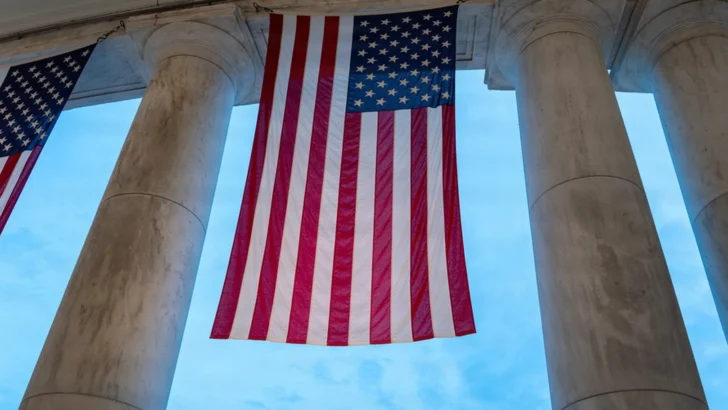
How Armistice Day became Veterans Day
The change sounds obvious in hindsight, but it took veterans themselves pushing for a broader holiday. One of the key figures was Raymond Weeks of Birmingham, Alabama, who believed November 11 should honor veterans of every American war.
- Raymond Weeks was a World War II veteran from Birmingham, Alabama.
- He advocated for turning Armistice Day into a national celebration of all veterans.
- Birmingham held a National Veterans Day event in 1947.
- Weeks continued organizing Veterans Day activities for decades.
- Representative Edward Rees of Kansas introduced legislation to change the federal holiday’s name.
- President Dwight D. Eisenhower signed the 1954 legislation establishing the name Veterans Day.
- Eisenhower also issued a proclamation supporting the new nationwide observance.
- The holiday’s focus became service by veterans from all U.S. wars and eras.
- Its World War I origin remained visible through the unchanged November 11 date.
- The official spelling is “Veterans Day.”
- There is no apostrophe in the federal holiday’s name.
- “Veteran’s Day” incorrectly suggests a day belonging to one veteran.
- “Veterans’ Day” is grammatically understandable but still not the official spelling.
- The federal government deliberately uses Veterans Day as the proper name.
- In the late 1960s, federal legislation moved several holidays to Mondays.
- Veterans Day was temporarily shifted to a Monday in October beginning in 1971.
- The change proved unpopular because November 11 had strong historical meaning.
- President Gerald Ford signed a 1975 law restoring the November 11 observance.
- The restored date took effect in 1978.
- November 11 has remained the annual federal Veterans Day date ever since.
Veterans Day vs. Memorial Day
- Veterans Day honors people who served in the U.S. armed forces.
- That includes living veterans as well as veterans who have died.
- Memorial Day specifically honors U.S. military personnel who died while serving.
- Memorial Day is observed on the last Monday in May.
- Veterans Day is fixed to November 11 because of its World War I history.
- Armed Forces Day is a third, separate U.S. observance.
- Armed Forces Day primarily recognizes people currently serving in the military.
- It is celebrated in May.
- Those three observances have overlapping military themes but different purposes.
- Saying “Happy Veterans Day” is common and generally appropriate.
- Many people prefer simply saying “Thank you for your service.”
- Individual veterans have different feelings about public recognition.
- Asking about someone’s service can be meaningful if the veteran is comfortable discussing it.
- No veteran is obligated to tell war stories or describe traumatic experiences.
- Some veterans served during wartime without entering combat.
- Others served entirely during peacetime.
- Military service includes far more jobs than front-line combat roles.
- Veterans have worked in medicine, logistics, intelligence, aviation, engineering, communications, maintenance, administration, and many other fields.
- Honoring veterans does not require assuming every veteran had the same military experience.
- The distinction from Memorial Day is the Veterans Day fact I wish everyone learned first.
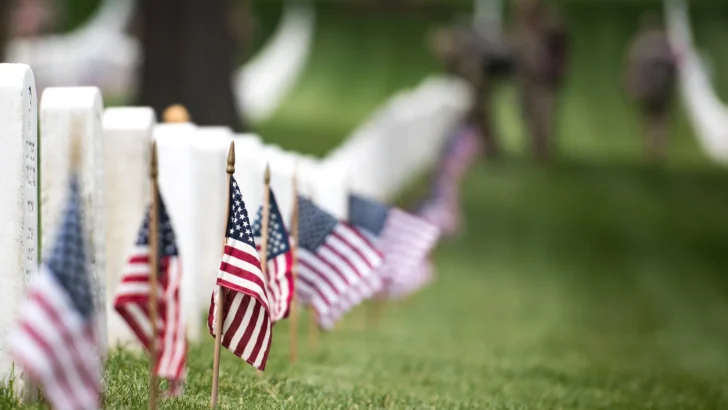
Who counts as a veteran?
This sounds like it should have a one-line answer, but federal benefit programs love definitions almost as much as the military loves acronyms. Legal veteran status and eligibility for a specific benefit can depend on service type, discharge status, dates, and the law governing that program.
- In ordinary conversation, a veteran is someone who previously served in the armed forces.
- Federal law uses more specific definitions for many programs and benefits.
- Length and character of service can matter for particular benefits.
- Active-duty service is treated differently from some reserve or training statuses under certain laws.
- National Guard and Reserve members can qualify as veterans under various circumstances.
- There is no single benefit rule that applies identically to every veteran program.
- The Army is the oldest branch of the U.S. military.
- The Navy is the nation’s sea-service fighting branch.
- The Marine Corps is organized within the Department of the Navy.
- The Air Force became a separate military department in 1947.
- The Coast Guard has both military and law-enforcement responsibilities.
- The Space Force became the newest branch in 2019.
- Space Force veterans are part of the modern Veterans Day community.
- Women have served in the U.S. military since before the nation’s founding, although roles and legal status changed over time.
- Women are now eligible for military occupations across the services, including combat roles.
- Black Americans have served in every major American war despite long periods of discrimination and segregation.
- President Harry Truman ordered desegregation of the armed forces in 1948.
- Native Americans have served in the U.S. military at high rates across many generations.
- Immigrants and naturalized citizens have also played major roles in American military service.
- The veteran population represents an enormous range of ages, backgrounds, beliefs, jobs, and service experiences.
Arlington, the Tomb & national ceremonies
- Arlington National Cemetery hosts one of the nation’s most prominent Veterans Day ceremonies.
- The ceremony centers on the Tomb of the Unknown Soldier.
- The Tomb stands on a hill overlooking Washington, D.C.
- The first Unknown Soldier buried there represented an unidentified American service member from World War I.
- That burial took place on November 11, 1921.
- The date intentionally connected the ceremony with Armistice Day.
- Unknown service members from World War II and the Korean War were later interred nearby.
- An unknown service member from the Vietnam War was interred in 1984.
- DNA testing later identified him as Air Force First Lieutenant Michael Blassie.
- His remains were returned to his family in 1998.
- The Vietnam crypt at the Tomb remains empty.
- Sentinels from the U.S. Army guard the Tomb.
- The Tomb Guard is associated with the 3rd U.S. Infantry Regiment, known as The Old Guard.
- The Tomb is guarded every day of the year.
- Weather does not routinely stop the guard from carrying out its mission.
- A presidential wreath-laying ceremony is traditionally part of Veterans Day at Arlington.
- The ceremony takes place around 11 a.m., echoing the World War I armistice hour.
- Speeches and music often follow the wreath ceremony.
- Veterans organizations participate in national commemorations.
- The setting makes the holiday’s World War I roots physically visible more than a century later.
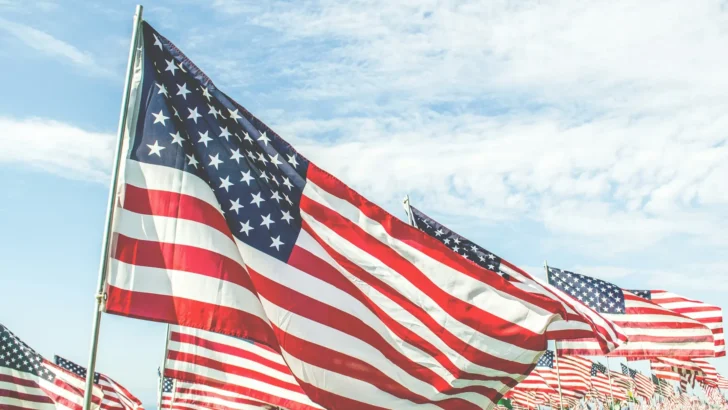
Flags, parades & Veterans Day traditions
Veterans Day is not supposed to be one long solemn ceremony. Parades, school programs, reunions, free community meals, military-history events, and very ordinary conversations all fit the holiday because veterans themselves are not one uniform group.
- The U.S. flag is generally flown at full staff on Veterans Day.
- Veterans Day does not automatically require a half-staff flag display.
- Half-staff orders can still apply if another official proclamation requires them.
- Many towns hold Veterans Day parades.
- New York City has hosted a major veterans parade tradition for more than a century.
- Birmingham, Alabama, has a particularly important Veterans Day history because of Raymond Weeks.
- School assemblies often invite local veterans to speak.
- Students may perform patriotic music or read military history during those programs.
- Community groups frequently place flags at cemeteries and memorials.
- Veterans organizations host breakfasts, lunches, dinners, and social events.
- Many restaurants and businesses offer Veterans Day discounts or free meals.
- Those private promotions are voluntary, not federal holiday requirements.
- Businesses usually require some form of service verification for military discounts.
- Federal offices close for the observed Veterans Day holiday.
- Mail and banking schedules can change because Veterans Day is a federal holiday.
- Private businesses are not universally required to close.
- Public-school schedules vary by state and district.
- If November 11 falls on a Saturday, federal employees generally observe the holiday on the preceding Friday.
- If November 11 falls on a Sunday, the federal observance generally moves to Monday.
- Veterans Day itself remains November 11 even when offices observe a neighboring weekday.
Veterans Day around the world & facts worth remembering
- November 11 is a remembrance date in many countries affected by World War I.
- Canada observes Remembrance Day on November 11.
- Australia also observes Remembrance Day.
- France marks the November 11 armistice as a national commemoration.
- The United Kingdom observes Armistice Day on November 11.
- Britain also holds Remembrance Sunday on the Sunday nearest November 11.
- Red poppies became international symbols of wartime remembrance after World War I.
- The symbolism was inspired by poppies growing on battle-scarred landscapes in Europe.
- The poem “In Flanders Fields” helped make the poppy especially recognizable.
- Poppy traditions are much more visible in countries such as Canada and the United Kingdom than in everyday U.S. Veterans Day practice.
- American veterans organizations also use memorial poppies in fundraising and remembrance programs.
- Veterans Day can be emotionally complicated for people carrying grief or difficult service memories.
- Not every veteran wants to attend a parade or public ceremony.
- Listening is often more respectful than assuming what service meant to someone.
- A veteran may be proud of service while also holding complicated views about a war or policy.
- Military families make sacrifices too, but Veterans Day specifically centers veterans themselves.
- Caregivers for disabled veterans can play an enormous role after military service ends.
- Veterans can face challenges involving employment, disability, health care, housing, and transition to civilian life.
- Many veterans also bring specialized leadership, technical, medical, mechanical, and organizational skills into civilian careers.
- Veterans continue serving communities as teachers, business owners, first responders, volunteers, public officials, and neighbors.
- Someone can be a veteran without ever having served overseas.
- Someone can be a veteran without ever having been in combat.
- Someone can be a combat veteran without wanting that experience to define every conversation about them.
- Veterans Day in 2026 falls on Wednesday, November 11.
- After 145 facts, the holiday makes the most sense as a thank-you grounded in history rather than a generic patriotic day off.
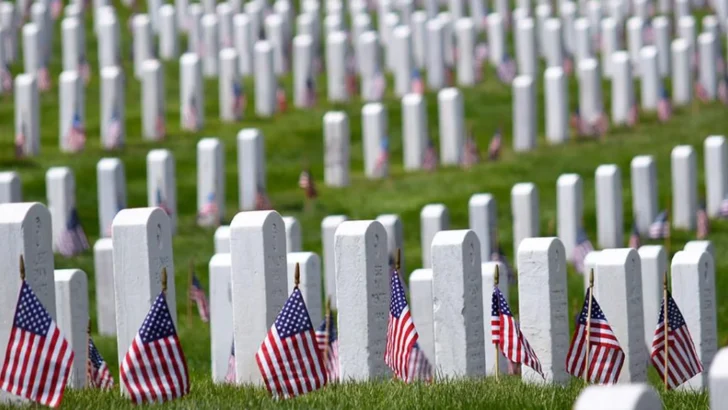
Quick FAQ
Q: When is Veterans Day?
A: Veterans Day is November 11 every year. In 2026, it falls on a Wednesday.
Q: What is the difference between Veterans Day and Memorial Day?
A: Veterans Day honors people who served in the U.S. armed forces. Memorial Day specifically honors military personnel who died while serving.
Q: Why is Veterans Day on November 11?
A: The World War I armistice took effect at 11 a.m. on November 11, 1918.
Q: Does Veterans Day have an apostrophe?
A: No. The official federal spelling is “Veterans Day.”
Q: Should the flag be at half-staff on Veterans Day?
A: Not automatically. The flag is generally flown at full staff unless a separate half-staff order is in effect.

Ellie is the owner and sole author of Fun Facts, combining her mechanical engineering background with years of research-driven writing to deliver facts you can trust. Every article is thoroughly fact-checked and routinely updated as new science and sources emerge to keep information accurate and current. Her mission is to make learning delightful while upholding high standards of reliability and transparency.