
The winter solstice sounds like the Sun is doing something dramatic, but Earth is the one leaning into the whole situation. It gives the Northern Hemisphere its shortest daylight stretch, starts astronomical winter, and somehow manages to make the earliest sunset happen on a different day just to keep things interesting.
What the winter solstice actually is
- A solstice occurs twice each year, once in June and once in December.
- The December solstice marks the start of astronomical winter in the Northern Hemisphere.
- At the same moment, it marks the start of astronomical summer in the Southern Hemisphere.
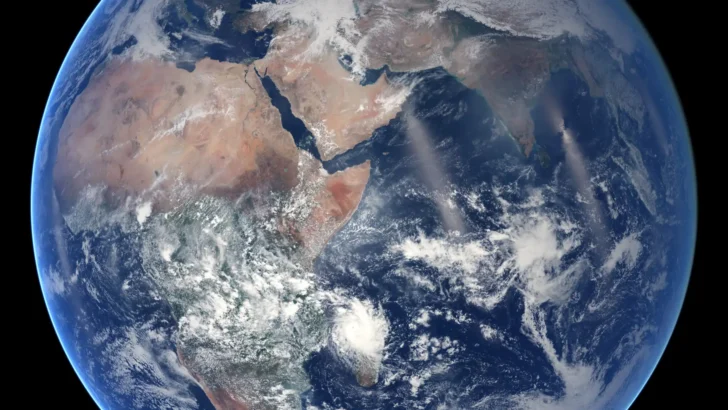
- The December solstice happens when the Sun reaches its southernmost apparent position in Earth’s sky.
- Earth’s axial tilt is responsible for that apparent seasonal movement.
- Earth’s axis is tilted about 23.4 degrees relative to the plane of its orbit.
- At the December solstice, the North Pole is tilted most strongly away from the Sun.
- The South Pole is tilted toward the Sun at the same time.
- The Sun is directly overhead at local noon near the Tropic of Capricorn on the December solstice.
- The Tropic of Capricorn lies at roughly 23.4 degrees south latitude.
- The solstice is a precise astronomical instant rather than an event lasting the entire day.
- That instant happens simultaneously worldwide.
- Local dates and clock times can differ because of time zones.
- The word “solstice” comes from Latin roots often interpreted as “Sun stands still.”
- The name refers to the Sun’s apparent north-south movement slowing and reversing near the solstice.
- The Sun does not literally stop moving through space.
- Earth also does not stop moving in its orbit.
- Meteorological winter begins December 1 in the Northern Hemisphere, before the astronomical solstice.
- That gives us two useful definitions of winter depending on whether we are doing weather statistics or astronomy.
- I am still waiting for a third definition based on when every parking lot becomes gray slush.
The exact 2026 winter solstice
For 2026, you can put an actual time on it instead of vaguely circling December 21. The solstice reaches its astronomical instant late Monday afternoon in the eastern United States and midafternoon in the central time zone.
- The 2026 December solstice occurs on Monday, December 21.
- The exact global instant is 20:50 Coordinated Universal Time.
- That is 3:50 p.m. Eastern Standard Time in New York.
- It is 2:50 p.m. Central Standard Time in Chicago.
- It is 1:50 p.m. Mountain Standard Time in Denver.
- It is 12:50 p.m. Pacific Standard Time in Los Angeles.
- Some locations in Asia and the Pacific experience the same solstice instant on December 22 local time.
- The 2026 Northern Hemisphere astronomical winter lasts until the March 2027 equinox.
- The December solstice does not always fall on December 21.
- Depending on the year and time zone, it can occur on December 20, 21, 22, or very rarely 23.
- December 21 is the most familiar modern date for the event.
- Calendar leap-year rules help keep solstices from drifting far through the months.
- Earth takes about 365.2422 days to complete a tropical year.
- That fractional day is why a simple 365-day calendar would slowly drift against the seasons.
- Leap days help correct that mismatch.
- The Gregorian calendar skips some century leap days to stay better aligned with the seasons.
- Years divisible by 100 are not leap years unless they are also divisible by 400.
- That is why 2000 was a leap year but 1900 was not.
- Small orbital changes also affect the exact timing and length of astronomical seasons.
- The calendar looks tidy only because astronomy is doing complicated work underneath it.
Why it is the shortest day in the Northern Hemisphere
- The winter solstice has the least daylight of the year for most Northern Hemisphere locations.
- It also has the longest night of the year north of the equator.
- The effect becomes more dramatic as you travel farther north.
- Near the equator, seasonal day-length changes are relatively small.
- In the midlatitudes, winter days can be several hours shorter than summer days.
- Within the Arctic Circle, some places experience no sunrise at all around the solstice.
- That continuous period without a true sunrise is called polar night.
- The North Pole is in continuous darkness around the December solstice.
- The South Pole experiences continuous daylight at the same time.
- Day length is controlled by Earth’s tilt and the observer’s latitude.
- Mountains and buildings can change the visible sunrise and sunset without changing the astronomical day length definition.
- Atmospheric refraction bends sunlight near the horizon.
- That refraction lets us see the Sun slightly before geometric sunrise.
- It also lets us see the Sun slightly after geometric sunset.
- Sunrise and sunset are conventionally timed using the upper edge of the Sun’s disk.
- Those definitions make measured daylight slightly longer than a simple center-of-the-Sun calculation.
- After the winter solstice, Northern Hemisphere daylight begins increasing again.
- The increase is tiny at first and becomes more noticeable later in winter.
- The solstice is therefore the turning point toward longer days even though the coldest weather may still be ahead.
- That last fact is my preferred December pep talk.
The earliest sunset is usually not on the solstice
This is the solstice fact that made me distrust every intuitive calendar assumption I had. The shortest day combines sunrise and sunset, but solar noon shifts through the clock year, so those two ends of the day do not reach their extremes together.
- At most midlatitude Northern Hemisphere locations, the earliest sunset happens before the winter solstice.
- The latest sunrise usually happens after the solstice.
- The shortest total daylight day still occurs around the solstice.
- This apparent mismatch comes from the changing relationship between clock time and solar time.
- Earth’s orbit is elliptical rather than perfectly circular.
- Earth also travels at changing orbital speeds through the year.
- Its tilted axis adds another geometric effect to the Sun’s apparent daily timing.
- Together, those effects create what astronomers call the equation of time.
- Solar noon therefore does not happen at exactly 12:00 p.m. clock time every day.
- It can drift several minutes earlier or later across the year.
- That drifting solar noon shifts sunrise and sunset clock times together.
- Before the solstice, sunset can begin getting later even while sunrise is still getting later faster.
- Total daylight can therefore continue shrinking for a while.
- After the solstice, sunrise can keep getting later even while sunset is already moving later.
- Total daylight is then increasing despite the later sunrise.
- The exact dates of earliest sunset and latest sunrise depend on latitude and time zone position.
- They are not identical across the United States.
- Locations near the equator show different timing patterns from high-latitude locations.
- A wall clock is therefore not a simple sundial with better typography.
- Once you know this, winter sunset tables become weirdly addictive.
The Sun, shadows & the winter sky
- The noon Sun reaches its lowest annual altitude in the Northern Hemisphere on the winter solstice.
- That low Sun angle produces long midday shadows.
- A vertical object casts a longer noon shadow in winter than in summer at the same location.
- The Sun rises south of due east on the December solstice in Northern Hemisphere midlatitudes.
- It sets south of due west there as well.
- The exact compass direction depends on latitude.
- At the equinoxes, sunrise and sunset occur much closer to due east and due west.
- The winter Sun follows its shortest and lowest daily arc across the Northern Hemisphere sky.
- In the Southern Hemisphere, the December Sun follows its highest and longest seasonal path.
- The December solstice is therefore the summer solstice for Australia, much of South America, and southern Africa.
- There is nothing inherently “winter” about the December solstice globally.
- “December solstice” is the more hemisphere-neutral astronomical name.
- Snow is not required for a winter solstice.
- Many warm climates experience the solstice without freezing temperatures.
- Clouds can hide the Sun without changing the solstice itself.
- A solstice still occurs even if nobody at your location can see the sky.
- The full moon has no required phase relationship with the solstice.
- Some years place a full moon close to the solstice and others do not.
- The December solstice is unrelated to Earth reaching perihelion a couple of weeks later.
- The low winter Sun, not greater Earth-Sun distance, is what matters for seasonal cold.
Stonehenge, ancient observations & solstice traditions
People noticed the Sun’s seasonal turning points long before anyone had a smartphone sunrise widget. The tricky part is separating real archaeological alignments and living traditions from modern claims that every ancient stone was secretly a solstice calendar.
- Stonehenge in southern England has strong alignments connected with solstice sunrise and sunset directions.
- The monument’s main axis aligns with midsummer sunrise and midwinter sunset.
- Archaeological evidence shows Stonehenge developed in stages over many centuries.
- Its builders did not leave a written instruction manual explaining every purpose.
- That means archaeologists distinguish evidence-based interpretations from speculation.
- The winter solstice appears to have been important to communities using the Stonehenge landscape.
- Animal remains from nearby Durrington Walls indicate large seasonal feasts in the prehistoric period.
- Some evidence suggests those gatherings occurred around midwinter.
- Modern visitors still gather at Stonehenge for solstice observances.
- Neolithic and Bronze Age monuments elsewhere also show solar alignments.
- Newgrange in Ireland is famous for illumination near the winter solstice.
- A narrow roof box allows rising winter-solstice sunlight into its passage and chamber.
- Newgrange was built more than 5,000 years ago.
- That makes it older than the main stone circle at Stonehenge.
- Ancient solar observation could help communities track seasonal cycles important to farming and ritual life.
- Many cultures developed calendars using combinations of solar, lunar, and stellar observations.
- Not every modern solstice celebration is a direct unchanged survival from prehistory.
- Traditions can be revived, reinvented, blended, or newly created.
- Modern Pagan groups often celebrate the winter solstice within contemporary religious frameworks.
- The fact that a tradition is modern does not make it meaningless to the people practicing it.
Yule, holidays & 25 solstice facts worth keeping
- Yule is a historic midwinter term with roots in Germanic and Norse traditions.
- The English word “Yuletide” preserves that old seasonal vocabulary.
- Modern Christmas traditions developed from many religious, regional, commercial, and seasonal influences.
- It is too simplistic to claim that Christmas is merely one renamed ancient solstice holiday.
- Evergreen branches became powerful winter symbols partly because they remain green when many other plants are dormant.
- Candles and fires provide natural symbols of light during the darkest part of the year.
- Many cultures hold winter festivals near the December solstice without sharing one common origin.
- Scandinavia’s St. Lucia celebrations occur on December 13, close to the darkest part of the year.
- Under the old Julian calendar, St. Lucia’s feast fell closer to the astronomical solstice.
- Iranian Yalda Night celebrates the year’s longest night around the winter solstice.
- Families may gather for poetry, conversation, nuts, and fruits such as pomegranates and watermelon.
- Dongzhi is an East Asian festival associated with the winter solstice.
- Its traditions vary across Chinese and other East Asian communities.
- Seasonal foods can symbolize family reunion, warmth, and renewal.
- The shortest day is not necessarily the coldest day of winter.
- Land, oceans, and the atmosphere take time to cool after incoming solar energy reaches its minimum.
- This seasonal lag pushes average coldest temperatures later than the solstice in many places.
- Large lakes and oceans slow temperature changes by storing and releasing heat.
- Snow cover can reinforce cold by reflecting sunlight back to space.
- The North Pole remains in darkness well beyond the single solstice date.
- After December 21, the Northern Hemisphere gains daylight but initially by only small amounts each day.
- By late winter, daily daylight gains become easier to notice.
- The March equinox eventually brings day and night close to equal again.
- The next major turning point after that is the June solstice, with the Northern Hemisphere’s longest day.
- After 145 facts, my favorite solstice tradition may still be looking at a 4:30 p.m. sunset and reminding myself the days are officially getting longer.
Quick FAQ
Q: When is the winter solstice in 2026?
A: The Northern Hemisphere winter solstice occurs Monday, December 21, 2026 at 20:50 UTC, or 2:50 p.m. CST in Chicago.
Q: Is the winter solstice the shortest day?
A: Yes, in terms of daylight north of the equator. It has the shortest daylight span and longest night of the year in the Northern Hemisphere.
Q: Is the earliest sunset on the winter solstice?
A: Usually not at midlatitudes. The earliest sunset generally occurs before the solstice, while the latest sunrise generally occurs afterward.
Q: Why is it called a solstice?
A: The word comes from Latin roots meaning roughly “Sun stands still,” referring to the Sun’s apparent seasonal north-south movement slowing before reversing direction.
Q: Are we farther from the Sun during winter?
A: No. Earth is actually closest to the Sun in early January. Winter cold comes primarily from Earth’s tilt, lower Sun angle, and shorter days.

Ellie is the owner and sole author of Fun Facts, combining her mechanical engineering background with years of research-driven writing to deliver facts you can trust. Every article is thoroughly fact-checked and routinely updated as new science and sources emerge to keep information accurate and current. Her mission is to make learning delightful while upholding high standards of reliability and transparency.