
Sea lions are what happens when a pinniped gets external ears, powerful front flippers, a loud voice, and enough shoulder mobility to walk into places you did not expect a marine mammal to reach. Underwater they are fast acrobats; on docks they are noisy roommates who appear fully convinced the marina was built for them.
Sea lions are eared seals built differently from true seals
- Sea lions belong to the family Otariidae.
- Fur seals belong to the same family.
- Otariids are commonly called eared seals.
- Sea lions have small visible external ear flaps.
- True seals do not have external ear flaps.
- Sea lions have long powerful front flippers.
- They can rotate the hind flippers forward under the body.
- That lets them support weight on all four flippers while on land.
- True seals cannot walk in the same way.
- Sea lions occur mainly around Pacific Ocean coasts.
- California sea lions live along western North America.
- Steller sea lions live across the North Pacific.
- South American sea lions inhabit coasts around southern South America.
- Australian sea lions live only around Australia.
- New Zealand sea lions breed around New Zealand's subantarctic and southern coasts.
- Galápagos sea lions live around the Galápagos Islands.
- Japanese sea lions were driven to extinction during the 20th century.
- Adult males are substantially larger than females in most species.
- Some male Steller sea lions weigh well over 2,000 pounds.
- Giving a one-ton animal the ability to walk up a dock feels like the exact moment marina design became complicated.
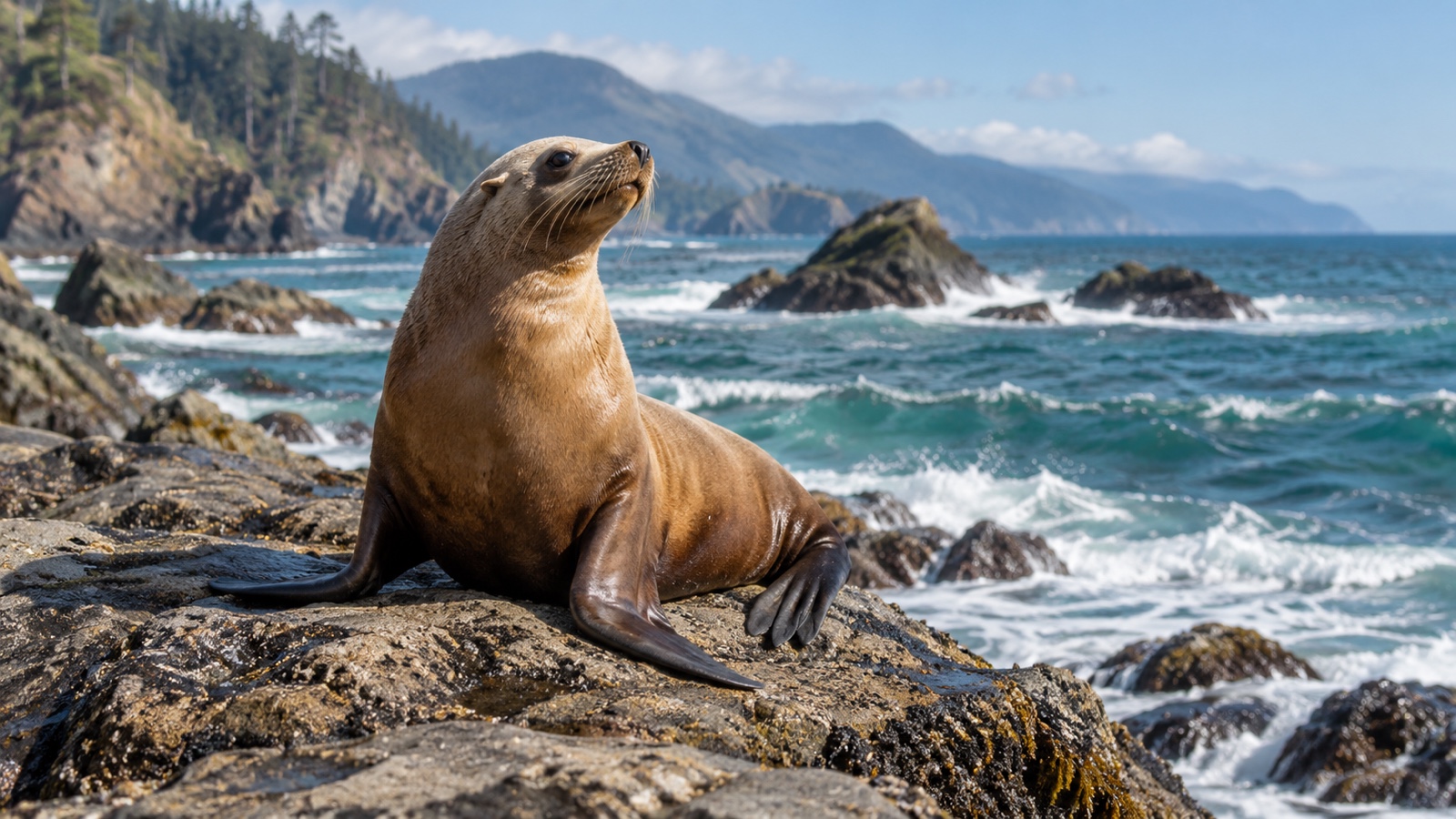
Those giant front flippers power underwater flight
- Sea lions swim mainly with powerful strokes of the front flippers.
- The motion resembles underwater flying.
- Hind flippers steer and stabilize.
- A streamlined torso reduces drag.
- Flexible shoulders allow broad flipper strokes.
- Sea lions can accelerate quickly.
- California sea lions can reach speeds around 20 miles per hour in short bursts.
- They make sharp turns with body and flipper adjustments.
- Sea lions can swim upside down.
- They can roll, loop, and change direction rapidly.
- Underwater agility helps chase schooling fish and squid.
- Young sea lions practice swimming through play.
- They chase one another and manipulate floating objects.
- Sea lions can porpoise at the surface during fast travel.
- Porpoising reduces the time spent pushing through dense water at high speed.
- They can leap completely out of the water.
- Sea lions may ride waves and surf.
- Strong foreflippers also help them climb rocky shores.
- They can climb stairs, docks, and low human structures when motivated.
- On land they look like a marine mammal attempting push-ups; underwater they look like the flippers were invented first and the body added later.
They bark, roar, growl and recognize familiar voices
- Sea lions are much more vocal on land than many true seals.
- California sea lions are famous for repeated barking calls.
- Adult males use loud vocalizations in territorial displays.
- Different species produce barks, growls, roars, grunts, and bleats.
- Mothers and pups use individually distinctive calls.
- A mother can locate her own pup within a noisy colony.
- Pups also learn the sound of their mother's call.
- Smell helps confirm identity at close range.
- Dense breeding colonies can contain hundreds or thousands of animals.
- Voice recognition prevents every reunion from becoming random.
- Sea lions can learn to respond to trained acoustic cues.
- Hearing works well in air and underwater.
- Underwater hearing helps detect prey and other animals.
- Ear openings close or become protected during dives.
- External pinnae are small enough to reduce drag.
- Vocal behavior changes with age and sex.
- Young pups make higher-pitched calls.
- Dominant males can become extremely noisy during breeding season.
- Human waterfront residents sometimes discover just how far sea-lion barking carries at night.
- A sea-lion colony is the rare nursery where every parent is trying to identify one child in a crowd while all the children are yelling simultaneously.
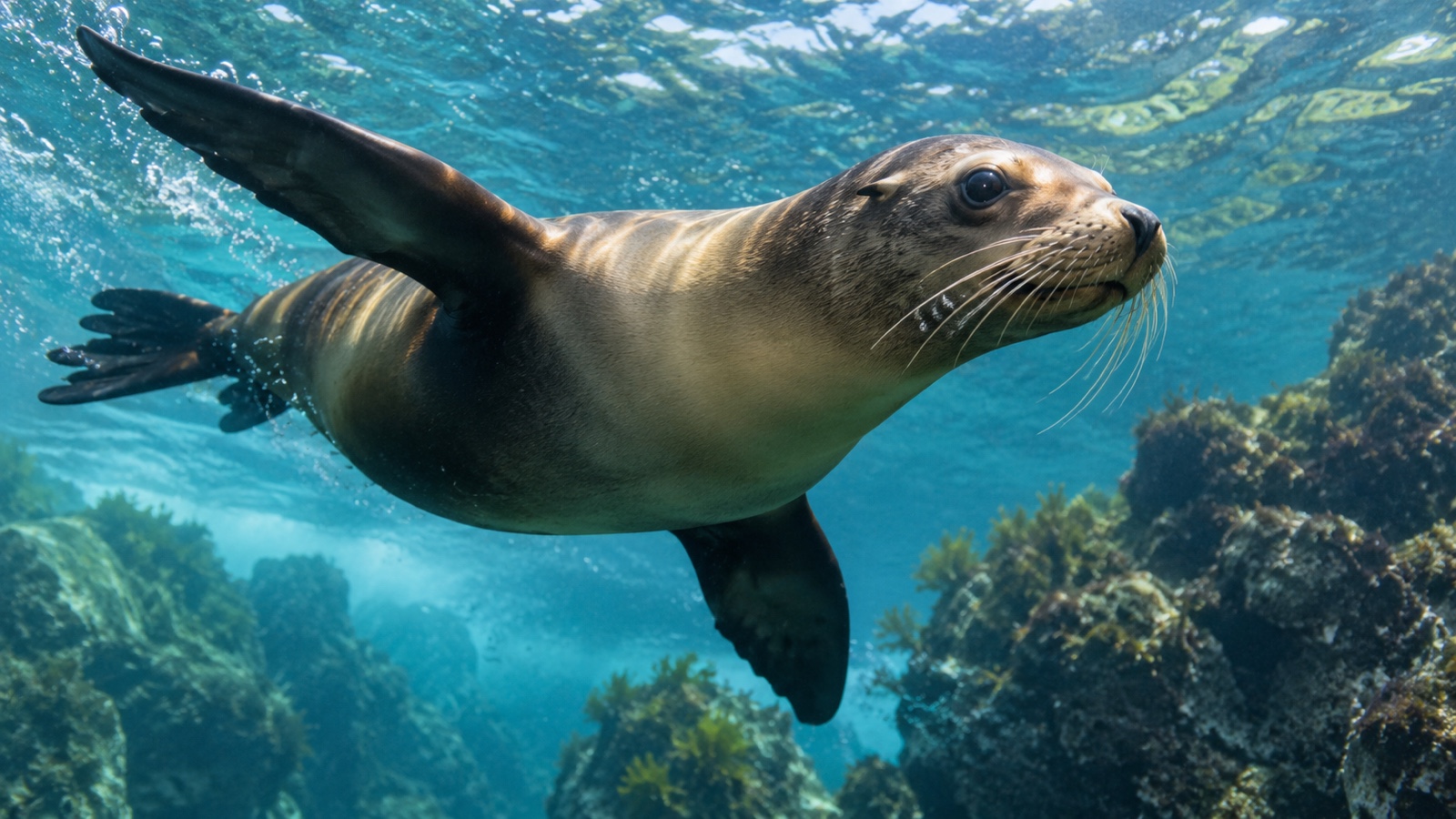
Whiskers can detect tiny movements in dark water
Sea-lion whiskers are not decorative. Each vibrissa is surrounded by sensitive nerves, allowing the animal to detect water movement and follow hydrodynamic trails left by fish even after the prey has passed.
- Sea-lion whiskers are called vibrissae.
- They are deeply rooted sensory structures.
- Each whisker can move actively.
- Sea lions sweep whiskers forward while investigating objects.
- Vibrissae detect water displacement.
- A swimming fish leaves swirling vortices in its wake.
- Sea lions can detect and follow those wakes.
- This ability helps when water is dark or cloudy.
- Sea lions also have good underwater vision.
- Large pupils gather light at depth.
- The eyes adjust between air and water.
- Sea lions are somewhat nearsighted in air compared with underwater performance.
- They compensate with hearing, smell, and whisker touch.
- Whiskers help judge the shape and texture of nearby objects.
- Trained sea lions can discriminate shapes through touch.
- Researchers study sea-lion sensory systems to understand underwater tracking.
- Military programs have trained sea lions for object detection and retrieval.
- Those programs use natural swimming, vision, and hearing abilities.
- Wild sea lions use the same sensory toolkit to make a living without anyone handing them a fish afterward.
- A mustache capable of tracking invisible turbulence is substantially more useful than anything my own facial hair has ever accomplished.
Diving requires oxygen storage and careful pressure management
- Sea lions are air-breathing mammals.
- They store oxygen in blood and muscle before dives.
- Blood contains high concentrations of hemoglobin.
- Muscle contains oxygen-binding myoglobin.
- Heart rate can slow during a dive.
- Blood flow shifts toward essential organs.
- Dive depth varies among species and individuals.
- California sea lions often make relatively short foraging dives.
- Some dives exceed several hundred feet.
- Steller sea lions also dive hundreds of feet while hunting.
- New Zealand sea lions can make substantial deep dives.
- Diving females balance food acquisition with returning to nurse pups.
- Sea lions can tolerate carbon-dioxide levels that would feel intensely uncomfortable to humans.
- Their lungs and chest structures cope with pressure changes.
- They avoid decompression problems through evolved diving patterns and physiology.
- Unusual rapid ascent or human disturbance can still alter normal behavior.
- Blubber insulates the body in cold water.
- Blood vessels in flippers help conserve or release heat.
- Sea lions can overheat while packed onto sunny beaches.
- Every dive is a timed grocery run where the shopper cannot breathe until leaving the store.
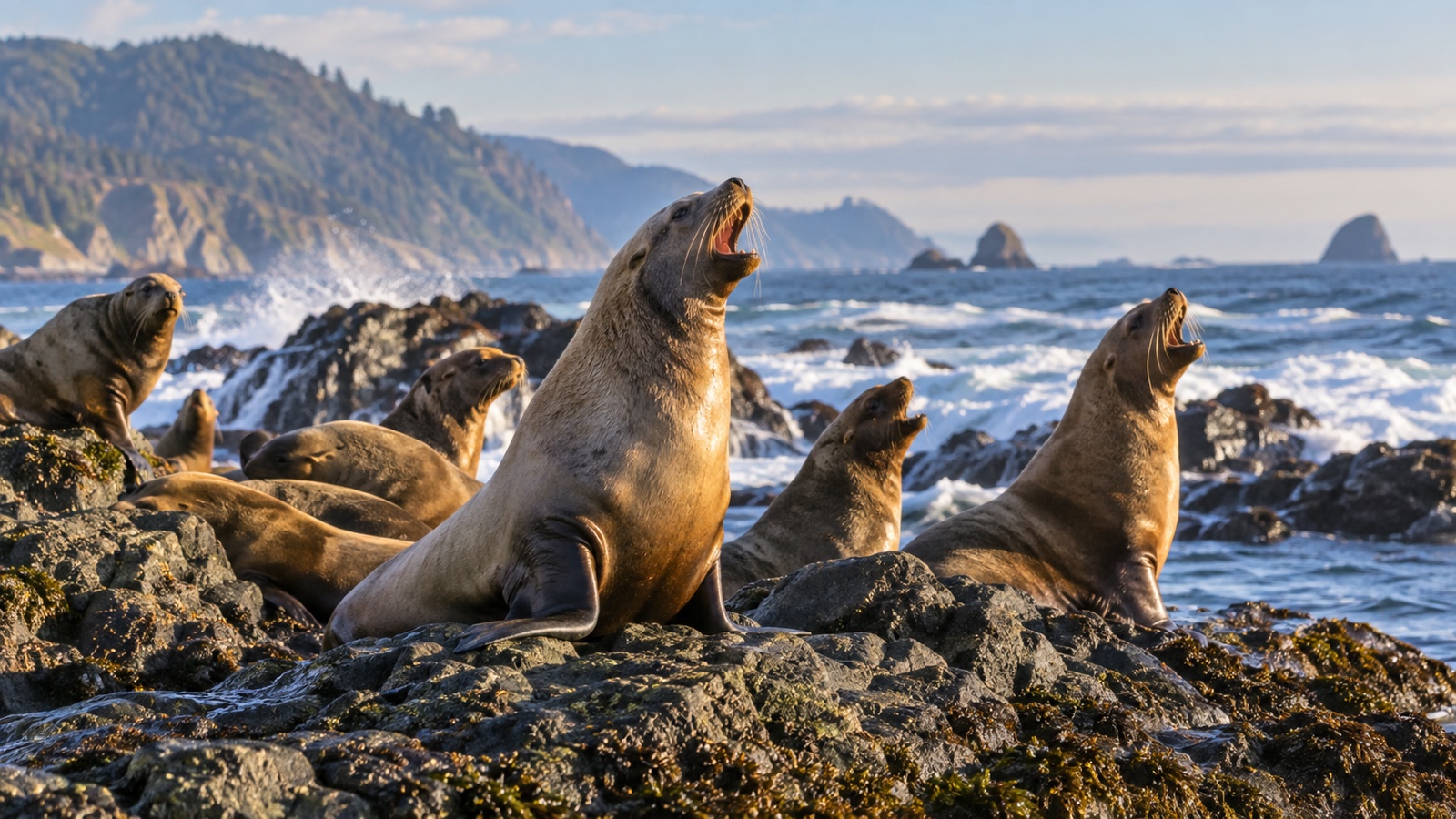
Breeding colonies run on territories, fasting and loud arguments
During breeding season, large males compete for shoreline territories while females arrive to give birth and nurse. The result can look chaotic, but animals are tracking space, status, pups, mates, rivals, hunger, and escape routes through a remarkably crowded social system.
- Sea-lion breeding sites are commonly called rookeries.
- Adult males establish territories before or during female arrival.
- Males display with posture and vocalizations.
- Physical fights occur when rivals refuse to retreat.
- Large neck and shoulder muscles protect adult males during combat.
- Old bulls often carry scars.
- Dominant males may fast while defending breeding territory.
- Long territorial duty causes substantial weight loss.
- Females usually give birth to one pup.
- Twin births are uncommon.
- Most females give birth shortly after arriving at the colony.
- Mothers nurse rich milk.
- Unlike some true seals, sea-lion mothers usually alternate nursing with feeding trips at sea.
- Pups gather in groups while mothers forage.
- Mothers return and call for their own pups.
- Scent helps confirm the reunion.
- Females can become pregnant again during the breeding season.
- Delayed implantation helps coordinate the next birth with the following season.
- Young pups learn to swim in shallow protected water before venturing farther.
- Sea-lion parenting includes leaving your baby in a screaming beach daycare, going fishing, then locating exactly the right screaming baby hours later.
Intelligence, predators and 25 final sea-lion facts
- Sea lions learn quickly in controlled training settings.
- They can distinguish objects, patterns, and cues.
- California sea lions have demonstrated understanding of ordered relationships in cognition experiments.
- Some trained individuals can match symbols with objects or actions.
- Positive reinforcement is widely used in modern zoo and aquarium husbandry.
- Training can let animals voluntarily participate in veterinary exams.
- Wild sea lions learn where fishing boats, docks, and food opportunities occur.
- That intelligence can create conflict around fisheries.
- Sea lions sometimes steal fish from fishing lines or nets.
- Entanglement in hooks, lines, straps, and nets can cause severe injuries.
- People should never intentionally feed wild sea lions.
- Feeding encourages dangerous approaches to boats and humans.
- California sea lions commonly haul out on docks and buoys.
- Pier 39 in San Francisco became famous for a large sea-lion gathering beginning around 1990.
- Numbers there vary seasonally with food and breeding movements.
- Killer whales prey on sea lions.
- Large sharks also prey on sea lions.
- White sharks hunt California sea lions in some coastal regions.
- Harmful algal blooms can poison sea lions through contaminated prey.
- Domoic acid exposure can cause seizures, disorientation, heart problems, and death.
- Warm-ocean events can shift prey away from traditional feeding areas.
- Some sea-lion populations are thriving while others remain threatened or endangered.
- Australian sea lions are endangered.
- New Zealand sea lions are threatened and still recovering from historic exploitation.
- After 145 facts, sea lions look less like barking dock decorations and more like intelligent, whisker-guided underwater athletes whose flexible flippers let them dominate the exact shoreline zone where boats and humans also want to be.
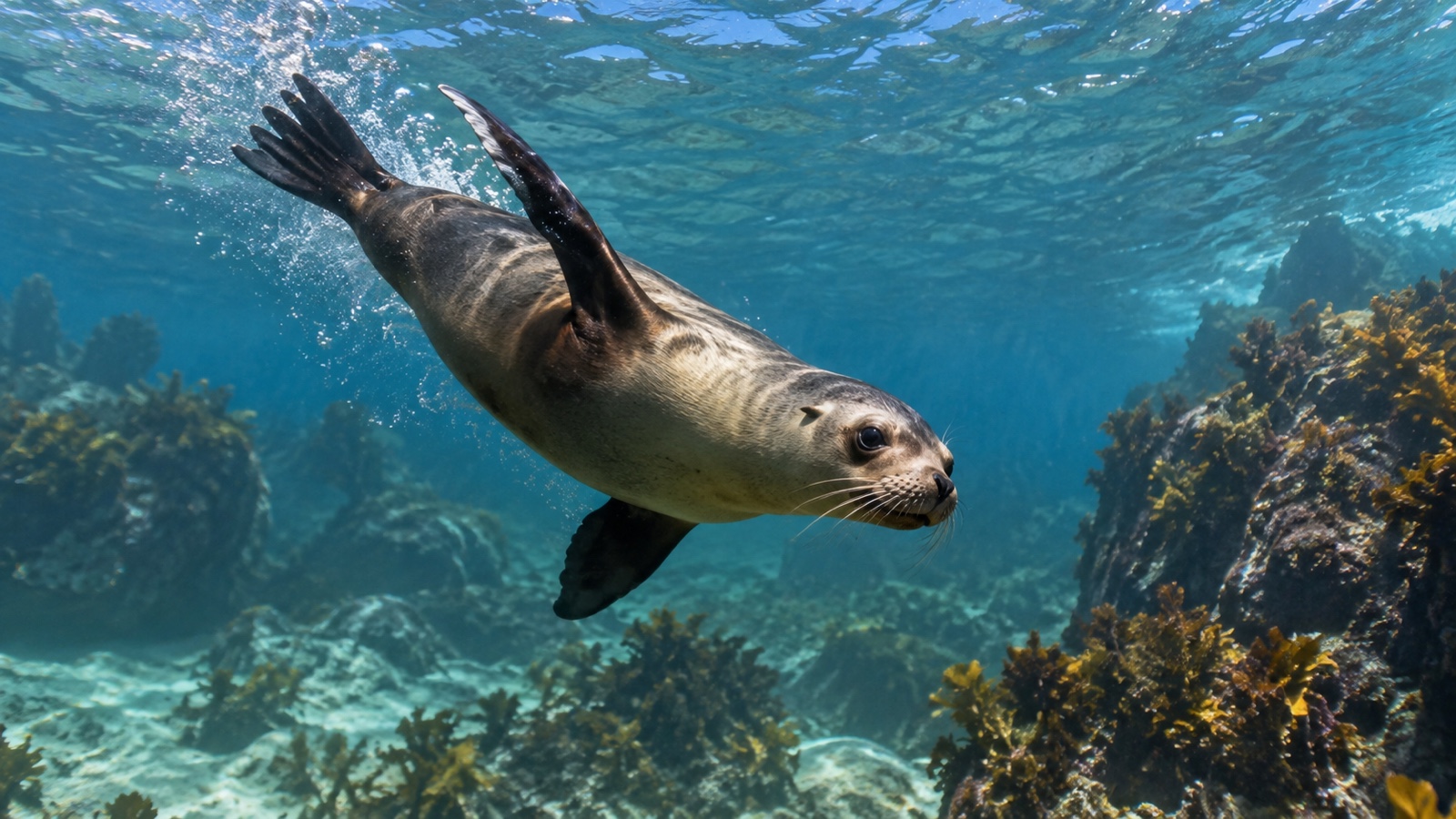
Quick FAQ
Q: What is the difference between a sea lion and a seal?
A: Sea lions have visible ear flaps, long front flippers, and hind flippers that rotate beneath the body. True seals lack external ear flaps and move more awkwardly on land.
Q: Why do sea lions bark?
A: Barking and other calls communicate identity, territory, alarm, breeding status, and mother-pup contact.
Q: Can sea lions walk?
A: Yes. They rotate their hind flippers forward and support themselves on all four flippers, letting them move surprisingly well on land.
Q: Are sea lions smart?
A: Yes. They learn complex cues, solve discrimination tasks, remember trained behaviors, and adapt quickly to changing food opportunities.
Q: Should people feed wild sea lions?
A: No. Feeding can make sea lions approach boats and people aggressively, increasing risk of bites, entanglement, and other conflicts.

Ellie is the owner and sole author of Fun Facts, combining her mechanical engineering background with years of research-driven writing to deliver facts you can trust. Every article is thoroughly fact-checked and routinely updated as new science and sources emerge to keep information accurate and current. Her mission is to make learning delightful while upholding high standards of reliability and transparency.