
Rabbits are much more than twitchy noses and fluffy tails. They have constantly growing teeth, nearly panoramic vision, powerful hind legs, unusual digestion, complicated social lives, and baby-making biology that helped make them famous symbols of spring. These 145 rabbit facts explore anatomy, behavior, wild species, domestic breeds, babies, communication, food, predators, pet care, and the important differences between rabbits and hares.
Rabbit basics
- Rabbits are mammals in the order Lagomorpha.
- Lagomorphs include rabbits, hares, and pikas.
- Rabbits are not rodents.
- Rodents belong to a different mammal order called Rodentia.
- One key difference is that lagomorphs have two pairs of upper incisors.
- The smaller second pair sits directly behind the large front incisors.
- Rabbits live naturally on every continent except Antarctica and Australia.
- Humans introduced European rabbits to Australia.
- Wild rabbit species occupy grasslands, deserts, wetlands, forests, and shrublands.
- The European rabbit is the ancestor of all domestic rabbit breeds.
- Its scientific name is Oryctolagus cuniculus.
- Domestic rabbits vary enormously in size, coat, ear shape, and color.
- Some breeds weigh less than 1 kilogram.
- Giant breeds can weigh more than 6 kilograms.
- Rabbits are herbivores adapted to eating fibrous plant material.
Rabbits and hares are not the same
- Rabbits and hares are close relatives but belong to different genera.
- Hares generally have longer legs and longer ears than rabbits.
- Hares are often faster runners across open ground.
- Most rabbits rely more heavily on hiding places and burrows.
- Hare babies are born furred with open eyes.
- Rabbit babies are usually born naked or lightly furred with closed eyes.
- This difference reflects distinct developmental strategies.
- Newborn hares are called leverets.
- Newborn rabbits are commonly called kits or kittens.
- Most hares do not live in elaborate communal underground warrens.
- Many rabbits do dig burrows or use underground shelters.
- The jackrabbit is actually a hare.
- Snowshoe hares are hares despite sometimes being casually called rabbits.
- Cottontails are rabbits but usually do not dig large warrens like European rabbits.
- Calling every long-eared lagomorph a rabbit hides surprisingly diverse adaptations.
Those famous rabbit ears
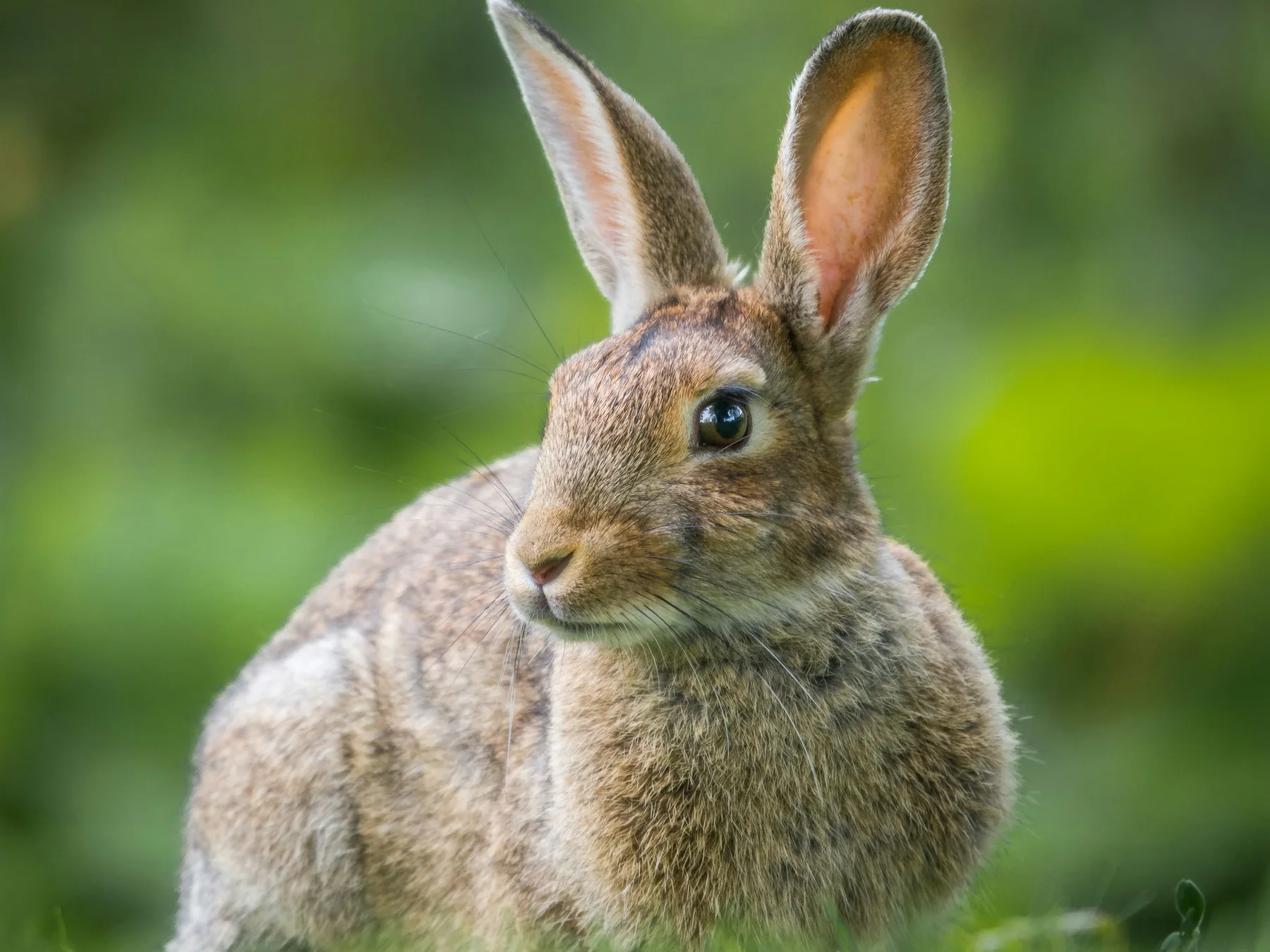
- Rabbit ears are highly mobile.
- Each ear can rotate to help locate sounds.
- Large ears give rabbits excellent hearing.
- Wild rabbits use hearing to detect predators before they get close.
- Ear position also communicates mood and attention.
- Forward ears often indicate alert interest.
- Ears flattened tightly backward can accompany fear, anger, or defensive behavior.
- Ear size varies greatly between rabbit species and breeds.
- Desert lagomorphs often have especially large ears.
- Large ears can help release body heat.
- Blood vessels close to the ear surface make heat exchange possible.
- Cold-climate species generally have smaller ears relative to body size.
- This pattern follows a biological tendency known as Allen’s rule.
- Lop-eared domestic rabbits have ears that hang down rather than standing upright.
- Selective breeding, not a separate wild species, produced many dramatic lop-ear forms.
Rabbit eyes and senses
- Rabbit eyes sit high and toward the sides of the head.
- This placement creates a very wide field of view.
- A rabbit can see most of the area around its body without turning its head.
- That panoramic vision is useful for spotting predators.
- The tradeoff is less binocular overlap than forward-eyed predators have.
- Rabbits still have enough overlapping vision to judge nearby objects.
- They have a small blind spot directly in front of the nose.
- Whiskers help compensate when objects are extremely close.
- Rabbits also have a blind area directly behind the head.
- They are especially sensitive to motion.
- Rabbit vision performs well in low-light conditions.
- Wild rabbits are often most active around dawn and dusk.
- This activity pattern is called crepuscular.
- Rabbits have a strong sense of smell.
- The famous constantly twitching nose helps move air across scent receptors.

Rabbit teeth never stop growing
- Rabbit teeth grow continuously throughout life.
- The incisors are the most visible continuously growing teeth.
- The cheek teeth also continue growing.
- Fibrous food helps wear teeth as rabbits chew.
- Wild diets require huge amounts of repetitive grinding.
- Rabbits move their jaws side to side while processing plant fibers.
- Healthy tooth wear depends on proper alignment.
- Misaligned teeth can become dangerously overgrown.
- Dental disease is a major health problem in domestic rabbits.
- Chewing hard objects alone does not replace a high-fiber diet.
- Grass and hay create long periods of grinding movement.
- A rabbit’s front incisors are adapted to clip vegetation.
- Cheek teeth grind food into smaller particles.
- Rabbit enamel is stronger on the front surface of an incisor than the back.
- Uneven wear helps maintain a chisel-like cutting edge.
Rabbit digestion is wonderfully weird
- Rabbits are hindgut fermenters.
- Microbes in the large cecum break down plant material humans cannot digest well.
- The cecum is a large pouch between the small and large intestines.
- Beneficial microbes produce nutrients while fermenting fiber.
- Rabbits produce two distinctly different kinds of droppings.
- Ordinary fecal pellets are the dry round pellets owners commonly see.
- Cecotropes are soft nutrient-rich packets produced by the cecum.
- Rabbits normally eat cecotropes directly from the anus.
- This behavior is called cecotrophy.
- Eating cecotropes lets rabbits absorb vitamins and microbial nutrients on a second pass.
- A healthy owner may rarely notice cecotropes because the rabbit consumes them quickly.
- Rabbits cannot vomit in the ordinary way many mammals can.
- Their gastrointestinal system depends on continual movement of appropriate fibrous food.
- Loss of appetite in a rabbit can become medically serious very quickly.
- Pet rabbits with sudden appetite loss need prompt veterinary attention.
Running, jumping, and binkies
- Rabbit hind legs are much more powerful than their front legs.
- Large thigh muscles generate explosive acceleration.
- Wild rabbits use rapid bursts of speed to escape predators.
- Zigzag running can make pursuit more difficult.
- A rabbit’s long hind feet help provide leverage during jumping.
- Domestic rabbits can jump surprisingly high when motivated.
- They can also leap several times their own body length horizontally.
- A joyful rabbit may leap and twist in midair.
- Rabbit owners call this exuberant movement a binky.
- Fast bursts of running around a room are often called zoomies.
- Rabbits can stand upright on their hind legs to survey surroundings.
- This posture gives them a better view over vegetation.
- The skeleton is relatively light compared with the strength of the hind legs.
- Incorrect handling can lead to serious spinal injury if a frightened rabbit kicks violently.
- Supporting the hindquarters is important when handling a domestic rabbit safely.
Rabbit social life and communication
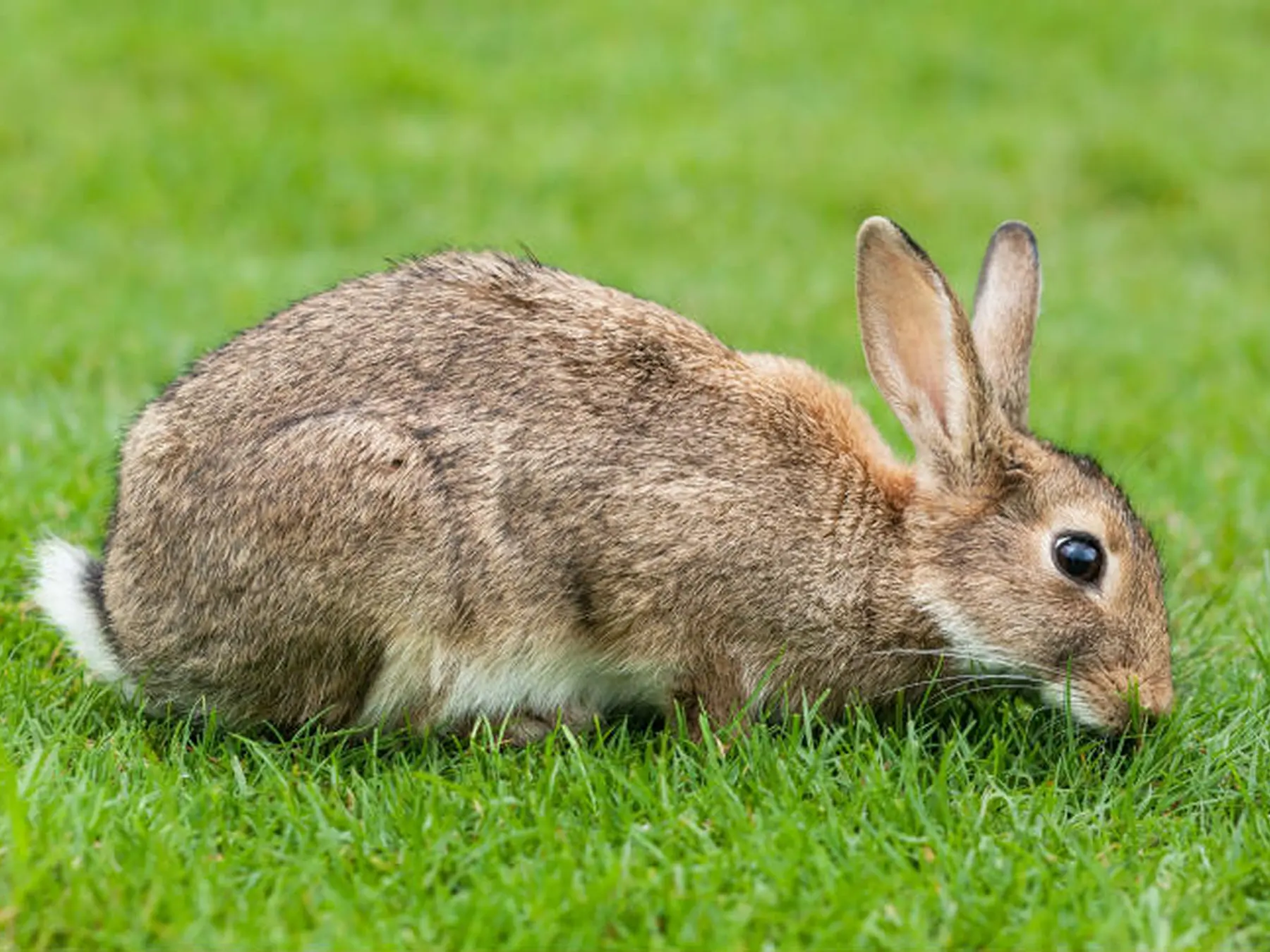
- European rabbits are highly social animals.
- Wild groups can live in complex burrow systems called warrens.
- Warrens contain tunnels, chambers, entrances, and escape routes.
- Social hierarchies can form within rabbit groups.
- Rabbits groom one another to reinforce social bonds.
- They rub the underside of the chin on objects to leave scent.
- This behavior is often called chinning.
- Rabbits have scent glands beneath the chin.
- They also communicate through urine and droppings.
- A rabbit may thump a hind foot loudly when alarmed.
- Thumping can warn nearby rabbits of danger.
- Tooth purring is a quiet gentle grinding sound associated with relaxation.
- Loud tooth grinding can instead indicate pain.
- Rabbits can grunt, honk, squeal, growl, and make other vocal sounds.
- Body posture, ears, eyes, movement, scent, and sound all contribute to rabbit communication.
Rabbit babies and reproduction
- Female rabbits are called does.
- Male rabbits are called bucks.
- Young rabbits are called kits or kittens.
- Rabbit pregnancy usually lasts about one month.
- Exact gestation length varies slightly among individuals and breeds.
- European rabbits are induced ovulators.
- Ovulation is triggered by mating rather than a fixed monthly cycle.
- A doe can become pregnant again soon after giving birth.
- Fast reproduction helps rabbit populations recover from heavy predation.
- Wild rabbit litter size varies with season, food, age, and condition.
- A doe lines her nest with grass and fur pulled from her body.
- Rabbit mothers do not sit continuously on their nests like many birds.
- They usually nurse kits only once or a few times each day.
- Rabbit milk is energy-rich, allowing very short nursing visits.
- Brief nursing also helps avoid drawing predators toward the nest.
Ten surprising rabbit facts
- Rabbits are lagomorphs, not rodents.
- They have a hidden second pair of tiny upper incisors behind the front teeth.
- Rabbit teeth keep growing for the animal’s entire life.
- Healthy rabbits eat special soft droppings called cecotropes for extra nutrition.
- A happy domestic rabbit may literally leap and twist through the air.
- Jackrabbits are actually hares.
- Rabbit mothers may visit newborn nests only briefly each day.
- Long ears function as cooling radiators as well as sound collectors.
- Wild European rabbits can engineer entire underground neighborhoods called warrens.
- For more animal trivia, explore our Science facts collection.

Quick rabbit FAQ
Are rabbits rodents?
No. Rabbits are lagomorphs. One obvious anatomical difference is that rabbits have a small second pair of upper incisors behind the larger front pair.
What is the difference between a rabbit and a hare?
Hares are generally longer-legged and their babies are born furred with open eyes. Rabbit kits are typically born helpless, nearly naked, and with closed eyes.
Why do rabbits eat their own droppings?
They eat specialized soft cecotropes so nutrients produced by gut microbes can pass through the digestive system a second time and be absorbed.
Why do rabbits thump?
A loud hind-foot thump is usually an alarm or warning signal. It can alert other rabbits while communicating that the animal senses danger.
What is a rabbit binky?
A binky is an excited leap, twist, or kick in the air commonly seen in happy, energetic domestic rabbits.

Ellie is the owner and sole author of Fun Facts, combining her mechanical engineering background with years of research-driven writing to deliver facts you can trust. Every article is thoroughly fact-checked and routinely updated as new science and sources emerge to keep information accurate and current. Her mission is to make learning delightful while upholding high standards of reliability and transparency.