
Atoms are unimaginably small, yet every ordinary object around you is built from them. They contain nuclei, electrons, quantum states, electric forces, empty-looking space, and enough internal energy to power stars, chemistry, electronics, and nuclear technology.
Atoms are the basic units of chemical elements
- An atom is the smallest unit that retains the chemical identity of an element.
- All ordinary matter is made from atoms or combinations of atoms.
- There are 118 officially recognized chemical elements.
- Each element is defined by its number of protons.
- Hydrogen has one proton.
- Helium has two protons.
- Carbon has six protons.
- Oxygen has eight protons.
- Iron has 26 protons.
- Gold has 79 protons.
- Uranium has 92 protons.
- The proton count is called the atomic number.
- Atoms are far smaller than anything visible with an ordinary optical microscope.
- A typical atom is around one ten-billionth of a meter across.
- Atomic size varies by element and chemical environment.
- Most atomic volume comes from the electron cloud.
- The nucleus occupies a tiny fraction of the atom's diameter.
- Almost all atomic mass is concentrated in the nucleus.
- Atoms can exist alone or bond into molecules and solids.
- The world looks continuous to us only because trillions upon trillions of tiny atoms are packed together below the scale our eyes can resolve.
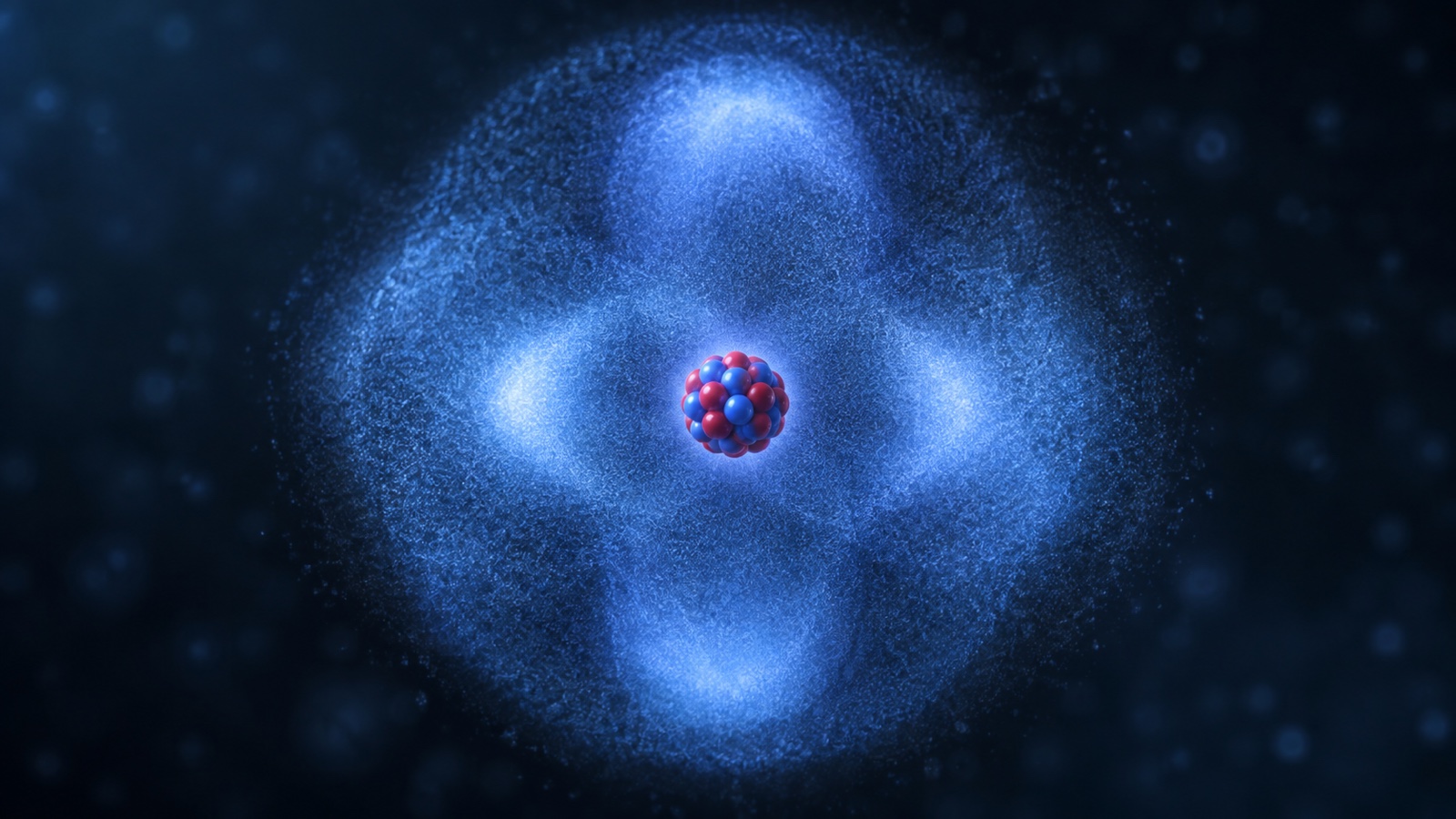
The nucleus contains protons and neutrons
- The atomic nucleus sits at the center of an atom.
- Protons carry positive electric charge.
- Neutrons have no net electric charge.
- Protons and neutrons are collectively called nucleons.
- Protons and neutrons have similar masses.
- Each is roughly 1,800 times more massive than an electron.
- The strong nuclear interaction helps bind nuclei together.
- Without the strong force, positively charged protons would repel one another apart.
- The strong interaction is extremely powerful at nuclear distances.
- It becomes much less relevant at ordinary macroscopic distances.
- Different neutron counts produce isotopes of the same element.
- Carbon-12 has six protons and six neutrons.
- Carbon-14 has six protons and eight neutrons.
- Both are still carbon because both have six protons.
- Some isotopes are stable.
- Others are radioactive.
- Radioactive nuclei spontaneously transform over time.
- That transformation is called radioactive decay.
- Different radioactive isotopes have different half-lives.
- A nucleus can be tiny enough to fit inside an atom by a factor of tens of thousands while still containing almost all of the atom's mass.
Electrons occupy quantum states, not tiny planet-like orbits
- Electrons carry negative electric charge.
- A neutral atom has the same number of electrons as protons.
- Electrons are elementary particles as far as current experiments show.
- They belong to a particle family called leptons.
- Electrons do not orbit nuclei like little planets in classical circular paths.
- Quantum mechanics describes electrons using wavefunctions.
- Electron orbitals describe probability distributions for where electrons may be detected.
- Different orbitals have different shapes and energies.
- The simplest atomic orbital is called the 1s orbital.
- s orbitals have spherical probability symmetry.
- p orbitals have directional shapes.
- d and f orbitals have more complex patterns.
- Electrons occupy quantized energy levels.
- That means only certain energy states are allowed.
- Electrons can absorb energy and move to higher states.
- They can release energy when returning to lower states.
- That released energy can appear as photons.
- Atomic spectra come from specific allowed energy transitions.
- Each element has a characteristic pattern of spectral lines.
- The classic solar-system atom icon is useful shorthand, but actual electrons behave more like quantum probability clouds than microscopic planets.
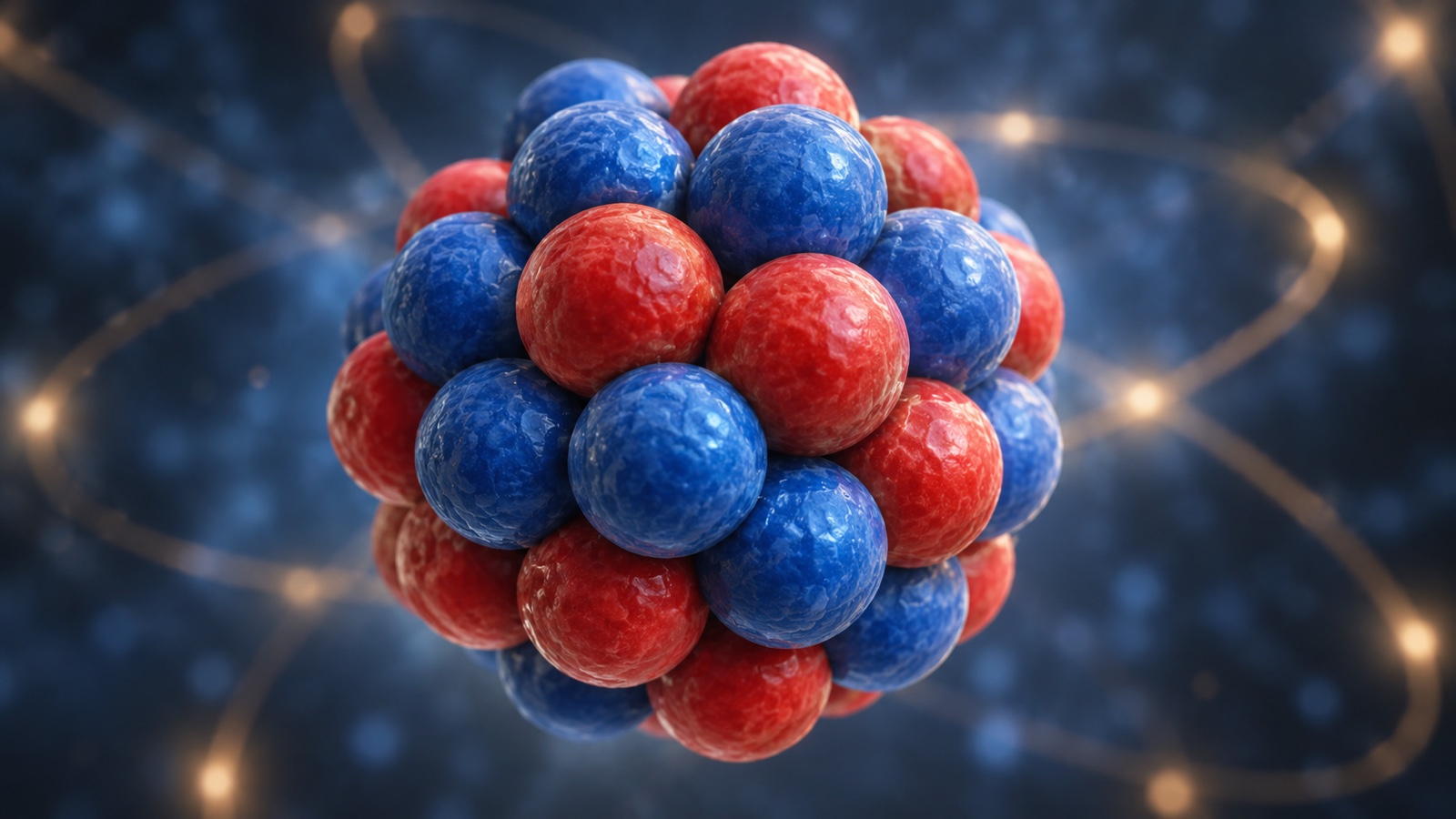
Electron arrangement controls chemistry
- Chemical behavior depends strongly on electron arrangement.
- Outer electrons are called valence electrons.
- Valence electrons participate most directly in chemical bonding.
- Atoms can share electrons in covalent bonds.
- Atoms can transfer electrons to form ions.
- Oppositely charged ions attract in ionic compounds.
- Metallic bonding involves electrons shared across many atoms.
- Noble gases have especially stable outer-electron configurations.
- Helium's first electron shell is full with two electrons.
- Neon has a filled outer shell of eight electrons.
- Atoms often react in ways that move toward lower-energy electron arrangements.
- The octet rule is a useful chemical pattern but not a universal law.
- Transition metals frequently violate simple octet expectations.
- Electron configuration explains periodic-table trends.
- Elements in the same column often have similar valence-electron patterns.
- This is why they often show related chemical behavior.
- Sodium readily loses one outer electron.
- Chlorine readily gains one electron in many compounds.
- Together they can form sodium chloride.
- Chemistry is largely what happens when atoms rearrange electron relationships without changing which nuclei define the elements involved.
Atoms can become ions by gaining or losing electrons
- An ion is an atom or molecule with net electric charge.
- Losing electrons produces a positive ion.
- A positive ion is called a cation.
- Gaining electrons produces a negative ion.
- A negative ion is called an anion.
- Ionization requires energy.
- The first ionization energy measures energy needed to remove one electron from a neutral atom.
- Ionization energies vary across the periodic table.
- Alkali metals have relatively low first ionization energies.
- Noble gases have relatively high ionization energies.
- Plasma contains many free charged particles.
- Stars are largely made of plasma rather than neutral atomic gas.
- Lightning creates hot ionized channels through air.
- Fluorescent lights rely on ionized gas and excited atoms.
- Mass spectrometers ionize atoms or molecules so electric and magnetic fields can separate them.
- Ion beams are used in semiconductor manufacturing.
- Medical treatments can also use charged-particle beams.
- Everyday table salt contains sodium and chloride ions locked into a crystal lattice.
- Your nerves rely on movement of ions such as sodium, potassium, calcium, and chloride.
- Ions are what happen when an atom's proton count stays the same but its electron bookkeeping changes.
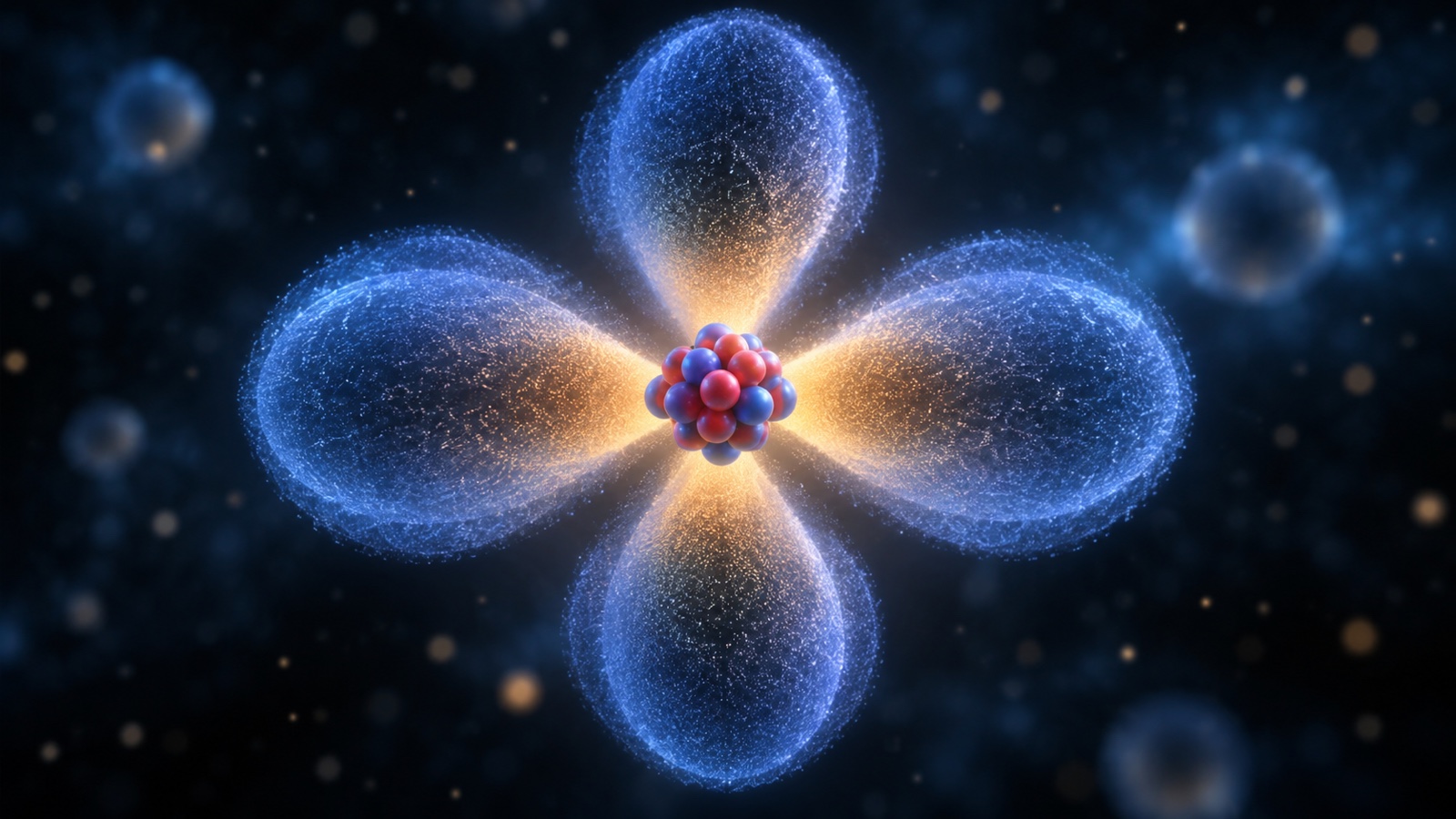
Nuclear reactions can change one element into another
- Chemical reactions rearrange electrons without changing atomic nuclei.
- Nuclear reactions change nuclei themselves.
- Changing the number of protons changes the element.
- Nuclear fission splits a heavy nucleus into smaller nuclei.
- Uranium-235 can undergo fission after absorbing a neutron.
- Fission releases energy.
- It also releases additional neutrons.
- Those neutrons can trigger more fissions in a chain reaction.
- Nuclear reactors control fission chain reactions.
- Nuclear weapons allow an extremely rapid uncontrolled chain reaction.
- Nuclear fusion combines light nuclei into heavier nuclei.
- The Sun produces energy primarily through fusion.
- Hydrogen nuclei ultimately combine into helium in the Sun's core.
- Fusion converts a small amount of mass into energy.
- Einstein's E equals mc squared relates mass and energy.
- Nuclear binding energy explains why nucleus masses differ from the sum of free-particle masses.
- Fusion powers ordinary stars.
- Heavy elements are built through stellar and explosive nuclear processes.
- Many atoms in your body were forged in earlier generations of stars.
- Ordinary chemistry cannot turn carbon into oxygen, but nuclear reactions can literally change the identity of elements by changing their proton counts.
Quantum physics makes atoms stable and strange
- Classical physics alone cannot explain why electrons do not spiral into nuclei.
- Quantum mechanics explains stable atomic energy states.
- The Pauli exclusion principle prevents identical fermions from occupying the same quantum state.
- Electrons are fermions.
- Electron spin has two allowed projections in a given measurement direction.
- Spin is an intrinsic quantum property rather than literal spinning of a tiny ball.
- The uncertainty principle limits simultaneous precision of certain pairs of properties.
- Position and momentum are one famous pair.
- Quantum tunneling allows particles to cross barriers classically considered forbidden.
- Tunneling contributes to radioactive decay.
- It also helps nuclear fusion occur in stars.
- Scanning tunneling microscopes use quantum tunneling to image surfaces at atomic scales.
- Individual atoms can be manipulated with specialized instruments.
- Researchers have arranged atoms into patterns deliberately.
- Atomic clocks use precise transitions between atomic energy states.
- Cesium atomic transitions define the SI second.
- Atomic clocks are among humanity's most precise measurement devices.
- Quantum behavior becomes most obvious at atomic and subatomic scales.
- Atoms are not tiny classical machines hiding below our vision. They obey a probability-based quantum rulebook that has no perfect everyday analogy.
- The weirdness of quantum mechanics is not optional decoration. It is the reason atoms, chemistry, electronics, and stable matter work at all.
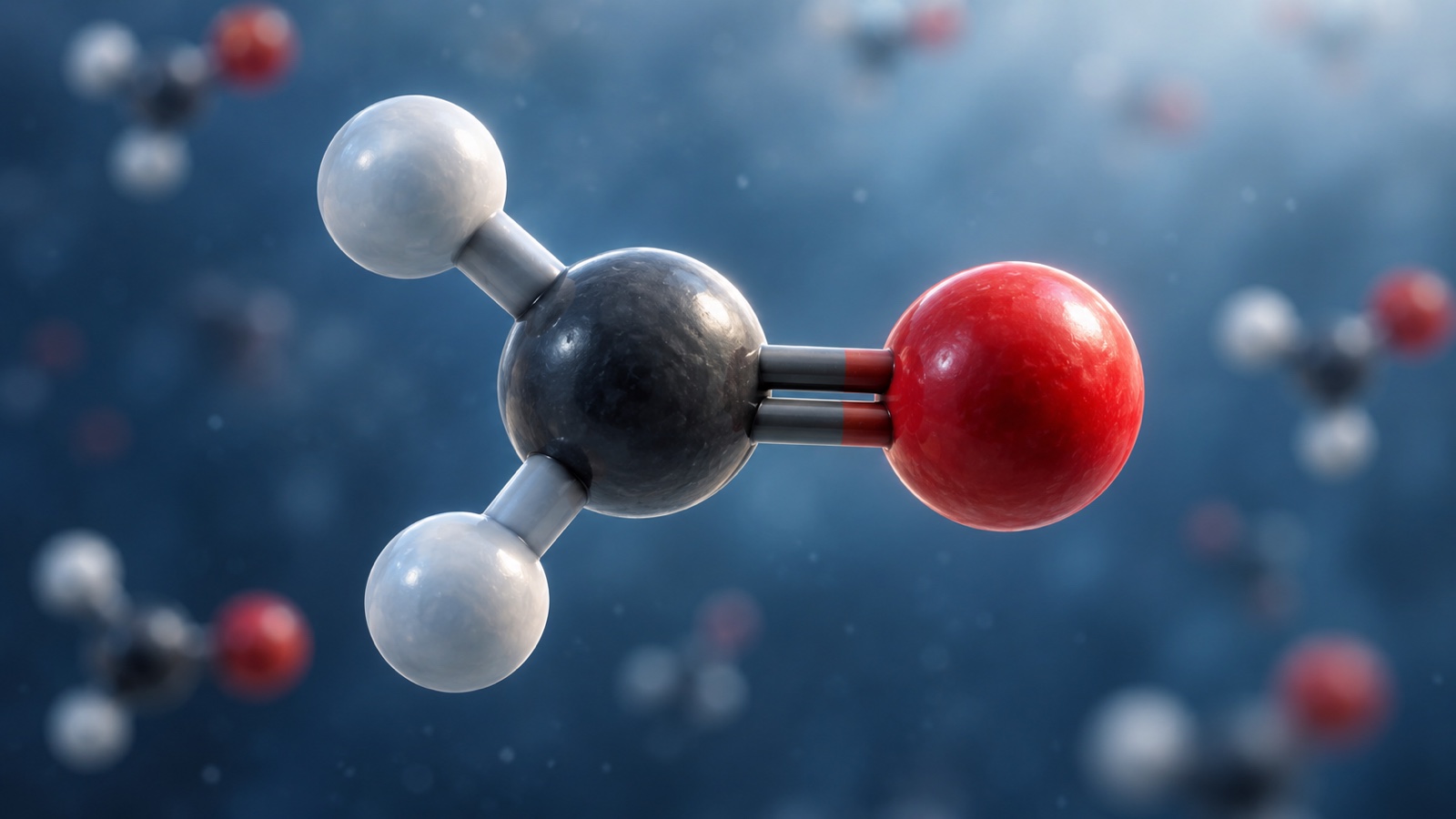
Everyday matter and 5 final atom facts
- Most atoms in your body are replaced or exchanged over time through breathing, food, water, metabolism, and waste rather than remaining permanently assigned to you.
- Atoms are mostly empty-looking space in a classical geometric sense, but quantum fields and electron probability make that “empty” space physically active rather than truly nothing.
- The atoms in a solid never need to touch like rigid billiard balls for the object to resist compression because electromagnetic and quantum effects create strong repulsion.
- Elements heavier than hydrogen were created through cosmic nuclear processes before becoming part of planets, oceans, rocks, and living organisms.
- After 145 facts, atoms look less like tiny colored spheres and more like quantum systems whose nuclei, electrons, fields, forces, and energy levels build every familiar form of ordinary matter.
Quick FAQ
Q: Are atoms mostly empty space?
A: Their nuclei occupy a tiny fraction of their volume, but the surrounding quantum electron cloud is not literally empty nothingness.
Q: Do electrons orbit like planets?
A: No. Quantum mechanics describes electrons with orbitals and probability distributions rather than classical paths.
Q: What makes an element an element?
A: Its number of protons.
Q: What is an isotope?
A: Atoms of the same element with different numbers of neutrons.
Q: Can one element become another?
A: Yes, through nuclear reactions that change the number of protons in the nucleus.

Ellie is the owner and sole author of Fun Facts, combining her mechanical engineering background with years of research-driven writing to deliver facts you can trust. Every article is thoroughly fact-checked and routinely updated as new science and sources emerge to keep information accurate and current. Her mission is to make learning delightful while upholding high standards of reliability and transparency.