
Pancakes may be the closest thing breakfast has to a universal language. Humans have cooked flat cakes from grains and starches for thousands of years, and nearly every culture seems to have discovered that batter plus a hot surface is a very good idea.
Pancakes are one of humanity's oldest cooked foods
- Pancakes are flat cakes cooked from a batter or loose dough.
- They can be sweet or savory.
- They can be thick or paper-thin.
- Ancient people made pancake-like foods long before modern kitchens.
- Archaeological evidence suggests ground seeds and plants were cooked into flat cakes tens of thousands of years ago.
- Ancient Greeks ate griddle cakes made from wheat flour and water.
- Some Greek versions were served with honey.
- Romans also ate flat cakes.
- The English word pancake dates to the medieval period.
- It literally combines pan and cake.
- Pancakes became practical because they cook quickly on a hot flat surface.
- They require less fuel than a large loaf of bread.
- They can use many types of flour.
- Wheat is common but not required.
- Buckwheat, corn, rice, chickpea, millet, and oat pancakes all exist.
- Pancake traditions developed independently in many regions.
- Some are fermented.
- Some are unleavened.
- Some use eggs while others do not.
- The basic idea is ancient because “make grain wet and put it on something hot” is an extremely durable piece of human technology.
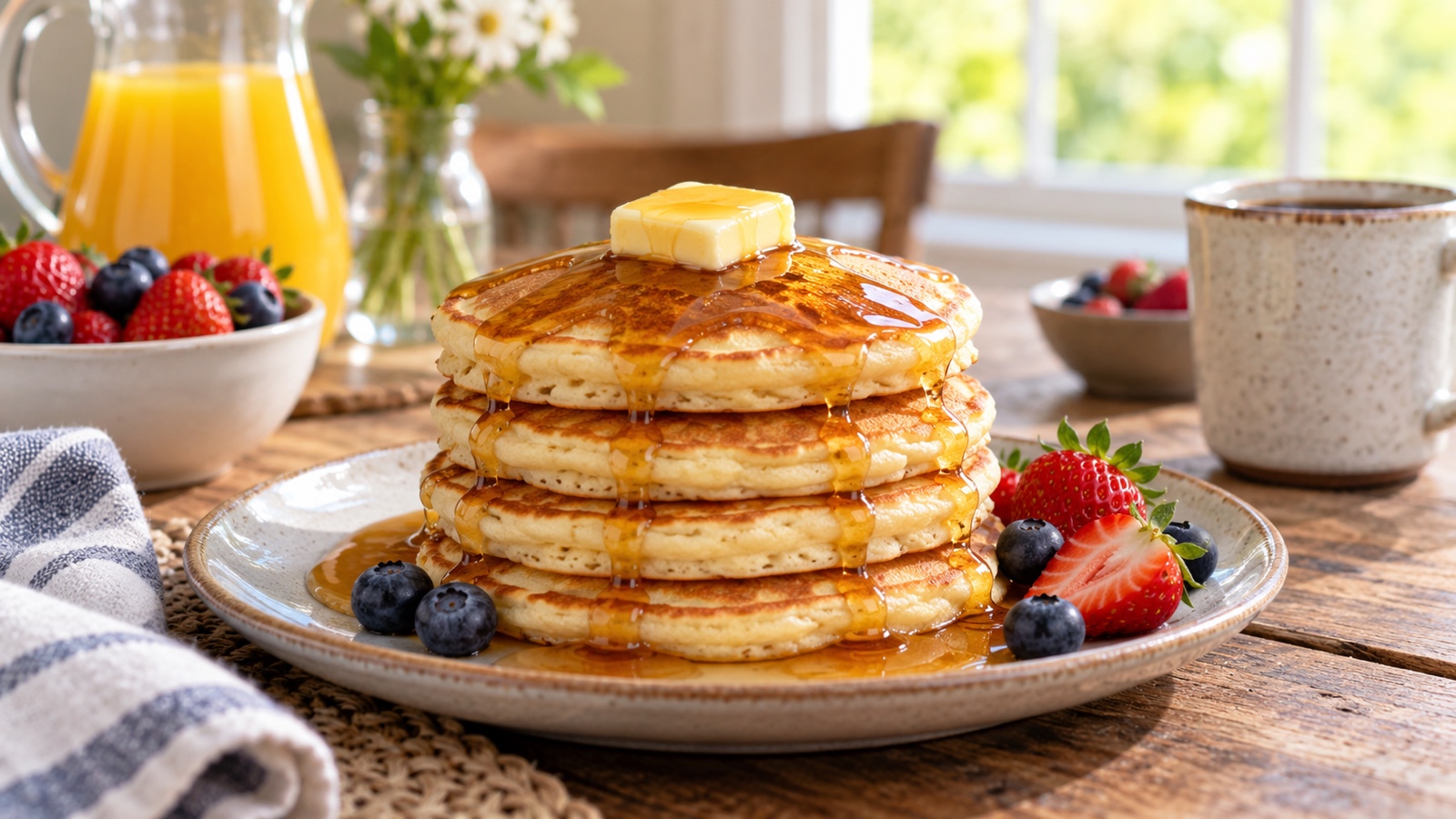
American pancakes rely on leavening for fluff
- Typical American pancakes are thicker than French crepes.
- Baking powder is a common leavening agent.
- Baking soda can also provide lift when acid is present.
- Buttermilk supplies acid for baking soda.
- Carbon dioxide bubbles expand in the batter.
- Heat sets the structure around those bubbles.
- Overmixing can make pancakes tougher.
- Mixing develops gluten in wheat flour.
- A few batter lumps are usually fine.
- Resting batter can hydrate flour more evenly.
- Resting also lets some gluten relax.
- Eggs contribute structure and richness.
- Milk adds water, proteins, and sugars.
- Melted butter or oil adds fat.
- Fat tenderizes the crumb.
- Sugar helps browning.
- Salt strengthens flavor.
- Vanilla is common but optional.
- A hot griddle sets the outer surface quickly.
- Fluffy pancakes are basically edible foam stabilized by flour, eggs, and heat.
Bubbles tell you when the first side is nearly done
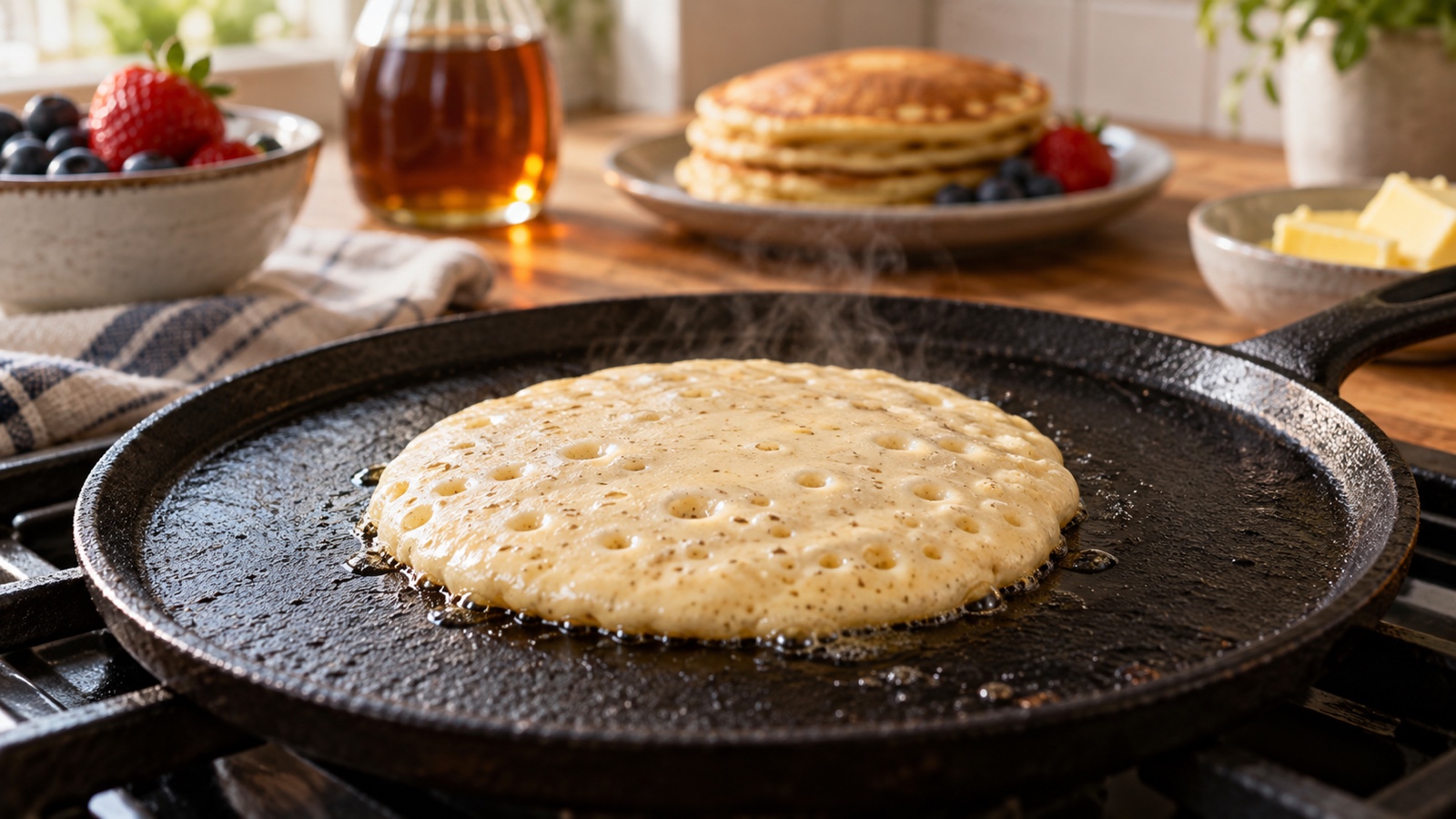
- Pancake batter releases gas bubbles as it heats.
- Bubbles rise toward the surface.
- When bubbles pop and leave holes, the structure is starting to set.
- Dry-looking edges are another flipping cue.
- Flipping too early can tear the pancake.
- Flipping too late can overbrown the first side.
- Most pancakes need only one flip.
- Repeated flipping can reduce even browning.
- Griddle temperature matters.
- Too cool produces pale, dry pancakes.
- Too hot burns the outside before the center cooks.
- A lightly greased surface prevents sticking.
- Too much grease can fry the edges.
- Cast iron retains heat well.
- Electric griddles provide consistent temperature.
- Nonstick pans require less added fat.
- Similar batter portions create even cooking times.
- A ladle or measuring cup helps control size.
- Small pancakes are easier to flip.
- The first pancake often looks weird because the pan, grease, and temperature are still negotiating terms.
The world has hundreds of pancake styles
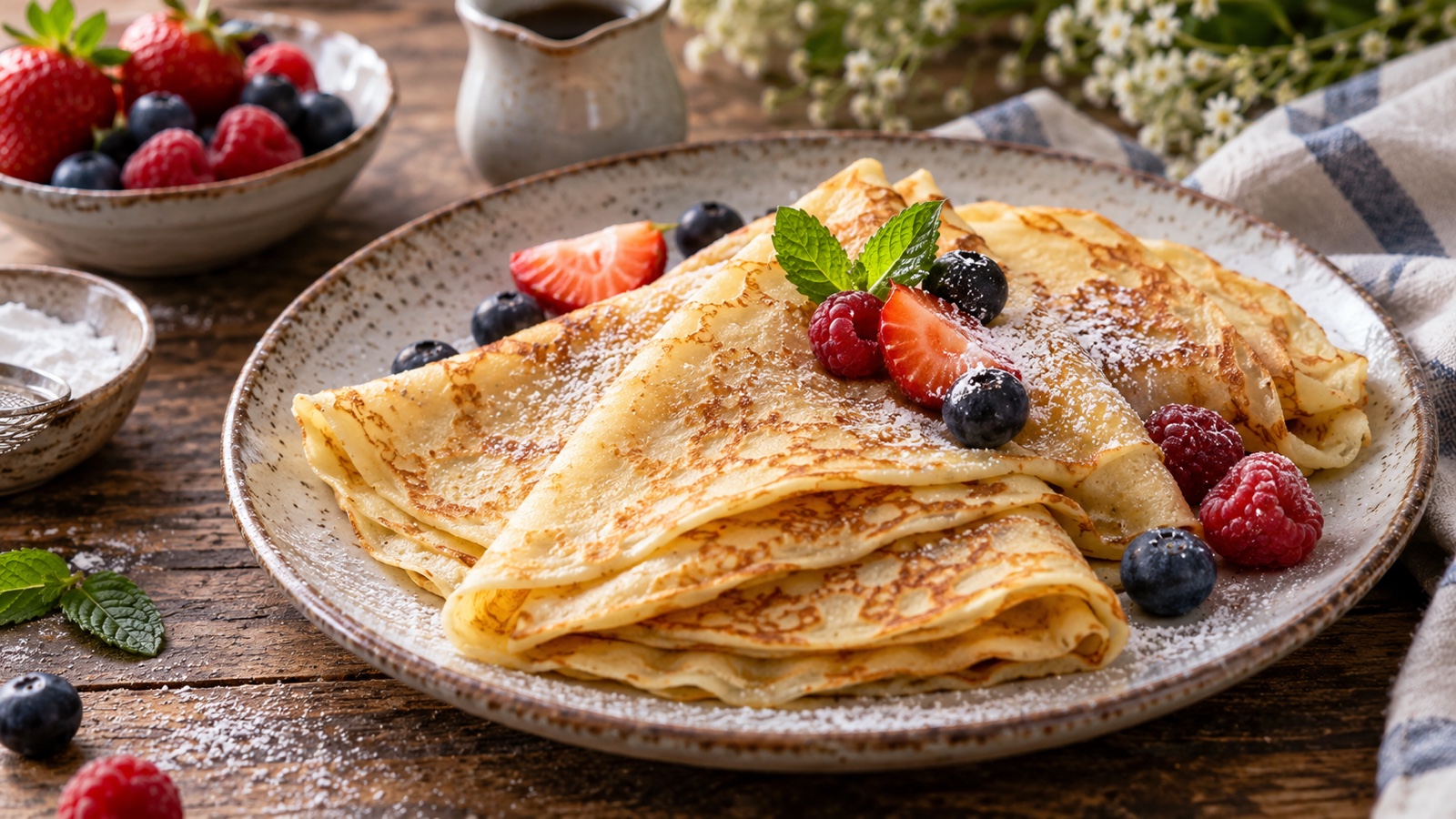
- French crepes are thin and flexible.
- Buckwheat galettes are a savory French style.
- Russian blini are traditionally made with buckwheat or wheat.
- Swedish pancakes are thin and tender.
- Dutch babies puff dramatically in the oven.
- German pancakes are another name for similar oven pancakes.
- Ethiopian injera is a fermented teff flatbread with a pancake-like form.
- South Indian dosa is a fermented rice-and-lentil crepe.
- Uttapam uses a thicker related batter.
- Chinese jianbing is a savory breakfast crepe.
- Korean pajeon includes scallions.
- Kimchi jeon includes kimchi.
- Japanese okonomiyaki is a savory cabbage-rich pancake.
- Japanese soufflé pancakes are unusually tall and airy.
- Venezuelan cachapas are made from fresh corn.
- Colombian arepas are thicker and more bread-like but share griddle traditions.
- Indian cheela can be made from chickpea flour.
- Moroccan msemen is layered and pan-cooked.
- Potato pancakes appear in many European cuisines.
- Calling all of these “pancakes” hides an entire world of grains, fermentation, textures, fillings, and cooking traditions.
Shrove Tuesday helped turn pancakes into a tradition
- Shrove Tuesday occurs before Ash Wednesday.
- It is also called Pancake Day in parts of Britain.
- Historically, households used rich foods before Lent.
- Eggs, butter, and milk fit naturally into pancake batter.
- This helped connect pancakes with the holiday.
- Pancake races are held in some British towns.
- Olney, England, is famous for a long-running pancake race.
- Participants traditionally run while carrying frying pans.
- Mardi Gras and Shrove Tuesday share the same pre-Lenten timing.
- Different cultures developed different celebratory foods.
- New Orleans is more associated with king cake.
- Britain became especially associated with pancakes.
- Church bells historically marked Shrove Tuesday in some communities.
- Pancakes were practical because ingredients were common household staples.
- They were also quick to cook for a crowd.
- Flipping pancakes became part of the fun.
- Pancake tossing works best with thin flexible pancakes.
- Heavy American stacks are less cooperative airborne objects.
- Food traditions often persist even after the original religious reason fades.
- Pancake Day survives because apparently society decided a scheduled excuse for butter and syrup deserved permanent protection.
Toppings can completely change the meal
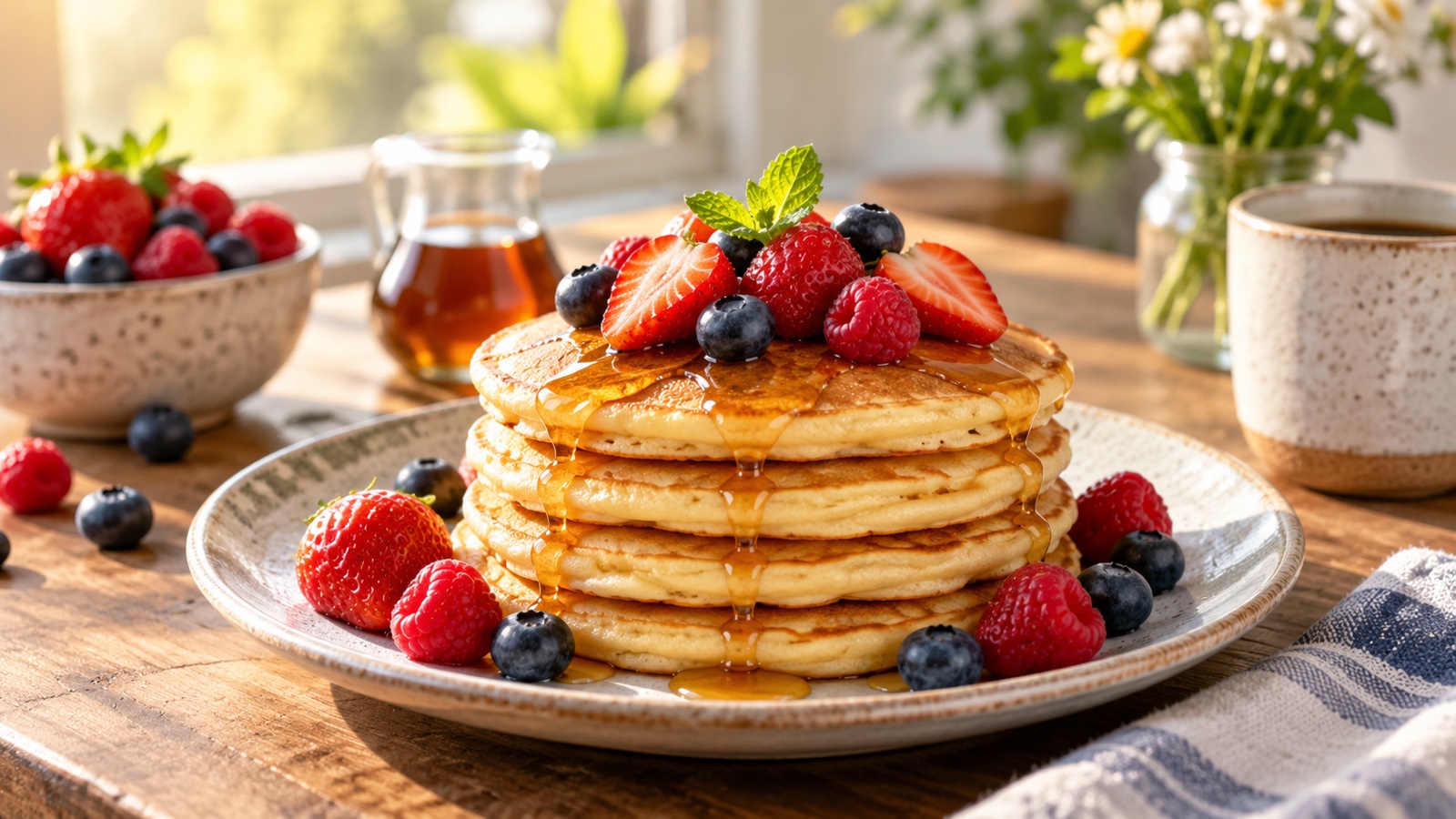
- Maple syrup is a classic North American pancake topping.
- Butter adds richness and salt.
- Fruit adds acidity and moisture.
- Blueberries can be folded directly into batter.
- Bananas caramelize well on a hot griddle.
- Chocolate chips melt into warm pancakes.
- Whipped cream turns breakfast into dessert very efficiently.
- Peanut butter adds protein and fat.
- Greek yogurt adds tang and protein.
- Lemon and sugar are classic crepe toppings.
- Jam is common in European pancake traditions.
- Nutella is a popular modern crepe filling.
- Savory pancakes can hold cheese.
- Eggs can turn pancakes into a full meal.
- Smoked salmon works with buckwheat blini.
- Scallions work in East Asian savory pancakes.
- Hot sauce pairs well with corn or savory batter.
- Fresh herbs can change the flavor without much added weight.
- Syrup soaks in more quickly while pancakes are hot.
- A pancake is basically a blank edible platform that breakfast and dinner both claim jurisdiction over.
Nutrition, freezing and 25 final pancake facts
- Pancake nutrition depends heavily on recipe and toppings.
- Plain pancakes are mainly carbohydrates.
- Eggs and milk add protein.
- Whole-grain flour increases fiber.
- Buckwheat is naturally gluten-free.
- Commercial buckwheat mixes can still contain wheat.
- Oat flour adds soluble fiber.
- Protein powders can alter texture if used heavily.
- Mashed banana adds sweetness and moisture.
- Pumpkin puree adds moisture and carotenoids.
- Too much fruit can make batter difficult to set.
- Frozen pancakes reheat well.
- Cooling them before stacking prevents excessive condensation.
- Parchment between layers prevents sticking.
- Toasters can reheat thinner frozen pancakes.
- Microwaves keep pancakes soft but reduce crisp edges.
- Ovens work well for reheating large batches.
- Pancake mix stores longer when kept dry and sealed.
- Old baking powder can reduce rise.
- Fresh leavening improves fluffiness.
- Buttermilk pancakes often taste tangier.
- Sourdough discard can be used in pancake batter.
- Fermentation adds acidity and flavor.
- Mini pancakes cook faster than full-size ones.
- After 145 facts, pancakes feel less like basic breakfast and more like a global cooking format humans have been reinventing for thousands of years.
Quick FAQ
Q: Why are pancakes fluffy?
A: Leavening creates gas bubbles, while flour and eggs set around them during cooking.
Q: Why should pancake batter not be overmixed?
A: Excess mixing develops gluten and can make pancakes tougher.
Q: Are crepes pancakes?
A: Yes. They are a thin French style of pancake.
Q: Can pancakes be frozen?
A: Yes. Cool them first, separate layers, freeze, and reheat as needed.
Q: How old are pancakes?
A: Pancake-like flat cakes have prehistoric roots, while written pancake traditions date back thousands of years.

Ellie is the owner and sole author of Fun Facts, combining her mechanical engineering background with years of research-driven writing to deliver facts you can trust. Every article is thoroughly fact-checked and routinely updated as new science and sources emerge to keep information accurate and current. Her mission is to make learning delightful while upholding high standards of reliability and transparency.