
Saudi Arabia is often pictured as one endless desert, which misses coral reefs, volcanic fields, green mountain terraces, ancient Nabataean tombs, date oases, Red Sea ports, enormous modern cities, and the two holiest places in Islam. The sand is real; it just does not get the entire map.
Saudi Arabia covers most of the Arabian Peninsula
- Saudi Arabia is the largest country on the Arabian Peninsula.
- It is located in southwestern Asia.
- Riyadh is the national capital and largest city.
- Jeddah is a major Red Sea port and commercial center.
- Saudi Arabia has 13 administrative provinces.
- The country borders Jordan, Iraq, Kuwait, Qatar, the United Arab Emirates, Oman, and Yemen.
- It also has coastlines on the Red Sea and Persian Gulf.
- The national currency is the Saudi riyal.
- Arabic is the official language.
- The national flag is green with the Islamic shahada and a white sword.
- The shahada is an Islamic declaration of faith.
- Because sacred text appears on the flag, Saudi flag handling follows special customs.
- The flag is not normally flown at half-staff.
- Saudi Arabia uses Arabia Standard Time.
- It is three hours ahead of Coordinated Universal Time.
- The country does not use Daylight Saving Time.
- Saudi Arabia has no permanent natural rivers.
- Water reaches cities through groundwater, desalination, dams, and large distribution systems.
- Desalinated seawater is especially important to urban water supply.
- Any country with no permanent rivers and millions of residents immediately turns plumbing into national-scale engineering.
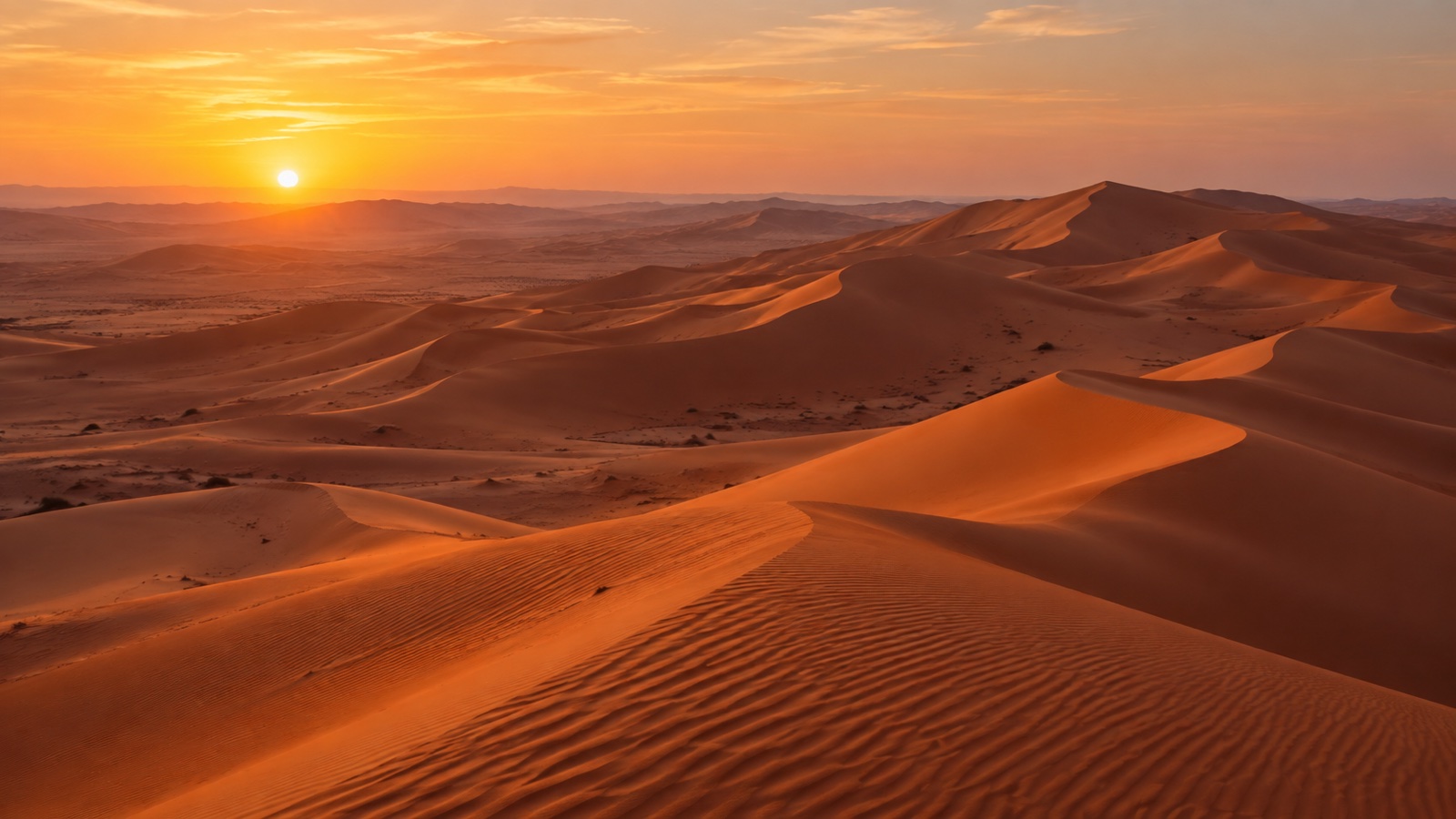
The Empty Quarter is enormous, but mountains rise in the west
- The Rub’ al Khali is commonly called the Empty Quarter.
- It stretches across Saudi Arabia, Oman, the UAE, and Yemen.
- It is one of the world’s largest continuous sand deserts.
- Some dune fields contain enormous ridges and star-shaped dunes.
- Not all Saudi desert is covered in sand.
- Rocky plains, gravel deserts, basalt fields, escarpments, and mountains cover huge areas.
- The An Nafud desert lies in northern Saudi Arabia.
- The Ad Dahna forms a long arc of sand connecting northern and southern desert systems.
- The Sarawat Mountains run along much of western Saudi Arabia.
- Highlands in the southwest are cooler and wetter than central deserts.
- Asir Province contains green mountain slopes and agricultural terraces.
- Fog and seasonal rain can make some southwestern landscapes surprisingly lush.
- Jabal Sawda has long been promoted as one of Saudi Arabia’s highest mountains, though modern elevation measurements complicate exact “highest peak” claims.
- Volcanic lava fields called harrat occur across western Saudi Arabia.
- Harrat Khaybar contains volcanic cones and lava flows.
- Some Saudi volcanoes have erupted within the last several thousand years.
- The Red Sea formed as the Arabian and African tectonic plates pulled apart.
- That rifting continues today.
- Earthquakes and volcanic processes therefore remain part of the region’s geology.
- Saudi Arabia’s landscape can go from white coral beach to black lava to green highlands before the Empty Quarter even gets involved.
Mecca and Medina make Saudi Arabia central to Islam
- Mecca is Islam’s holiest city.
- The Kaaba stands at the center of the Grand Mosque in Mecca.
- Muslims around the world face toward the Kaaba during daily prayer.
- That prayer direction is called the qibla.
- Hajj is the major annual pilgrimage to Mecca.
- Hajj is one of the Five Pillars of Islam.
- Muslims who are physically and financially able are expected to perform Hajj once in their lives.
- Hajj occurs during the Islamic month of Dhu al-Hijjah.
- Because the Islamic calendar is lunar, Hajj moves through the solar seasons over time.
- Umrah is a pilgrimage to Mecca that can be performed at other times of year.
- Medina is Islam’s second-holiest city.
- The Prophet’s Mosque is located in Medina.
- Prophet Muhammad migrated from Mecca to Medina in 622 CE.
- That migration is called the Hijra.
- The Islamic Hijri calendar counts years from the Hijra era.
- Non-Muslims are not permitted to enter the sacred core of Mecca.
- Access rules also apply to specific sacred zones in and around Medina.
- Pilgrimage infrastructure moves enormous crowds through transportation, lodging, food, health, and security systems.
- Hajj management is one of the world’s largest recurring crowd-management operations.
- Millions of people facing one building from every time zone on Earth may be one of the most striking examples of shared geographic orientation anywhere.
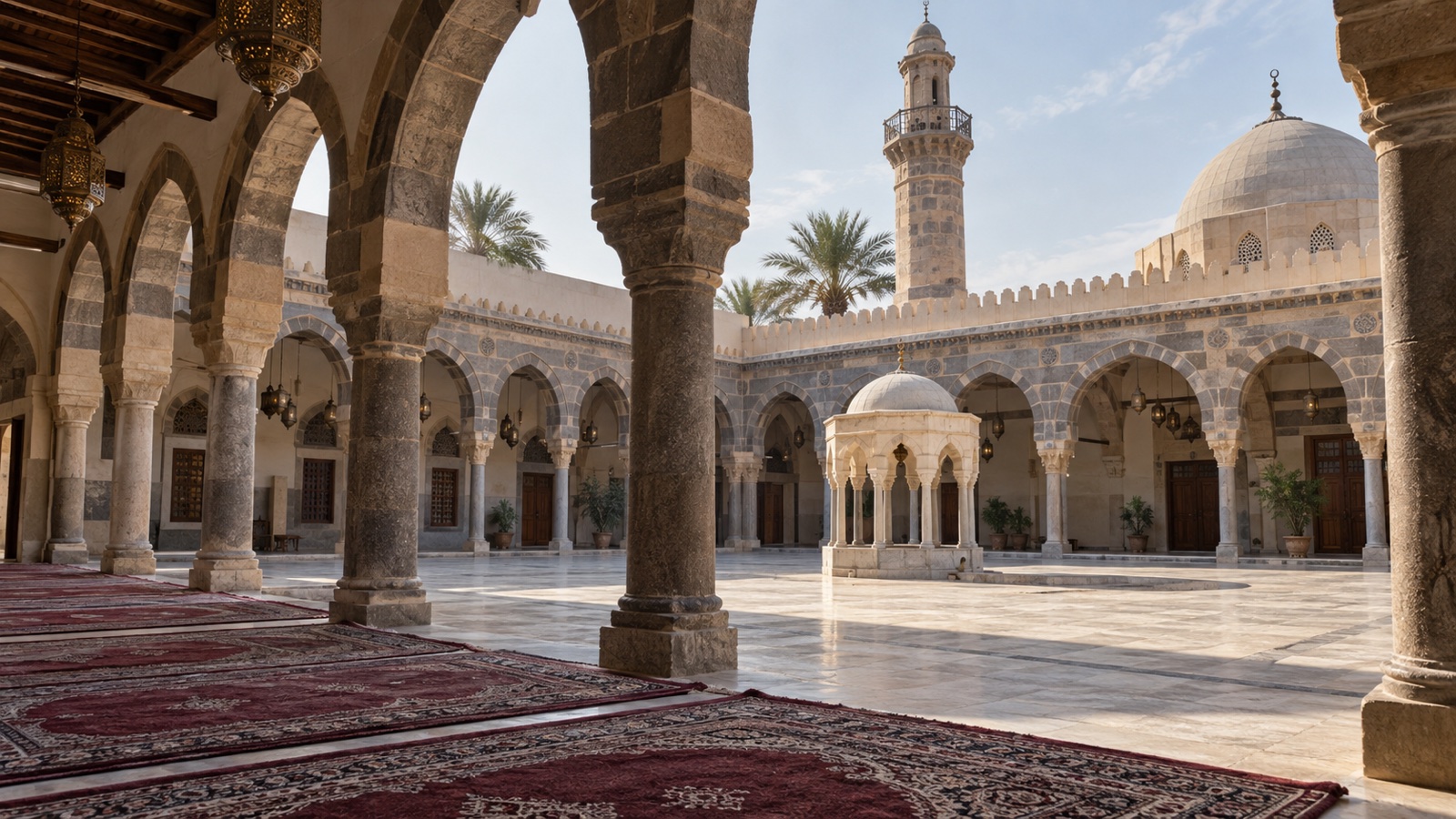
Ancient Arabia had trade cities long before oil
Petroleum changed Saudi Arabia dramatically, but it did not create Arabian history. Caravan routes moved incense, spices, metals, textiles, pilgrims, and ideas through the peninsula for centuries, while oasis cities and kingdoms connected the Red Sea, Mediterranean, Mesopotamia, and Indian Ocean worlds.
- AlUla is an oasis region in northwestern Saudi Arabia.
- Its location supported trade and settlement for thousands of years.
- Hegra, also called Mada’in Salih, lies near AlUla.
- Hegra contains monumental tombs carved into sandstone cliffs.
- The tombs were built mainly by the Nabataeans.
- The Nabataean kingdom also built Petra in modern Jordan.
- Hegra became Saudi Arabia’s first UNESCO World Heritage Site.
- Ancient Dadan was another important oasis kingdom in the AlUla region.
- Lihyanite rulers later controlled the oasis.
- Rock inscriptions preserve ancient North Arabian writing systems.
- Tayma was another important oasis on ancient trade routes.
- Babylonian king Nabonidus spent years at Tayma during the sixth century BCE.
- Arabian trade carried frankincense and myrrh northward from southern Arabia.
- Red Sea ports connected inland communities with Egypt and East Africa.
- Jeddah developed as the main seaport for pilgrims traveling to Mecca.
- Historic Jeddah is known as Al-Balad.
- Al-Balad contains traditional multi-story buildings made with coral stone and wood.
- Wooden lattice windows called rawasheen helped provide shade and ventilation.
- Saudi archaeology continues revealing settlements, inscriptions, rock art, and prehistoric landscapes.
- Oil is younger than the country’s oldest trade routes by several thousand years.
Oil transformed the kingdom during the 20th century
- The modern Kingdom of Saudi Arabia was proclaimed in 1932.
- Abdulaziz Ibn Saud founded and became the first king of the unified kingdom.
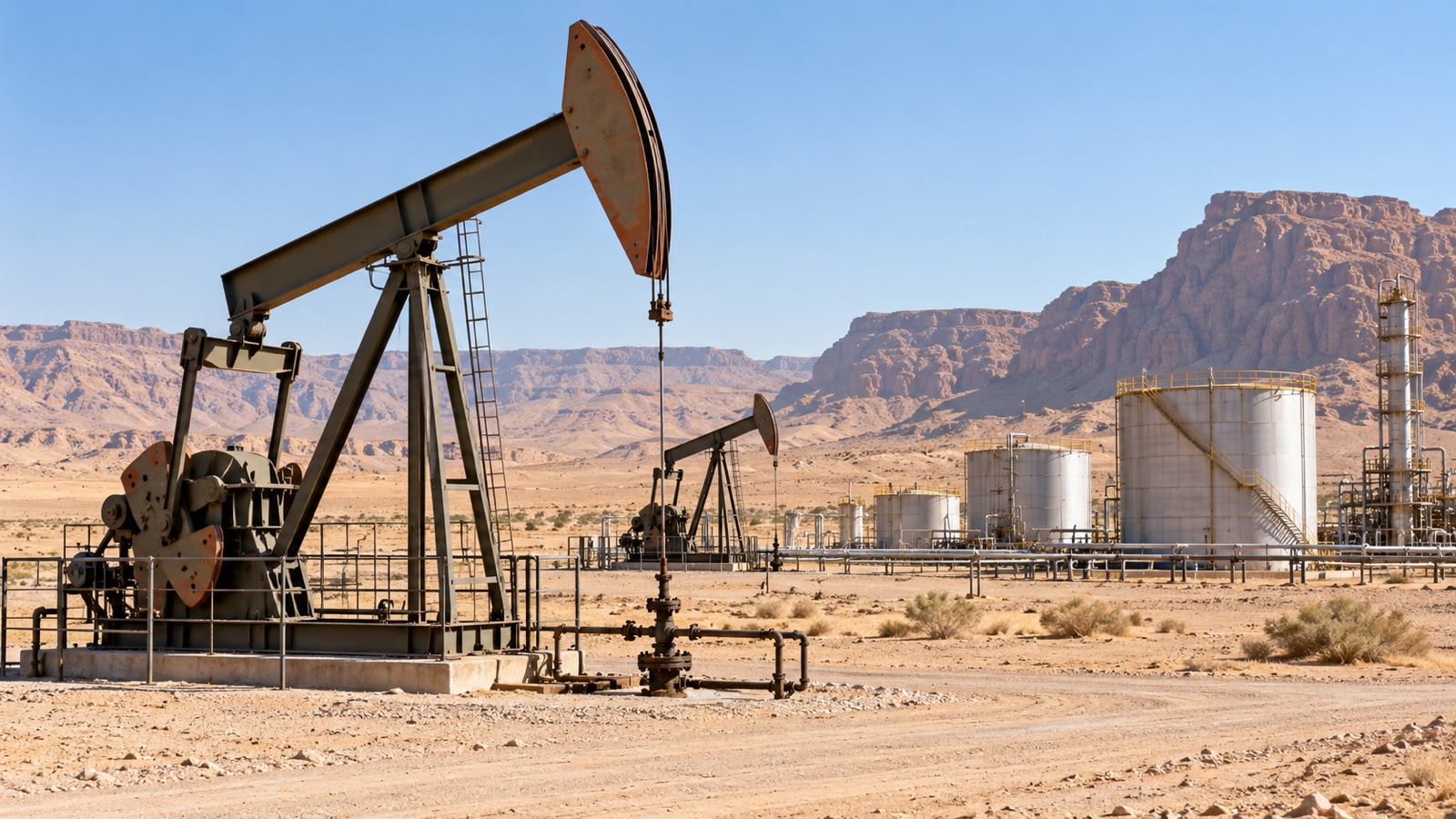
- Commercial oil was discovered in the Eastern Province in 1938.
- Dammam Well No. 7 became famous as the breakthrough discovery well.
- Large-scale oil exports transformed government revenue.
- Saudi Aramco developed from an American-linked concession company into Saudi national ownership.
- Aramco became one of the world’s largest energy companies.
- Ghawar is one of the world’s largest conventional oil fields.
- Ras Tanura developed into a major oil-export center.
- Petroleum wealth financed highways, hospitals, universities, airports, utilities, and new cities.
- Saudi Arabia became a founding member of OPEC in 1960.
- OPEC coordinates petroleum policies among member countries.
- Oil price changes strongly influence the Saudi economy and government finances.
- Saudi policy has increasingly emphasized economic diversification.
- Vision 2030 is the national transformation framework launched in 2016.
- It promotes tourism, entertainment, technology, logistics, manufacturing, and other non-oil sectors.
- New megaprojects have attracted both international attention and scrutiny over cost, feasibility, labor, displacement, and environmental impact.
- Tourism visa access expanded significantly beginning in 2019.
- Women were permitted to drive cars beginning in 2018.
- The speed of social and economic change is real, even while significant legal and human-rights restrictions remain.
Red Sea reefs, desert wildlife and date oases surprise visitors
The Red Sea side of Saudi Arabia is the geography fact I wish more desert stereotypes included. Clear warm water, coral reefs, mangroves, seagrass, seabirds, dolphins, and reef fish sit only a road trip away from some of the driest landscapes on Earth.
- Saudi Arabia has a long Red Sea coastline.
- Coral reefs grow along large portions of that coast.
- Red Sea corals tolerate unusually warm and salty conditions.
- Scientists study some Red Sea reefs for clues about coral heat tolerance.
- Mangroves grow in sheltered coastal areas.
- Dugongs occur in parts of the wider Red Sea region.
- Dolphins and sea turtles inhabit Saudi coastal waters.
- Whale sharks are seasonal visitors to parts of the Red Sea.
- Arabian oryx have been restored to protected areas after disappearing from the wild regionally.
- Sand gazelles and mountain gazelles live in suitable Saudi habitats.
- Arabian leopards are critically endangered.
- Tiny remnant leopard populations may survive in the mountains of the Arabian Peninsula.
- Conservation breeding programs work with Arabian leopards in Saudi Arabia.
- Hamadryas baboons live in southwestern mountain regions.
- Desert monitor lizards and many snake species survive extreme heat through behavioral adaptations.
- Date palms grow in oases and irrigated farms.
- Al-Ahsa Oasis is one of the world’s largest oasis landscapes.
- Al-Ahsa contains millions of date palms.
- The oasis is a UNESCO World Heritage Site.
- Saudi Arabia’s most unexpected wildlife commute may be driving from coral reef snorkeling to baboon country in the mountains.
Coffee, kabsa, falcons and 25 final Saudi facts
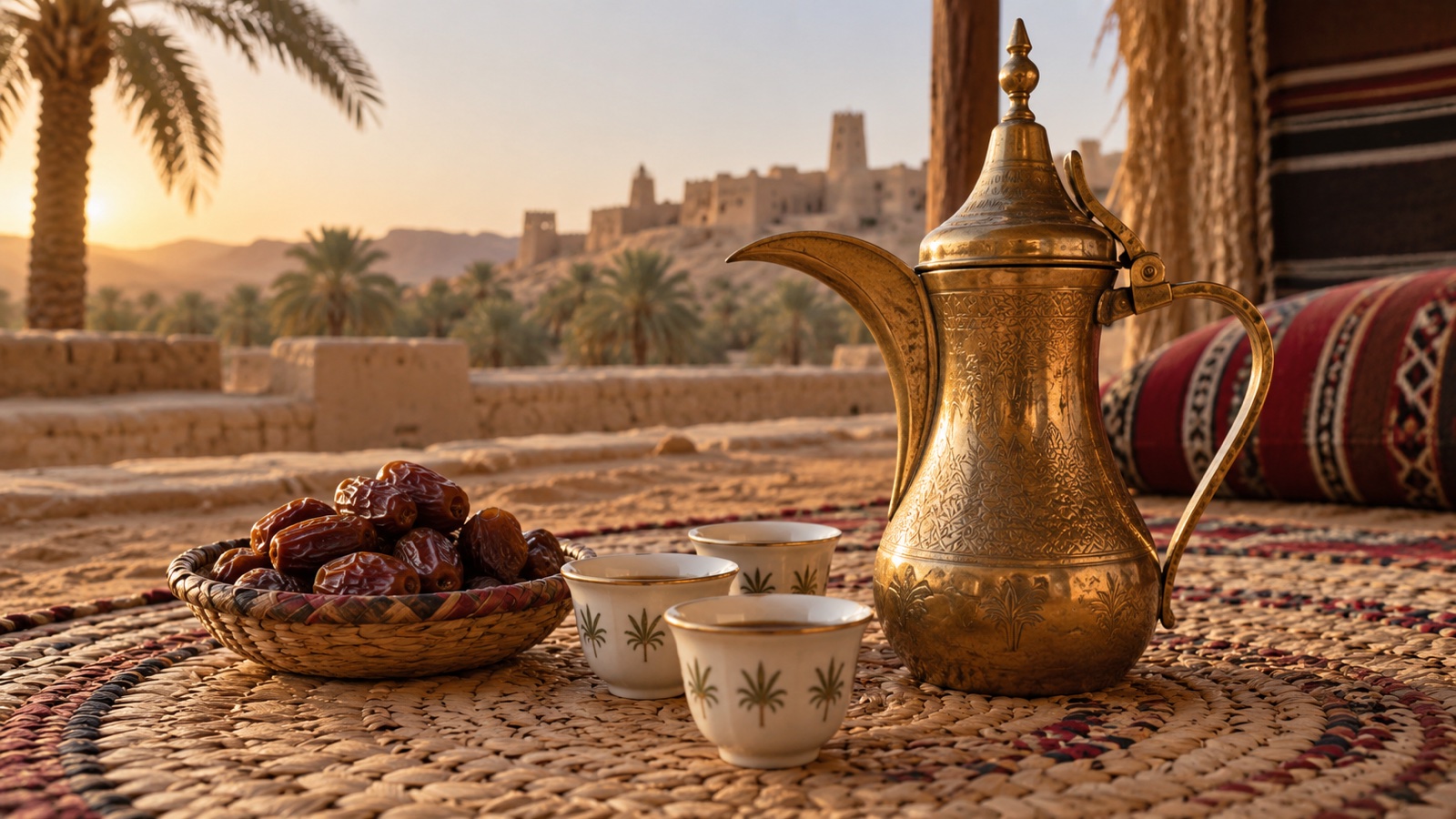
- Saudi coffee is commonly made lightly roasted and flavored with cardamom.
- Saffron, cloves, or other spices may also be added.
- Small handleless cups are traditionally used for serving.
- Dates frequently accompany coffee.
- Saudi coffee was officially renamed “Saudi coffee” in government cultural usage rather than simply “Arabic coffee.”
- Kabsa is a spiced rice dish commonly served with chicken, lamb, or other meat.
- Jareesh uses crushed wheat cooked into a thick savory dish.
- Saleeg is a creamy rice dish associated especially with the Hejaz region.
- Mutabbaq is a filled folded flatbread popular in western Saudi Arabia.
- Falconry is a longstanding Arabian tradition.
- Saudi falcon festivals can include races, auctions, exhibitions, and heritage events.
- Camels remain important symbols of desert heritage.
- Camel milk and camel meat are consumed in Saudi Arabia.
- Camel festivals include beauty competitions and racing.
- Modern technology is used in camel identification, veterinary care, and competition.
- Football is the country’s most popular spectator sport.
- Saudi clubs have increasingly recruited internationally famous players.
- The national men’s football team defeated eventual champion Argentina during the 2022 FIFA World Cup group stage.
- The victory was one of the tournament’s biggest upsets.
- Traditional Najdi architecture uses mud brick, courtyards, and climate-responsive design.
- At-Turaif in Diriyah preserves important early Saudi-state architecture.
- Diriyah was a capital of the first Saudi state.
- The annual Janadriyah heritage tradition helped showcase regional crafts, dance, food, and culture for decades.
- The sword dance known as ardah is a famous Najdi performance tradition.
- After 145 facts, Saudi Arabia feels much less like one desert kingdom and more like mountains, reefs, holy cities, ancient trade, oil wealth, and rapid change all competing for the same headline.
Quick FAQ
Q: What is Saudi Arabia famous for?
A: Mecca and Medina, Islam’s Hajj pilgrimage, oil, the Empty Quarter, dates, Arabic coffee, Red Sea reefs, ancient AlUla, falconry, camels, and rapid modern development.
Q: What is the capital of Saudi Arabia?
A: Riyadh is the capital and largest city.
Q: Does Saudi Arabia have rivers?
A: It has wadis and temporary flowing water after rain, but no permanent natural rivers comparable with the Nile or Mississippi.
Q: Is all of Saudi Arabia desert?
A: No. Desert is extensive, but the country also has high mountains, volcanic fields, oases, agricultural terraces, mangroves, coral reefs, and long coastlines.
Q: When was Saudi Arabia founded?
A: The modern Kingdom of Saudi Arabia was proclaimed in 1932 after Abdulaziz Ibn Saud unified major regions of the peninsula under his rule.

Ellie is the owner and sole author of Fun Facts, combining her mechanical engineering background with years of research-driven writing to deliver facts you can trust. Every article is thoroughly fact-checked and routinely updated as new science and sources emerge to keep information accurate and current. Her mission is to make learning delightful while upholding high standards of reliability and transparency.