
Singapore is a country, city, island, shipping hub, food obsession, garden experiment, and public-transport masterclass packed into a space smaller than many major metro areas. I expected skyscrapers and hawker centers; I did not expect wild crocodiles, otters downtown, four official languages, and reservoirs that double as city scenery.
Singapore is a country and a city at the same time
- Singapore is a sovereign city-state in Southeast Asia.
- Its main island sits just off the southern tip of the Malay Peninsula.
- The country also includes dozens of smaller islands and islets.
- Singapore lies about 85 miles north of the equator.
- Its land area is smaller than Rhode Island.
- Singapore has expanded its physical size through land reclamation.
- Reclamation uses imported or excavated material and engineered coastal construction to create new land.
- The official name is the Republic of Singapore.
- Singapore has no separate countryside government outside the city because the city and country are the same sovereign state.
- The country uses Singapore Standard Time.
- Singapore is eight hours ahead of Coordinated Universal Time.
- It does not observe Daylight Saving Time.
- The Singapore dollar is the national currency.
- Singapore’s flag is red and white with a crescent moon and five stars.
- The crescent represents a young nation on the rise.
- The five stars represent democracy, peace, progress, justice, and equality.
- The national coat of arms includes a lion and a tiger.
- The lion represents Singapore while the tiger reflects historic links with Malaysia.
- Singapore’s national anthem is “Majulah Singapura,” meaning “Onward Singapore.”
- For a tiny dot on the map, Singapore has an impressive amount of national symbolism per square mile.
A tropical climate shapes everyday life
- Singapore has a tropical rainforest climate.
- Temperatures stay warm throughout the year.
- Average daily temperatures usually remain in the 80s°F.
- Humidity is high in every month.
- Rain falls year-round rather than during one sharply defined rainy season.
- Short intense thunderstorms are common.
- Lightning occurs frequently because warm humid air creates strong convection.
- Singapore is sometimes described as one of the world’s lightning capitals.
- The Northeast Monsoon generally brings wetter conditions from about December into early March.
- The Southwest Monsoon affects the region during the middle of the year.
- Equatorial location keeps daylight length fairly consistent through the seasons.
- Sunrise and sunset times change much less than they do in northern U.S. cities.
- Singapore has no winter in the temperate-season sense.
- Air conditioning is common in malls, offices, transit, hotels, and homes.
- Covered walkways help pedestrians move between buildings during heavy rain and strong sun.
- Flash flooding can occur when intense tropical rain overwhelms drainage temporarily.
- The country has invested heavily in canals, drains, reservoirs, and stormwater management.
- Climate change and sea-level rise are major long-term concerns for a low-lying island state.
- Coastal defenses and drainage planning are therefore national infrastructure issues.
- My favorite Singapore packing advice is simple: prepare simultaneously for sun, rain, humidity, and aggressively cold indoor air conditioning.
Singapore grew from a trading port into a global hub
- The Singapore area had trading settlements centuries before British colonization.
- It was connected with wider Malay and Southeast Asian maritime networks.
- The name Singapore is associated with the Malay “Singapura.”
- “Singapura” comes from Sanskrit words commonly translated as “lion city.”
- A famous legend credits a Sumatran prince with seeing an animal he believed was a lion on the island.
- Lions are not native to Singapore, so the legendary animal was unlikely to have been an actual lion.
- Sir Stamford Raffles established a British trading post at Singapore in 1819.
- The port’s location near major shipping routes helped it grow rapidly.
- Singapore became part of the British Straits Settlements.
- Immigrants arrived from China, India, the Malay world, Europe, and elsewhere.
- That migration helped create Singapore’s modern multicultural population.
- Japanese forces captured Singapore in 1942 during World War II.
- The British surrender was a major wartime defeat.
- Japan occupied Singapore until 1945.
- Singapore became self-governing in 1959.
- Lee Kuan Yew became the first prime minister.
- Singapore joined Malaysia in 1963.
- Political and economic tensions led to separation two years later.
- Singapore became an independent republic on August 9, 1965.
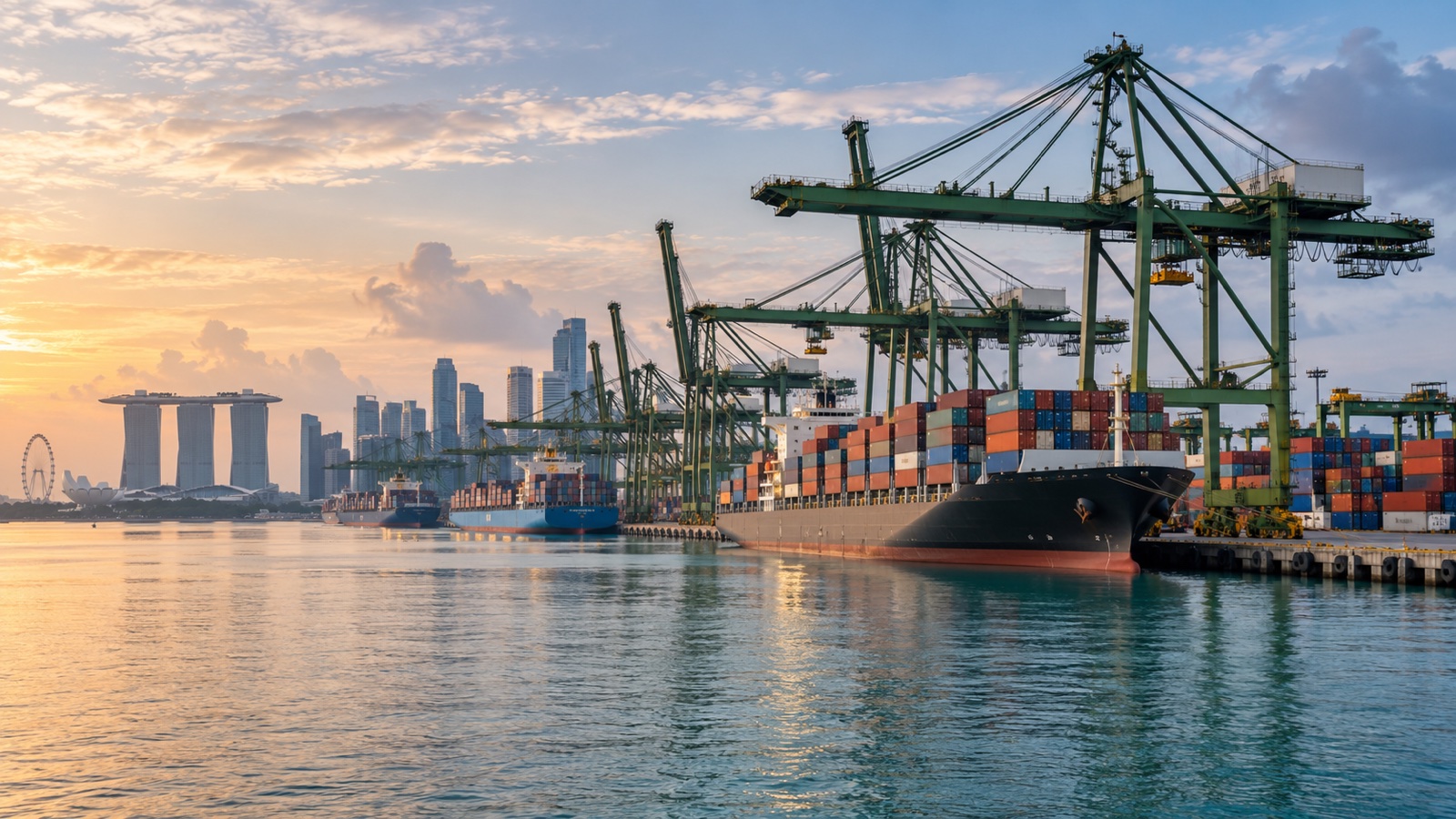
- A country that became independent unexpectedly in 1965 went on to build one of the world’s busiest ports, which is a fairly dramatic second act.
Four official languages share one city-state
Singapore is one of those places where a breakfast order can quietly demonstrate national history. English links schools and government, Malay carries symbolic national status, Mandarin is widely spoken, Tamil has official recognition, and everyday conversations may slide between languages with impressive speed.
- Singapore has four official languages.
- They are English, Malay, Mandarin Chinese, and Tamil.
- Malay is designated as the national language.
- The national anthem is sung in Malay.
- English is the main working language of government and much of business.
- English is also the principal medium of instruction in schools.
- Many Singaporeans grow up bilingual or multilingual.
- Students commonly study English plus an officially recognized “mother tongue” language.
- Singaporean English includes a colloquial variety widely called Singlish.
- Singlish draws vocabulary and grammar influences from English, Malay, Chinese varieties, Tamil, and other languages.
- Words such as “lah” can function as discourse particles in Singlish.
- Singlish is a living local speech variety rather than simply “bad English.”
- Standard Singapore English is used in formal education and professional settings.
- Chinese Singaporeans form the country’s largest ethnic group.
- Malay Singaporeans are recognized constitutionally as the Indigenous people of Singapore.
- Indian Singaporeans include Tamil, Malayali, Punjabi, Sikh, Gujarati, and many other communities.
- Religious life includes Buddhism, Christianity, Islam, Taoism, Hinduism, Sikhism, and other traditions.
- Mosques, temples, churches, and shrines can sit surprisingly close together.
- Public holidays reflect several religious and cultural traditions.
- Singapore’s calendar is basically a reminder that multiculturalism gets more interesting when everyone also gets snacks.
Hawker centers are part of the country’s social infrastructure
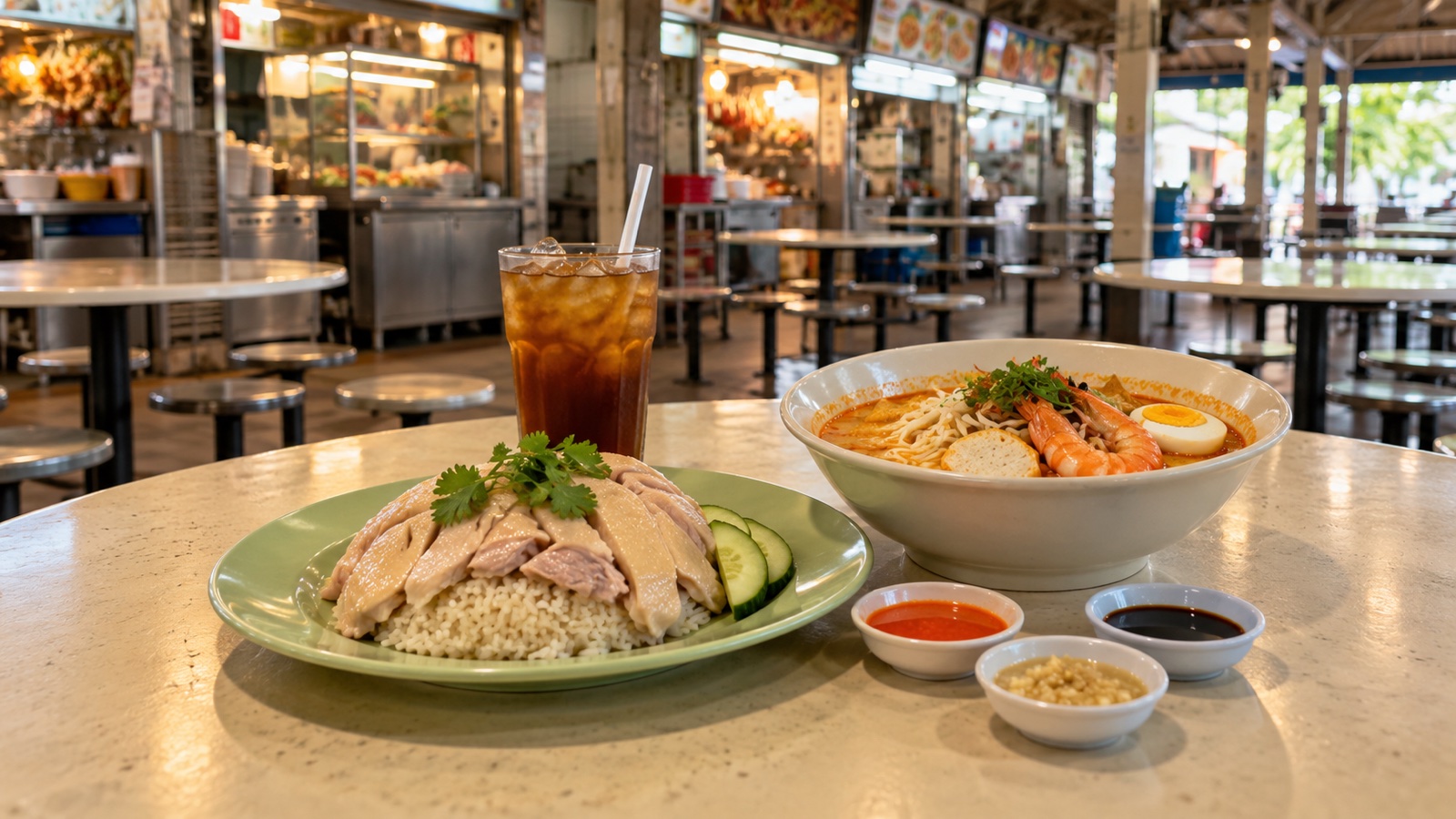
- Hawker centers bring many independent food stalls together in shared dining spaces.
- They grew partly from efforts to organize street food into cleaner permanent facilities.
- Hawker culture reflects Chinese, Malay, Indian, Peranakan, and other culinary traditions.
- Singapore’s hawker culture was added to UNESCO’s Intangible Cultural Heritage list in 2020.
- Hainanese chicken rice is one of Singapore’s signature dishes.
- It combines poached or roasted chicken with fragrant rice and sauces.
- Laksa is a spicy noodle dish with several regional and local styles.
- Katong laksa is strongly associated with Singapore’s east coast.
- Chili crab is another famous Singapore dish.
- The sauce is usually sweet, savory, spicy, and tomato-based rather than simply chopped chilies.
- Black pepper crab is another popular crab preparation.
- Satay consists of seasoned grilled meat skewers served with sauces and accompaniments.
- Roti prata is a flaky griddled flatbread often served with curry.
- Kaya toast pairs toasted bread with coconut-egg jam and butter.
- Soft-boiled eggs and coffee commonly accompany kaya toast at breakfast.
- Kopi is local coffee prepared through traditional coffee-shop methods.
- Different kopi orders specify milk, sugar, strength, and temperature.
- Peranakan cuisine reflects centuries of cultural mixing, especially Chinese and Malay influences.
- Food courts in modern malls coexist with older-style hawker centers and kopitiams.
- Singapore may be one of the few places where figuring out lunch can legitimately become a full research project.
Gardens, wildlife & green space are taken surprisingly seriously
The phrase “city in a garden” sounds like tourism copy until you realize how deliberately Singapore plans trees, parks, reservoirs, green roofs, roadside planting, wildlife corridors, and restored wetlands. It is still a dense city, but greenery is treated like infrastructure rather than decoration.
- Singapore Botanic Gardens was founded in the 19th century.
- It became Singapore’s first UNESCO World Heritage Site in 2015.
- The gardens played an important historical role in tropical plant research.
- Research there helped support the region’s rubber industry.
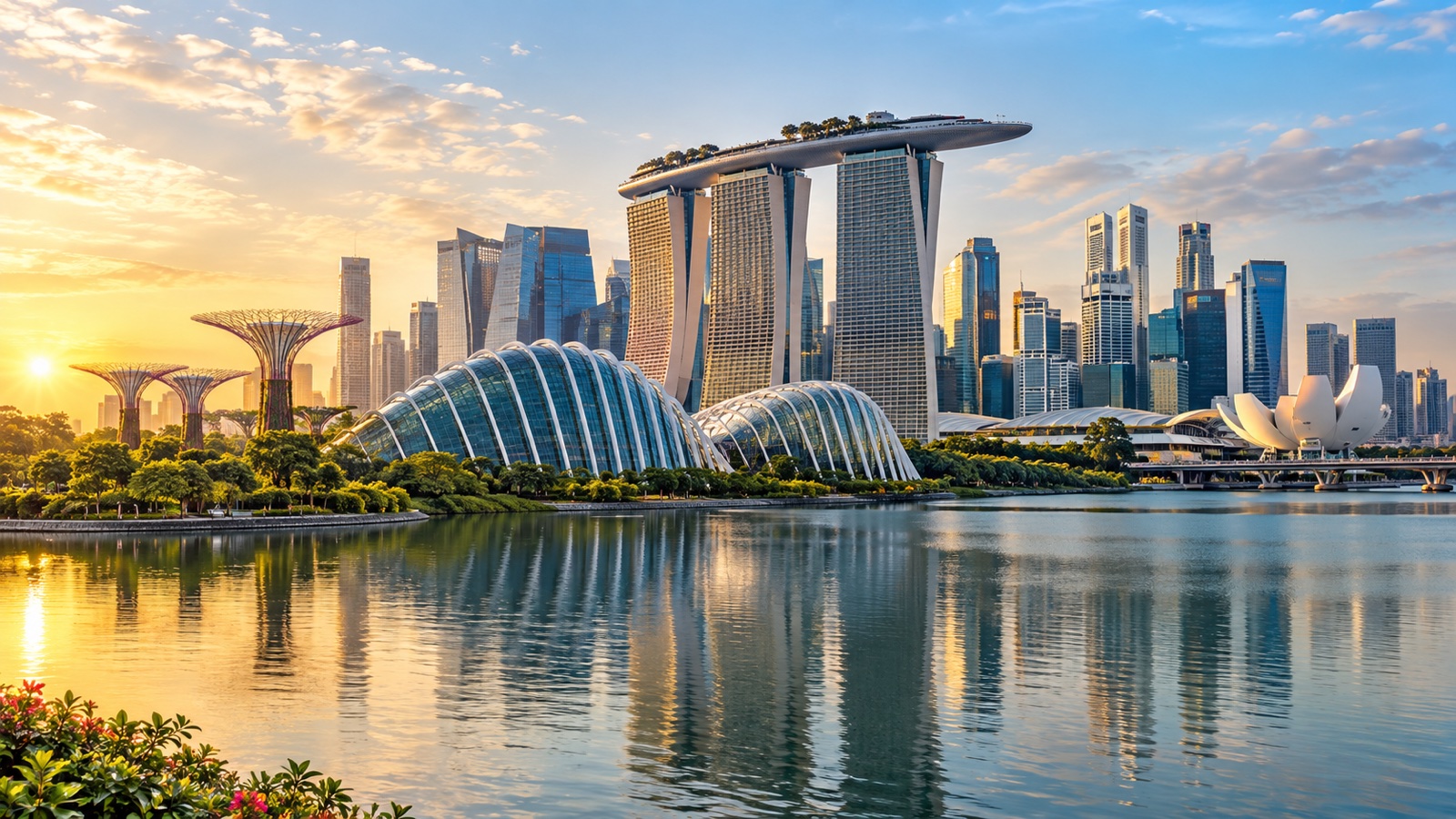
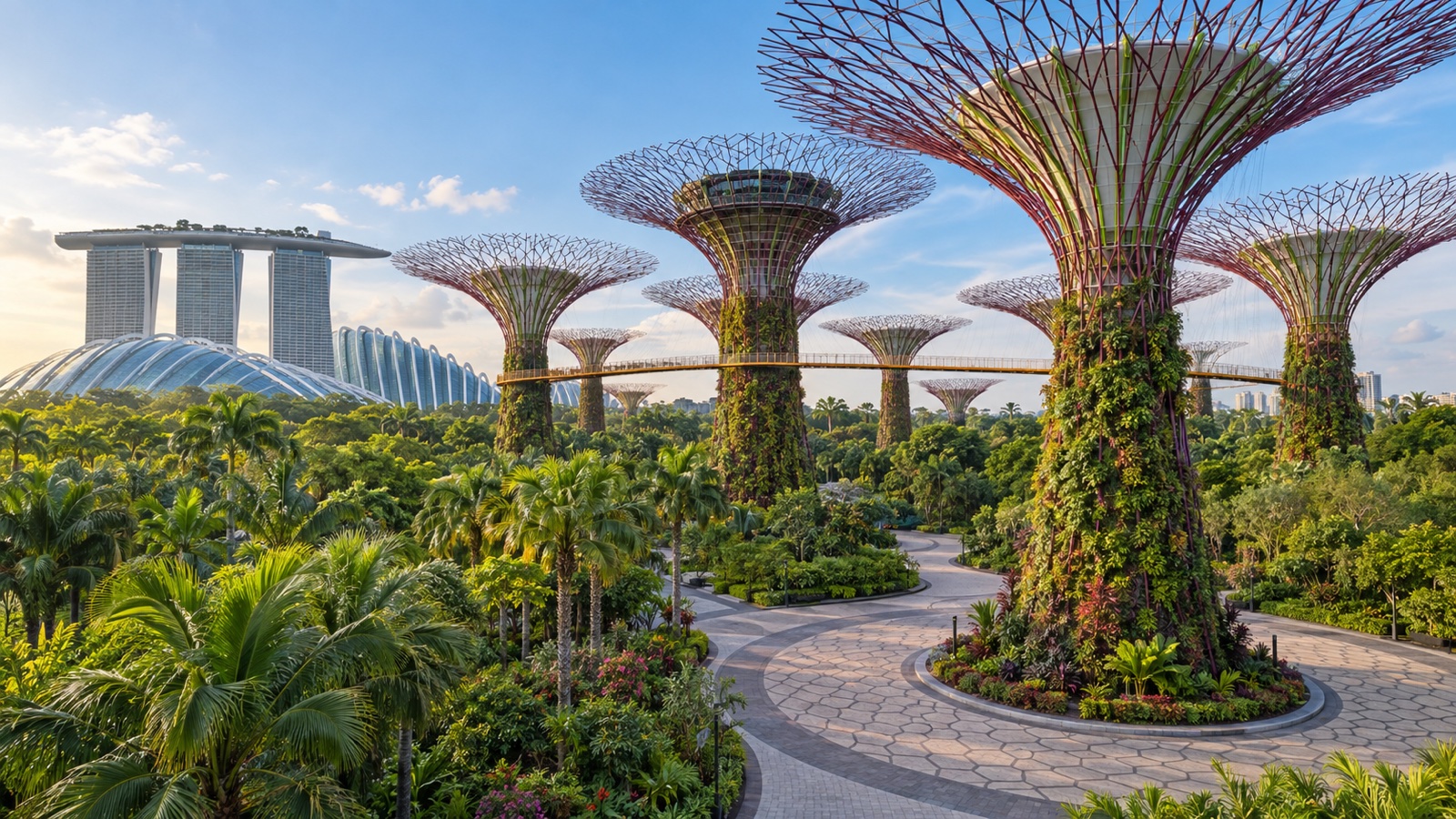
- Gardens by the Bay opened in 2012.
- Its Supertrees are vertical garden structures rather than giant artificial trees pretending to be natural ones.
- Some Supertrees incorporate solar-energy systems.
- The Flower Dome is a large cooled conservatory.
- The Cloud Forest conservatory recreates cool, moist highland conditions.
- Singapore has extensive roadside tree planting.
- Park connectors link green spaces across many neighborhoods.
- MacRitchie Reservoir sits within a large forested central catchment.
- Singapore’s reservoirs store drinking water as well as providing recreation and habitat.
- Wild long-tailed macaques live in forested areas.
- Smooth-coated otters have returned to urban waterways and become local celebrities.
- Wild boars occur in natural areas.
- Estuarine crocodiles live in and around Sungei Buloh Wetland Reserve and northern coastal waters.
- Monitor lizards can be seen around parks and reservoirs.
- Singapore has more biodiversity than its dense skyline might suggest.
- Urban otters crossing a downtown sidewalk are a strong reminder that wildlife did not read the zoning map.
Housing, transport, rules & 25 final Singapore facts
- Most Singapore residents live in apartments built through the public Housing and Development Board system.
- Many HDB residents own long-term leasehold interests rather than renting month to month.
- New towns are planned with schools, transit, shops, parks, and community facilities.
- Singapore’s Mass Rapid Transit system is commonly called the MRT.
- The rail network connects major residential, commercial, and airport areas.
- Buses fill in routes between rail lines.
- Electronic payment cards and mobile systems make transfers relatively seamless.
- Car ownership is intentionally expensive and tightly managed.
- Prospective owners generally need a Certificate of Entitlement for a vehicle.
- Road pricing is used to manage congestion.
- Singapore Changi Airport is one of Asia’s major aviation hubs.
- Jewel Changi Airport contains a huge indoor waterfall called the Rain Vortex.
- The Port of Singapore is one of the world’s busiest maritime hubs.
- The Strait of Singapore is a crucial global shipping route.
- Singapore has strict laws on littering and public cleanliness.
- Chewing gum is not simply “illegal” in every circumstance, despite the common travel myth.
- Ordinary retail sale and import are heavily restricted, while approved therapeutic dental or nicotine gums can be sold under rules.
- Durian fruit is famously banned on many forms of public transit because of its strong smell.
- The Merlion is a national tourism icon with a lion head and fish body.
- The fish body refers to Singapore’s maritime origins.
- Marina Bay Sands is recognizable for three towers topped by a long rooftop structure.
- The rooftop includes an infinity pool reserved for hotel guests.
- Singapore hosts a Formula 1 night race on a street circuit.
- National Day is celebrated every August 9.
- After 145 facts, Singapore still feels like the world’s most compact argument that small countries can think extremely big.
Quick FAQ
Q: Is Singapore a city or a country?
A: Both. Singapore is a sovereign city-state, meaning the main city and the independent country are part of the same national system.
Q: What languages are spoken in Singapore?
A: English, Malay, Mandarin Chinese, and Tamil are official languages, and many residents are bilingual or multilingual.
Q: Is chewing gum illegal in Singapore?
A: That is oversimplified. Ordinary gum sales and imports are heavily restricted, but approved therapeutic gums can be sold under regulated conditions.
Q: What food is Singapore famous for?
A: Hainanese chicken rice, chili crab, laksa, satay, roti prata, kaya toast, kopi, and a huge variety of hawker-center dishes.
Q: Is Singapore really near the equator?
A: Yes. The main island lies only about 85 miles north of the equator, which helps explain its consistently warm tropical climate.

Ellie is the owner and sole author of Fun Facts, combining her mechanical engineering background with years of research-driven writing to deliver facts you can trust. Every article is thoroughly fact-checked and routinely updated as new science and sources emerge to keep information accurate and current. Her mission is to make learning delightful while upholding high standards of reliability and transparency.