
Boxing is far older than modern gloves, weight classes, ropes, and championship belts. Ancient fighters wrapped their hands in leather, 18th-century professionals fought bare-knuckle contests that could last dozens of rounds, and today’s sport uses timed rounds, medical checks, judges, referees, and dramatically different amateur and professional systems. These 145 boxing facts explore ancient boxing, the Queensberry rules, gloves, rings, punches, footwork, weight classes, scoring, knockdowns, famous champions, Olympic boxing, training, safety, terminology, and the science behind hitting without getting hit.
Boxing basics
- Boxing is a combat sport based on punching, defense, movement, and ring strategy.
- Modern boxing contests are divided into timed rounds.
- Boxers wear padded gloves.
- A referee controls action inside the ring.
- Judges score most bouts that reach the final bell.
- A knockout can end a fight before the scheduled distance.
- A technical knockout can also stop a bout early.
- Boxers compete in weight classes.
- Weight divisions reduce extreme size mismatches.
- Professional and Olympic-style boxing use different administrative systems and some different rules.
- Stances are commonly described as orthodox or southpaw.
- An orthodox boxer usually leads with the left hand and left foot.
- A southpaw usually leads with the right hand and right foot.
- USA Boxing maintains current Olympic-style boxing rules for sanctioned competition in the United States.
- The central boxing idea is simple to say and difficult to master: land legal punches while avoiding the opponent’s.
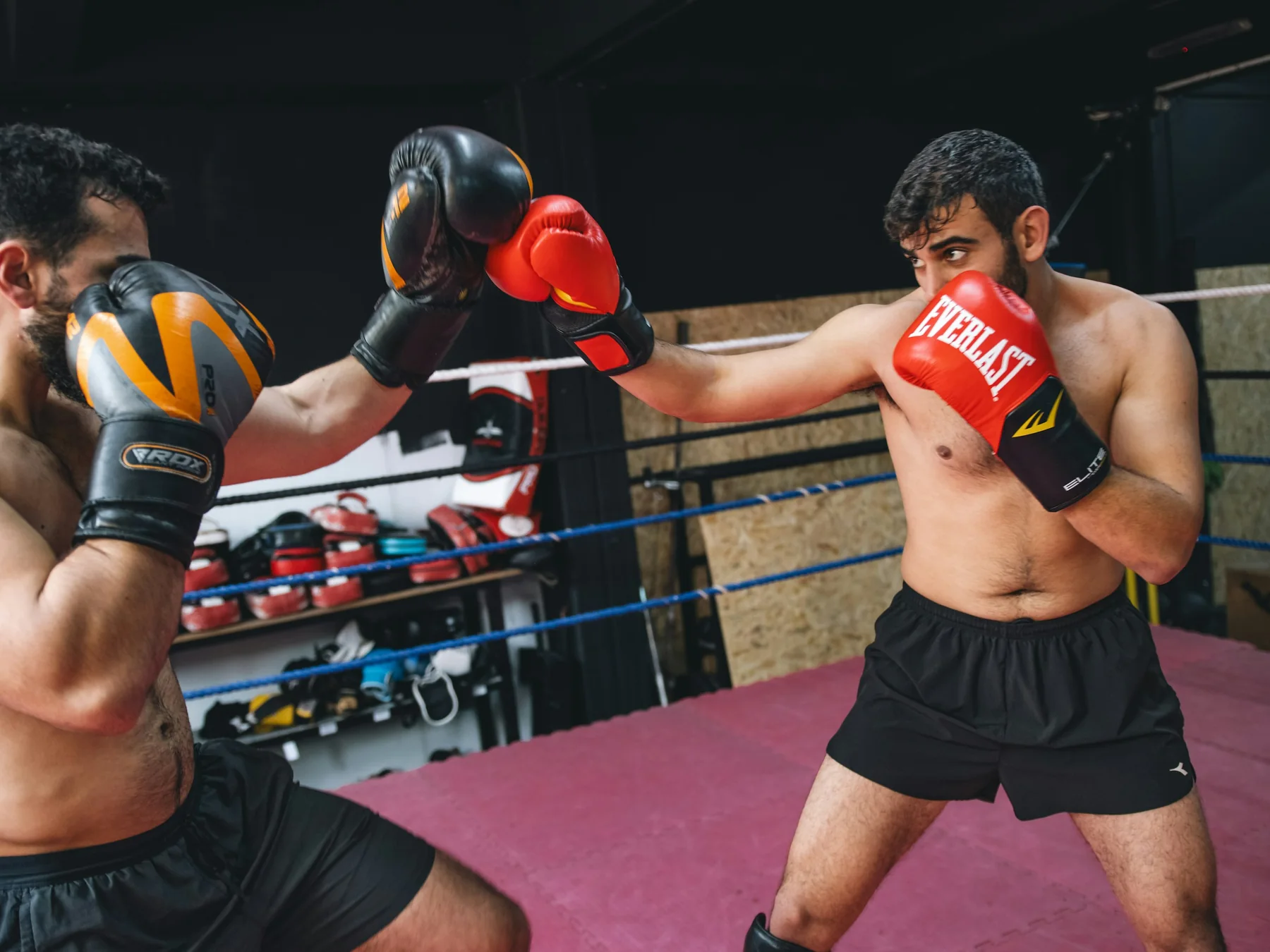
Boxing is thousands of years old
- Images of fist fighting appear in ancient art.
- Mesopotamian reliefs depict boxing-like contests.
- Ancient Egyptian art also shows fighters using their fists.
- Boxing became an event in the ancient Olympic Games.
- It was added to the Greek Olympics in the seventh century BCE.
- Ancient Greek boxers wrapped leather strips around their hands.
- Those wraps protected hands more than opponents.
- Ancient contests had no modern three-minute round system.
- Fights could continue until one boxer conceded or could not continue.
- Roman boxing became even harsher in some periods.
- Roman fighters sometimes used reinforced hand coverings.
- The ancient sport disappeared from formal European competition after antiquity.
- Prizefighting reemerged prominently in Britain centuries later.
- Modern boxing is therefore not one unbroken unchanged sport from ancient Greece.
- It is a modern combat sport with ancient ancestors and repeated rule reinvention.
Bare-knuckle prizefighting came first
- Organized British prizefighting developed during the 17th and 18th centuries.
- Early professional bouts were often fought with bare fists.
- James Figg became one of the first famous English champions.
- He also practiced sword and staff fighting.
- Jack Broughton became another influential early champion.
- Broughton introduced written rules in 1743.
- His rules created a defined fighting area.
- They also protected a downed fighter from immediate continued attack.
- The London Prize Ring Rules appeared in the 19th century.
- Under those rules, a round could end when a fighter went down.
- Rounds therefore varied dramatically in length.
- Wrestling and throws were allowed in some bare-knuckle systems.
- Fights could last for many rounds.
- Modern boxing’s ban on grappling developed gradually.
- Bare-knuckle prizefighting was its own rule system rather than simply gloveless modern boxing.
The Queensberry rules changed everything
- The Marquess of Queensberry Rules were published in 1867.
- They were written by sportsman John Graham Chambers.
- John Sholto Douglas, the Marquess of Queensberry, lent his name and support.
- The rules required padded gloves.
- They established three-minute rounds.
- They created one-minute rest periods.
- They used a ten-second count for a knocked-down boxer.
- They prohibited wrestling.
- The rules promoted the style recognizable as modern boxing.
- Adoption was gradual rather than immediate.
- Bare-knuckle contests continued for years.
- John L. Sullivan is often called the last great bare-knuckle heavyweight champion.
- He also became an early gloved heavyweight champion under Queensberry-style rules.
- Gloves changed defense, punching technique, and injury patterns.
- A rulebook named for an aristocrat became the shorthand foundation of modern professional boxing.
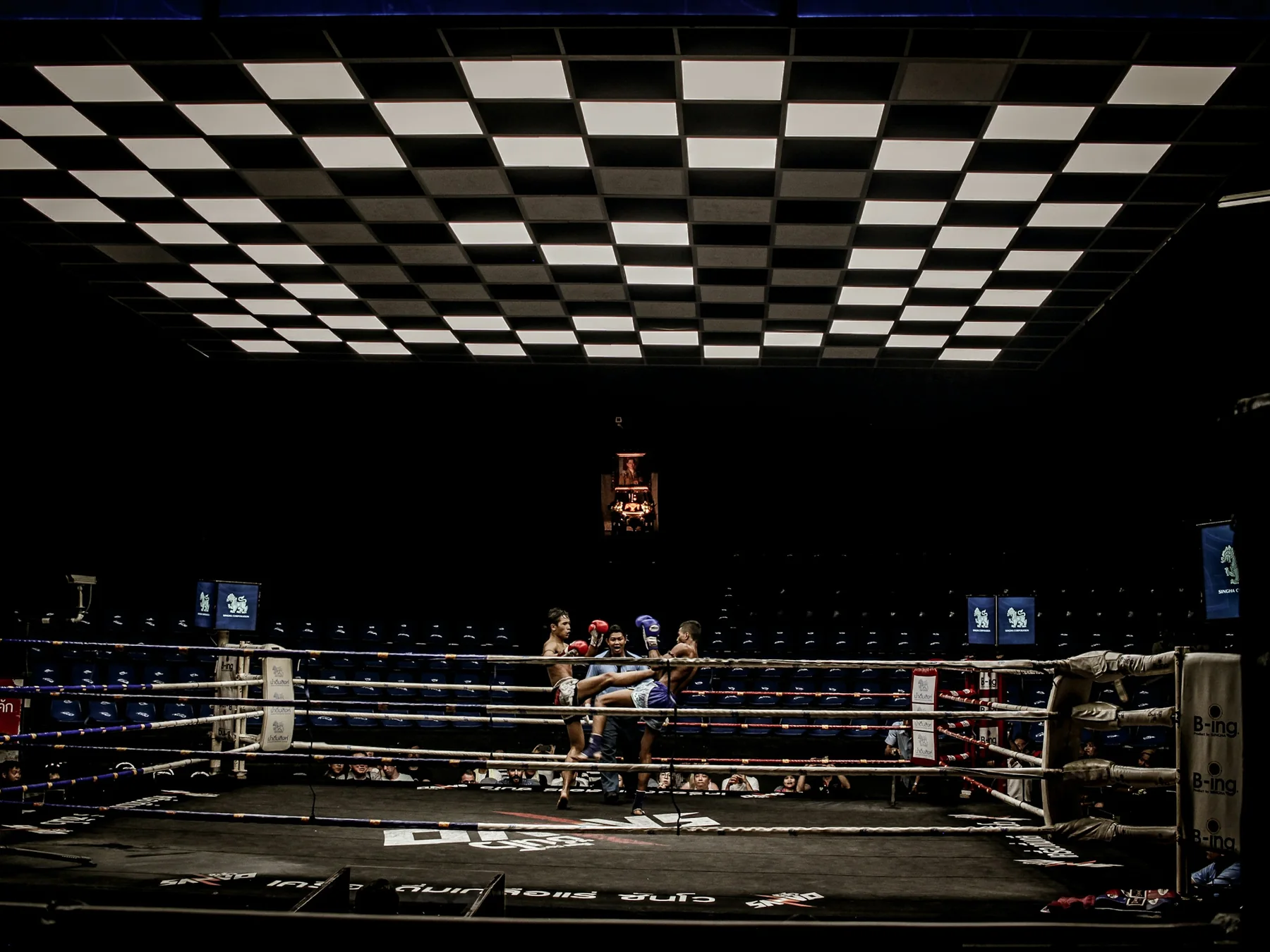
The ring is usually square
- A boxing ring is square despite being called a ring.
- The word survives from earlier fighting spaces where spectators formed a circle.
- Modern rings have ropes around four sides.
- Corner posts support those ropes.
- Two opposite corners belong to the boxers.
- They are traditionally called the red and blue corners in many competitions.
- Neutral corners are used during knockdown counts.
- The canvas covers a padded platform.
- Ring dimensions vary by governing body and event.
- Corner teams work from outside the ropes between rounds.
- A boxer returns to the assigned stool during the rest period.
- The referee can send a boxer to a neutral corner after a knockdown.
- Ring ropes can influence tactics.
- Some fighters prefer center-ring space while others fight effectively along the ropes.
- The “squared circle” nickname captures boxing’s strange evolution from crowd-formed rings to modern square platforms.
Four basic punches create endless combinations
- The jab is a straight punch from the lead hand.
- It is usually the fastest and shortest basic punch.
- A jab can measure distance.
- It can interrupt an opponent’s rhythm.
- The cross is a straight punch from the rear hand.
- It often carries more power because the hips and shoulders rotate strongly.
- A hook travels on a curved horizontal path.
- Hooks can target the head or body.
- An uppercut travels upward through the center or inside angle.
- Uppercuts are effective at close range.
- Body punches can reduce an opponent’s stamina and mobility.
- Combinations link multiple punches before the opponent can reset.
- Feints make a boxer appear to attack one target before choosing another.
- Punch power comes from coordinated legs, hips, torso, shoulder, and arm rather than the arm alone.
- Four simple punch families create an enormous tactical vocabulary once timing, angles, speed, distance, and deception are added.
Defense is more than blocking
- Good boxing defense begins with distance.
- A boxer who is out of range does not need to absorb or block a punch.
- Footwork changes angles and distance.
- Slipping moves the head just outside a straight punch.
- Rolling can move under a hook.
- Parrying redirects an incoming punch.
- Blocking absorbs or stops a strike with gloves and arms.
- The guard protects vulnerable targets.
- Shoulder-roll defense uses the lead shoulder and body angle to deflect punches.
- Clinching can temporarily stop exchanges at close range.
- Referees separate prolonged clinches.
- Counterpunching turns an opponent’s attack into an opening.
- Head movement without foot positioning can still leave a boxer trapped.
- Elite defense is often subtle because the safest punch is the one that misses by a few centimeters.
- The saying “hit and don’t get hit” captures why defense counts as active skill rather than passive survival.
Knockdowns, knockouts, and stoppages
- A knockdown occurs when a legal punch causes a boxer to touch the canvas with more than the feet or otherwise meet the governing rule’s knockdown definition.
- The referee begins a count after a knockdown.
- A boxer usually must rise and demonstrate readiness before the count ends.
- A knockout occurs when the boxer cannot continue within the count.
- A technical knockout does not require unconsciousness.
- A referee may stop a bout when one boxer cannot defend intelligently.
- A ringside doctor can recommend or require a stoppage under applicable rules.
- A corner can stop a fight to protect its boxer.
- The phrase “throw in the towel” comes from a cornerman signaling surrender.
- Modern rules may instead require clearer approved signals.
- Cuts can stop fights.
- Accidental fouls can create special scoring or no-contest outcomes depending on when they occur.
- A knockdown strongly influences scoring but does not automatically decide the entire round under every system.
- Repeated head trauma can occur without any single dramatic knockout.
- Medical safety in boxing therefore depends on more than simply counting how often a fighter hits the floor.
Scoring can look mysterious
- Professional boxing commonly uses the ten-point must system.
- The round winner usually receives 10 points.
- The loser commonly receives 9 or fewer.
- A knockdown often produces a 10-8 round.
- Multiple knockdowns can widen the score further.
- Judges evaluate effective punching.
- Defense and ring control can also matter under professional judging criteria.
- Three judges usually score major professional bouts.
- A unanimous decision means all judges favor the same winner.
- A split decision means one judge scores for the loser while two favor the winner.
- A majority decision means two judges favor one boxer and the third scores a draw.
- A majority draw and split draw are also possible.
- Olympic-style boxing uses its own standardized judging criteria and scoring procedures.
- Close rounds create inevitable subjectivity even with trained judges.
- A fight can therefore produce intense disagreement without any arithmetic error at all.
Ten surprising boxing facts
- Boxing appeared in the ancient Olympic Games more than two thousand years ago.
- Bare-knuckle boxing used very different round rules from modern boxing.
- The Queensberry rules were written by John Graham Chambers rather than by the marquess whose name they carry.
- A boxing ring is square.
- The word ring survives from earlier circular fighting spaces.
- Gloves were introduced partly to protect hands, not simply to make punching harmless.
- A technical knockout does not mean a boxer was unconscious.
- The phrase “throw in the towel” comes from a fight-ending corner signal.
- A southpaw is usually a left-handed stance but right-handed fighters can choose it too.
- For more combat-sport trivia, explore our upcoming wrestling guide and sports facts.
Quick boxing FAQ
How long is a boxing round?
Professional men’s championship bouts commonly use three-minute rounds, while round length varies by competition, age, sex category, and governing body.
What is a southpaw boxer?
A boxer who typically leads with the right hand and right foot, leaving the stronger left hand in the rear position for many fighters.
What is the difference between a KO and TKO?
A KO generally means a boxer cannot beat the count, while a TKO is an official stoppage because a boxer cannot safely or intelligently continue.
Why is a boxing ring square?
Earlier prizefights were surrounded by circular spectator “rings.” Purpose-built fighting platforms later became square, but the old name remained.
What are the main boxing punches?
Jab, cross, hook, and uppercut, which can be combined with different targets, angles, rhythms, and feints.

Ellie is the owner and sole author of Fun Facts, combining her mechanical engineering background with years of research-driven writing to deliver facts you can trust. Every article is thoroughly fact-checked and routinely updated as new science and sources emerge to keep information accurate and current. Her mission is to make learning delightful while upholding high standards of reliability and transparency.