
Queen Elizabeth II became monarch at 25, reigned for more than 70 years, worked with 15 British prime ministers, served during the transformation of empire into Commonwealth, and became one of the most familiar public figures of the 20th and 21st centuries. Her life also included wartime service, corgis, horses, colorful diplomacy, televised milestones, and an extraordinary schedule of constitutional duties. These 145 Queen Elizabeth II facts explore her childhood, accession, coronation, family, Commonwealth role, jubilees, royal traditions, hobbies, public service, final years, and the history behind her record-breaking reign.
Queen Elizabeth II basics
- Queen Elizabeth II was born Elizabeth Alexandra Mary Windsor.
- She was born on April 21, 1926.
- Her birthplace was 17 Bruton Street in Mayfair, London.
- Her parents were the Duke and Duchess of York.
- Her father later became King George VI.
- Her mother later became known as Queen Elizabeth The Queen Mother.
- Elizabeth had one younger sister, Princess Margaret.
- She became heir presumptive when her father became king in 1936.
- Elizabeth married Prince Philip in 1947.
- She became queen on February 6, 1952.
- Her coronation took place on June 2, 1953.
- She reigned until her death on September 8, 2022.
- Her reign lasted more than 70 years.
- She was the longest-reigning monarch in British history.
- The Royal Family’s official biographical history documents the major milestones of her life and reign.
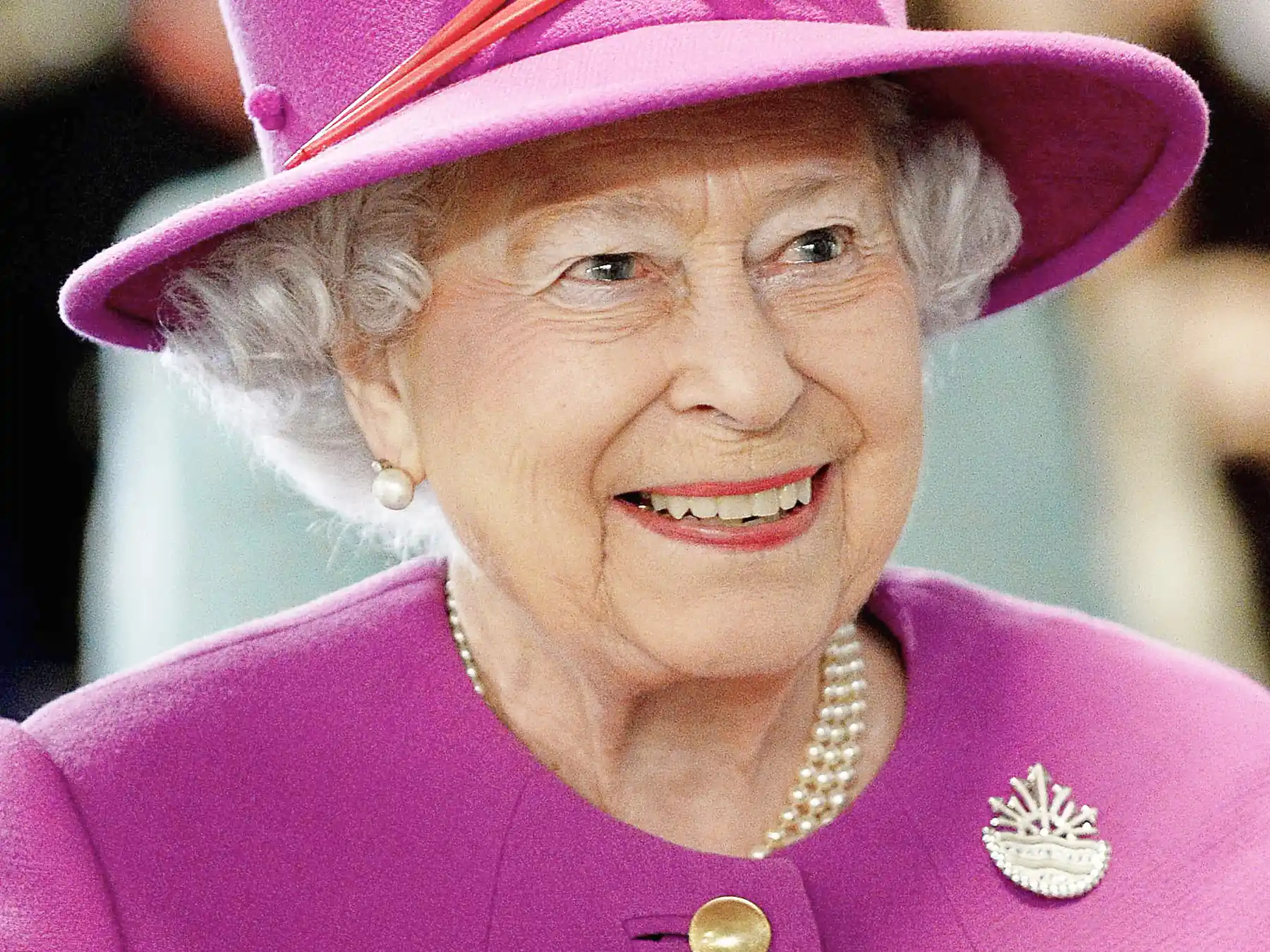
She was not born expecting to be queen
- Elizabeth’s grandfather was King George V.
- Her uncle Edward, Prince of Wales, was first in line to the throne when she was born.
- Her father Albert was the king’s second son.
- That meant young Elizabeth was not initially expected to become monarch.
- King George V died in January 1936.
- Elizabeth’s uncle became King Edward VIII.
- Edward abdicated in December 1936.
- He gave up the throne to marry Wallis Simpson.
- Elizabeth’s father then became King George VI.
- Elizabeth moved to first place in the line of succession.
- She remained heir presumptive rather than heir apparent because a future younger brother could theoretically have taken precedence under the succession rules then in force.
- No younger brother was born.
- Elizabeth therefore remained next in line.
- The abdication crisis transformed her life at age 10.
- A child who had been a relatively distant royal granddaughter suddenly became the future queen.
A royal childhood during war
- Elizabeth was educated mainly at home.
- Her studies included constitutional history and law.
- She also learned French.
- World War II began when she was 13.
- The royal family remained in Britain during the war.
- Elizabeth and Margaret spent much of the conflict at Windsor Castle.
- In 1940, Elizabeth made her first radio broadcast.
- She spoke to children who had been evacuated from their homes.
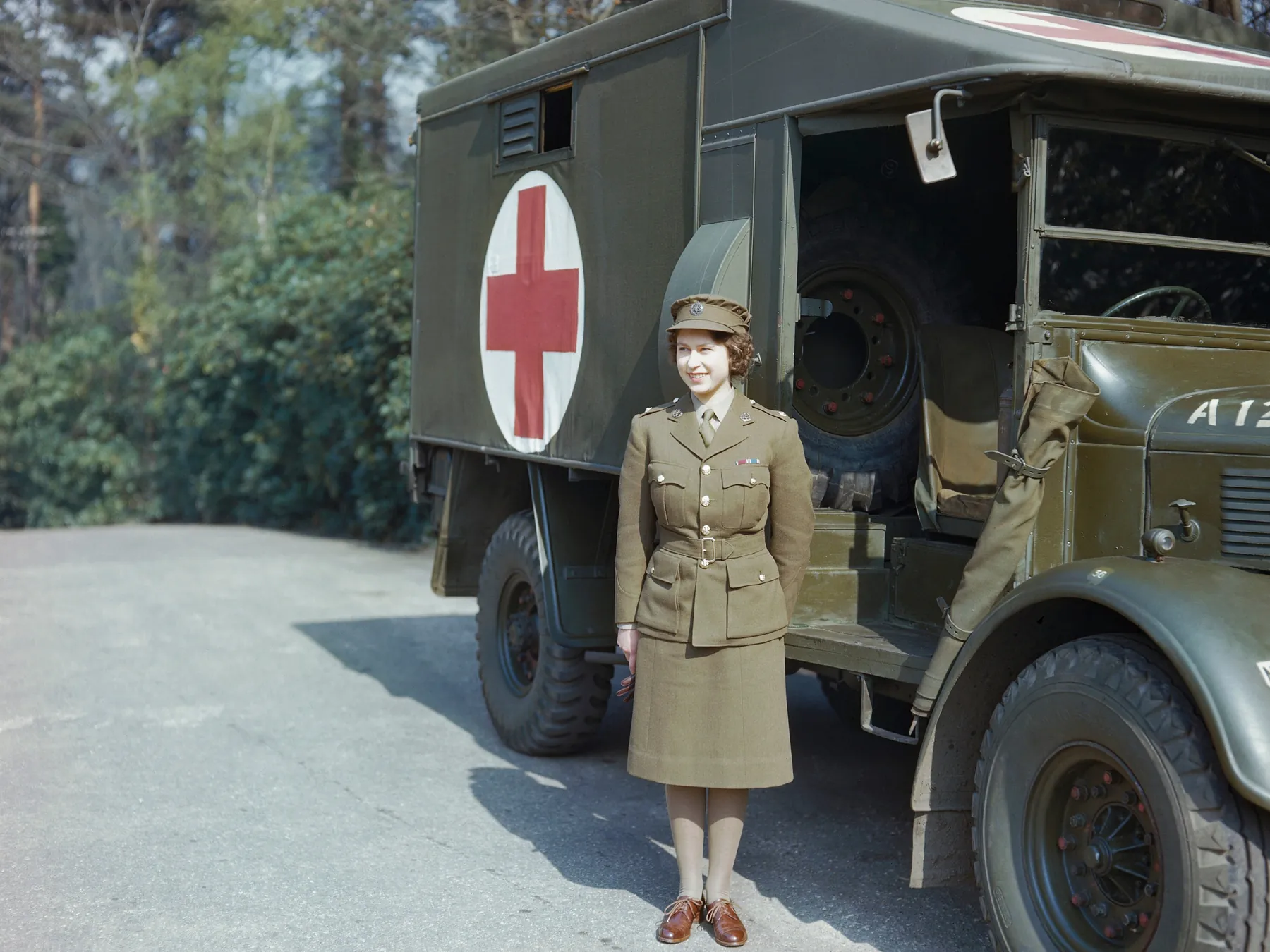
- Elizabeth joined the Auxiliary Territorial Service in 1945.
- She trained as a driver and mechanic.
- Her service number was 230873.
- She learned vehicle maintenance.
- She became the first female member of the British royal family to serve as a full-time active member of the armed services.
- On Victory in Europe Day, Elizabeth and Margaret joined crowds in London anonymously with permission from their parents.
- The wartime years gave the future queen direct experience of national crisis before she reached adulthood.
Elizabeth and Philip
- Elizabeth met Prince Philip of Greece and Denmark several times while young.
- They began corresponding seriously during her teenage years.
- Philip served in the Royal Navy during World War II.
- Their engagement was announced in July 1947.
- Philip renounced his Greek and Danish royal titles before the marriage.
- He became a naturalized British subject.
- He adopted the surname Mountbatten.
- King George VI created him Duke of Edinburgh before the wedding.
- Elizabeth and Philip married on November 20, 1947.
- The ceremony took place at Westminster Abbey.
- Britain was still under postwar rationing.
- Elizabeth saved clothing ration coupons for her wedding dress.
- The couple had four children: Charles, Anne, Andrew, and Edward.
- Philip became the longest-serving consort of a British monarch.
- Their marriage lasted more than 73 years until Philip’s death in 2021.
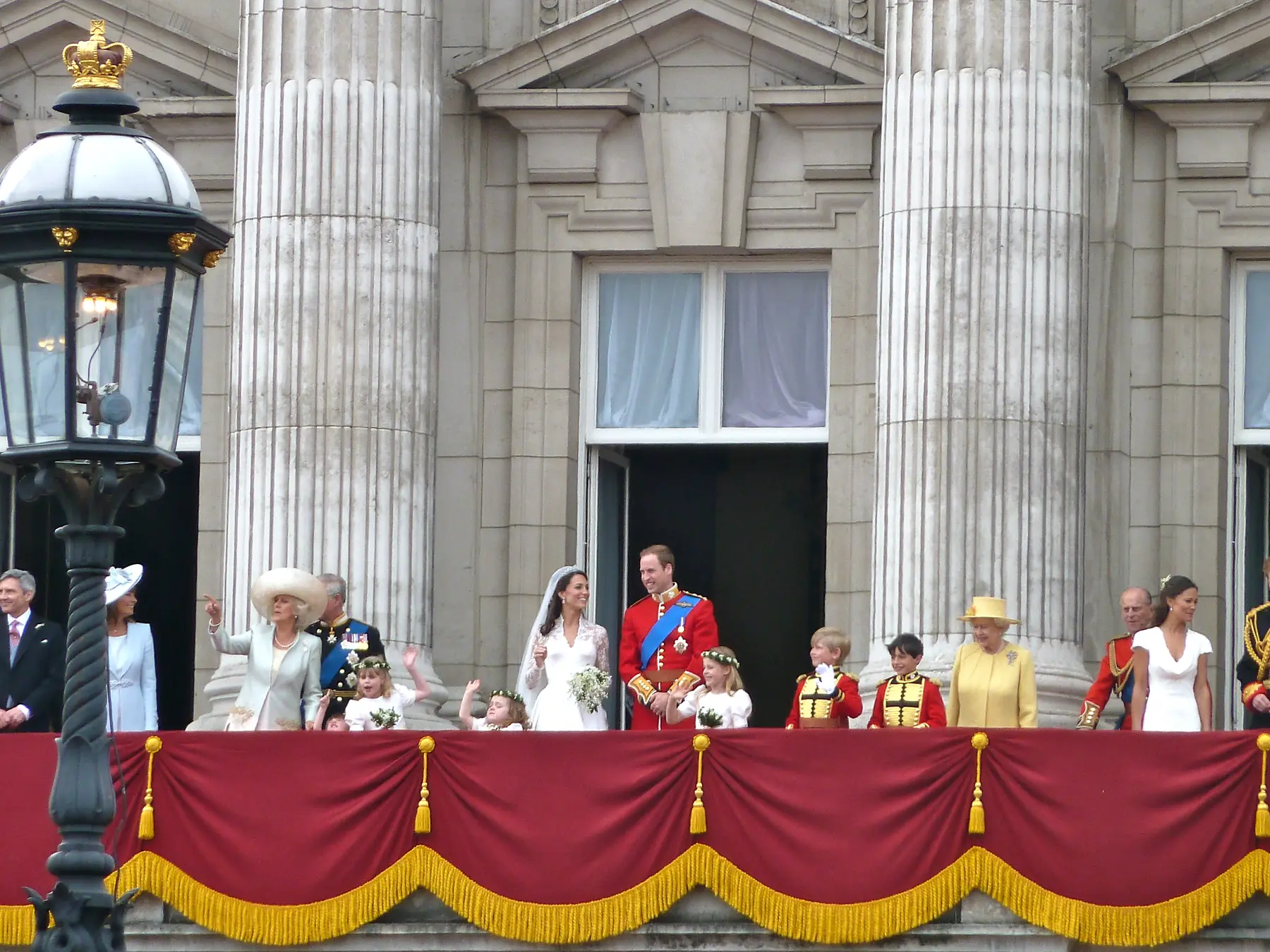
She became queen in Kenya
- King George VI’s health deteriorated in the early 1950s.
- Elizabeth increasingly represented him at public events.
- In early 1952, Elizabeth and Philip began a Commonwealth tour.
- They traveled first to Kenya.
- On February 6, 1952, King George VI died at Sandringham.
- Elizabeth immediately became queen under British succession law.
- She was 25 years old.
- She received the news while staying in Kenya.
- The tour was immediately abandoned.
- Elizabeth returned to Britain as monarch.
- Her regnal name remained Elizabeth II.
- Scotland saw controversy because the earlier Queen Elizabeth I had not ruled an independent Scotland.
- The royal cipher EIIR was attacked on some Scottish post boxes.
- The new queen began constitutional duties almost immediately.
- Her accession happened suddenly, but the institution had been preparing her for the possibility for years.
The 1953 coronation
- Elizabeth’s coronation took place at Westminster Abbey on June 2, 1953.
- The ceremony followed traditions stretching back centuries.
- Archbishop of Canterbury Geoffrey Fisher crowned her.
- The St Edward’s Crown was used for the crowning.
- The coronation was televised.
- The broadcast helped drive television ownership in Britain.
- Millions watched in the United Kingdom.
- Many more watched recordings around the world.
- The coronation service itself was not shortened merely for television.
- The sacred anointing portion was not shown close-up on television.
- The Queen wore a gown designed by Norman Hartnell.
- Its embroidery represented countries of the United Kingdom and Commonwealth.
- Rain fell heavily on coronation day.
- Street celebrations still took place across Britain.
- The coronation turned a medieval constitutional ritual into one of the first truly global television events.
Fifteen British prime ministers
- Winston Churchill was prime minister when Elizabeth became queen.
- He was the first of 15 British prime ministers to serve during her reign.
- The monarch holds regular private audiences with the prime minister.
- Those conversations are confidential.
- The Queen’s role was politically neutral.
- She did not vote publicly in elections.
- She formally opened sessions of Parliament.
- She granted Royal Assent to legislation.
- Royal Assent is now a constitutional formality.
- The Queen invited political leaders to form governments after elections or leadership changes.
- Most modern appointments followed clear constitutional convention.
- Liz Truss became the final prime minister appointed by Elizabeth II.
- The Queen appointed Truss at Balmoral on September 6, 2022.
- Elizabeth died two days later.
- Her weekly prime-minister audiences linked governments from Churchill’s postwar Britain to the politics of the 2020s.
The Commonwealth changed during her reign
- Elizabeth II became monarch during the decline of the British Empire.
- Many colonies became independent during her reign.
- The Commonwealth expanded as a voluntary association of independent states.
- The Queen served as Head of the Commonwealth.
- That position was not automatically hereditary in the same way as the British crown.
- Commonwealth leaders later agreed that Charles would succeed her as Head of the Commonwealth.
- Elizabeth made extensive Commonwealth tours.
- She visited every region of the United Kingdom.
- She also visited every Commonwealth realm during her reign.
- Some countries retained her as their monarch after independence.
- Others became republics while remaining in the Commonwealth.
- Barbados became a republic in 2021.
- The Queen’s reign therefore spanned enormous changes in Britain’s relationship with former colonies.
- Debates over monarchy, colonial history, and reparative justice grew stronger during her later years.
- Her longevity made her a living link between imperial history and the modern Commonwealth.
Corgis, horses, and private interests
- Elizabeth loved dogs, especially Pembroke Welsh corgis.
- She received a corgi named Susan for her 18th birthday.
- Many later royal corgis descended from Susan.
- The Queen also kept dorgis, crosses between corgis and dachshunds.
- She was an accomplished horsewoman.
- Horse breeding and racing were major lifelong interests.
- Her horses won important races.
- She closely followed bloodlines and breeding decisions.
- Elizabeth attended the Royal Windsor Horse Show regularly.
- She also enjoyed country life at Balmoral and Sandringham.
- Brightly colored outfits helped make her visible in large crowds.
- Her handbags became part of her recognizable public style.
- She used a handbag and subtle gestures to communicate with staff during engagements, according to numerous royal accounts.
- The Queen enjoyed photography from a young age.
- Her private interests offered rare glimpses of personality inside an unusually formal public role.
Ten surprising Queen Elizabeth II facts
- Elizabeth was not born as the daughter of a king.
- Her uncle’s abdication made her the future monarch.
- She trained as a military driver and mechanic during World War II.
- She became queen while visiting Kenya.
- Her coronation helped turn television into a mass household medium in Britain.
- She worked with 15 British prime ministers.
- Her first prime minister was Winston Churchill and her last was Liz Truss.
- She reigned longer than any previous British monarch.
- Many of her corgis descended from one dog named Susan.
- For more royal history, explore our Princess Diana facts and History facts.
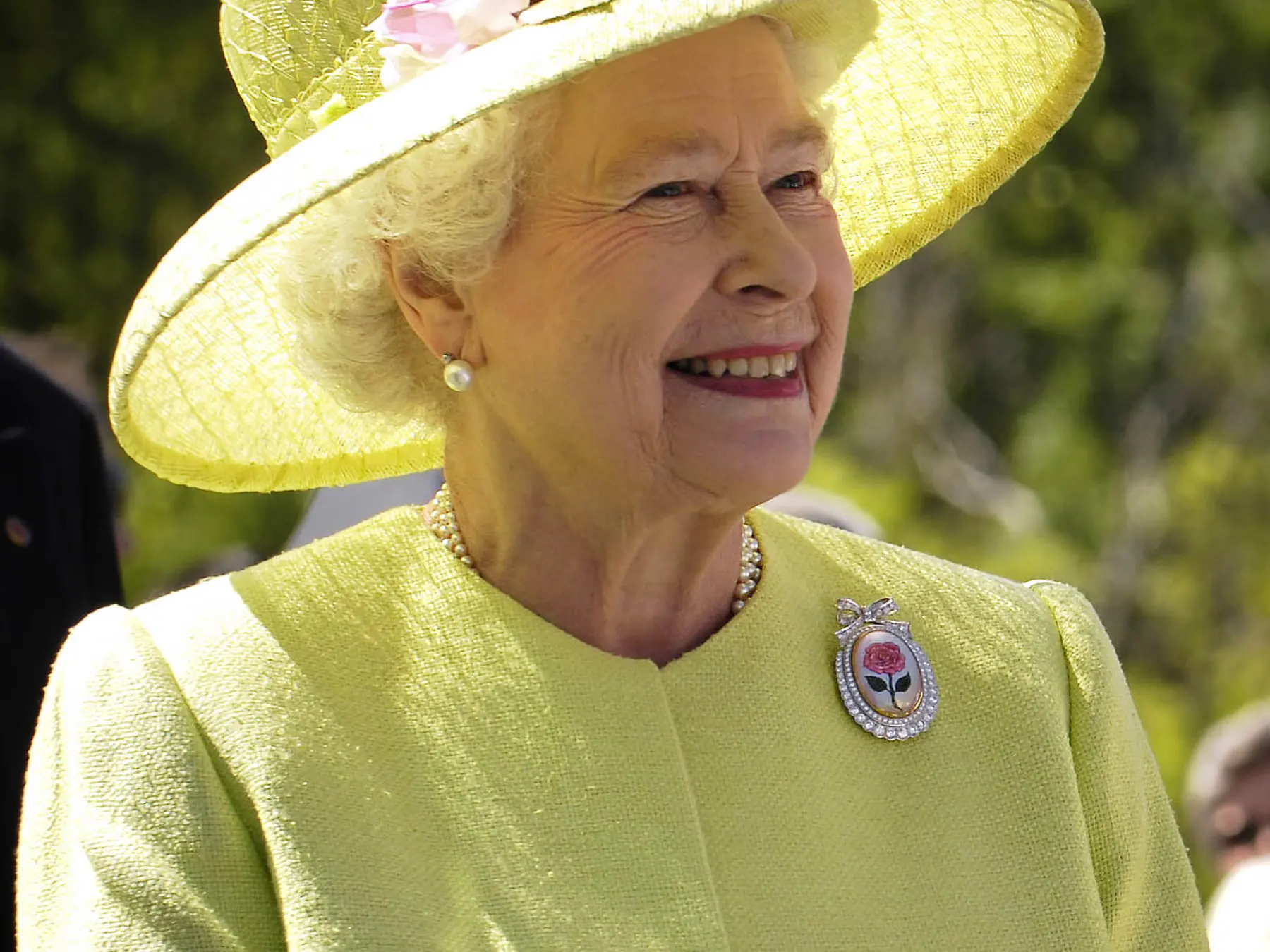
Quick Queen Elizabeth II FAQ
When did Queen Elizabeth II become queen?
February 6, 1952, after the death of her father, King George VI.
How long did Queen Elizabeth II reign?
More than 70 years, from February 1952 until her death on September 8, 2022.
Where was Elizabeth when she became queen?
Kenya, where she and Prince Philip had begun a Commonwealth tour.
How many prime ministers served under Queen Elizabeth II?
Fifteen British prime ministers, from Winston Churchill to Liz Truss.
Why was Queen Elizabeth II historically significant?
Her record-long reign spanned decolonization, the Cold War, Britain’s changing global role, the rise of television and digital media, and major transformations in the Commonwealth and monarchy.

Ellie is the owner and sole author of Fun Facts, combining her mechanical engineering background with years of research-driven writing to deliver facts you can trust. Every article is thoroughly fact-checked and routinely updated as new science and sources emerge to keep information accurate and current. Her mission is to make learning delightful while upholding high standards of reliability and transparency.