
Diana, Princess of Wales became one of the most photographed people on Earth, but the reasons she remains culturally important go beyond royal fashion. She changed how a modern royal interacted with patients, children, people with HIV/AIDS, and landmine survivors, while navigating a marriage and media environment followed by hundreds of millions. These 145 Princess Diana facts explore her childhood, royal wedding, sons, charity work, style, public speaking, AIDS advocacy, landmine campaign, divorce, famous interviews, funeral, memorials, and the carefully documented history behind a life often buried under rumor.
Princess Diana basics
- Diana Frances Spencer was born on July 1, 1961.
- She was born at Park House on the Sandringham estate in Norfolk, England.
- Her parents were John Spencer and Frances Roche.
- Diana grew up in an aristocratic British family.
- She had two older sisters and a younger brother who survived childhood.
- Her brother is Charles Spencer, 9th Earl Spencer.
- Diana became Lady Diana Spencer when her father inherited the earldom in 1975.
- She married Charles, Prince of Wales, in 1981.
- She became Diana, Princess of Wales.
- Diana and Charles had two sons.
- They are Prince William and Prince Harry.
- Diana became internationally famous for royal duties, humanitarian work, and style.
- She and Charles divorced in 1996.
- Diana died in Paris on August 31, 1997.
- She was 36 years old.
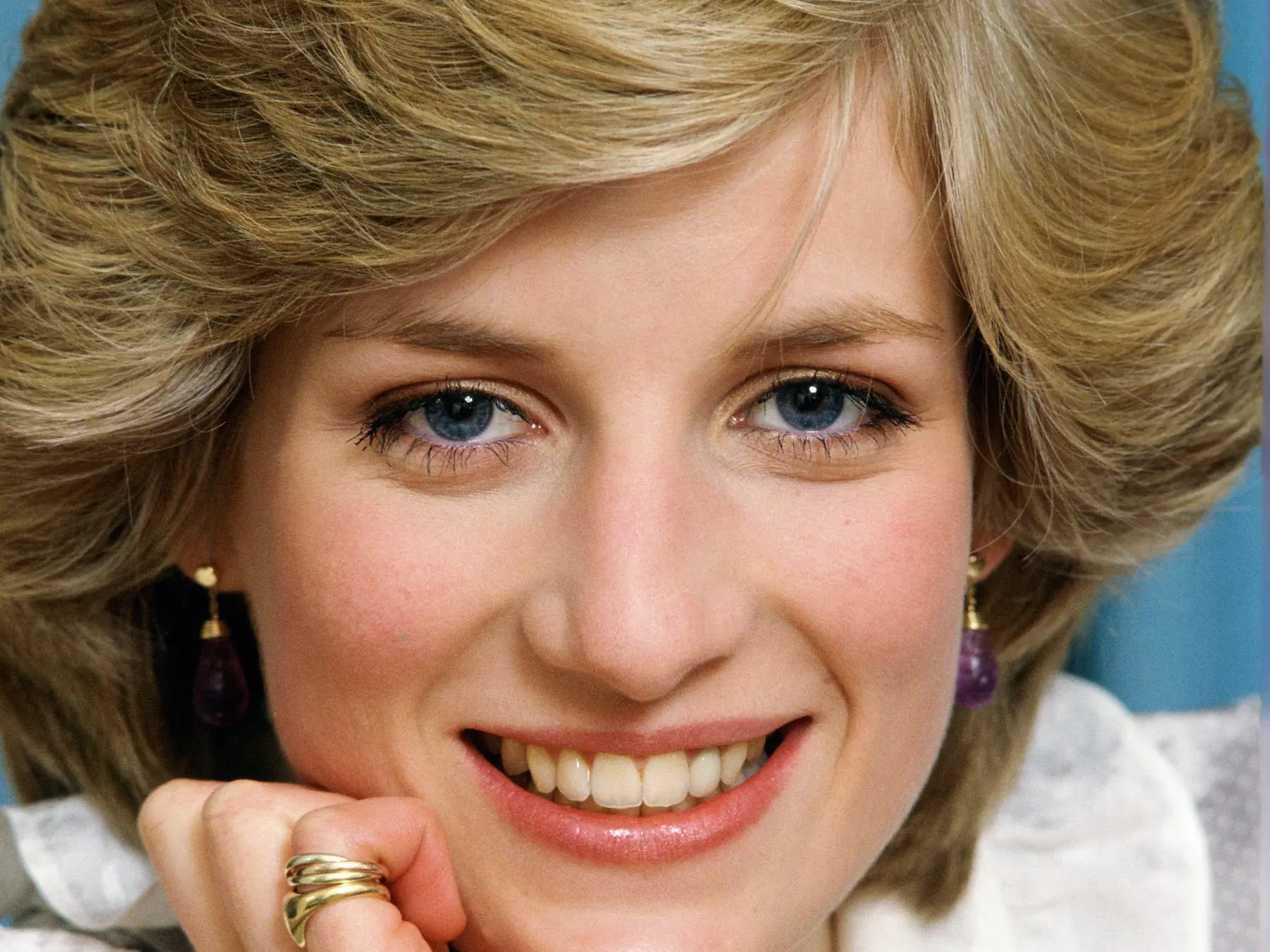
An aristocratic childhood
- The Spencer family had long connections with the British royal family.
- Diana’s grandmothers served as ladies-in-waiting to Queen Elizabeth The Queen Mother.
- Diana spent early childhood near the royal Sandringham estate.
- Her parents’ marriage became unhappy.
- They separated when Diana was young.
- A difficult custody dispute followed.
- Diana’s father eventually received custody of the children.
- She attended boarding schools.
- Diana did not excel academically in conventional exams.
- She was interested in music and dance.
- She studied ballet.
- Her height eventually made a professional ballet career impractical.
- Diana later moved to London.
- She shared an apartment with friends.
- Her life before royal marriage was privileged by ordinary standards but considerably less formal than the palace world she entered.
She worked before marrying Charles
- Diana held several jobs before becoming engaged.
- She worked as a nanny.
- She also worked with young children at a nursery school.
- Her work with children became a major part of early press coverage.
- Photographers followed her as interest in the royal relationship grew.
- Diana was not technically a kindergarten teacher despite that common shorthand.
- She worked as a nursery assistant at the Young England Kindergarten.
- She also cleaned for friends and worked as a hostess.
- Her paid employment was unusual compared with some earlier royal brides from aristocratic backgrounds.
- Diana’s public image as a young nursery worker contrasted strongly with palace formality.
- She was 19 when her engagement was announced.
- Charles was 32.
- The age difference attracted less public criticism in 1981 than it often does in retrospective discussion.
- The intense media interest began before the wedding.
- Diana’s relationship with photographers would remain one of the defining pressures of her adult life.
The 1981 royal wedding
- Charles and Diana announced their engagement in February 1981.
- They married on July 29, 1981.
- The ceremony took place at St Paul’s Cathedral in London.
- Royal weddings traditionally often used Westminster Abbey, making St Paul’s a notable choice.
- The cathedral offered a larger seating capacity.
- Hundreds of millions of people around the world watched on television.
- Diana wore a gown designed by David and Elizabeth Emanuel.
- The dress had an enormous train about 25 feet long.
- Its sleeves and skirt became defining examples of early-1980s bridal style.
- Diana’s wedding shoes contained hidden decorative details.
- The ceremony included a famous wording slip when Diana reversed part of Charles’s names.
- Charles also made a small verbal mistake.
- Diana did not promise to “obey” Charles in the vows.
- That omission attracted attention and influenced later royal wedding choices.
- The wedding was marketed as a fairy tale even though the marriage later proved deeply troubled.
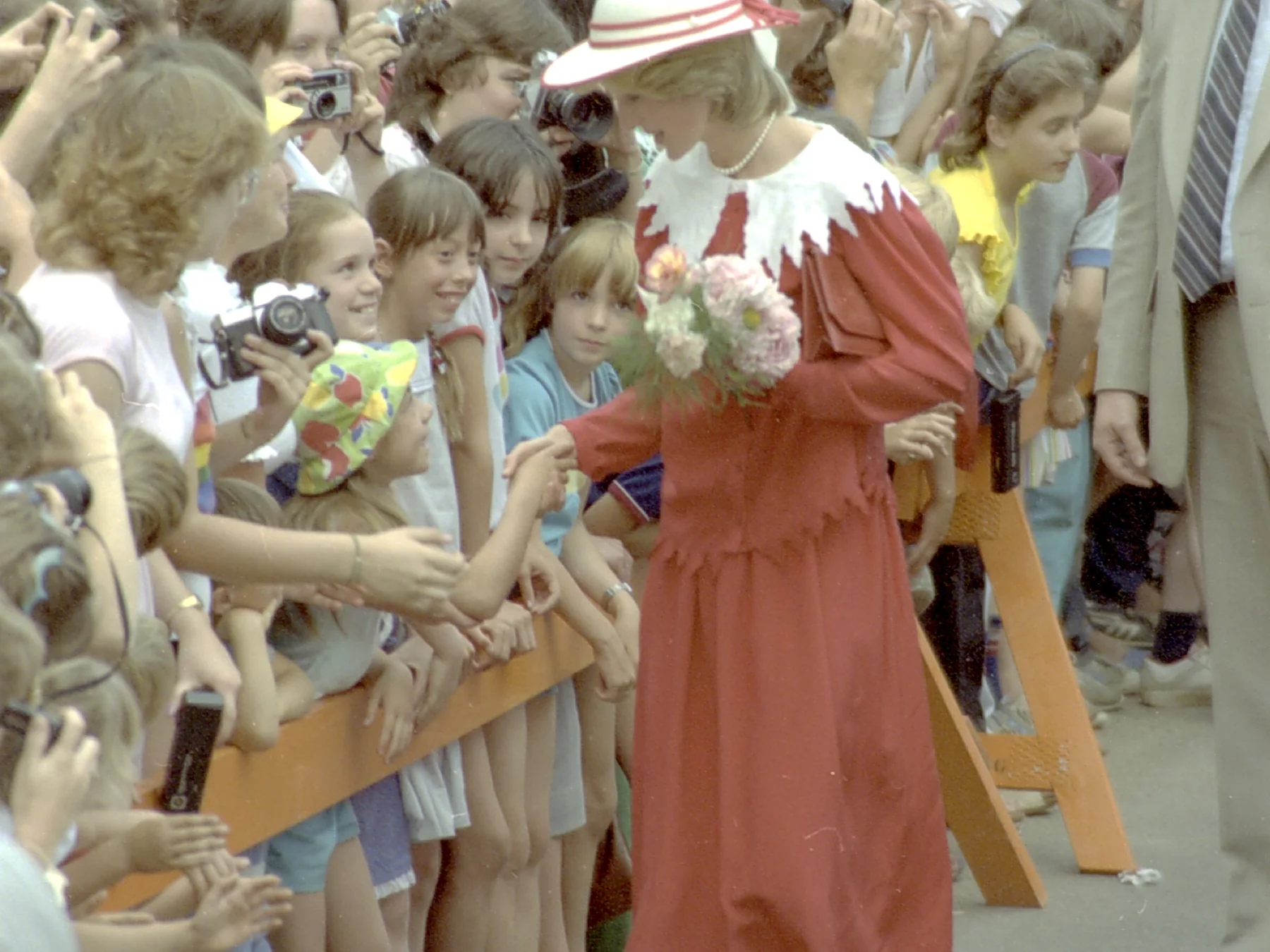
William and Harry
- Prince William was born on June 21, 1982.
- Prince Harry was born on September 15, 1984.
- Diana was highly involved in her sons’ daily lives by royal standards of the era.
- She selected schools.
- She took them on ordinary outings.
- Photographs showed the family at amusement parks and fast-food restaurants.
- Diana sometimes stood in queues with the boys.
- She wanted them exposed to life beyond palaces.
- William became the first heir in his direct line to attend nursery school outside the palace environment.
- Diana took the boys to hospitals and charitable organizations.
- She also protected them fiercely from press intrusion.
- That goal was difficult because photographers followed the family constantly.
- After Diana’s death, William was 15.
- Harry was 12.
- Both sons have repeatedly described her influence on their charity work and understanding of public service.
Changing perceptions of HIV and AIDS
- Diana became a prominent public advocate for people living with HIV and AIDS.
- Fear and misinformation about HIV were widespread during the 1980s.
- Some people wrongly believed casual touch could transmit the virus.
- In 1987, Diana opened Britain’s first purpose-built HIV/AIDS unit at London Middlesex Hospital.
- She publicly shook hands with a patient without wearing gloves.
- The gesture was medically safe.
- It was also symbolically powerful.
- HIV is not spread through ordinary handshakes.
- Diana’s high-profile contact challenged stigma.
- She continued visiting AIDS patients and organizations.
- She hugged people with HIV in public.
- Her work helped humanize patients during an era of intense discrimination.
- Diana did not discover medical facts about HIV.
- Her contribution was using celebrity to make accurate health information emotionally visible.
- A simple handshake became one of the most important images of her humanitarian career.
She visited people others avoided
- Diana supported organizations working with homelessness.
- Centrepoint became one of her major charities.
- She brought William and Harry to homelessness organizations privately.
- Diana also supported children’s hospitals.
- She visited patients with serious illnesses.
- She supported leprosy charities.
- Leprosy, or Hansen’s disease, carried severe stigma despite being treatable.
- Diana touched and interacted openly with people affected by the disease.
- She became patron of the Leprosy Mission.
- Diana also worked with cancer organizations.
- She supported Great Ormond Street Hospital.
- Her public style emphasized direct personal contact.
- She often crouched or knelt to speak at eye level with children.
- Photographers captured gestures that made royal visits look less formal.
- Diana’s influence on royal public engagement came as much from body language as speeches.
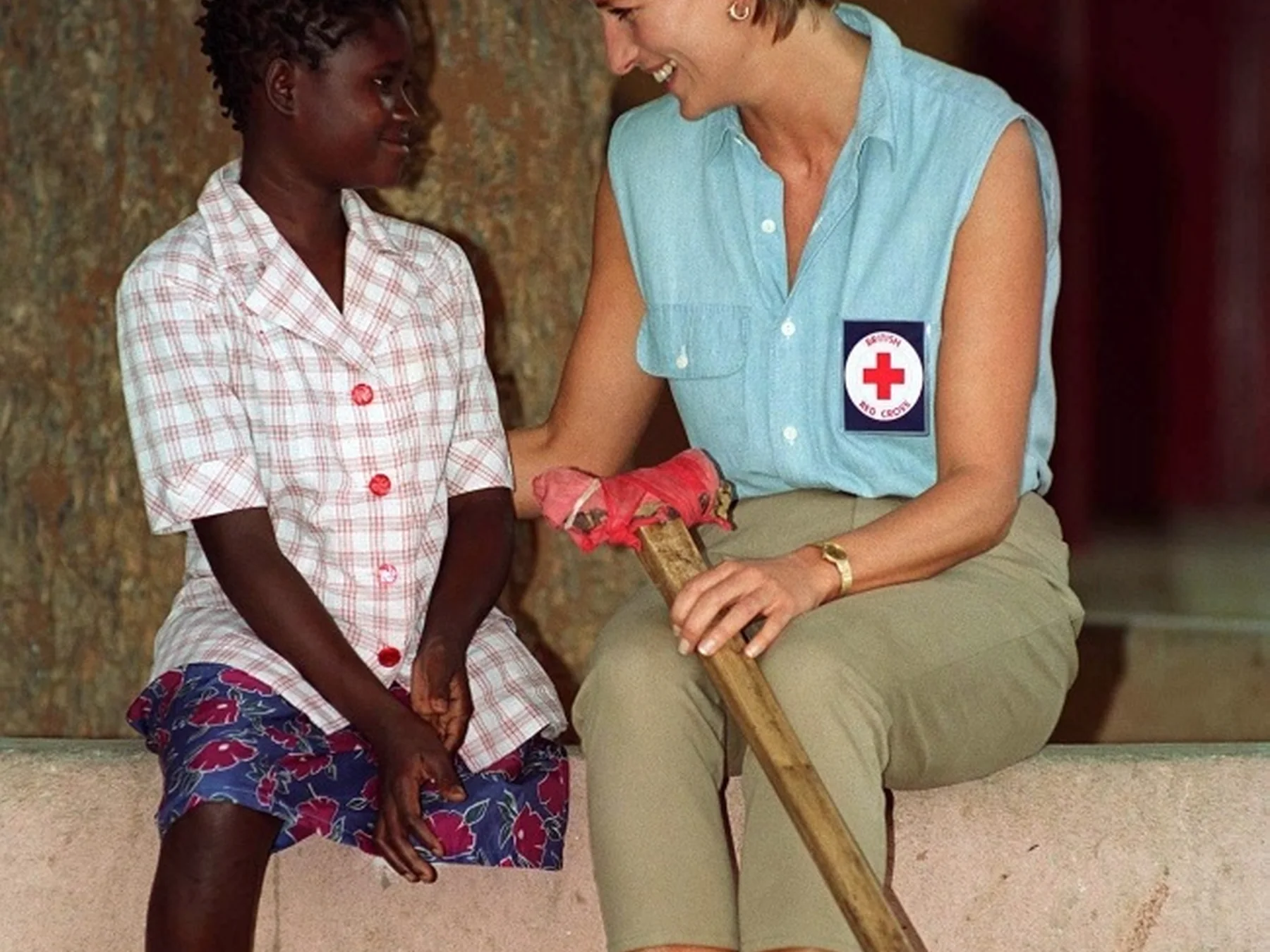
Landmines become her final major campaign
- Diana became a high-profile advocate against anti-personnel landmines in 1997.
- She visited Angola with the British Red Cross.
- Diana walked through a cleared minefield wearing protective equipment.
- Photographs of the walk appeared around the world.
- She met people who had lost limbs to mines.
- Diana later visited Bosnia to meet landmine survivors.
- Her involvement attracted enormous attention to a campaign already led by humanitarian organizations.
- Critics accused her of entering political territory.
- Diana described the issue in humanitarian terms.
- The International Campaign to Ban Landmines won the Nobel Peace Prize in 1997.
- The Ottawa Treaty banning anti-personnel mines opened for signature later that year.
- Diana died before the treaty was signed.
- She did not single-handedly create the treaty.
- Her celebrity significantly amplified public awareness.
- Images of a princess walking through a former minefield became among the most memorable photographs of humanitarian advocacy.
Separation, interview, and divorce
- Charles and Diana’s marriage deteriorated publicly.
- Prime Minister John Major announced their separation in Parliament in 1992.
- Both Charles and Diana later acknowledged extramarital relationships.
- Diana gave a famous BBC Panorama interview in 1995.
- She discussed her marriage, mental health, and royal role.
- The interview drew an enormous audience.
- Journalist Martin Bashir used deceptive methods to secure Diana’s participation.
- A later independent inquiry led by Lord Dyson documented serious BBC failures.
- The BBC apologized.
- Queen Elizabeth II urged Charles and Diana to proceed with divorce.
- The divorce was finalized in August 1996.
- Diana lost the style Her Royal Highness.
- She retained the title Diana, Princess of Wales.
- She continued charitable work after divorce.
- Her post-royal life lasted only about one year before her death.
Ten surprising Princess Diana facts
- Diana worked as a nursery assistant before marrying into the royal family.
- She was only 20 years old on her wedding day.
- Her wedding-dress train was about 25 feet long.
- Diana’s public handshake with an HIV-positive patient challenged a major health myth.
- She supported leprosy charities as well as AIDS organizations.
- Diana took her sons to homelessness organizations to expose them to lives outside royal privilege.
- Her 1997 minefield walk helped focus global attention on anti-personnel landmines.
- The famous 1995 Panorama interview was later found to have been secured through deceptive journalistic methods.
- Diana was only 36 when she died.
- For more royal history, explore our upcoming Queen Elizabeth II guide and History facts.
Quick Princess Diana FAQ
When was Princess Diana born?
July 1, 1961, at Park House on the Sandringham estate in Norfolk.
When did Diana marry Prince Charles?
July 29, 1981, at St Paul’s Cathedral in London.
How many children did Diana have?
Two sons, Prince William and Prince Harry.
Why was Diana’s AIDS work important?
She publicly touched, shook hands with, and hugged people with HIV at a time when many people wrongly feared casual contact, helping challenge stigma with medically accurate behavior.
When did Princess Diana die?
August 31, 1997, after a car crash in the Pont de l’Alma tunnel in Paris. Official investigations found the crash resulted from a combination of high speed, an impaired driver, and pursuit by photographers, with seat-belt nonuse also affecting survivability.

Ellie is the owner and sole author of Fun Facts, combining her mechanical engineering background with years of research-driven writing to deliver facts you can trust. Every article is thoroughly fact-checked and routinely updated as new science and sources emerge to keep information accurate and current. Her mission is to make learning delightful while upholding high standards of reliability and transparency.