
Leopards are masters of disappearing in plain sight. Their spotted coats work in forests, mountains, savannas, deserts, and even landscapes near cities, while their powerful bodies let them climb trees carrying prey that can weigh nearly as much as they do. They also have one of the widest geographic ranges of any big cat. These 145 leopard facts explore rosettes, black panthers, climbing, hunting, cubs, habitats, senses, subspecies, snow-line mountains, prey, conservation, human conflict, and the differences between leopards, jaguars, cheetahs, and other spotted cats.
Leopard basics
- The leopard’s scientific name is Panthera pardus.
- Leopards belong to the cat family Felidae.
- They are members of the genus Panthera.
- That genus also includes lions, tigers, jaguars, and snow leopards.
- Leopards are native to parts of Africa and Asia.
- They have one of the broadest habitat ranges among big cats.
- Leopards live in forests, savannas, grasslands, mountains, shrublands, and dry regions.
- They are primarily carnivorous.
- Leopards are powerful climbers.
- They can also swim.
- Adult males are generally larger than females.
- Body size varies substantially among regions.
- Leopards are mostly solitary.
- They are often active at night or around dawn and dusk.
- The IUCN classifies the leopard species as Vulnerable globally, with some regional populations in much greater danger.
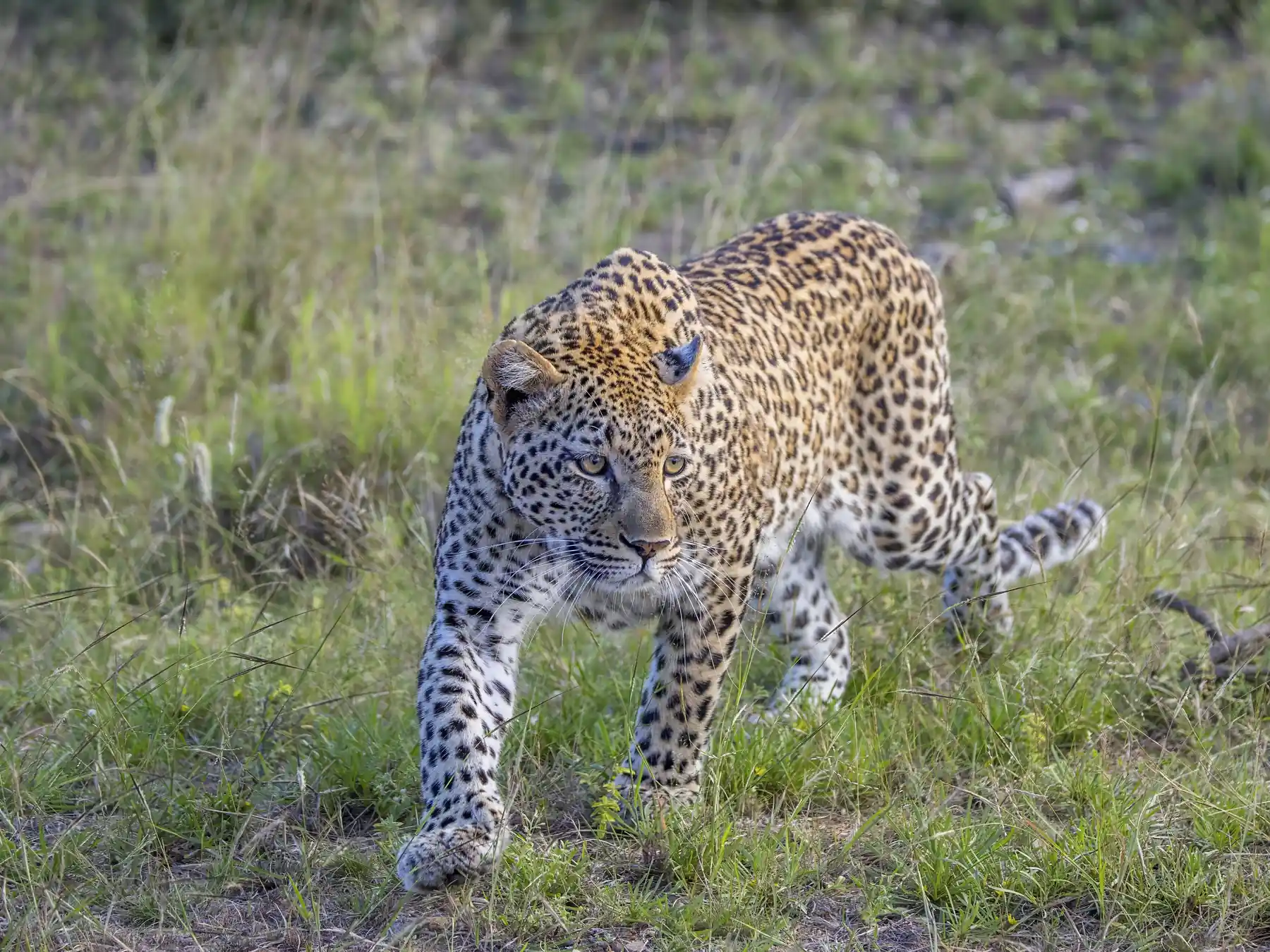
Rosettes are not ordinary spots
- Leopard coats are covered with dark markings called rosettes.
- Rosettes are clusters or rings of spots rather than simple solid dots.
- The pattern helps break up the outline of the cat.
- This camouflage is useful in dappled vegetation and shadow.
- Rosette shape varies across the body.
- The face and lower legs have more solid spots.
- The belly is lighter.
- The tail has spots and partial rings.
- Every leopard’s pattern is individually distinctive.
- Researchers can use photographs to identify individuals.
- Camera traps record coat patterns automatically in the wild.
- Software can help match repeated sightings.
- Leopard rosettes usually lack central dots.
- Jaguar rosettes often contain one or more central spots.
- That is one useful visual clue for telling these two spotted big cats apart.
Black panthers can be leopards
- Black panther is not a separate species.
- The term commonly refers to melanistic leopards or jaguars.
- Melanism produces unusually dark pigmentation.
- A black leopard still has rosettes.
- The markings can become visible in bright or angled light.
- Melanistic leopards occur especially often in some humid forest regions.
- Dark coloration may provide camouflage advantages under low-light forest conditions.
- Genetics controls the melanistic trait.
- The inheritance pattern differs between leopards and jaguars.
- Not every leopard population contains many black individuals.
- Black leopards are especially famous in parts of Southeast Asia.
- A melanistic leopard is still the same species as a normally colored leopard.
- Its behavior is not automatically more aggressive.
- The term panther is used inconsistently in everyday language.
- Scientific names are more reliable than color-based common names when identifying big cats.
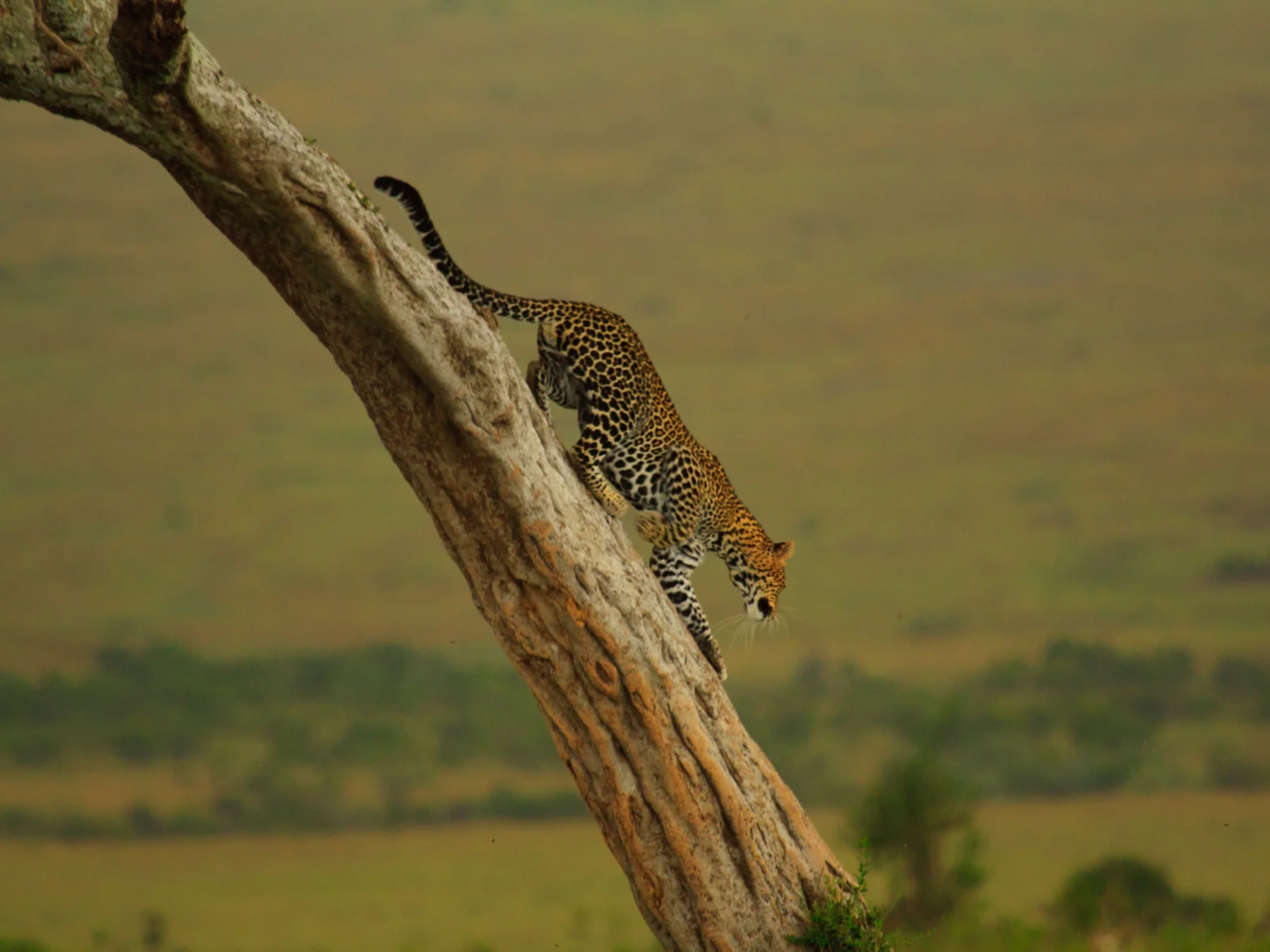
Built for climbing
- Leopards have muscular shoulders and forelimbs.
- Retractable claws provide grip on bark.
- Flexible ankles help with climbing.
- A long tail contributes balance.
- Leopards often rest in trees.
- They may scan territory from elevated branches.
- Trees can provide escape from larger predators.
- Leopards famously drag carcasses into trees.
- This can protect food from hyenas and lions.
- A leopard may hoist prey close to its own body mass.
- Large males can move surprisingly heavy carcasses vertically.
- Not every leopard caches every meal in a tree.
- Behavior depends on competitors, prey size, habitat, and tree availability.
- In regions without strong scavenger competition, tree caching may be less important.
- The famous “leopard with antelope in a tree” image is one flexible strategy rather than a compulsory rule.
Ambush hunters
- Leopards rely heavily on stealth.
- They stalk prey using cover.
- The spotted coat helps conceal movement.
- They can crouch extremely low.
- A final attack usually occurs from relatively short range.
- Leopards can sprint quickly but are not built for long-distance chases.
- They commonly kill prey with a throat bite or suffocating hold.
- Their diet is extraordinarily flexible.
- Prey can include antelope, deer, pigs, monkeys, rodents, hares, birds, reptiles, and other animals.
- Leopards can survive on much smaller prey when large animals are scarce.
- This dietary flexibility helps them occupy diverse habitats.
- They may also take livestock.
- Livestock predation creates conflict with people.
- Leopards living near cities can hunt dogs, pigs, and other human-associated animals.
- The ability to change prey is one reason leopards persist in landscapes where other large predators disappear.
Leopards communicate without meeting often
- Adult leopards usually live alone outside mating and mother-cub relationships.
- Solitary does not mean socially unaware.
- Leopards communicate through scent marks.
- They spray urine on vegetation and rocks.
- They scrape the ground.
- They leave feces in noticeable locations.
- Cheek rubbing deposits scent too.
- These marks communicate occupancy and reproductive information.
- Leopards also vocalize.
- A famous call sounds like rough wood being sawed.
- It is often called a sawing call.
- Males and females can use it.
- Growls, snarls, purr-like sounds, and other vocalizations occur in different contexts.
- Territories can overlap, especially between males and females.
- Scent lets neighboring cats share information without risky face-to-face encounters.
Cubs stay hidden
- Female leopards raise cubs without help from the male.
- Pregnancy lasts roughly three months.
- Litters commonly contain two or three cubs.
- Newborn cubs are blind.
- Their eyes open after several days.
- Mothers hide young in dens, thick vegetation, caves, or rocky shelter.
- They move cubs between hiding places.
- This can reduce detection by predators.
- Cubs begin following their mother as they grow.
- They learn hunting skills gradually.
- Play develops coordination and stalking behavior.
- Young leopards remain dependent for many months.
- They eventually disperse to establish their own ranges.
- Juvenile survival can be low in areas with many predators or human pressure.
- A female’s reproductive success depends on keeping cubs hidden while also hunting enough food to nurse and feed them.
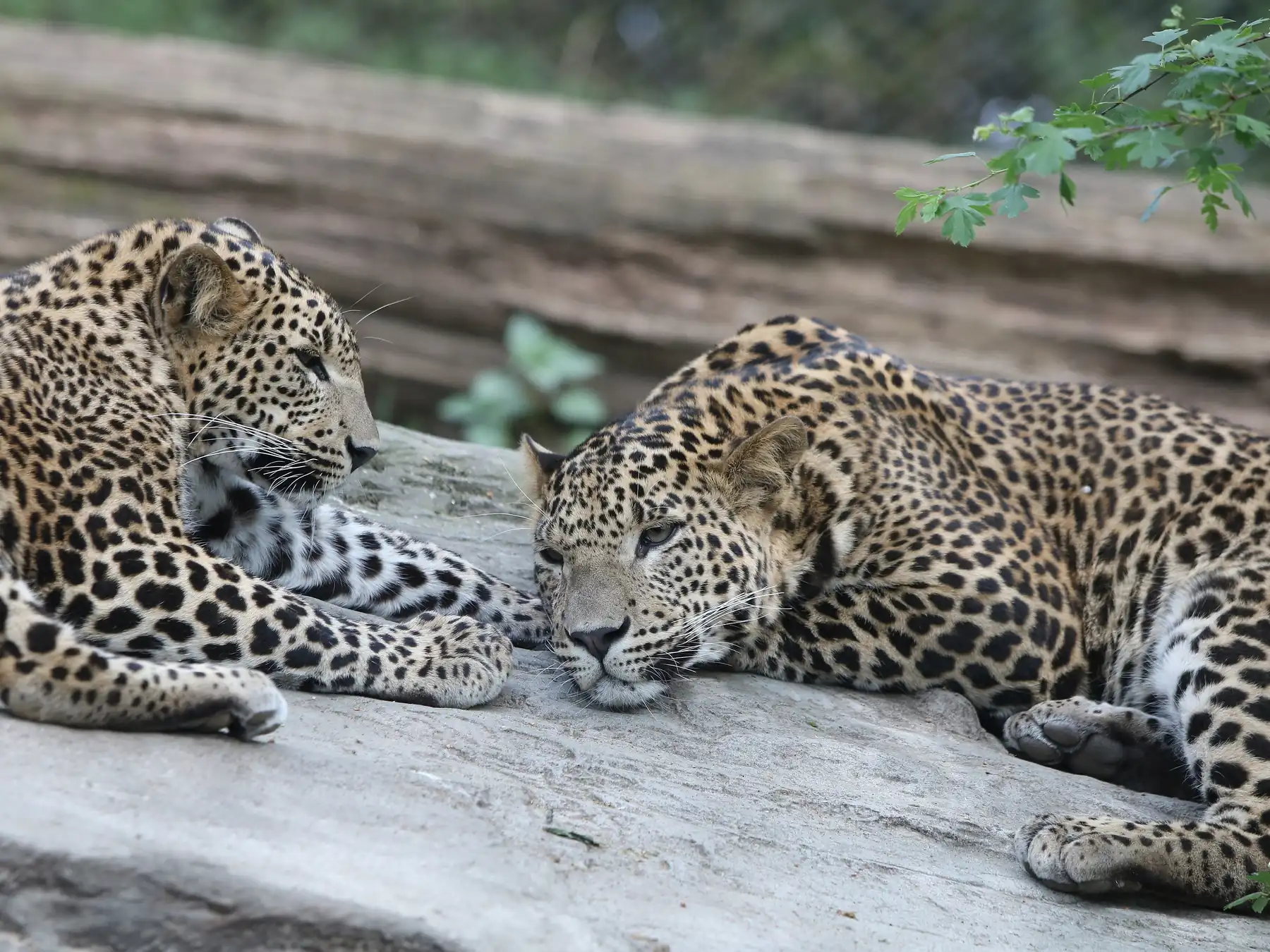
Leopards across mountains and deserts
- Leopards survive in tropical rainforest.
- They also live in dry African savanna.
- Some inhabit rugged mountains.
- Persian leopards occur in western Asian mountain regions.
- Amur leopards live in temperate forests of the Russian Far East and northeastern China.
- They grow thick winter coats.
- Amur leopards are among the world’s rarest big cats.
- Arabian leopards survive in arid mountainous habitat.
- Sri Lankan leopards are the island’s largest terrestrial predators.
- Indian leopards live in landscapes ranging from forests to agricultural mosaics.
- Some persist surprisingly close to major cities.
- Leopards use drainage lines, plantations, scrub, and rocky cover to move through human-dominated land.
- Adaptability does not make them immune to habitat loss.
- Small isolated populations can lose genetic diversity.
- The leopard’s wide species range hides severe local declines.
Leopard, jaguar, or cheetah?
- Leopards and jaguars both have rosette-patterned coats.
- Jaguars are native to the Americas.
- Leopards are native to Africa and Asia.
- Jaguars are generally stockier and more heavily built.
- Jaguar rosettes often contain central spots.
- Leopard rosettes are usually smaller and lack central dots.
- Cheetahs have solid round spots rather than rosettes.
- Cheetahs also have dark tear marks running down the face.
- Cheetah claws are less fully retractable than leopard claws.
- Cheetahs are specialized for extreme sprinting.
- Leopards are more powerful climbers.
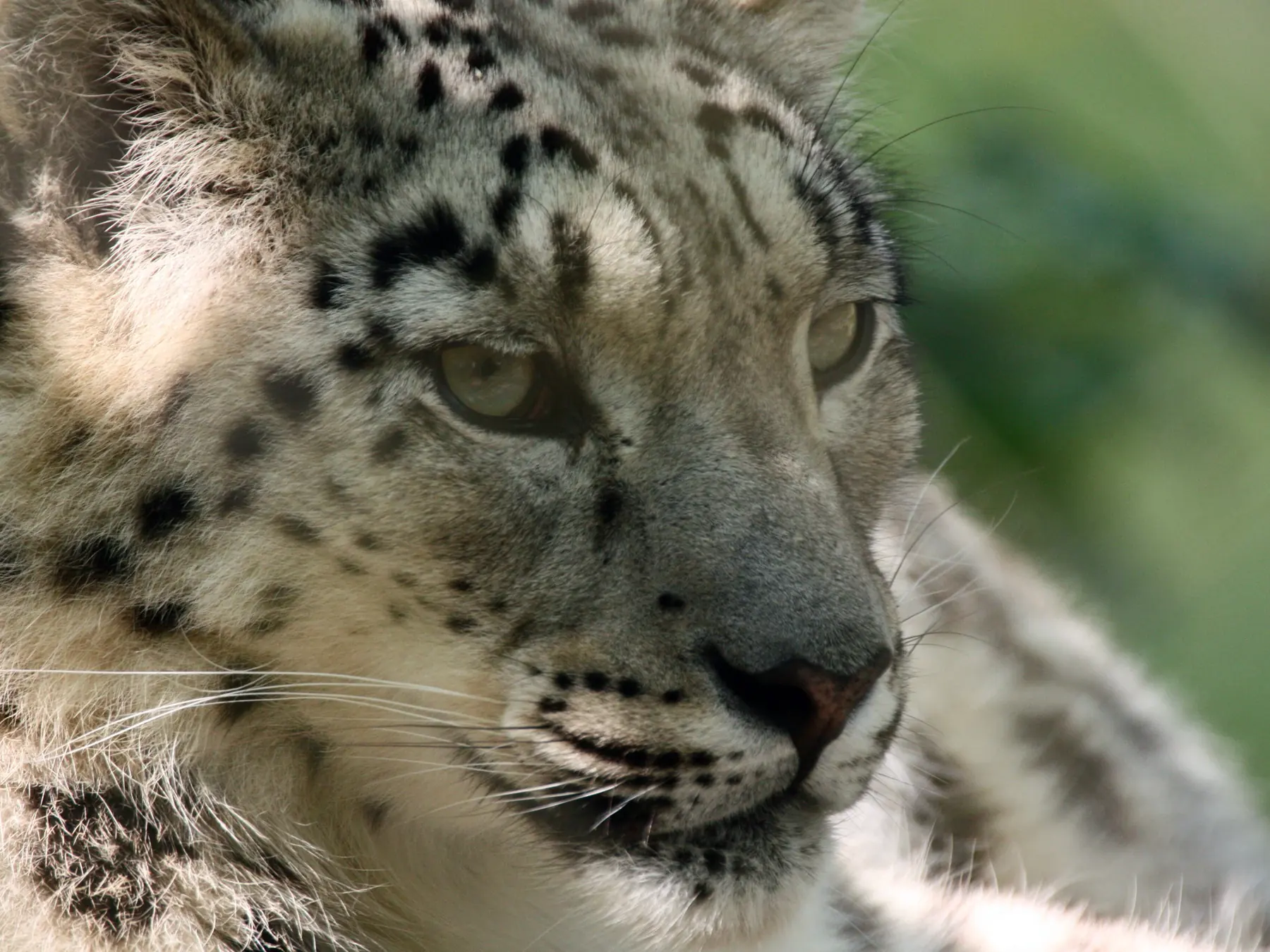
- Snow leopards are a different species, Panthera uncia.
- Clouded leopards are not true leopards despite the common name.
- They belong to the genus Neofelis.
- Common names can make big-cat family relationships much more confusing than scientific taxonomy does.
Ten surprising leopard facts
- A black panther in Africa or Asia can be a melanistic leopard.
- Black leopards still have rosettes hidden in the dark coat.
- Leopards can drag extremely heavy prey into trees.
- They make a distinctive call often compared with sawing wood.
- Leopards live from rainforest to desert-edge mountains.
- Some survive surprisingly close to large human cities.
- Jaguar rosettes often contain central dots while leopard rosettes usually do not.
- Cheetahs have solid spots, not leopard-style rosettes.
- The leopard’s enormous range hides the fact that several regional populations are critically endangered.
- For more big-cat trivia, explore our tiger facts and animal facts.
Quick leopard FAQ
Where do leopards live?
Across parts of sub-Saharan Africa, North Africa, the Middle East, South Asia, Southeast Asia, China, and the Russian Far East, although their modern range is much smaller than historically.
Are black panthers leopards?
They can be. In Africa and Asia, “black panther” usually means a melanistic leopard. In the Americas it usually refers to a melanistic jaguar.
Can leopards climb trees?
Yes. They are exceptional climbers and often rest, hide, scan territory, or store prey in trees.
How can you tell a leopard from a jaguar?
Leopards are generally slimmer and their rosettes usually lack the central dots commonly seen inside jaguar rosettes. Their natural ranges are also on different continents.
Are leopards endangered?
The species is globally classified as Vulnerable, while several subspecies and regional populations face much more severe extinction risk.

Ellie is the owner and sole author of Fun Facts, combining her mechanical engineering background with years of research-driven writing to deliver facts you can trust. Every article is thoroughly fact-checked and routinely updated as new science and sources emerge to keep information accurate and current. Her mission is to make learning delightful while upholding high standards of reliability and transparency.