
Iceland has volcanoes under glaciers, geothermal swimming pools, black-sand beaches, summer nights that barely get dark, winter auroras, one of the world’s oldest parliaments, and a language that keeps many medieval features alive. It is young in geological terms but packed with history. These 145 Iceland facts explore Reykjavík, Vikings, Alþingi, glaciers, geysers, volcanoes, hot water, wildlife, food, sagas, language, names, elves, energy, and the dramatic island sitting directly on a plate boundary.
Iceland basics
- Iceland is an island country in the North Atlantic Ocean.
- It lies between Greenland and mainland Europe.
- Reykjavík is Iceland’s capital and largest city.
- Iceland is a Nordic country.
- The national language is Icelandic.
- The currency is the Icelandic króna.
- Iceland is a republic.
- It has no land borders with another country.
- The island covers a little over 100,000 square kilometers.
- Much of the interior is sparsely inhabited.
- Most people live near the coast.
- The southwest contains the country’s largest concentration of population.
- Iceland is much greener in summer than its name suggests.
- Neighboring Greenland can be much icier despite its greener name.
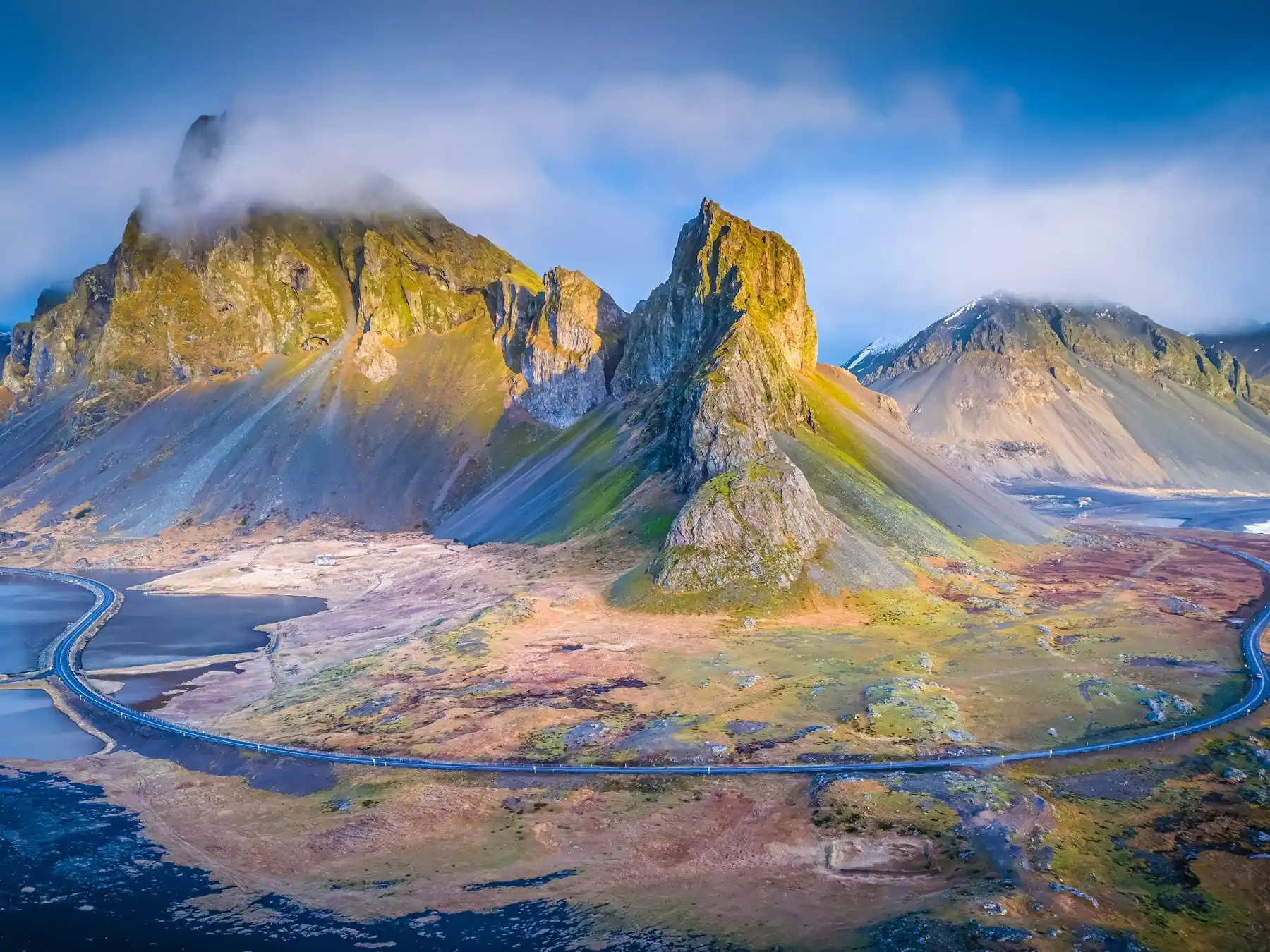
- The Government of Iceland describes the country as a geologically active Nordic island built by volcanism.
A country on two tectonic plates
- Iceland sits astride the Mid-Atlantic Ridge.
- The North American and Eurasian tectonic plates are moving apart there.
- Most of the Mid-Atlantic Ridge lies deep underwater.
- Iceland is one of the rare places where parts of the ridge rise above sea level.
- A deep mantle hotspot also contributes to Iceland’s unusually intense volcanism.
- Plate movement creates rift zones across the island.
- Earthquakes are common.
- Most earthquakes are too small to cause major damage.
- Volcanic eruptions occur frequently on geologic timescales.
- New lava continually reshapes parts of the landscape.
- Þingvellir National Park contains dramatic faults and rift features.
- The visible cliffs there are often described as the edges of tectonic plates.
- The actual plate boundary is a broad deforming zone rather than one narrow crack.
- GPS measurements can track Icelandic crust moving apart.
- Iceland is effectively being pulled open while magma fills parts of the gap.
Volcanoes shape Icelandic life
- Iceland contains many active volcanic systems.
- Hekla is one of the country’s historically famous volcanoes.
- Katla lies beneath the Mýrdalsjökull ice cap.
- Grímsvötn lies beneath Vatnajökull.
- Subglacial eruptions can rapidly melt huge volumes of ice.
- The resulting floods are called jökulhlaups.
- Jökulhlaups can destroy roads and bridges.
- The 1783 to 1784 Laki eruption released enormous quantities of lava and volcanic gases.
- Its effects contributed to famine and hardship in Iceland.
- Volcanic aerosols from Laki also affected climate and air quality far beyond Iceland.
- Eyjafjallajökull erupted in 2010.
- Its ash plume caused widespread European aviation disruption.
- The volcano’s long Icelandic name became unexpectedly famous around the world.
- Recent eruptions on the Reykjanes Peninsula have shown that volcanic activity can return after centuries of relative quiet.
- Icelandic authorities monitor volcanic systems continuously for public safety.
Glaciers cover a surprising amount of Iceland
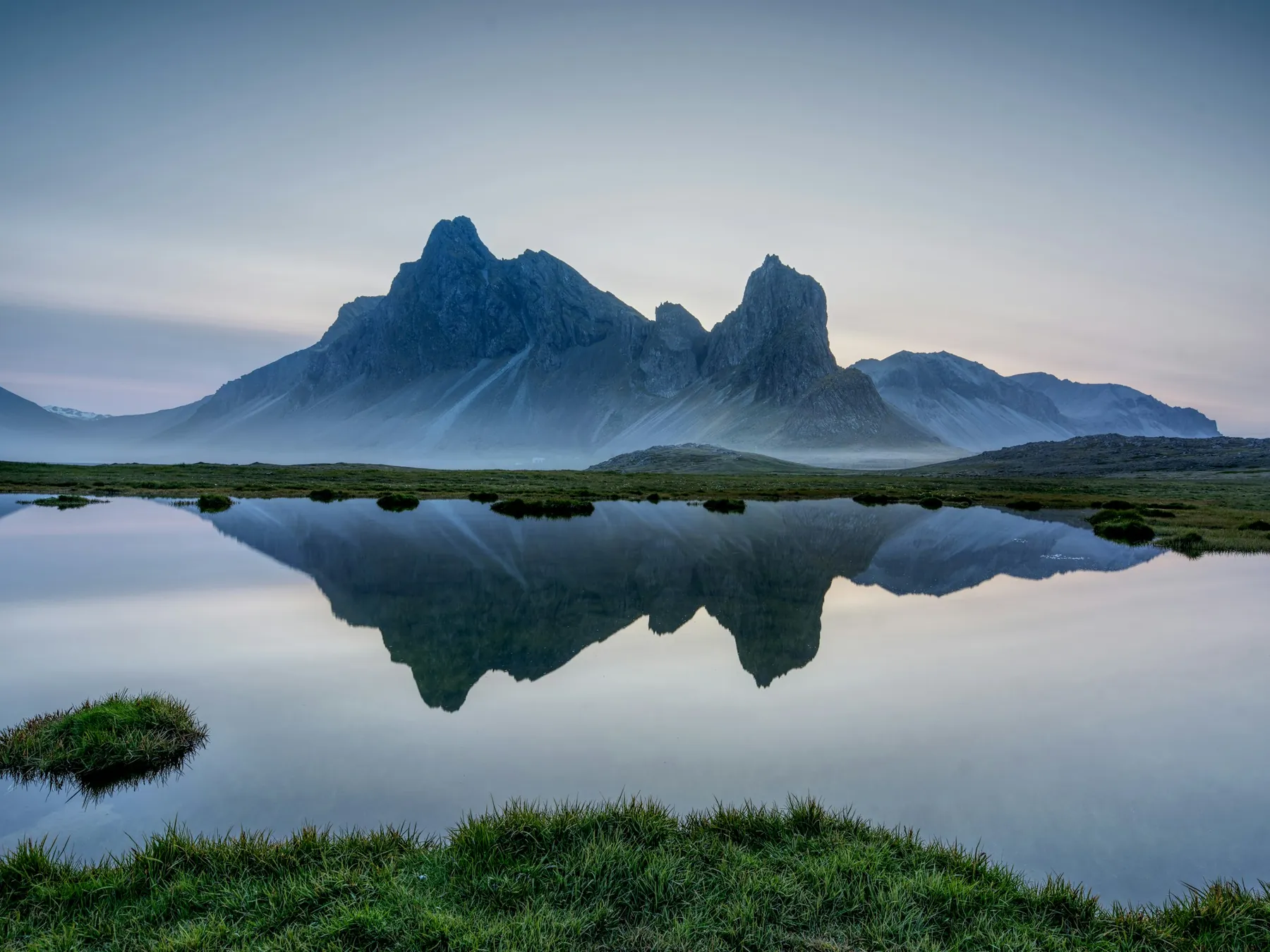
- Glaciers cover roughly a tenth of Iceland’s land area, though the percentage is declining.
- Vatnajökull is the country’s largest ice cap.
- It is one of Europe’s largest glaciers by volume.
- Several active volcanoes lie beneath Vatnajökull.
- Glacial ice flows slowly under its own weight.
- Outlet glaciers carry ice from high ice caps into valleys.
- Glaciers grind and reshape rock beneath them.
- They leave behind moraines made of transported debris.
- Glacial rivers carry large quantities of sediment.
- Southern Iceland contains broad black sandur plains built by glacial floods and rivers.
- Jökulsárlón is a famous glacial lagoon.
- Icebergs break from Breiðamerkurjökull into the lagoon.
- Some chunks later wash onto nearby black sand at Diamond Beach.
- Icelandic glaciers have retreated significantly during modern warming.
- Okjökull lost its glacier status and became a symbol of climate-driven ice loss.
Geysers, hot springs, and geothermal heat
- The English word geyser comes from Iceland’s famous Geysir.
- Geysir lies in the Haukadalur geothermal area.
- The Icelandic verb geysa relates to gushing.
- Great Geysir is much less regularly active today than in some historical periods.
- Nearby Strokkur erupts far more frequently.
- Strokkur can send hot water high into the air every few minutes.
- Geysers require unusually specific underground plumbing.
- Water becomes heated under pressure below the surface.
- When boiling begins, pressure drops and can trigger explosive flashing to steam.
- Iceland uses geothermal water to heat homes and buildings.
- District-heating networks pipe hot water through communities.
- Geothermal energy also generates electricity.
- Public swimming pools commonly use geothermal heat.
- Hot tubs are an everyday social institution rather than only a tourist luxury.
- Iceland’s warm buildings in winter owe much to the same geology that creates its volcanoes.
Settlement and Viking history
- Norse settlement of Iceland began during the late ninth century.
- Ingólfur Arnarson is traditionally described as the first permanent Norse settler.
- According to tradition, he settled near present-day Reykjavík.
- Settlers came mainly from Norway and the British Isles.
- Genetic studies reflect both Norse and Gaelic ancestry.
- Many early settlers brought enslaved people from Ireland and Scotland.
- The medieval Landnámabók records settlement traditions and genealogies.
- Its accounts were written after the settlement era and mix historical memory with literary tradition.
- Iceland had no indigenous human population comparable with long-settled continental regions.
- Irish monks may have visited before Norse settlement, but the evidence is limited and debated.
- Farmsteads spread around habitable coastal lowlands.
- Wood was scarce compared with Norway.
- Turf became an important building material.
- Icelandic society developed without a king living on the island during its early commonwealth period.
- The settlement era remains central to Icelandic national storytelling.
Alþingi is remarkably old
- Iceland’s parliament is called Alþingi.
- It was established around 930.
- It is often described as one of the world’s oldest surviving parliamentary institutions.
- Early assemblies met at Þingvellir.
- Representatives gathered annually to make laws and settle disputes.
- The lawspeaker recited law orally before written law codes existed.
- Alþingi did not function exactly like a modern democratic parliament.
- Political participation was shaped by chieftains and medieval social structures.
- Iceland later came under Norwegian and then Danish rule.
- The parliament lost much of its old authority.
- Alþingi was abolished in 1800.
- It was restored in Reykjavík in 1845.
- Iceland gradually gained greater self-government.
- The Republic of Iceland was founded in 1944.
- The modern Alþingi preserves the name and institutional lineage of the medieval assembly.
Icelandic language and names
- Icelandic is a North Germanic language.
- It descended from Old Norse.
- Modern Icelandic preserves more medieval grammatical features than several related Scandinavian languages.
- Icelanders can often approach medieval saga texts with less linguistic distance than English speakers face with Old English.
- Icelandic uses letters including þ and ð.
- The letter þ is called thorn.
- Traditional Icelandic naming often uses patronymics or matronymics rather than inherited family surnames.
- A patronymic usually identifies someone as the son or daughter of a parent.
- For example, Jónsson means son of Jón.
- Jónsdóttir means daughter of Jón.
- Not every Icelander follows this system.
- Some families have inherited surnames.
- Phone directories traditionally organize people by given name.
- People commonly address even prominent officials by first name.
- Naming customs reinforce a social culture where given names carry unusual public importance.
Wildlife and everyday culture
- Arctic foxes are Iceland’s only native land mammals.
- Reindeer were introduced to Iceland in the 18th century.
- Wild reindeer now live mainly in eastern Iceland.
- Icelandic horses descend from animals brought by early settlers.
- Importing horses into Iceland is tightly restricted.
- Once an Icelandic horse leaves the country, it generally cannot return.
- The breed is famous for extra gaits such as tölt.
- Puffins nest in huge colonies along Icelandic cliffs.
- Whale watching is a major tourism activity.
- Iceland has no native mosquitoes established as a permanent breeding population.
- That absence is famous, though changing climate keeps the question scientifically interesting.
- Swimming pools are major social spaces in towns around the country.
- Icelanders have a strong literary tradition connected with medieval sagas and modern books.
- Reykjavík became the first non-native-English-speaking UNESCO City of Literature.
- Modern Iceland blends tiny population size with internationally influential music, literature, design, and film.
Ten surprising Iceland facts
- The English word geyser comes directly from an Icelandic hot spring.
- Iceland sits on a spreading tectonic boundary that is normally hidden beneath the ocean.
- Active volcanoes exist underneath enormous glaciers.
- Geothermal energy heats most Icelandic homes through district systems.
- Alþingi began around the year 930.
- Icelandic naming often changes surname-style endings from one generation to the next.
- The only native land mammal is the Arctic fox.
- Iceland has no established native mosquito population.
- A horse exported from Iceland generally cannot return under disease-protection rules.
- For more Nordic trivia, explore our upcoming Norway and Sweden guides and Culture facts.
Quick Iceland FAQ
What is Iceland’s capital?
Reykjavík, home to a large share of the country’s population and cultural institutions.
Why does Iceland have so many volcanoes?
It lies on the Mid-Atlantic Ridge where tectonic plates spread apart, while a mantle hotspot supplies additional magma.
Does Iceland really use geothermal heat?
Yes. Geothermal water is widely used in district heating, pools, greenhouses, and energy systems.
Is Iceland covered in ice?
Glaciers cover a significant portion of the island, but most land is not permanently ice-covered and summers can be vividly green.
Does Iceland have mosquitoes?
No stable breeding mosquito population is established in Iceland, making their absence one of the country’s better-known wildlife curiosities.

Ellie is the owner and sole author of Fun Facts, combining her mechanical engineering background with years of research-driven writing to deliver facts you can trust. Every article is thoroughly fact-checked and routinely updated as new science and sources emerge to keep information accurate and current. Her mission is to make learning delightful while upholding high standards of reliability and transparency.