
French fries seem straightforward until you ask where they were invented, why twice-frying works, what “French” means, why cold potatoes brown differently, or how restaurants create a crisp shell around a fluffy center. Then one side dish turns into a lesson in potato history, starch chemistry, frying physics, global migration, and food folklore. These 145 french-fry facts explore their disputed origin, potato science, shapes, oils, sauces, fast food, and famous styles around the world.
French fry basics
- French fries are strips or pieces of potato cooked in hot fat.
- They are usually deep-fried.
- Fries can also be oven-baked or air-fried, though the crust differs from traditional deep frying.
- Potato variety strongly affects fry texture.
- High-starch potatoes are often preferred for fluffy interiors.
- Russet potatoes are widely used for American-style fries.
- French fries are known as chips in Britain and several other countries.
- British chips are usually thicker than typical American fast-food fries.
- What Americans call potato chips are called crisps in Britain.
- Fries can be straight, crinkle-cut, waffle-cut, curly, shoestring, steak-cut, or wedge-shaped.
- Surface area changes crispness and oil interaction.
- Thin fries become crisp quickly but can dry out.
- Thick fries retain more soft potato interior.
- Salt is usually added immediately after frying so it sticks to surface oil.
- French fries became one of the world’s most recognizable potato foods.
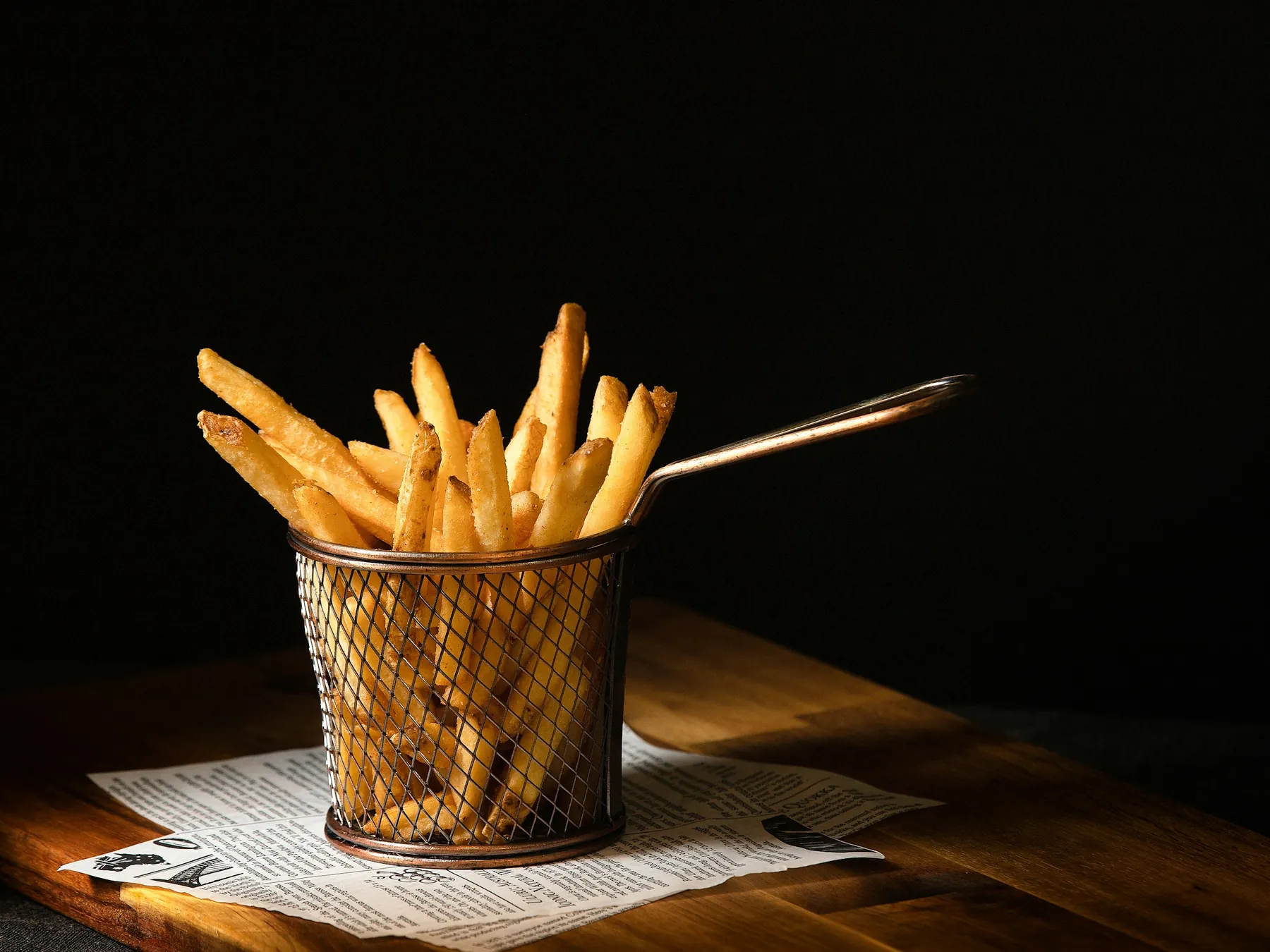
Where did french fries come from?
- The exact origin of french fries is disputed.
- Belgium and France are both strongly associated with early fried-potato traditions.
- Simple claims that one country definitely invented fries oversimplify the historical evidence.
- Fried potatoes became popular in Paris during the 18th and 19th centuries.
- Street vendors sold fried potato preparations in the French capital.
- Belgium developed an especially deep cultural connection with fried potatoes.
- Belgian fry shops are called friteries or fritkots.
- A popular Belgian legend places fried potato strips in the Meuse Valley during the 1600s.
- Historians have questioned whether the documentary evidence supports that early date.
- The potato itself had reached Europe only after contact with the Americas.
- It took time for potatoes to become accepted as an ordinary European food.
- Frying potatoes required reliable access to cooking fat.
- Several cooks could easily have developed similar fried-potato forms independently.
- The history is therefore more likely a gradual culinary evolution than one inventor’s eureka moment.
- France and Belgium both remain central to the modern cultural story of fries.
Why are they called French fries?
- The English-language name “French fried potatoes” appeared before the modern fast-food era.
- In older culinary English, “French fried” could describe food cooked in deep fat.
- The word French in the name does not prove the dish was invented in France.
- A popular story says American soldiers discovered fries in French-speaking Belgium during World War I.
- That story cannot explain the earliest English uses because the phrase predates World War I.
- Thomas Jefferson encountered French cuisine during his years in Europe.
- A White House manuscript associated with his household includes a recipe for potatoes fried in the French manner.
- The recipe called for cutting potatoes into small pieces and frying them.
- Jefferson did not single-handedly introduce fried potatoes to all Americans.
- He did help document elite French culinary influence in the early United States.
- The shortened term french fries became increasingly common in American English.
- The spelling often uses a lowercase f because the phrase functions as a common food name.
- Restaurants may simply list fries on menus.
- Other languages use names that make no reference to France.
- Food names often preserve language history more clearly than invention history.
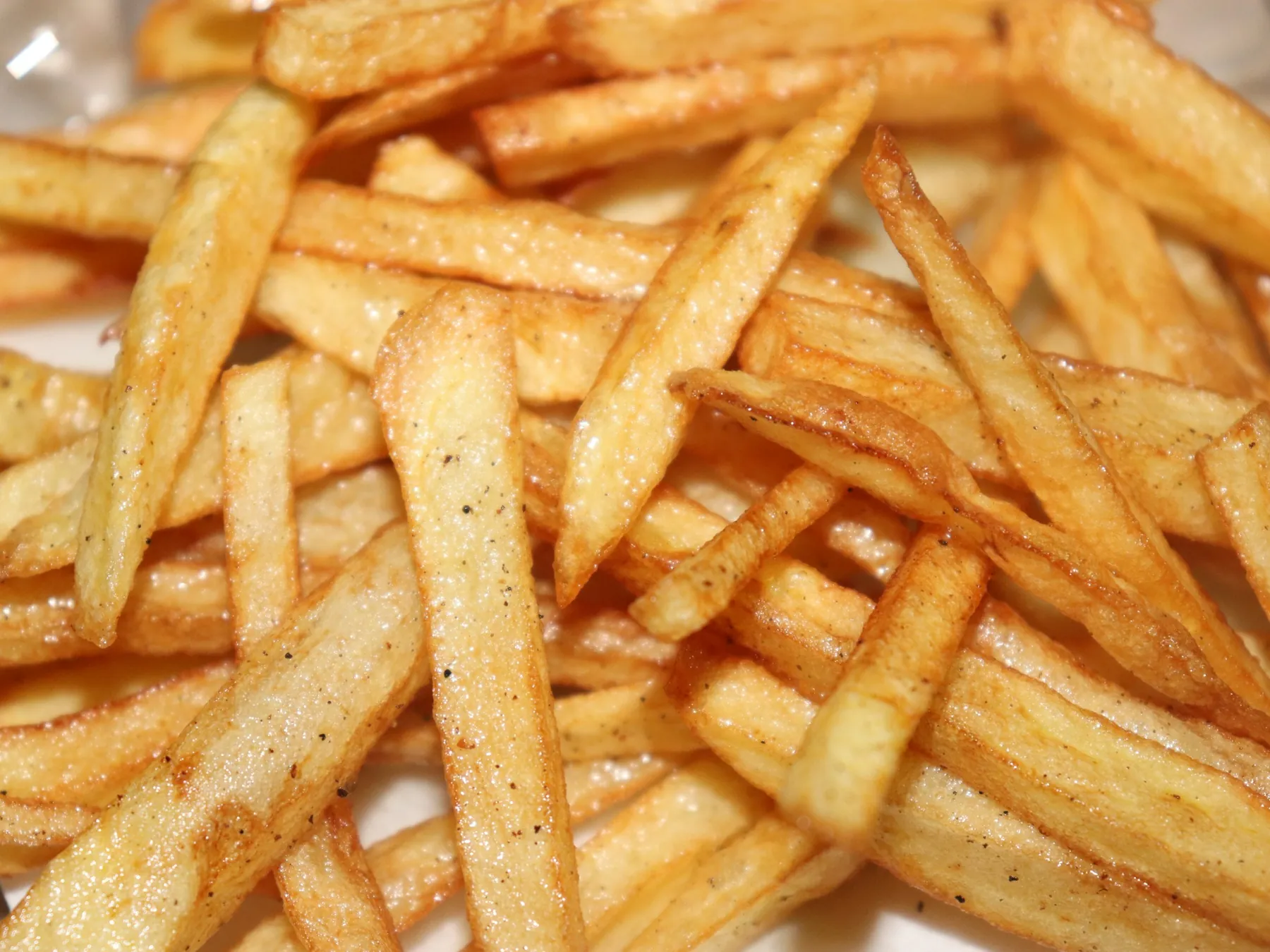
The potato started in the Andes
- Potatoes were domesticated in the Andes of South America thousands of years ago.
- Indigenous farmers developed enormous potato diversity.
- Spanish contact brought potatoes to Europe during the 16th century.
- Europeans did not immediately embrace the unfamiliar crop.
- Potatoes eventually became important because they produce substantial food from relatively small areas.
- The edible portion is a tuber.
- A tuber is an enlarged underground stem rather than a root.
- The “eyes” on a potato are buds.
- Those buds can sprout into new shoots.
- Potatoes store energy mainly as starch.
- Starch is what gives a properly cooked fry its fluffy interior.
- Different potato cultivars contain different levels of starch and moisture.
- Waxy potatoes hold their shape well but can produce denser fries.
- Floury high-starch potatoes can create drier, fluffier interiors.
- Modern french-fry quality begins in a field long before a potato reaches a fryer.
Why double-frying works
- Many classic fries are cooked twice.
- The first fry is often done at a lower temperature.
- This stage cooks the potato interior.
- Heat gelatinizes starch inside the potato cells.
- Water moves toward the surface as the potato cooks.
- The fries are then rested or cooled.
- The second fry uses hotter oil.
- This rapidly dehydrates and browns the exterior.
- The result can combine a crisp shell with a fluffy center.
- Belgian fries are famously associated with double-frying.
- Restaurants may blanch fries in oil before final service.
- Industrial processors can partially fry potatoes before freezing them.
- Restaurants then finish the fries quickly when ordered.
- This makes service faster and more consistent.
- Double cooking is food engineering disguised as a simple kitchen trick.
Why fries get crispy
- Hot oil transfers heat rapidly into the potato surface.
- Surface water boils into steam.
- As moisture escapes, the exterior becomes dry and rigid.
- Starch at the surface forms a crisp structure.
- The Maillard reaction contributes browned color and roasted flavors.
- Reducing sugars react with amino compounds during browning.
- Too much surface water slows browning initially.
- Wet potatoes can also make hot oil splatter dangerously.
- Rinsing cut potatoes removes some loose surface starch.
- Some cooks soak potatoes before frying.
- Soaking can affect surface starch and sugar levels.
- Drying the pieces thoroughly before frying is important for safety and crispness.
- Overcrowding the fryer drops oil temperature.
- Low oil temperature can produce pale, greasy fries.
- Consistent fryers balance oil temperature, potato load, cut size, and cooking time.
Cold storage changes fry color
- Raw potatoes are not always best stored in an ordinary home refrigerator.
- Very cold storage can convert some potato starch into sugars.
- This process is called cold-induced sweetening.
- Extra reducing sugars can make fries brown too quickly.
- They can also create an overly sweet or bitter flavor after frying.
- Fry processors carefully manage potato storage temperatures.
- Potatoes are commonly cured after harvest.
- Curing helps heal small skin injuries.
- Storage humidity reduces excessive water loss.
- Sprouting must also be controlled during long storage.
- The potato industry selects cultivars specifically suited to fry processing.
- Long tuber shape helps produce long fries.
- Consistent solids content improves predictable texture.
- A restaurant’s fry quality can depend on agricultural storage decisions made months earlier.
- The journey from soil to crisp fry is a surprisingly controlled supply chain.
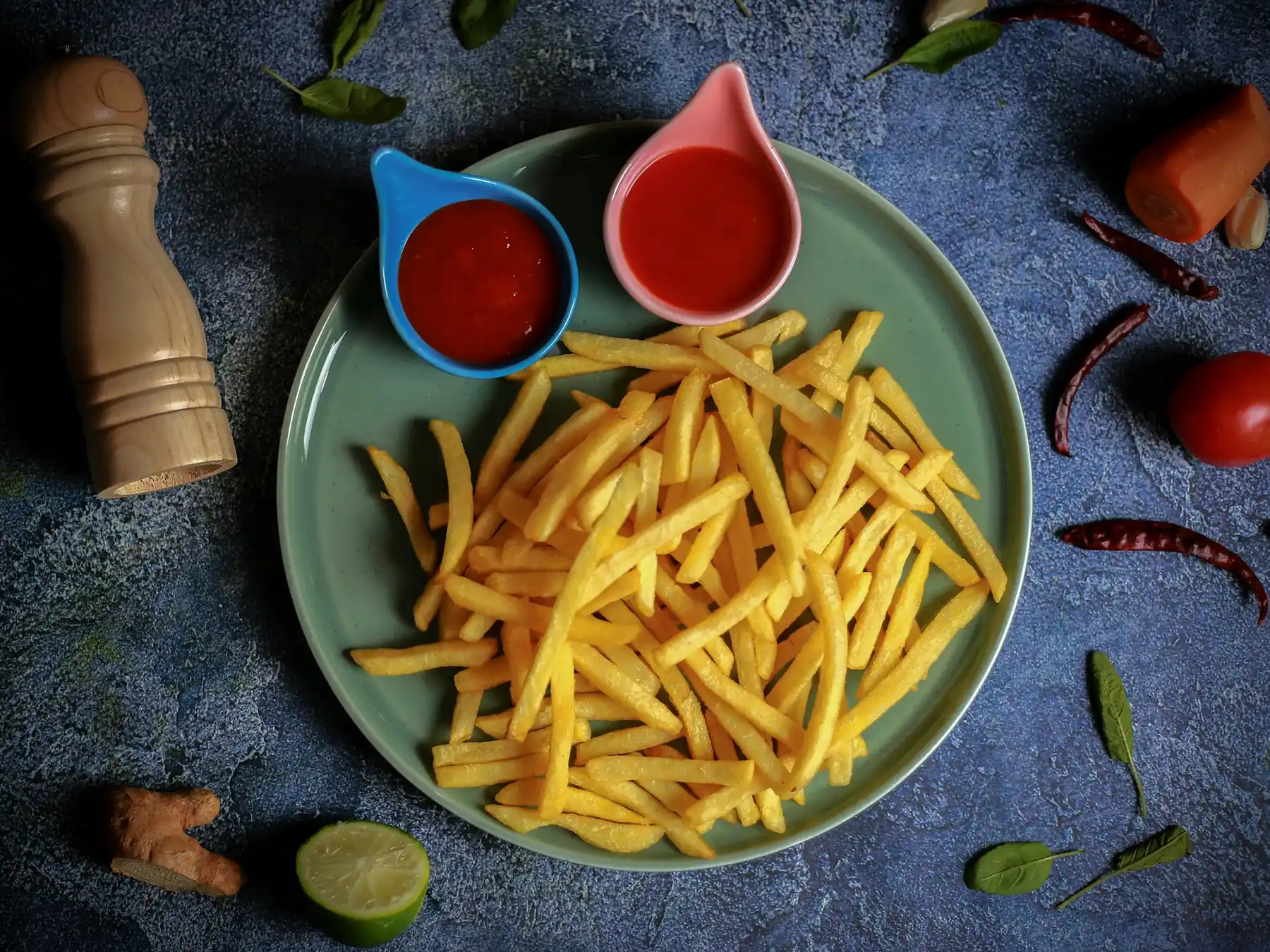
Fries around the world
- Belgian fries are commonly served in paper cones or trays.
- Mayonnaise is a classic Belgian fry accompaniment.
- French steak frites pairs steak with fries.
- British fish and chips uses thicker fried potatoes.
- Canadian poutine tops fries with cheese curds and hot gravy.
- Poutine originated in Quebec.
- Dutch fry shops offer many sauces and toppings.
- Patatje oorlog combines fries with several sauces in a Dutch snack style.
- Spain serves patatas bravas, fried potato pieces with spicy sauce, though they are not ordinary french fries.
- Peru’s lomo saltado combines stir-fried beef and vegetables with fries.
- Chile and other Latin American countries have dishes that pile meats, eggs, onions, or sauces over fries.
- Middle Eastern shawarma shops may stuff fries inside sandwiches.
- Japan offers fries flavored with seaweed, butter, consomme, and seasonal seasonings.
- Cheese fries, chili fries, loaded fries, and animal-style fries are popular American variations.
- A plain fried potato became an adaptable base for local flavor almost everywhere it traveled.
Fast food made fries a global icon
- Fast-food restaurants turned fries into a standardized side dish.
- Chains needed potatoes that cooked consistently in enormous quantities.
- Mechanical cutters create uniform fry dimensions.
- Commercial fries can be blanched, dried, partially fried, frozen, shipped, and finished at restaurants.
- Freezing can alter potato structure in ways processors carefully control.
- Restaurants use timed fry cycles to improve consistency.
- Dedicated fryers reduce flavor transfer from other foods.
- Some chains changed frying fats over time for health, cost, flavor, or regulatory reasons.
- Beef tallow historically contributed flavor to some American fast-food fries.
- Vegetable oils later became more common.
- Flavor systems can be adjusted when frying oils change.
- Salt particle size affects how evenly seasoning coats fries.
- Holding fries too long after cooking lets steam soften the crust.
- Packaging must vent some moisture or fries become soggy quickly.
- The perfect drive-through fry is therefore a race against heat, moisture, and time.
Ten surprising french-fry facts
- No historian can confidently settle the France-versus-Belgium fry-origin debate with one simple proof.
- The World War I story about Americans naming fries after French-speaking Belgian soldiers cannot be the whole naming story.
- Thomas Jefferson’s household recorded a fried-potato recipe in the French manner.
- Potato eyes are actually buds on an underground stem.
- Double-frying separates interior cooking from exterior crisping.
- Keeping raw potatoes too cold can make future fries brown more quickly.
- A fry can become soggy simply from steam trapped in its own takeout container.
- Belgium commonly pairs fries with mayonnaise rather than ketchup.
- Poutine transformed fries into one of Canada’s defining comfort foods.
- For more food trivia, explore our upcoming potato guide and Food facts.
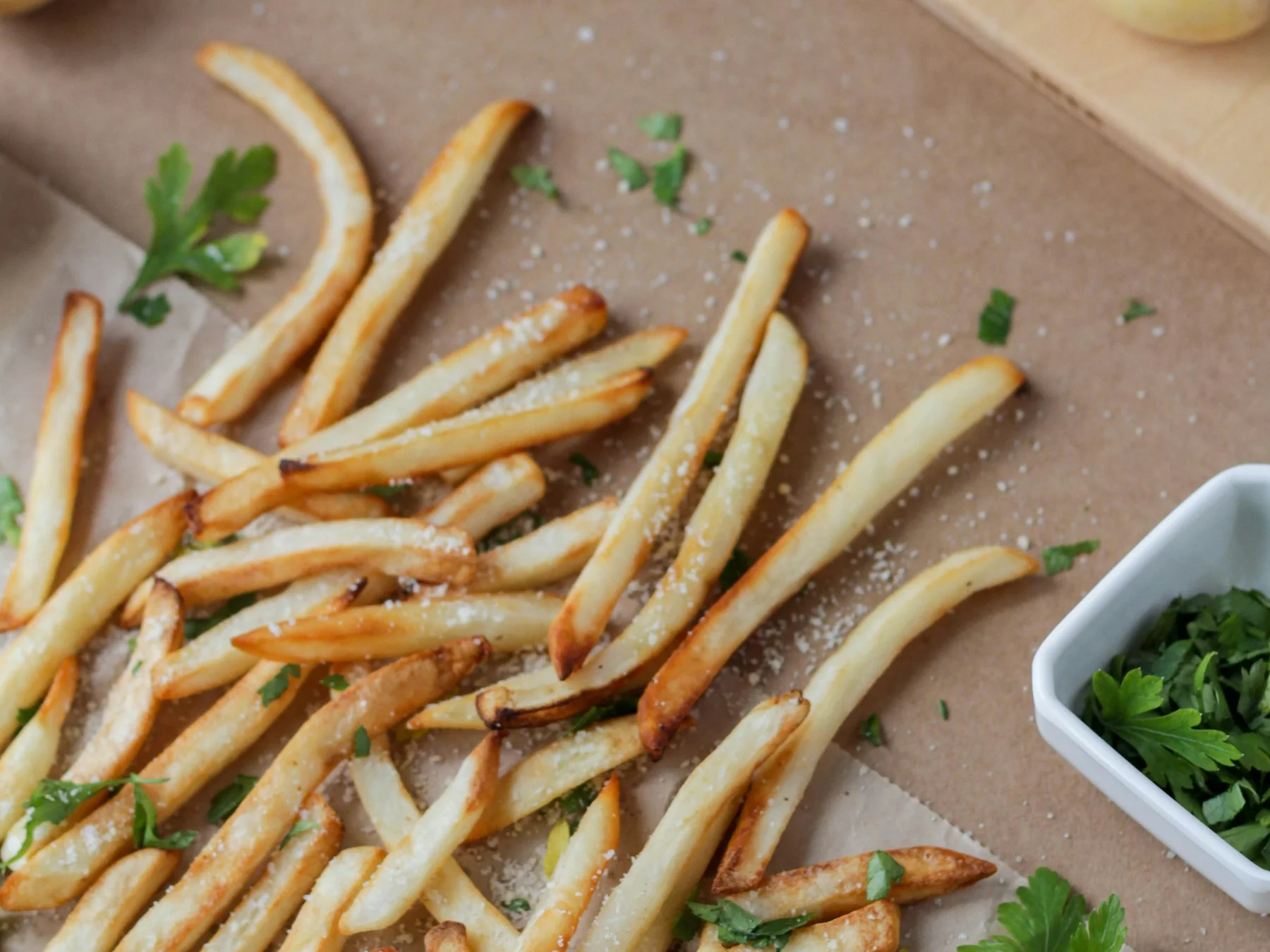
Quick french-fries FAQ
Were french fries invented in France?
The exact origin is disputed. France and Belgium both have strong historical connections to fried potatoes, and the evidence does not support one simple uncontested inventor story.
Why are fries cooked twice?
The first cook softens and cooks the potato interior. A hotter second fry rapidly dries and browns the outside, creating a crisp shell.
Why are russet potatoes good for fries?
They are relatively high in starch and low in moisture, which helps produce a dry fluffy interior and crisp exterior.
Why do fries get soggy?
Moisture migrates from the soft interior and surrounding steam into the crisp crust. Trapping hot fries in sealed packaging accelerates that process.
Are french fries called chips in Britain?
Yes. British chips are typically thicker than American fast-food fries, while American potato chips are called crisps.

Ellie is the owner and sole author of Fun Facts, combining her mechanical engineering background with years of research-driven writing to deliver facts you can trust. Every article is thoroughly fact-checked and routinely updated as new science and sources emerge to keep information accurate and current. Her mission is to make learning delightful while upholding high standards of reliability and transparency.