
Owls are famous for huge eyes and haunting calls, but their real biology is even stranger. They can rotate their heads far beyond human limits, fly with remarkable quiet, hunt beneath snow, swallow prey whole, and hear a mouse moving in darkness. These 145 owl facts explore their anatomy, senses, feathers, hunting, nests, species, myths, and conservation.
Owl basics
- Owls are birds of prey in the order Strigiformes.
- Living owls are divided into two families, Tytonidae and Strigidae.
- Tytonidae contains barn owls and closely related species.
- Strigidae contains the many species commonly called typical owls.
- More than 200 owl species live around the world.
- Owls occur on every continent except Antarctica.
- They inhabit forests, deserts, grasslands, tundra, farms, wetlands, and cities.
- Most owls are active mainly at night or around twilight.
- Some owl species are regularly active during daylight too.
- Owls are carnivores that eat animals rather than plants as their main food.
- Depending on species, prey can include insects, rodents, fish, birds, and reptiles.
- Owls have hooked beaks designed to tear flesh.
- Their feet end in strong curved talons used to seize prey.
- Most owls have four toes on each foot.
- One outer toe can pivot backward in many species for a stronger grip.
Those enormous owl eyes
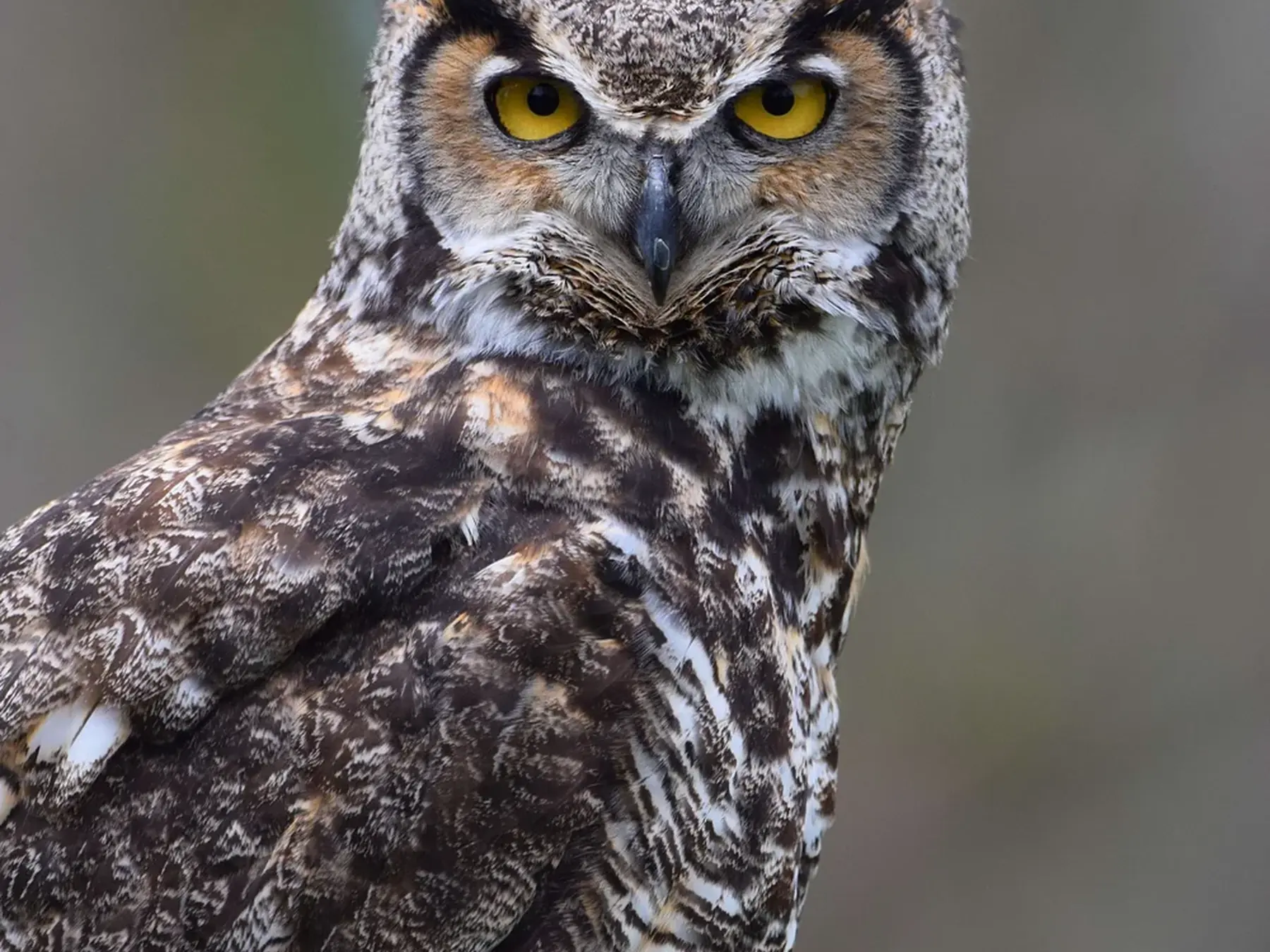
- Owl eyes are unusually large compared with the size of their skulls.
- The eyes are more tube-shaped than round like human eyeballs.
- Because of that shape, owl eyes cannot rotate freely in their sockets.
- Owls compensate by turning their heads instead of moving their eyes sideways.
- Large eyes collect more light, which is useful during dim nighttime hunting.
- Many owls have retinas rich in rod cells that perform well in low light.
- Owls still need some light to see and cannot see in absolute darkness.
- Their forward-facing eyes provide overlapping vision useful for judging distance.
- Good depth perception helps owls strike prey accurately.
- Owls have a transparent third eyelid called a nictitating membrane.
- The nictitating membrane helps protect and moisten each eye.
- Owls can see during daylight even though many species specialize in darkness.
- Bright light does not automatically blind an owl.
- Pupil size changes as light conditions change.
- The Smithsonian National Zoo explains these visual adaptations in its owl biology coverage.
How far can an owl turn its head?
- Owls can rotate their heads about 270 degrees in either direction.
- They cannot spin their heads all the way around.
- A full human-style 360-degree rotation would seriously damage blood vessels and tissues.
- Owls have 14 neck vertebrae, while humans normally have seven.
- Extra vertebrae help give the owl neck remarkable flexibility.
- Head turning compensates for eyes that remain largely fixed in their sockets.
- Scientists have studied owl arteries to understand how blood flow survives extreme rotation.
- Special vessel arrangements allow blood to keep reaching the brain during head turns.
- Some arteries have extra room that helps accommodate twisting.
- Alternative blood-vessel pathways can help maintain circulation.
- The neck looks shorter than it really is because feathers hide much of it.
- An owl can elongate its neck dramatically when curious or alarmed.
- Feathers can also make the head appear wider than the skull beneath them.
- Head bobbing helps some owls judge distance by creating motion parallax.
- That bobbing behavior can look comical while serving a serious visual purpose.
Owls have extraordinary hearing
- Hearing is crucial for many owl species that hunt in darkness.
- The flat facial disk around an owl’s eyes helps collect sound.
- Facial feathers can direct sound toward the ear openings.
- Owls do not have visible external ear flaps like mammals.
- The feather tufts on some owl heads are not ears.
- Great horned owl “horns” are feather tufts used in signaling and camouflage.
- In several owl species, the ear openings are positioned asymmetrically.
- One ear may sit higher on the skull than the other.
- This asymmetry helps the bird compare when sounds reach each ear.
- Tiny timing differences help an owl locate prey vertically and horizontally.
- Barn owls can hunt rodents using sound even in extremely dim conditions.
- Great gray owls can detect small mammals moving beneath snow.
- They may plunge feet-first through the snow surface to seize hidden prey.
- Snow depth and crust conditions affect how well sound travels to hunting owls.
- The facial disk can subtly change shape as feathers and muscles adjust.
Why owl flight is so quiet
- Many owls produce unusually little noise while flying.
- Quiet flight helps them approach prey without giving an early warning.
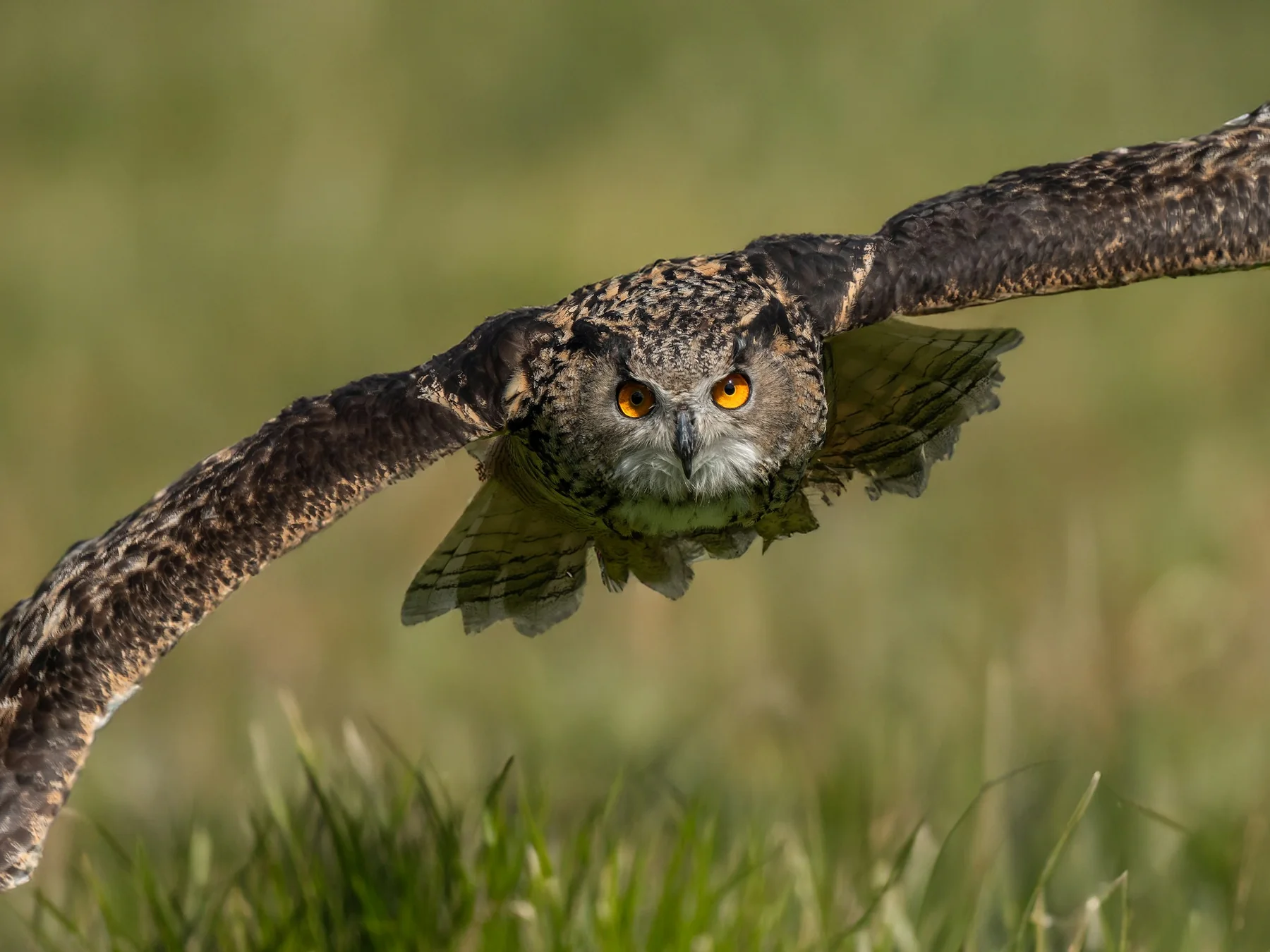
- The leading edges of owl flight feathers have comb-like structures.
- Those serrations help break large turbulent air movements into smaller ones.
- Soft fringes on feather edges also reduce aerodynamic noise.
- Velvety feather surfaces help damp high-frequency sound.
- Large wings let many owls fly relatively slowly while still producing lift.
- Slow flight reduces the intense airflow associated with faster wingbeats.
- Not every owl species is equally silent.
- Fish-eating owls have less need for extreme silent-flight adaptations than rodent hunters.
- Silent flight can also help an owl hear prey while the bird is moving.
- Flapping noise from ordinary bird wings can mask faint sounds below.
- Owl feathers trade some waterproofing for softness and noise reduction.
- That means some owls are more vulnerable to heavy rain than water birds.
- Feather design shows how flight can be optimized for stealth instead of maximum speed.
How owls hunt and eat
- Many owls hunt from a perch and drop onto prey.
- Others fly low over open ground while listening and watching.
- Talons usually kill or restrain prey before the beak tears it apart.
- Small prey may be swallowed whole.
- Owls cannot digest bones, fur, feathers, teeth, and claws equally well.
- Indigestible material is compressed inside the stomach into a pellet.
- The owl later coughs, or casts, the pellet back through its mouth.
- An owl pellet is not feces.
- Scientists can dissect pellets to identify prey species from bones and teeth.
- Schools often use sterilized owl pellets to teach food-web ecology.
- Pellet contents reveal what an owl has eaten recently.
- An owl may cast more than one pellet during a day.
- The exact pellet size depends on owl species and prey.
- Large prey may be carried to a perch and eaten in pieces.
- Owls compete with eagles, hawks, foxes, snakes, and other predators for food.
Owl nests and babies
- Most owls do not build elaborate nests from scratch.
- They often use tree cavities, cliffs, buildings, or abandoned nests of other birds.
- Barn owls readily nest in barns, towers, nest boxes, and hollow trees.
- Burrowing owls nest underground.
- They may use burrows dug by prairie dogs, ground squirrels, or other mammals.
- Snowy owls usually nest directly on the ground in open Arctic tundra.
- Female owls generally perform most incubation.
- Males commonly provide food to incubating females.
- Owls often begin incubating before the entire clutch has been laid.
- That causes chicks in one nest to hatch at different times.
- The oldest chick can therefore be much larger than its youngest sibling.
- Food abundance strongly influences survival in many owl broods.
- Baby owls are called owlets.
- Young owls may leave the nest before they can fly perfectly.
- Parents can continue feeding fledglings while they practice climbing and flying.
Famous owl species
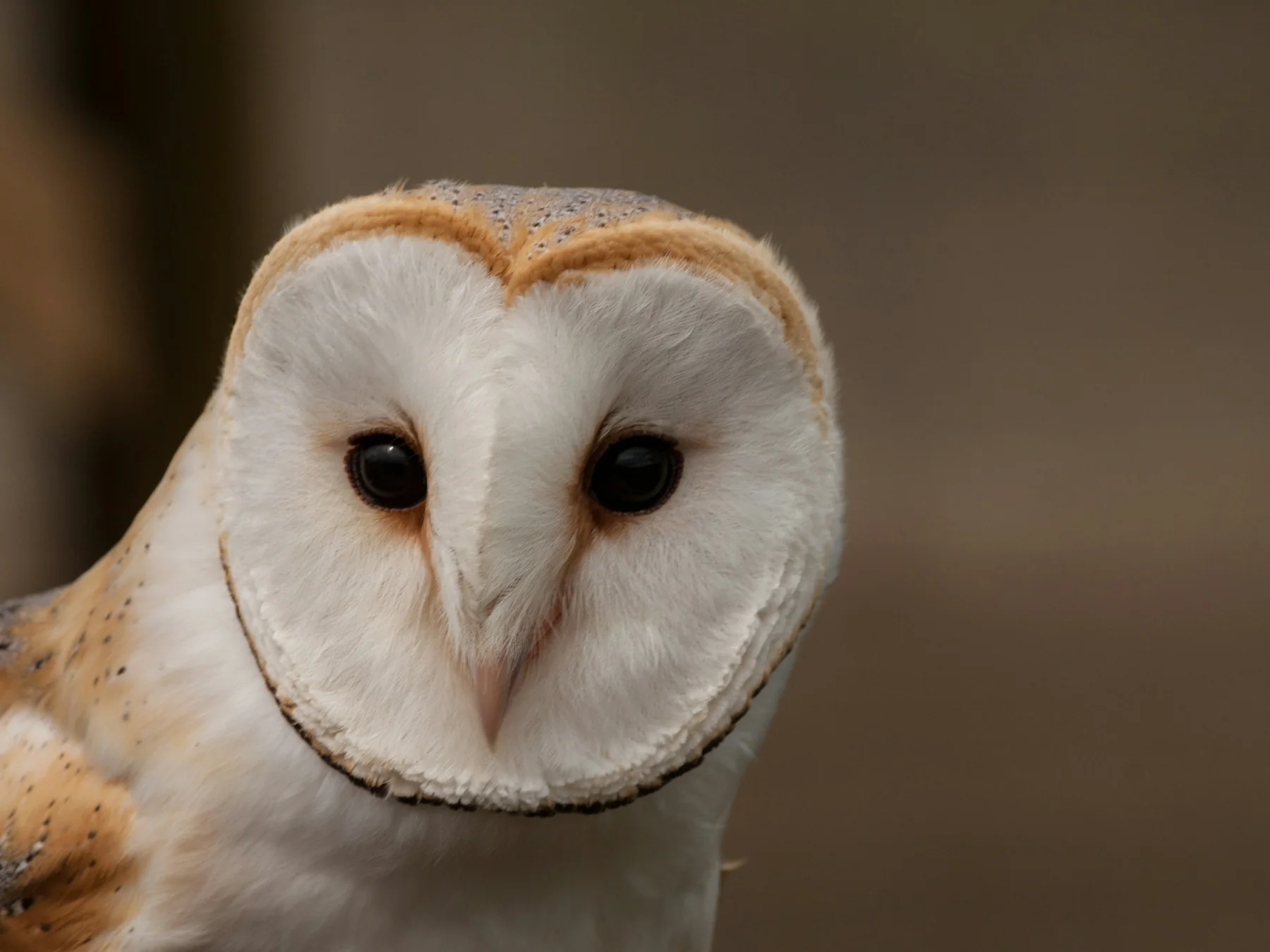
- The barn owl has a pale heart-shaped facial disk.
- Barn owls occur naturally across an enormous portion of the world.
- The great horned owl is one of North America’s largest familiar owls.
- Great horned owls can prey on skunks, rabbits, birds, and other animals.
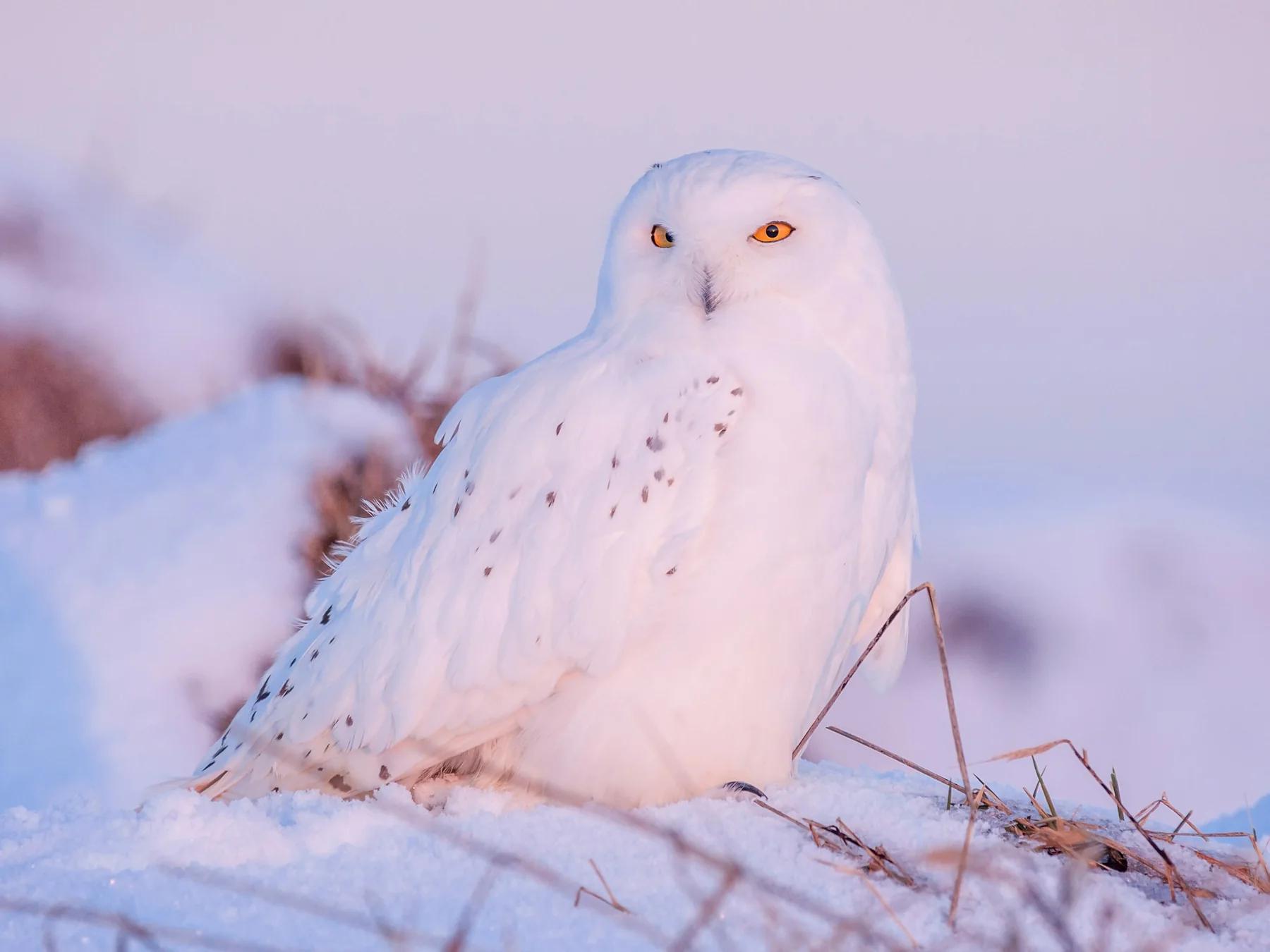
- Snowy owls are large white owls of Arctic regions.
- Adult male snowy owls tend to become whiter than females.
- Females usually retain more dark barring throughout life.
- The great gray owl looks enormous partly because of thick feathers.
- Its body is lighter than its dramatic size might suggest.
- Elf owls are among the smallest owls in the world.
- They live in arid regions of the southwestern United States and Mexico.
- Burrowing owls have unusually long-looking legs for their body size.
- Northern saw-whet owls are tiny forest owls with oversized-looking heads.
- Eurasian eagle-owls rank among the world’s largest owl species.
- Fish owls have adaptations for catching aquatic prey instead of tiny rodents.
Owls, people, and conservation
- Owls appear in myths, religions, stories, logos, and art around the world.
- Ancient Greeks strongly associated the little owl with the goddess Athena.
- That connection helped make owls enduring symbols of wisdom in Western culture.
- Other cultures have associated owls with death, prophecy, protection, or bad luck.
- Those beliefs reflect human culture rather than universal facts about owl behavior.
- Owls can benefit farms by eating large numbers of rodents.
- Installing appropriate nest boxes can support some cavity-nesting owl species.
- Pesticides can harm owls directly or indirectly through contaminated prey.
- Rodenticides are especially concerning because poisoned rodents may be eaten by raptors.
- Vehicle collisions kill owls that hunt along road edges.
- Habitat loss threatens owl species that depend on old forests or specialized landscapes.
- Power lines and fences can also injure or kill some owls.
- Conservation needs differ widely because owl species occupy very different habitats.
- The U.S. Fish and Wildlife Service provides species-specific information for many American owls.
- Protecting prey populations and nesting habitat is often central to owl conservation.
Ten surprising owl facts
- Owl ear tufts are feathers, not actual ears.
- Owls cannot roll their fixed tubular eyes around like humans can.
- An owl pellet comes from the digestive tract but is not poop.
- Some owls hunt hidden mammals by listening through a layer of snow.
- The largest-looking owl is not necessarily the heaviest owl.
- Some tiny owls live in cactus deserts rather than dark forests.
- Burrowing owls spend much of their lives close to underground mammal burrows.
- Owls can rotate their heads astonishingly far, but never a complete circle.
- Silent feathers help an owl hear prey as well as hide its approach.
- For more wildlife trivia, browse our Science facts and animal guides.
Quick owl FAQ
Can owls turn their heads all the way around?
No. Many can rotate about 270 degrees, which is extraordinary but still short of a full 360-degree turn.
Why are owls so quiet when they fly?
Special feather serrations, fringes, soft surfaces, and relatively slow wingbeats reduce aerodynamic noise and help many species approach prey silently.
Do owls see in complete darkness?
No. Their eyes are exceptionally adapted to low light, but vision still requires light. Hearing lets many owls continue hunting when visibility is poor.
What is an owl pellet?
It is a compact bundle of indigestible bones, fur, feathers, and other material that an owl regurgitates after digesting a meal.
Are all owls nocturnal?
No. Many are mainly nocturnal, but some regularly hunt in daylight or during dawn and dusk, especially in high-latitude habitats.

Ellie is the owner and sole author of Fun Facts, combining her mechanical engineering background with years of research-driven writing to deliver facts you can trust. Every article is thoroughly fact-checked and routinely updated as new science and sources emerge to keep information accurate and current. Her mission is to make learning delightful while upholding high standards of reliability and transparency.